Public accommodations shape daily life because they include the places where people shop, travel, study, seek health care, dine, and participate in community events. In civil rights law, public accommodations generally means businesses and facilities open to the public, from hotels and restaurants to retail stores, theaters, transit terminals, stadiums, websites, and service counters. Success stories in public accommodations matter because they show how rights move from legal text into lived access. I have worked with accessibility audits, complaint resolution, and staff training, and the same pattern appears repeatedly: barriers that seem routine to operators can block education, employment, family life, and basic dignity for customers. Real-world case studies make those barriers visible and, more importantly, show what effective correction looks like.
This hub article covers rights in action through practical examples across physical accessibility, communication access, digital inclusion, service policies, and enforcement. The legal foundation in the United States often comes from the Americans with Disabilities Act, especially Title III, alongside Section 504 obligations for certain funded entities, state civil rights statutes, building codes, and local ordinances. The core principle is equal access, but equal access is not abstract. It means a step-free entrance that actually works, captioning that can be read, a reservation system compatible with screen readers, a service policy that allows disability-related modifications, and staff who know how to respond appropriately. These are operational issues as much as legal ones, which is why public accommodations compliance rises or falls on management systems, not slogans.
As the hub page for rights in action case studies and real-world applications, this article explains how successful organizations identified risk, corrected barriers, and sustained improvement. It also points readers toward the wider rights and protections topic by showing how complaints, settlement agreements, advocacy, and internal review can reinforce one another. The strongest success stories are not only courtroom wins. Many involve a business owner who changed policies after a demand letter, a museum that redesigned exhibits after community feedback, or a hotel group that standardized accessible room data after repeated booking failures. These examples provide a blueprint for readers who need to evaluate a facility, train teams, build procedures, or understand what enforcement achieves in practice.
Physical Access: From Minimum Compliance to Reliable Usability
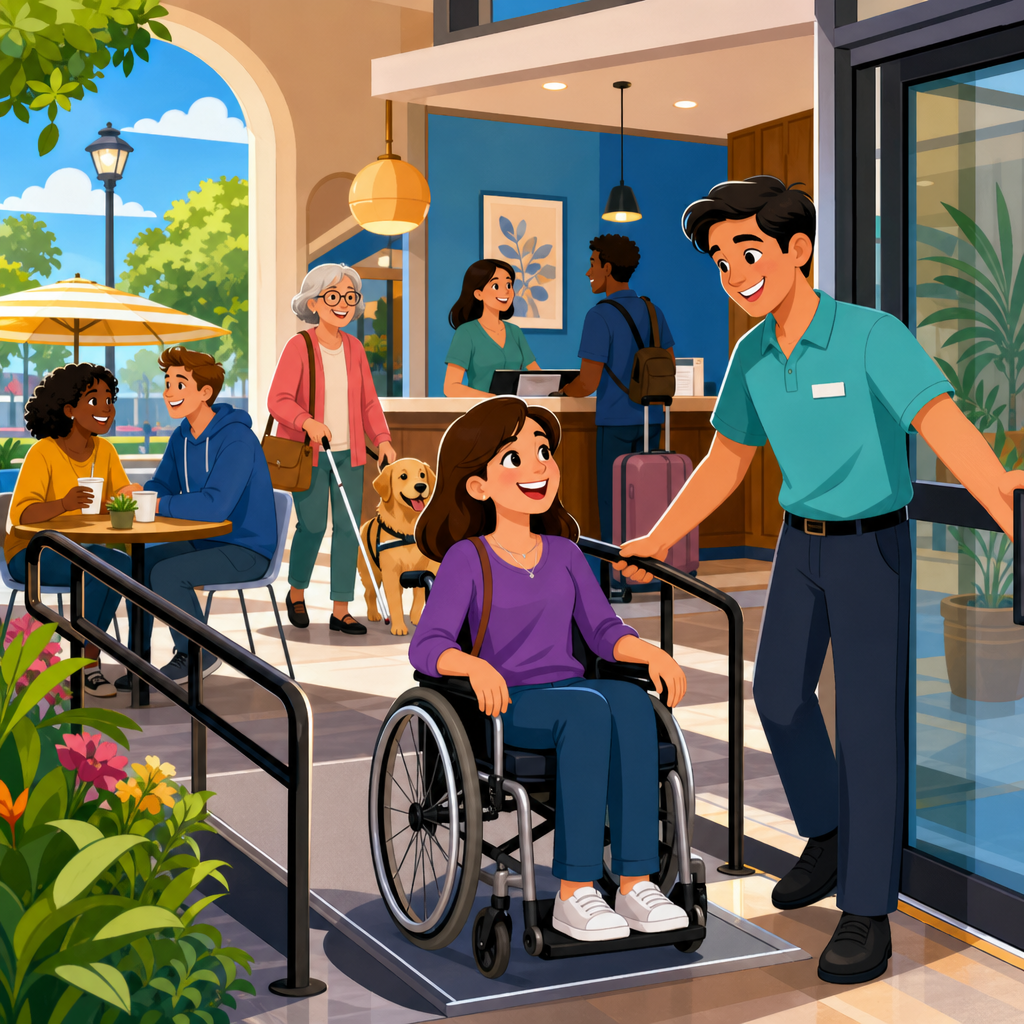
Physical access is usually the most visible public accommodations issue, and it remains the area where simple fixes can produce immediate gains. Common barriers include inaccessible parking, steep curb ramps, heavy doors, narrow paths of travel, sales counters that are too high, restrooms without turning space, and dining layouts that crowd wheelchair users. I have seen organizations assume that one ramp near a delivery entrance solves access. It does not. Usability depends on the complete route, including parking, drop-off, entry hardware, interior circulation, restroom access, seating choices, and emergency procedures. The 2010 ADA Standards for Accessible Design provide technical benchmarks, but effective remediation starts with observing how people actually move through the space.
A strong success story often begins with an audit and ends with standard operating procedures. Consider a regional restaurant chain that received repeated complaints about inaccessible host stands, fixed-table layouts, and blocked access aisles. Instead of handling each location separately, the company hired an accessibility consultant, reviewed measurements chain-wide, and created a corrective action plan tied to capital budgeting. Host stands were lowered or paired with compliant service surfaces, movable tables were added in every section, and managers were instructed that accessible routes could not be used for high-chair storage or seasonal displays. The result was not merely fewer complaints. Customer dwell time improved, online reviews mentioned easier seating, and risk dropped because access became part of opening and closing checklists.
Hotels provide another useful example because small failures can break the entire travel experience. Accessible rooms are valuable only when the path from registration to sleeping area, bathroom, breakfast service, pool, and meeting space is also accessible. Several hotel brands have faced enforcement pressure when reservation systems failed to identify accessibility features accurately. The best-performing properties now use room-specific data fields for roll-in showers, tub transfer benches, visual alarms, bed height, clear floor space, and route details, then verify that information during periodic inspections. That level of detail reduces mismatches between guest needs and room assignments, which is one of the most common and preventable public accommodations failures.
Communication Access: When Equal Service Requires More Than Good Intentions
Communication access means customers can receive information as effectively as others, whether they are deaf, hard of hearing, blind, have low vision, speech disabilities, or cognitive disabilities. In practice, this may require qualified sign language interpreters, real-time captioning, assistive listening systems, accessible print formats, tactile signage, plain-language materials, or staff trained to communicate without patronizing the customer. Businesses often make the mistake of treating communication accommodations as optional extras. They are not. If the interaction is complex, high stakes, or time sensitive, the auxiliary aid must be effective for that person in that setting.
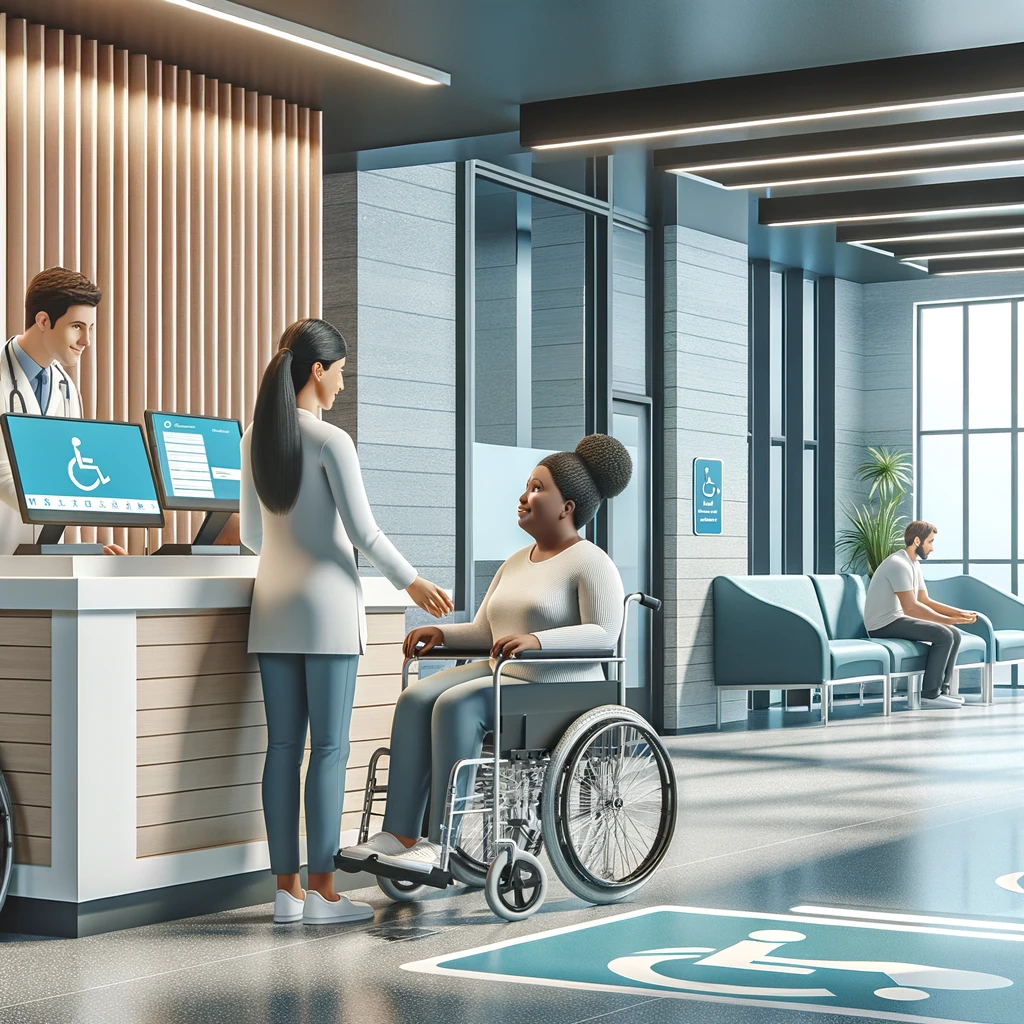
Health care settings illustrate the difference between intent and effectiveness. A clinic may believe written notes are enough for a deaf patient, but notes can fail during informed consent discussions, medication explanations, or emergency instructions. Enforcement actions by the Department of Justice and the Department of Health and Human Services have repeatedly emphasized that family members usually should not be used as interpreters except in limited emergencies. One clinic system I advised moved from ad hoc interpreter requests to a centralized process with on-site interpreter vendors, video remote interpreting backup, and a scheduling flag in the electronic health record. Missed details dropped, patient satisfaction rose, and clinicians reported fewer delays because the process became predictable.
Entertainment venues offer another success pattern. Theaters and stadiums that added captioning devices, assistive listening systems, audio description, and trained guest services teams found that accessible events attracted repeat attendance from families and community groups that had previously stayed away. The key lesson was consistency. Equipment had to be charged, signed out quickly, and supported by staff who knew where accessible seating and companion seating were located. Equal service is not achieved by buying technology and leaving it in a cabinet. It depends on maintenance, training, and accountability.
Digital Public Accommodations: Access Now Happens on Screens First
For many customers, the first interaction with a public accommodation happens online, not at the front door. They book rooms, reserve tables, review menus, complete intake forms, buy tickets, request transportation, and locate accessibility details through websites and apps. When those systems are not accessible, exclusion begins before a person ever arrives. Although digital accessibility law continues to evolve, the practical standard used across settlements, procurement policies, and remediation plans is conformance with the Web Content Accessibility Guidelines, usually WCAG 2.1 AA or higher. That standard matters because it translates broad equal access principles into testable requirements such as keyboard navigation, alternative text, color contrast, captioning, labels, error identification, and predictable structure.
A common case study involves a retailer with an attractive site that works poorly for screen reader users. Buttons lack labels, forms time out unexpectedly, promotional pop-ups trap keyboard focus, and checkout errors are announced only by color. After complaints or litigation, successful remediation usually combines automated scanning with manual testing by accessibility specialists and disabled users. Tools like axe DevTools, WAVE, Lighthouse, and screen readers such as JAWS, NVDA, and VoiceOver can identify patterns, but lived user testing catches workflow failures that scanners miss. The most effective organizations then embed accessibility into design systems, quality assurance, and procurement so the same defects do not reappear in the next release.
Digital success stories are especially important for this rights in action hub because they show how civil rights principles adapt to modern commerce. A restaurant with a compliant dining room still denies equal access if its menu image cannot be read, online ordering cannot be completed without a mouse, or accessibility information is missing from reservation pages. Good digital practice is straightforward: publish accessibility details prominently, test critical user paths, provide an accessible feedback channel, and respond quickly when barriers are reported. That is rights protection translated into product management.
Policy Modifications and Frontline Decision-Making
Many public accommodations disputes are caused not by architecture or software but by rigid policies applied without regard to disability-related needs. Service animals, outside food needed for medical reasons, flexible seating for fatigue conditions, extra time in queues, and exceptions to no-companion rules are common flashpoints. The governing concept is reasonable modification unless the change would fundamentally alter the nature of the service or create a direct threat that cannot be mitigated. Staff need more than a legal memo; they need examples, scripts, and escalation channels.
| Challenge | Common Failure | Successful Response |
|---|---|---|
| Service animal entry | Demanding certification or excluding the animal automatically | Train staff on the two permitted questions and behavior-based standards |
| Queue management | Requiring everyone to stand in the same line regardless of disability | Offer virtual waitlists, seating alternatives, or call-back options |
| Food policies | Banning medically necessary items without review | Create an exception process for diabetes, allergies, and related needs |
| Ticketing | Separating companions from disabled patrons | Hold accessible and companion seating under clear release rules |
One museum I worked with had repeated complaints because guards were inconsistently enforcing touch restrictions against blind visitors using tactile exhibit components. The institution responded by revising exhibit labels, retraining security and educators together, and designating a single accessibility coordinator to handle questions in real time. Complaints fell because staff no longer improvised. Another example comes from retail, where fitting room policies sometimes block wheelchair users or personal care assistants. Stores that succeed make privacy and safety rules explicit while allowing disability-related assistance, and they audit whether accessible fitting rooms are actually unlocked, unoccupied by stock, and located on an accessible path.
These policy cases are often the easiest to fix and the most damaging when ignored. They shape whether customers feel welcome, challenged, or humiliated. Rights in action means frontline discretion is guided by procedures that preserve dignity.
Enforcement, Settlements, and Community Pressure
Success stories in public accommodations do not happen by accident. They are often driven by a mix of self-assessment, advocacy, media attention, insurance concerns, and formal enforcement. The Department of Justice can investigate and negotiate settlement agreements, state attorneys general and civil rights agencies can act under local law, and private plaintiffs can seek injunctive relief, damages under state statutes in some jurisdictions, and attorney fees. The most durable outcomes usually come from agreements that specify timelines, technical standards, reporting obligations, staff training, and complaint procedures. Vague promises produce weak results; measurable obligations create change.
Community advocacy is equally important. Disability organizations routinely identify recurring barriers across sectors and push businesses toward industry-wide solutions. For example, advocacy around movie captioning and audio description helped normalize equipment deployment and audience notice practices. Pressure regarding ride-share accessibility, stadium seating distribution, and online booking transparency has had similar effects. From experience, businesses improve fastest when they stop viewing complaints as isolated irritants and start treating them as operational data. A single grievance may reveal a system failure affecting hundreds of customers.
For readers using this hub to explore rights and protections, the practical takeaway is clear: documentation matters. Photos, measurements, screenshots, transaction records, witness names, and dates help establish patterns and support corrective action. On the business side, maintaining audit logs, training records, maintenance tickets, and accessibility statements demonstrates seriousness and speeds resolution. Enforcement works best when facts are organized and remedies are concrete.
What Organizations That Succeed Consistently Do Differently
Across sectors, the most successful public accommodations programs share the same traits. Leadership assigns ownership. Accessibility is written into procurement, leases, design briefs, event planning, and vendor contracts. Staff receive role-specific training instead of generic annual slides. Feedback channels are public and monitored. Audits include disabled users, not only technical reviewers. Most importantly, organizations revisit barriers after renovation, staffing changes, or software updates because access degrades when no one is watching.
That is why case studies matter. They turn abstract rights into repeatable methods: audit the customer journey, correct the highest-impact barriers first, document standards, train frontline teams, and measure whether the fix works for real people. Public accommodations are where rights become visible. When access improves, participation expands, complaints decrease, and institutions earn trust they cannot buy through branding alone. Use this hub to explore deeper articles on complaints, settlements, digital standards, service policies, and sector-specific examples, then apply the lessons to your own site, facility, or program. Rights are strongest when they are put into action early, consistently, and with respect.
Frequently Asked Questions
What does “public accommodations” mean, and why do success stories in this area matter?
Public accommodations generally refers to businesses, services, and facilities that are open to the public, including hotels, restaurants, retail stores, movie theaters, medical offices, transportation hubs, schools, stadiums, government service counters, and, increasingly, websites and digital platforms that serve the public. These spaces shape everyday life because they are where people work through routine tasks and important milestones alike: booking travel, buying groceries, attending events, receiving health care, or accessing basic services. When barriers exist in these settings, the impact is immediate and personal. It can affect independence, dignity, safety, and equal participation in community life.
Success stories matter because they show what progress looks like in practical terms. They move the conversation from abstract legal rights to real-world outcomes, such as a restaurant adding accessible seating, a hotel creating clearer booking procedures for accessible rooms, a clinic improving communication access, or a business redesigning its website so customers can use it independently. These stories also help people understand that change is possible. They demonstrate that public accommodations challenges are not only legal issues, but solvable human problems that respond to planning, accountability, and collaboration.
Just as important, success stories create a roadmap for others. They show business owners, advocates, community leaders, and customers what effective inclusion can look like and why it benefits everyone. A barrier removed for one group often improves the experience for many others, including older adults, parents with strollers, people recovering from injuries, and customers who simply value clear, user-friendly environments. In that way, success stories do more than celebrate progress. They encourage broader cultural change by showing that accessibility and equal access are achievable, practical, and worth investing in.
What are some common challenges people face in public accommodations?
Challenges in public accommodations can take many forms, and they are not always obvious at first glance. Some are physical barriers, such as steps without ramps, narrow aisles, inaccessible restrooms, poorly placed service counters, inadequate seating options, or parking layouts that make entry difficult. Others involve communication barriers, including the absence of captioning, inaccessible printed materials, lack of sign language interpretation when needed, poor website design, confusing wayfinding, or staff who are not trained to communicate respectfully and effectively with people who have different access needs. In many situations, the problem is not a single obstacle, but a series of small barriers that combine to exclude people.
There are also policy and procedural challenges. A business may technically have an accessible entrance, for example, but store deliveries may routinely block it. A hotel may advertise accessible rooms but fail to hold those rooms properly in its reservation system. A medical office may have equipment in the building, yet no process for ensuring patients can actually use it safely and privately. Online systems can create another layer of exclusion when websites, menus, ticketing portals, or appointment tools are not designed to work with assistive technology. These barriers can turn what should be a normal transaction into an exhausting experience.
Another major challenge is inconsistency. One location may be accessible while another branch of the same business is not. Some staff members may be helpful and well-informed, while others rely on assumptions or outdated practices. This unpredictability places the burden on the customer to investigate, explain, and advocate over and over again. That is why success stories are so powerful: they show how organizations can move beyond patchwork fixes and create systems that are reliable, respectful, and truly inclusive across the customer experience.
How do real success stories help improve accessibility and equal access in public spaces?
Real success stories help because they provide evidence that inclusion works in practice. When a business, institution, or community venue successfully removes barriers, it offers a concrete example others can learn from. Instead of talking in vague terms about compliance or good intentions, success stories show the specific steps that made a difference. That might include redesigning an entrance, retraining staff, improving reservation systems, revising customer service policies, adding digital accessibility features, or working directly with affected community members to identify overlooked barriers. These examples make accessibility feel actionable rather than theoretical.
Success stories also build momentum. For individuals who have experienced exclusion, they can be validating and empowering. They show that advocacy can lead to measurable improvements and that complaints, feedback, and collaboration can produce results. For businesses and organizations, these stories reduce uncertainty by demonstrating that accessibility improvements are not just legal obligations, but smart operational choices that can strengthen reputation, customer loyalty, and community trust. A well-documented success can influence competitors, vendors, property managers, and local leaders to adopt similar changes.
Perhaps most importantly, success stories broaden the public understanding of what inclusion actually requires. They reveal that meaningful access is not limited to installing a ramp or checking a legal box. It often involves thinking carefully about the entire customer journey, from the first online interaction to the physical environment to how staff respond in real time. By highlighting problem-solving, persistence, and positive outcomes, these stories help shift the culture from reactive accommodation to proactive inclusion. That shift is often where lasting progress begins.
What factors usually lead to successful outcomes when barriers in public accommodations are addressed?
Successful outcomes usually begin with listening. Many of the strongest improvements happen when businesses, property owners, service providers, or institutions take concerns seriously and engage directly with the people affected by barriers. Rather than treating complaints as isolated inconveniences, successful organizations use them as information. They ask where the problem occurs, how often it happens, what part of the experience is failing, and what changes would create meaningful access. This kind of informed listening is often the difference between a cosmetic fix and a truly effective solution.
Leadership commitment is another major factor. Accessibility improvements are most successful when decision-makers treat them as part of core operations rather than optional extras. That means setting clear expectations, assigning responsibility, budgeting for changes, and following through over time. Staff training is equally important. Even well-designed spaces can become inaccessible if employees do not understand policies, do not know how to assist respectfully, or unintentionally create new barriers. Organizations that succeed tend to combine physical improvements with procedural changes so that access is supported consistently, not left to chance.
Planning and accountability also play a critical role. The most effective success stories usually involve more than a one-time fix. They include reviews, testing, feedback loops, and a willingness to adjust. In many cases, collaboration with advocates, disability organizations, legal professionals, accessibility consultants, or community members helps identify issues that internal teams may miss. Strong outcomes often come from this mix of legal awareness, practical problem-solving, and lived experience. When those elements work together, accessibility becomes more sustainable, and equal access becomes part of how the public accommodation operates every day.
What can businesses and communities learn from success stories about overcoming challenges in public accommodations?
One of the biggest lessons is that progress often starts with relatively straightforward actions, but it grows through consistency and mindset. Success stories show that organizations do not need to wait for a dispute, lawsuit, or public controversy before taking accessibility seriously. Many meaningful improvements begin with basic steps: evaluating entryways and restrooms, reviewing policies, checking websites, training staff, and asking whether customers can use services independently and with dignity. When these efforts are approached proactively, they tend to be less disruptive and more effective than rushed corrections made under pressure.
Businesses can also learn that accessibility is not separate from customer service. In strong success stories, inclusive design and respectful service improve the experience for everyone. Clear signage helps all visitors. Better website navigation helps all users. More flexible seating, better communication practices, and simpler service procedures make spaces easier to use across a wide range of needs. Communities benefit as well, because accessible public accommodations support fuller participation in local life. They make it easier for people to shop, work, travel, receive care, and join social and civic activities without unnecessary barriers.
Finally, these stories teach that change is possible when people treat access as a shared responsibility. Advocates, customers, business owners, employees, legal professionals, and community leaders all have a role to play. Success does not usually come from one dramatic gesture; it comes from attention, follow-through, and respect for the principle that public-facing spaces should be usable by the public. That is why success stories are so valuable in this area. They remind readers that equal access is not just a legal standard on paper. It is something that can be built, improved, and experienced in daily life.