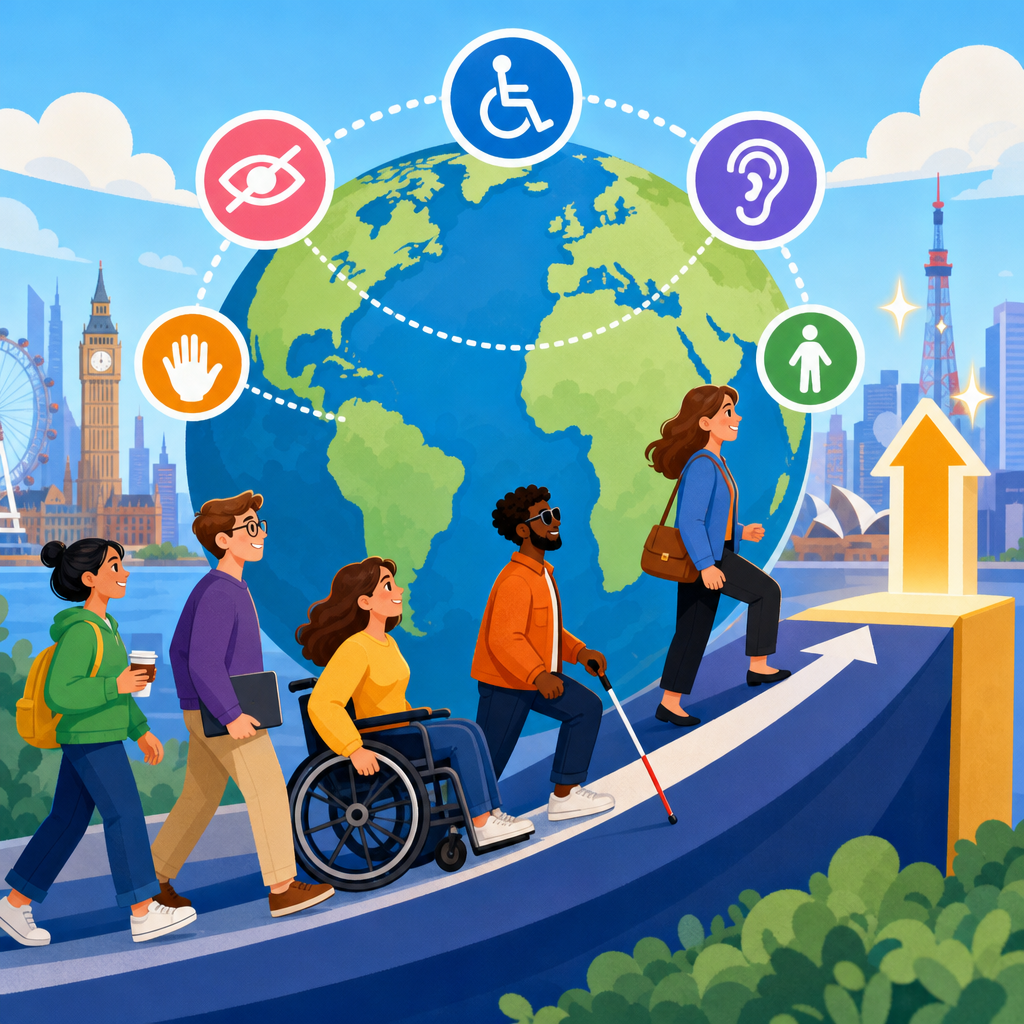
Global accessibility laws are no longer a niche compliance issue; they are reshaping how U.S. companies design websites, software, customer service, employment practices, and physical spaces. Accessibility means removing barriers that prevent people with disabilities from using products, services, information, and environments on equal terms. Disability rights law turns that principle into enforceable obligations through standards, complaint systems, procurement rules, and court decisions. For U.S. businesses, the central question is no longer whether global accessibility rules matter, but how quickly those rules will raise expectations across markets, supply chains, and boardrooms.
I have worked with organizations that first treated accessibility as a domestic legal risk, usually tied to Americans with Disabilities Act website claims, then realized their global operations created a much broader duty. A product team might launch in the European Union, sell software to Canadian public agencies, outsource support to India, and recruit employees in the United Kingdom. In practice, that means one inaccessible checkout flow, PDF, kiosk, or video captioning process can create problems in multiple jurisdictions at once. The future of global accessibility and disability rights is therefore not abstract. It is operational, commercial, and immediate.
This matters because disability is common, not exceptional. The World Health Organization estimates that about 1.3 billion people, or roughly 16 percent of the global population, experience significant disability. Aging populations, chronic health conditions, and digital dependence are expanding the importance of inclusive design. Accessibility also intersects with language access, mobile usability, temporary impairments, and low-bandwidth conditions. When companies improve keyboard navigation, caption video, simplify forms, or support screen readers, they often improve usability for everyone. That business reality is one reason accessibility is moving from specialist teams into mainstream governance, product management, and procurement.
Globally, the legal baseline has shifted from anti-discrimination principles alone to increasingly technical and measurable requirements. The United Nations Convention on the Rights of Persons with Disabilities established a powerful human rights framework, pushing governments to recognize accessibility as a prerequisite to participation in education, employment, commerce, and civic life. National and regional laws then translated that framework into rules for digital products, transportation, telecommunications, public accommodations, consumer services, and workplace adjustment. For U.S. companies, the practical effect is clear: international law is becoming a forcing function that encourages a single, higher accessibility standard across all operations.
Why global rules are tightening and why U.S. companies cannot ignore them
Global accessibility laws are expanding for three connected reasons. First, disability rights advocacy has become more sophisticated and coordinated. Disabled people and advocacy groups have pushed policymakers to move beyond broad promises toward enforceable standards. Second, digital systems now mediate essential services, from banking and healthcare to hiring and education, so inaccessible technology can lock people out of daily life. Third, governments increasingly use procurement and market regulation to drive change, requiring vendors to meet accessibility criteria before they can sell into public or regulated sectors.
For U.S. companies, this creates direct exposure even when headquarters remain domestic. A SaaS vendor serving universities may need to satisfy European Accessibility Act requirements through distributors or clients. A manufacturer selling connected devices abroad may need accessible instructions, support interfaces, and companion apps. A retailer operating globally must think about accessible e-commerce, payment flows, customer support chat, and returns processes. Accessibility is also showing up in merger diligence, insurer questionnaires, enterprise security reviews, and vendor assessments. Once procurement teams add accessibility language to contracts, legal pressure turns into a recurring revenue issue.
Another reason companies cannot ignore these laws is standard convergence. Different jurisdictions use different statutes, regulators, and remedies, but many point toward similar technical benchmarks, especially the Web Content Accessibility Guidelines. That does not mean every law is identical. It does mean businesses can no longer claim they have no practical roadmap. In my experience, the companies that move fastest are those that stop treating each country as an isolated compliance project and instead build one durable accessibility program that can absorb local differences without reinventing every process.
The legal frameworks shaping the next decade
The next decade will be shaped by a mix of international principles and hard-edged regional mandates. The Convention on the Rights of Persons with Disabilities remains foundational because it frames accessibility as a rights issue rather than a discretionary feature. In Europe, the European Accessibility Act is especially important because it extends accessibility requirements across a range of products and services, including e-commerce, banking, e-books, consumer devices, and certain transport-related services. It pushes member states toward harmonized obligations, making accessibility a condition of market participation rather than a best practice.
Other jurisdictions are also influential. Canada’s Accessible Canada Act and provincial rules, including the Accessibility for Ontarians with Disabilities Act, have advanced structured compliance planning and reporting. The United Kingdom’s Equality Act, public sector accessibility regulations, and procurement expectations continue to shape supplier behavior. Australia, New Zealand, Japan, Israel, and parts of Latin America have each developed meaningful accessibility requirements through anti-discrimination law, digital service policies, telecommunications rules, or case law. In many places, public procurement has become the hidden engine of change because vendors must document accessibility to win contracts.
U.S. companies should watch standards as closely as statutes. WCAG 2.1 AA remains the most commonly cited benchmark in policies, settlements, and procurement language, while WCAG 2.2 adds criteria that affect focus appearance, drag interactions, and target size considerations. EN 301 549 is crucial in Europe because it translates accessibility expectations into a procurement-oriented technical standard covering ICT products and services. For mobile software, native accessibility APIs on iOS and Android are not optional implementation details; they are the practical path to compliance. Companies that understand these named standards can align engineering, design, QA, and legal teams around shared requirements.
| Framework or Standard | Why It Matters | Common Business Impact |
|---|---|---|
| Convention on the Rights of Persons with Disabilities | Global rights framework influencing national laws | Raises baseline expectations for equal access |
| European Accessibility Act | Applies accessibility rules across EU markets | Forces product and service redesign for cross-border sales |
| Accessible Canada Act and AODA | Requires planning, reporting, and accessible service delivery | Impacts public sector sales and employment practices |
| WCAG 2.1/2.2 AA | Most widely referenced technical benchmark for digital access | Shapes design systems, audits, and remediation roadmaps |
| EN 301 549 | Key European ICT accessibility standard | Drives procurement eligibility and documentation needs |
How international pressure changes U.S. corporate behavior
Global accessibility pressure changes behavior through product decisions, not just legal memos. I have seen companies begin with a lawsuit response mindset, then change course once international customers ask for VPATs, accessibility conformance reports, captioning policies, and evidence of testing with assistive technology. A single request from a multinational client can trigger design system upgrades, procurement controls, and release gating for every product team. That is how global rules raise the bar in the United States: they make accessibility part of normal business qualification, similar to privacy, security, and quality assurance.
One major effect is earlier integration. Instead of auditing a site after launch, mature teams now include accessibility acceptance criteria in user stories, Figma component libraries, automated testing pipelines, and manual QA scripts. They test with screen readers such as JAWS, NVDA, and VoiceOver; verify keyboard access; check color contrast; validate heading structure; and review dynamic content announcements. They also train content teams to write meaningful alt text, use plain language, and avoid inaccessible PDFs when HTML will do. These changes happen because retrofitting globally distributed products is expensive, slow, and reputationally damaging.
International pressure also reaches beyond customer-facing websites. Human resources systems, onboarding portals, learning platforms, collaboration tools, call center workflows, and internal dashboards all matter because employment law and workplace equality obligations are tightening in many countries. If a company cannot hire, train, or promote disabled employees effectively, it faces legal and talent risks. The same is true for physical environments. Global hotel brands, retailers, and manufacturers are increasingly expected to align digital accessibility with wayfinding, signage, service counters, and reasonable accommodation procedures.
The business case beyond legal compliance
Accessibility is often discussed through legal exposure, but the stronger long-term case is commercial resilience. Disabled consumers represent substantial spending power, and accessibility improvements reduce friction for older adults, multilingual users, and people navigating temporary limitations. In e-commerce, inaccessible forms, unlabeled buttons, and motion-heavy interfaces directly hurt conversion. In enterprise software, inaccessible dashboards slow employee productivity and create support burdens. In media, poor captioning reduces engagement in sound-off environments. These are not side effects. They are measurable performance issues that accessibility work can improve.
There is also a governance benefit. Companies that build strong accessibility programs usually get better at cross-functional execution. They create inventories of digital assets, clarify ownership, improve documentation, standardize components, and connect legal expectations to engineering tasks. Those same disciplines help with privacy, cybersecurity, and product quality. I have repeatedly seen accessibility become the catalyst for better release management because it forces teams to define what “done” actually means. That operational maturity matters when companies expand internationally and need consistent evidence that controls are working.
Investors and enterprise buyers are paying more attention as well. Accessibility can affect environmental, social, and governance narratives, though smart companies avoid treating it as branding alone. Procurement teams increasingly ask whether vendors have an accessibility statement, an audit cadence, trained staff, and a remediation path. Some buyers request a VPAT based on the Voluntary Product Accessibility Template using WCAG and Section 508 mappings. If a supplier cannot produce credible documentation, the deal may stall. In that sense, global disability rights norms are not merely pushing U.S. companies to avoid harm; they are shaping who gets access to growth markets.
What future leaders will do differently
The companies that lead in the future of global accessibility and disability rights will move from reactive fixes to governed systems. They will assign executive ownership, usually across legal, product, HR, procurement, and operations rather than leaving accessibility inside one digital team. They will maintain a policy anchored in recognized standards, build accessible design systems, require vendor accessibility commitments, and budget for ongoing testing. They will also involve disabled people directly through research, usability testing, and employee resource groups, because conformance alone does not guarantee a usable experience.
Future leaders will be realistic about automation. Automated scanners such as axe, WAVE, Lighthouse, and Siteimprove are useful for catching missing labels, contrast issues, and structural errors at scale, but they cannot determine whether alt text is meaningful, whether focus order is logical, or whether a checkout flow is understandable with a screen reader. Manual expert review and testing by disabled users remain essential. The strongest programs combine automation, human auditing, defect tracking, and executive reporting. They treat accessibility debt the way security teams treat vulnerability management: continuously, visibly, and with deadlines.
They will also prepare for accessibility in artificial intelligence, immersive interfaces, and global customer support. AI-driven chatbots must work with assistive technology and offer escalation paths. Automated captioning needs quality controls. Voice interfaces must account for speech variability and provide alternatives. Virtual and augmented reality systems will face increasing scrutiny around motion sensitivity, navigation, captioning, and controller alternatives. The core principle will remain stable even as technology changes: if a product becomes more essential, regulators and customers will expect it to become more accessible.
Will global accessibility laws raise the bar in the United States?
Yes. Global accessibility laws will push U.S. companies to raise the bar because multinational commerce rewards consistency, and consistency is easiest to achieve by adopting a higher common standard. Companies rarely maintain one accessible product for Europe, another for Canada, and a lower one for the United States over the long term. The cost, complexity, and reputational risk are too high. Instead, international obligations tend to pull U.S. operations upward, influencing product roadmaps, contract terms, hiring systems, training, and leadership accountability. That pattern is already visible in technology, retail, hospitality, education, finance, and manufacturing.
The important nuance is that law alone will not create full inclusion. Enforcement remains uneven, small businesses face resource constraints, and some organizations still confuse statements of intent with operational change. Yet the direction is unmistakable. Accessibility is becoming a market expectation backed by rights-based regulation, technical standards, and procurement leverage. For U.S. companies, the practical move is to act before pressure arrives through a complaint, a lost contract, or a blocked market entry. Build one credible global accessibility program, measure it, and improve it continuously. That is how organizations reduce risk, serve more people, and compete effectively in the next era of disability rights.
Frequently Asked Questions
1. Why are global accessibility laws becoming so important for U.S. companies?
Global accessibility laws matter more than ever because many U.S. companies no longer operate only within the United States. They sell products internationally, hire across borders, run global websites and apps, and serve customers in multiple markets at once. As a result, they are increasingly exposed to accessibility rules from the European Union, Canada, the United Kingdom, Australia, and other jurisdictions that treat disability access as a legal requirement rather than a best-effort goal. These laws can apply through direct regulation, public procurement requirements, consumer protection rules, employment standards, and digital product expectations tied to market access.
What makes this especially significant is that accessibility is no longer viewed as a narrow technical issue. Regulators and courts are treating it as a core civil rights and equal access obligation. That means a company may need to think about accessibility across its website design, mobile apps, software interfaces, kiosks, PDFs, video content, customer support systems, hiring processes, workplace accommodations, and even physical locations. In practical terms, global laws are raising expectations for what “usable by everyone” should look like, and they are pushing companies to build accessibility into products and operations from the start.
For U.S. businesses, this creates both risk and opportunity. The risk is straightforward: noncompliance can lead to complaints, lawsuits, blocked sales opportunities, procurement disqualification, reputational damage, and expensive retrofits. The opportunity is just as important: companies that build strong accessibility programs can improve user experience, reach more customers, strengthen brand trust, and create systems that work better for everyone. In that sense, global accessibility laws are not just external pressure. They are becoming a benchmark for modern business quality, inclusion, and market readiness.
2. Could international accessibility standards actually influence how U.S. companies design websites and software?
Yes, and in many cases they already are. Even when a U.S. company is not directly headquartered under a foreign legal regime, international rules can shape internal design decisions because companies want one product standard that works across markets. Maintaining separate versions of a website, app, or software platform for different countries is expensive, complicated, and risky. That is why many organizations adopt a common accessibility baseline, often aligning with widely recognized standards such as the Web Content Accessibility Guidelines, or WCAG, across their global digital ecosystem.
This influence shows up in practical design choices. Teams begin paying more attention to keyboard navigation, screen reader compatibility, color contrast, captions and transcripts, accessible forms, error identification, document structure, responsive layouts, and consistent navigation. Product managers may add accessibility checkpoints to release cycles. Design systems may include accessible components by default. Procurement teams may require vendors to demonstrate conformance. Quality assurance teams may test with assistive technologies rather than relying only on visual review. Once these practices become embedded, they tend to affect the entire product, including what U.S. users experience.
International standards also influence software development culture. Instead of treating accessibility as a legal patch after launch, companies start to see it as part of secure, scalable, professional product development. That shift matters because accessibility defects are often easier and cheaper to prevent than to fix later. In effect, global legal pressure can accelerate better engineering discipline inside U.S. companies. So while the exact legal trigger may come from outside the United States, the resulting design improvements often become enterprise-wide and permanent.
3. Will global accessibility laws raise the bar beyond what U.S. law already requires?
In many situations, yes. U.S. law already imposes important accessibility obligations, especially through disability rights statutes, employment protections, and public accommodation principles. But global laws may push companies toward more explicit, more standardized, and more proactive compliance models. Some international frameworks are highly detailed about digital accessibility, procurement documentation, product lifecycle obligations, reporting expectations, and technical standards. That level of specificity can force companies to move beyond vague commitments and adopt measurable accessibility processes.
For example, a company may have historically focused on reacting to complaints under U.S. law. Under stronger global expectations, that same company may need to document accessibility features, test products before release, train staff, respond to accessibility feedback through formal channels, and verify vendor compliance. Instead of waiting for a lawsuit or accommodation request, businesses may be expected to anticipate barriers and remove them systematically. That is a meaningful shift in mindset: from reactive compliance to preventive design and operational accountability.
Raising the bar also means broadening the scope of what counts as accessibility. It is not only about websites. It can include onboarding portals for job applicants, internal HR platforms, customer support chat tools, electronic documents, self-service technologies, public-facing kiosks, e-commerce checkout flows, and hybrid physical-digital experiences. In short, global laws may not replace U.S. requirements, but they can intensify them by making accessibility more structured, more visible, and harder to ignore.
4. What business areas are most likely to be affected if U.S. companies respond seriously to global accessibility laws?
The impact is likely to be broad, because accessibility touches nearly every function that shapes how people interact with a company. Digital teams are often affected first, especially those responsible for websites, mobile apps, software platforms, online forms, video content, and downloadable documents. Marketing departments may need to rethink campaign assets, email templates, social media content, and multimedia materials so they are accessible to people using assistive technology or alternative input methods.
Human resources and talent acquisition are also major areas of impact. If a company hires globally or uses digital systems for recruiting and onboarding, accessibility becomes critical in job postings, application portals, assessments, interview processes, training platforms, and workplace accommodation systems. Accessibility in employment is not just about avoiding legal claims; it directly affects whether qualified candidates and employees with disabilities can participate equally in the workplace. That can influence retention, morale, and the company’s reputation as an employer.
Customer service is another high-exposure area. Accessible contact methods, relay-compatible communication, captioned support content, readable help documentation, and usable chatbot or ticketing systems all matter. Product and procurement functions may need to set accessibility requirements for third-party software, hardware, and service providers. Real estate and facilities teams may also face pressure regarding physical access, signage, service counters, event spaces, and the interaction between physical environments and digital tools. Companies that take global accessibility laws seriously usually find that accessibility is not a single department’s issue. It becomes a governance issue that requires coordination across legal, compliance, IT, design, HR, procurement, customer experience, and leadership.
5. How can U.S. companies prepare now if they expect global accessibility laws to keep raising expectations?
The smartest approach is to stop treating accessibility as a narrow legal checklist and start building it into governance, design, procurement, and daily operations. A strong starting point is an accessibility assessment that looks across websites, apps, software, documents, customer workflows, employment systems, and physical touchpoints. Companies need to understand where barriers exist, which legal regimes may apply, how severe the risks are, and which business functions need immediate attention. Without that baseline, accessibility efforts often become scattered and reactive.
From there, companies should establish clear policies and ownership. That may include adopting recognized technical standards, assigning executive and operational responsibility, creating internal testing protocols, training developers and content teams, and incorporating accessibility requirements into contracts with vendors. Businesses should also build feedback and remediation channels so users can report problems and the company can address them efficiently. In many organizations, procurement reform is one of the most important steps because inaccessible third-party tools often create compliance and usability problems throughout the enterprise.
It is also important to involve people with disabilities in testing and decision-making whenever possible. Automated scans are useful, but they do not replace human review and real-world usability testing. Companies that combine legal awareness, technical standards, user input, and cross-functional accountability are usually in a much stronger position than those that wait for complaints. The larger point is simple: if global accessibility laws continue to shape market expectations, the companies that prepare early will be better equipped to reduce risk, improve user experience, and compete in a business environment where accessibility is increasingly seen as a baseline requirement rather than an optional enhancement.