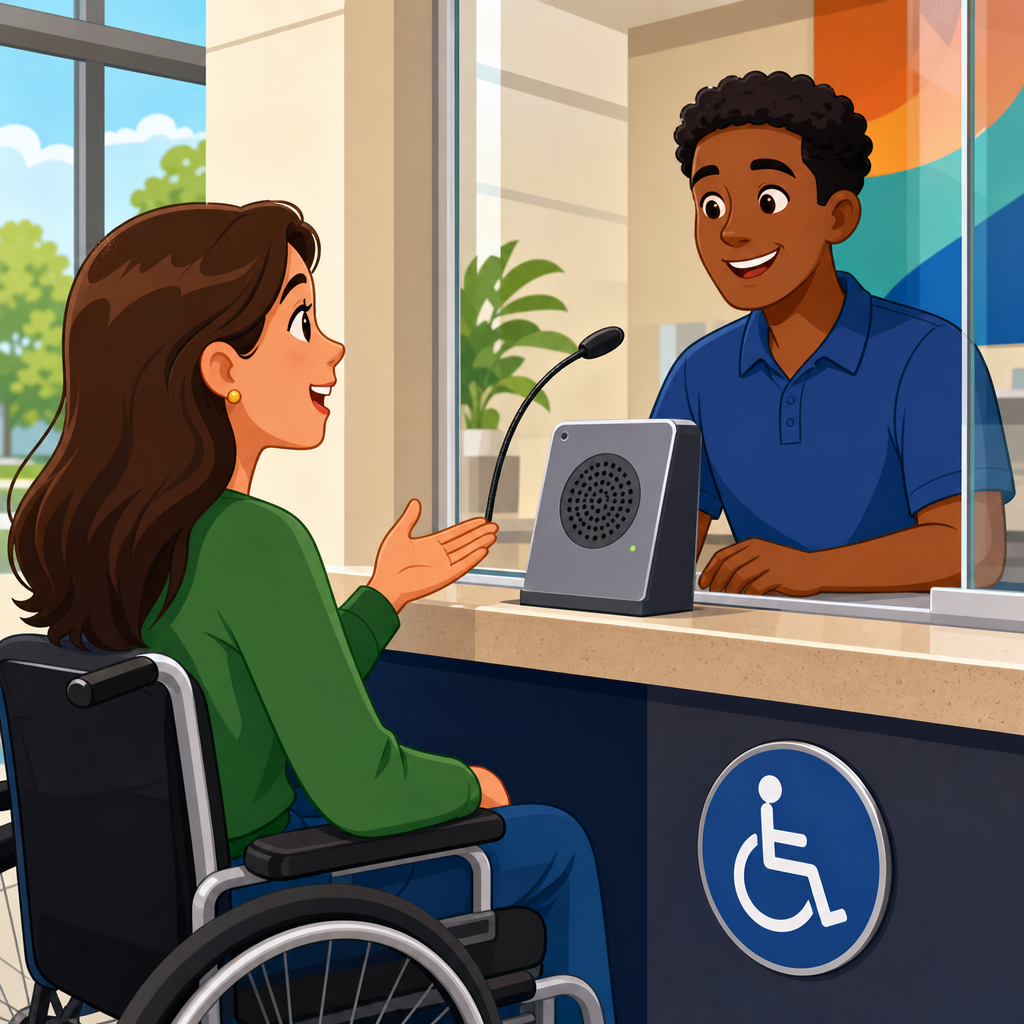
Two-way communication systems under the ADA are the intercoms, call stations, emergency phones, and similar devices that let a person exchange information with someone in another location, and Chapter 7 of ADA Accessibility Standards explains when those systems must be usable by people who are deaf, hard of hearing, blind, low vision, or who have speech disabilities. In practice, this chapter matters most at building entrances, secured lobbies, parking facilities, transit-related spaces, detention settings, and emergency assistance points, where a missed message can block access or put safety at risk. I have worked on accessibility reviews where a property had a sleek video intercom, clear audio, and smartphone forwarding, yet still failed basic accessibility because a visitor who could not hear spoken instructions had no equivalent visual communication path. That gap is exactly what Chapter 7 is meant to prevent.
The key concept is functional equivalence. If a site uses a communication element to grant entry, request help, verify identity, or relay instructions, the same core function must be available to users with different sensory and communication needs. The ADA Standards do not regulate every brand feature or dictate one exact product, but they establish scoping and technical requirements that designers, owners, and inspectors can apply consistently. Chapter 7 works alongside related provisions in the standards, especially rules on operable parts, reach ranges, floor space, signage, and detectable warnings. Understanding that relationship is important because compliance is rarely about one device in isolation; it is about the full user journey from approach and activation to message exchange and outcome.
For owners and project teams, this topic matters for legal compliance, procurement, operations, and risk management. A noncompliant communication system can trigger complaints, retrofits, delayed approvals, and avoidable exclusion of tenants, patients, residents, students, or visitors. For specifiers, the challenge is that manufacturers often market products as ADA compliant without addressing all applicable provisions. For facility managers, maintenance is just as important as selection because a caption display, volume control, or tactile marking that is broken or disabled can undermine an otherwise compliant installation. This hub article explains Chapter 7 comprehensively, defines the major system types, outlines how the requirements are applied, and highlights the design decisions that most often determine whether a two-way communication system under the ADA works in the real world.
What Chapter 7 Covers and When It Applies
Chapter 7 addresses communication elements and features that enable information exchange, notification, or signal transmission within the built environment. In the context of two-way communication systems, the chapter focuses on devices that allow a person at one point to communicate with a person or control point somewhere else. Common examples include entrance intercoms at multifamily housing or office buildings, emergency assistance call boxes in parking garages, area-of-refuge communication stations, and secure visitation or intake communication points. The central compliance question is straightforward: when a communication system is required or provided for use by the public or building occupants, can people with hearing loss or speech disabilities use it effectively and independently?
Application depends on the facility type and the role of the device. If the system is part of an accessible entrance or accessible means of egress, the communication function must support accessible use. If emergency communication is involved, the stakes are higher because the user may be under stress, unable to relocate, or dependent on the device for life safety instructions. In reviews I have conducted, the biggest misunderstanding is assuming that a standard audio intercom becomes compliant merely by mounting it at an accessible height. Height matters, but Chapter 7 goes further by requiring features such as visible signals, text telephone compatibility in specific contexts, volume control or hearing aid compatibility where applicable, and controls identifiable by touch.
Design teams should also understand that the ADA Standards are minimums. Other codes and referenced standards can add obligations. The International Building Code and NFPA 72 may affect emergency communications. The 2010 ADA Standards remain the federal baseline for many facilities, while state accessibility codes can be more stringent. A prudent compliance process compares all governing requirements early, before procurement, because changing a door station after rough-in is far more expensive than specifying the right capability from the start.
Core Requirements for Accessible Two-Way Communication Systems
The ADA does not require every intercom to have every feature, but it does require the communication experience to be accessible where Chapter 7 applies. The most important requirements usually fall into five categories: operable parts, visual and audible indicators, compatibility for people who are deaf or hard of hearing, support for users with speech disabilities, and clear instructions. Operable parts must meet the general accessibility rules for location, force, and usability. That means controls need to be within reach range, usable with one hand, and not require tight grasping, pinching, or twisting of the wrist. These points are often covered elsewhere in the standards, but they directly affect communication devices because many failures occur before communication even begins.
For users who are deaf or hard of hearing, accessible two-way communication often means there must be a nonvoice method or an enhanced voice method, depending on the use case. In some settings, this has historically meant TTY compatibility. In others, it may mean a visual display, real-time text capability, or another equivalent method that allows the message to be conveyed without relying solely on hearing. Visual indicators are equally important. If a system rings, connects, records a call, unlocks a door, or times out, the user needs visual confirmation. Without those cues, a person may not know whether help is on the way, whether they were heard, or whether they should repeat the request.
Users with speech disabilities are frequently overlooked in intercom design. A system that depends on rapid spoken verification can create a barrier even if the audio is loud and clear. Good practice includes allowing extra time, avoiding voice-only menus, and providing alternative response methods such as push-button choices or text display. Instructions should be concise, high contrast, and located where they can be read during use. In field assessments, I look for plain-language labels such as “Press to call security” and “Wait for light before speaking,” because ambiguous icons and unlabeled buttons create needless confusion.
| Requirement area | What compliance looks like | Common failure |
|---|---|---|
| Operable parts | Buttons within reach range and usable without tight grasping | Device mounted too high or with recessed, stiff controls |
| Audible and visual status | Lights or display confirm ringing, connection, and door release | Audio-only feedback with no visible status indication |
| Hearing access | TTY, hearing aid compatibility, amplified audio, or equivalent accessible method as required | Standard speaker and microphone only |
| Speech access | Alternative response path that does not depend entirely on speech clarity | Voice-only verification under time pressure |
| Instructions | Simple, tactile or visual labeling with high contrast | Small print, jargon, or unlabeled call buttons |
Entrances, Lobbies, and Secured Access Points
Entrance intercoms are the most common real-world example of two-way communication systems under the ADA. At a gated site, apartment building, clinic after hours, or office tower with a secured vestibule, the intercom often functions as the gatekeeper to the entire facility. If a visitor cannot use it, the accessible route effectively ends at the door. A compliant design starts with the basics: clear floor space at the device, accessible height, glare-resistant placement where possible, and visible call status. But the stronger designs go further, pairing audio with text or video instructions and ensuring the remote responder is trained to use the accessible features.
Video intercoms can help users who communicate by lip reading or sign, but video alone does not solve accessibility. Camera angle, lighting, screen size, latency, and bidirectional visibility all affect usability. I have seen systems installed with the screen so high that wheelchair users could not easily see the image, and others with strong backlighting that turned the remote speaker into a silhouette. If video is part of the solution, it has to be deployed thoughtfully. For hearing aid users, an integrated induction loop or other hearing aid-compatible path can greatly improve clarity in noisy vestibules. For deaf users, visible text prompts or live text conversation features are more dependable than audio relay through a low-quality speaker.
Another recurring issue is remote door release without confirmation. The person answering the intercom may press unlock, but if there is no visible sign that the door is released, the visitor may assume the call failed. A small illuminated message, countdown indicator, or distinct visual signal solves this problem and benefits everyone, not only disabled users. That is a recurring theme in Chapter 7: accessibility features generally improve universal usability, reduce failed interactions, and shorten support calls.
Emergency, Area-of-Rescue, and Assistance Communication
Emergency communication points demand the highest level of care because they are used under pressure and often by people who cannot simply choose another route. Area-of-rescue or area-of-refuge systems, emergency help stations, and assistance call boxes must allow a stranded or threatened person to contact staff and receive intelligible instructions. In these settings, accessibility is inseparable from life safety. A user may need confirmation that the call connected, information about when help will arrive, and updates if conditions change. Audio-only communication is often inadequate for users who are deaf or have significant hearing loss, especially in noisy garages, smoky corridors, or outdoor campuses.
Best practice is to provide both audible and visible communication states: call initiated, call received, connection active, help on the way, and call ended. Where TTY is required by applicable standards, it must actually function with the installed system, not merely be listed on a submittal. I have tested systems where a manufacturer claimed compatibility, but the line settings or digital conversion prevented usable communication. Commissioning should include real device-to-device testing, not paper review alone. Emergency devices should also have durable instructions and be protected from glare, vandalism, and environmental exposure, because weathered labels and dim indicators become critical failures when the device is needed most.
Response procedures matter as much as hardware. If the receiving station is staffed by personnel who speak over the user, disconnect quickly, or do not understand the visual indicators, the accessible design fails operationally. Facilities should script brief, plain-language responses, train staff to pause for delayed input, and document backup procedures for outages. An accessible emergency communication system is a combination of compliant equipment, verified performance, and disciplined operations.
Procurement, Installation, and Ongoing Maintenance
Most compliance problems begin in procurement. Product literature often uses broad claims like “ADA-ready,” “accessible mounting,” or “hearing assistance capable,” but those phrases do not prove conformance with Chapter 7 or with related scoping provisions. The specification should identify the exact features needed: tactilely identifiable controls, visual call status, compatible handsets or hearing aid support where relevant, nonvoice communication capability where required, and integration with accessible entrances or egress systems. Submittal review should ask for cut sheets, installation dimensions, user interface details, and documented compatibility with any required communication protocol.
Installation quality is equally decisive. A compliant product becomes noncompliant if mounted outside reach range, placed behind a door swing, exposed to direct sunlight that washes out the display, or connected to a network that introduces severe audio delay. Commissioning should include user-path testing with realistic scenarios: first-time visitor at night, wheelchair user carrying a bag, deaf user relying on visual prompts, person with low vision in bright daylight, and emergency caller under stress. These tests reveal practical issues that drawings miss. In one project review, the intercom met the dimensional criteria, but the speech from the remote desk was unintelligible because the station faced a loud exhaust fan. Rotating the unit and adding acoustic treatment solved the problem before occupancy.
Maintenance keeps the system compliant over time. Lamps fail, touch surfaces wear, firmware changes menus, and staff sometimes disable features they do not understand. A good maintenance plan includes periodic functional testing, cleaning of screens and speaker grilles, verification of labels, battery backup checks where applicable, and logs of corrective actions. For portfolio owners, standardizing on a smaller number of accessible device types simplifies training and replacement. Accessibility is not a one-time purchase; it is an operating condition that must be preserved.
How This Chapter Connects to the Broader Accessibility Program
Chapter 7 is best understood as a hub within the larger ADA Accessibility Standards framework. Two-way communication systems intersect with accessible routes, doors and gates, signage, alarms, assembly spaces, transient lodging, residential facilities, medical environments, transportation-related facilities, and emergency egress planning. That is why compliance teams should treat this chapter as a coordination issue, not a standalone device checklist. A secure entrance intercom may also implicate door maneuvering clearance, vestibule dimensions, accessible hardware, and wayfinding. An assistance call station in a garage may intersect with accessible parking, route continuity, lighting, and emergency procedures. When those pieces are coordinated, the result is smoother access for everyone.
For readers building out a complete compliance program, this chapter naturally leads to related guidance on accessible entrances and doors, operable parts and reach ranges, signage and visual communication, fire alarm notification, and areas of refuge. Those companion topics explain the surrounding conditions that determine whether a communication device is genuinely usable. The main benefit of understanding Chapter 7 comprehensively is that it helps owners stop treating accessibility as a product label and start treating it as a communication experience. Review your entrances, emergency call points, and secured access locations, test them with real users and realistic scenarios, and upgrade any system that depends on hearing or speech alone. That step will reduce barriers, improve safety, and bring your facilities closer to dependable ADA compliance.
Frequently Asked Questions
What does the ADA mean by a two-way communication system?
Under the ADA, a two-way communication system is a device that allows a person in one location to communicate with someone in another location in order to gain access, request assistance, receive instructions, or handle a security or emergency-related interaction. In practical terms, this includes many common devices such as entrance intercoms, video entry stations, emergency call boxes, area-of-rescue communication devices, security desk call stations, and similar systems used in buildings, parking structures, transportation environments, and controlled-access facilities. The key point is that the system is not just broadcasting information one way; it is intended to support an exchange between two people.
Chapter 7 of the ADA Accessibility Standards focuses on making those systems usable by people with hearing, vision, or speech disabilities. That means the system must do more than simply exist. If someone who is deaf or hard of hearing cannot effectively receive the response, if a blind or low-vision user cannot locate or operate the device, or if a person with a speech disability cannot successfully communicate through it, then the system may fail to provide accessible use. ADA compliance in this area is about functional communication, not just hardware installation.
This is why these requirements matter so much at locations where communication is a gateway to entry or safety. Think about a resident or visitor trying to use a building entry intercom, a driver in a parking garage using a help station, or a person in a transit-related space calling for assistance. If the system is the only way to move forward, then accessibility becomes essential to equal access.
Where are two-way communication systems most likely to be required to meet ADA accessibility standards?
These requirements most often come into play wherever a person must use a communication device to access a building, navigate a secured space, request help, or respond during an emergency. Common examples include building entrances with intercoms, secured vestibules and lobbies, parking facilities with help or payment-assistance stations, transportation and transit-related environments, and detention or correctional settings where communication devices are central to movement and safety. In all of these settings, the communication system is often the only link between the user and staff in another location.
The importance of accessibility increases when there is no equivalent alternative. For example, if a visitor can only gain entry to a building by using an intercom panel, that panel must be usable by people with disabilities. The same is true if an emergency phone is the primary method to request assistance in a parking garage or if a call station is the only way to communicate at a secured checkpoint. If the system controls access to services, safety, or participation, ADA usability requirements become highly relevant.
It is also important to remember that the exact compliance analysis depends on the type of facility, whether the work involves new construction, alterations, or barrier removal, and whether other federal, state, or local rules apply. Still, as a practical matter, property owners, architects, security integrators, and facility managers should treat any installed intercom, emergency call device, or similar communication station in a public or common-use setting as something that deserves careful ADA review.
What features make a two-way communication system accessible under the ADA?
An accessible two-way communication system is designed so users with different disabilities can locate it, understand it, operate it, and successfully exchange information through it. That usually means considering several layers of accessibility rather than relying on a single feature. For users who are deaf or hard of hearing, the system may need text-based communication, visual indicators, or other methods that do not depend solely on audible speech. For users who are blind or have low vision, controls need to be identifiable and operable, and the device must be installed where it can be reached and used effectively. For users with speech disabilities, the system should allow communication in a way that does not assume clear spoken responses are the only acceptable form of interaction.
Accessibility also involves installation details. Mounting height, clear floor space, reach ranges, operable parts, visibility, and signage all affect whether a device is truly usable. A perfectly capable intercom can still be inaccessible if it is mounted too high for a wheelchair user, placed where there is no proper approach space, or designed with tiny unlabeled controls that a low-vision user cannot distinguish. ADA compliance is not just about the electronics inside the unit; it includes the full user experience at the point of use.
In many cases, the best approach is to think in terms of equivalent communication. Can the user initiate contact independently? Can the user perceive the response? Can the user send information back in a reliable way? Can the interaction be completed without requiring assistance from a companion or staff member standing nearby? If the answer to any of those questions is no, the system may need additional accessible features or a different design altogether.
Do all intercoms, emergency phones, and call stations have to include text communication?
Not every device is treated identically in every situation, but text communication is a major accessibility issue under Chapter 7 because it can be essential for people who are deaf, hard of hearing, or who have speech disabilities. Where the ADA Standards require a two-way communication system to be accessible to those users, a system that relies only on voice may not be enough. In many real-world settings, text capability is the feature that turns a conventional intercom into a usable accessible communication point.
That said, compliance is not as simple as adding a screen and assuming the job is done. The text interface must itself be usable. It should be readable, responsive, and integrated into the communication flow in a way that allows an actual exchange, not just canned status messages. Users need to know when the other party has answered, how to input text, and how to receive instructions or responses. If the text component is confusing, poorly placed, too small to read, or difficult to activate, it may still fall short from an accessibility standpoint.
Owners and specifiers should also avoid treating text as the only accessibility solution. A compliant system often needs to account for multiple disability groups at once. Someone who is blind may not benefit from a visually oriented text interface alone, and someone with limited dexterity may struggle with small touch targets or keypad layouts. The safest path is to evaluate the intended use case, the applicable standards, and the needs of varied users, then select a communication system that supports accessible, independent, and effective use.
How can building owners and project teams improve ADA compliance for two-way communication systems?
The best starting point is to review every location where a two-way communication device is used for entry, assistance, security, or emergency response and ask a simple question: can a person with hearing, vision, or speech disabilities use this system independently and effectively? That review should cover not only the device model but also the installation conditions, the user interface, the mounting location, and the procedures of the staff who answer the calls. Accessibility failures often happen because teams focus on product specifications while overlooking how the system actually functions in real life.
Project teams should coordinate early among architects, accessibility consultants, low-voltage designers, security integrators, code consultants, and facility operators. That collaboration helps ensure the system meets ADA technical criteria while also fitting the building’s operational needs. For example, an accessible entry intercom is only truly effective if the receiving staff know how to respond through its accessible features and if the communication process does not break down after hours or during emergencies. Training, testing, and maintenance are just as important as initial selection.
Finally, it is wise to document decisions and verify compliance before occupancy. Field conditions matter. A device that appears compliant on paper can become inaccessible if installed at the wrong height, blocked by architectural elements, exposed to glare that makes a screen unreadable, or paired with signage that does not clearly identify its purpose. Regular audits can help owners catch these issues before they become complaints or barriers for users. In short, ADA compliance for two-way communication systems is achieved through thoughtful design, correct installation, and ongoing operational reliability—not through a checkbox approach.