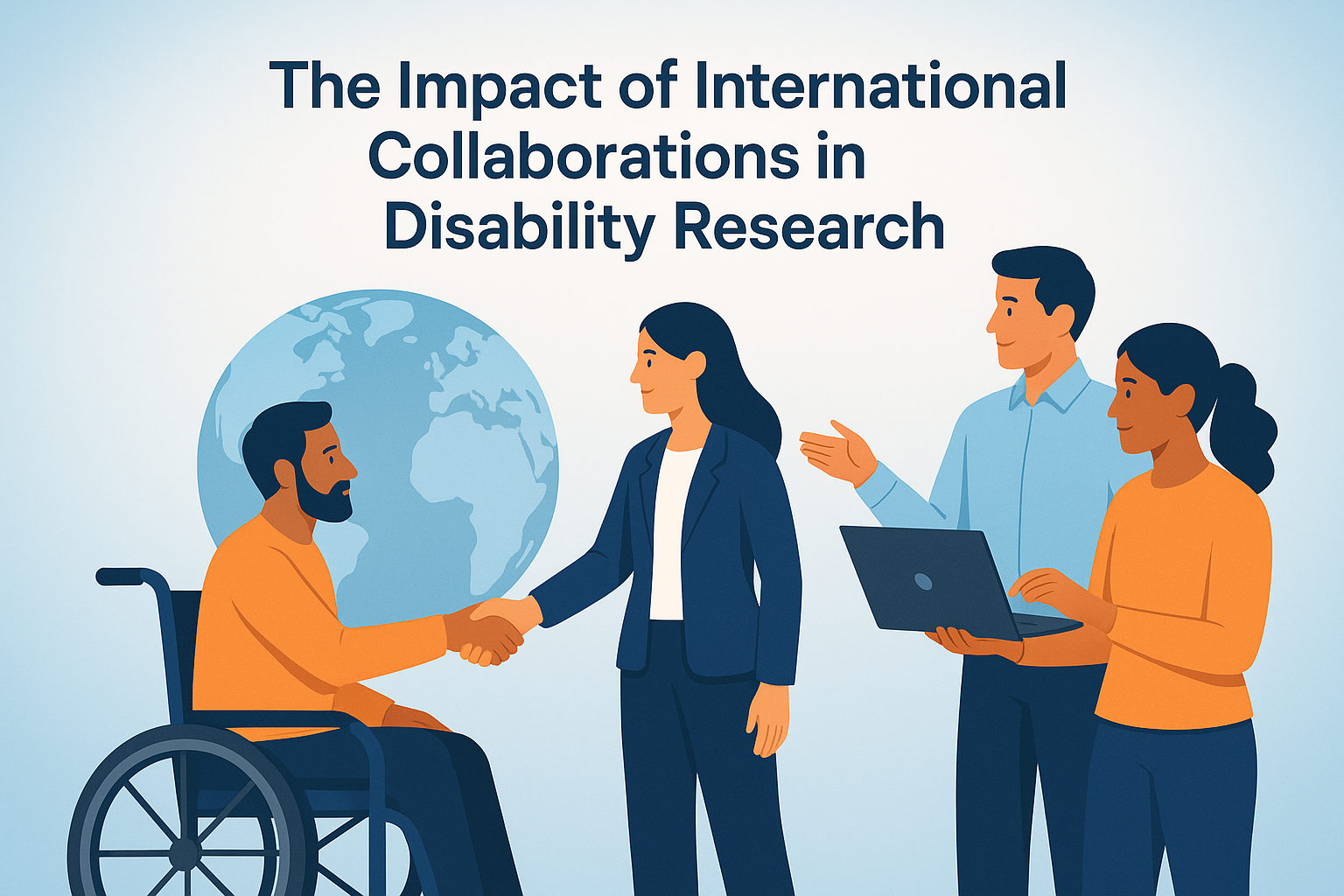
Introduction to Disability Research and Its Significance
Disability research refers to the systematic study of disability and its various dimensions, including health, accessibility, policy, and social integration. It is an interdisciplinary field that draws from multiple areas such as health sciences, social sciences, engineering, and education. This research is crucial as it seeks to understand the challenges faced by individuals with disabilities and find innovative solutions to improve their quality of life.
International collaborations in disability research involve researchers, institutions, and stakeholders from different countries working together. Such collaborations are essential as they bring a global perspective to identifying and addressing the diverse needs of the disabled population. By sharing resources, knowledge, and cultural insights, international collaborations can accelerate the advancement of inclusive practices and policies worldwide.
Furthermore, it matters because disability research helps societies to better cater to an often marginalized and overlooked segment of the population, consequently leading to more inclusive communities. With inclusive research, policies can be tailored to bridge gaps in accessibility and equity, directly impacting people’s well-being on a global scale. Thus, the impact of international collaborations in this field is profound and far-reaching.
The Role of International Collaboration in Enhancing Research Quality
International collaborations significantly enhance the quality of disability research by bringing diverse perspectives that can highlight both universal and culture-specific challenges. In a world where disability rights and conditions vary substantially from one country to another, pooling insights from different regions helps create a more comprehensive understanding of disabilities.
A notable example of this is the collaboration between universities in the United States and Sweden, which examined the differences in accessibility and support for students with disabilities. Through comparative analysis, they were able to identify best practices and areas for improvement in both educational systems. This enabled both countries to refine their policies and make progressive steps toward greater inclusivity in education.
Moreover, international collaborations can lead to more rigorous research methodologies. By involving multiple stakeholders from diverse geographical locations, studies can incorporate a wider range of data sources and methods. This results in findings that are not only statistically robust but also applicable to a broader context, increasing their impact and relevance.
Facilitating Knowledge Exchange and Innovation
One of the most substantial benefits of international collaboration in disability research is the facilitation of knowledge exchange and innovation. By sharing research findings, methodologies, and technological advancements, researchers can collectively advance the field at a faster pace than would be possible in isolation.
An excellent illustration of this is the collaboration between Australia and Japan on developing assistive technologies for the visually impaired. By pooling resources and expertise, the collaboration led to the creation of a cutting-edge navigation device that utilizes artificial intelligence to offer real-time guidance. This innovation not only benefited the two countries involved but also provided a valuable tool that could be adapted and used globally.
Technological advancements stemming from such collaborations can play a crucial role in empowering individuals with disabilities, enabling them to participate more fully in society. The shared knowledge and innovation fostered by international collaborations thus hold the potential for transformative impacts on the lives of people with disabilities everywhere.
Addressing Cultural and Policy Differences
Cultural and policy differences can either hinder or enrich disability research. International collaborations provide the opportunity to address these variances constructively. Understanding diverse cultural beliefs about disability can lead to more culturally sensitive research approaches and solutions.
For instance, a collaboration between India and the United Kingdom focused on mental health disabilities and cultural stigmas. By examining the cultural context in India, researchers developed mental health programs that were culturally considerate, making them more effective and better received by the local population.
Policy differences also offer an opportunity for learning and adaptation. By understanding how different countries manage disability-related policies, stakeholders can identify best practices and adapt them to fit their national context. For example, countries with more advanced disability insurance systems can provide models for other nations to emulate, leading to improved support systems globally.
This kind of constructive dialogue and exchange not only leads to more effective disability research but also encourages international policy harmonization to some extent, paving the way for a more inclusive global society.
Improving Funding and Resource Allocation
Collaborative international networks are often more successful in securing funding from diverse sources. By working together, countries can combine their funding efforts, leading to larger pools of resources earmarked for disability research.
For example, the European Union has been instrumental in creating large-scale, international funding programs dedicated to disability research. Initiatives like Horizon 2020 provided critical funding support for transnational projects, allowing researchers to pursue ambitious investigations that were beyond the scope of individual projects.
Additionally, resource allocation is optimized when expertise and infrastructure are shared internationally. Researchers from countries with less developed research facilities can gain access to cutting-edge technologies and laboratories through collaborative agreements with institutions in more resource-endowed countries.
This not only elevates the standard of research but also builds capacity in less developed regions, creating a ripple effect that enhances global disability research capabilities and outcomes.
| Benefit | Example | Outcome |
|---|---|---|
| Enhanced Research Quality | US-Sweden University Collaboration | Improved Educational Policies |
| Knowledge Exchange and Innovation | Australia-Japan Assistive Tech Partnership | Advanced Navigation Device |
| Addressing Cultural Differences | India-UK Mental Health Study | Culturally Sensitive Programs |
| Improved Funding | EU Horizon 2020 | Large-Scale Projects |
Conclusion: The Road Ahead for Disability Research
The importance of international collaborations in disability research cannot be overstated. By improving research quality, fostering innovation, addressing cultural and policy differences, and enhancing funding opportunities, such collaborations provide a multifaceted approach to advancing the field.
For policymakers, researchers, and organizations involved in disability advocacy, understanding and leveraging the benefits of international partnerships can be pivotal. It is crucial for stakeholders to continue building and nurturing these relationships, ensuring that they evolve to meet emerging challenges and opportunities in the field.
As a call to action, readers involved in disability research or advocacy are encouraged to explore potential international partnerships, seek collaborative projects, and promote a culture of global exchange. By working together, we can create a more inclusive, accessible, and equitable world for all.
The journey of disability research is ongoing, and international collaborations will be instrumental in navigating the path forward, ultimately transforming conditions and perceptions of disability worldwide.
Frequently Asked Questions
1. What is the significance of international collaborations in disability research?
International collaborations in disability research are extremely significant because they bring together diverse perspectives, resources, and expertise from across the globe to tackle the multifaceted challenges faced by individuals with disabilities. Such collaborations enable researchers to cross geographical and cultural boundaries, leading to a more comprehensive understanding of disability issues, which are invariably influenced by cultural, social, and policy contexts. By pooling resources and knowledge, these collaborations enhance the capacity to develop innovative, inclusive, and universally applicable solutions. Additionally, international partnerships often pave the way for the harmonization of disability policies and standards across nations, promoting greater accessibility and integration for individuals with disabilities worldwide.
2. How do international collaborations enhance the quality and scope of disability research?
International collaborations significantly enhance the quality and scope of disability research in numerous ways. Firstly, by involving researchers from diverse backgrounds, they ensure a broad spectrum of methodologies and theoretical frameworks, which enriches the research process and outcomes. Such diversity leads to more robust and generalizable findings that can be adapted to various contexts. Furthermore, international collaborations facilitate the sharing of data, tools, and technology, including access to state-of-the-art laboratories and equipment, which may not be available in certain regions. This exchange fosters innovation and accelerates the research process. Moreover, collaborations often involve cross-cultural studies, which are critical for understanding how different environments impact disability and accessibility. As a result, these partnerships help to formulate solutions that are culturally sensitive and inclusive, greatly benefiting the global disability community.
3. What challenges do researchers face when engaging in international collaborations in disability research?
While international collaborations in disability research offer numerous benefits, they are not without challenges. One major challenge is the coordination and communication across different time zones, which can complicate scheduling meetings and project timelines. Language barriers may also impede effective communication and understanding among international teams, necessitating additional resources such as translation services. Cultural differences can present challenges too, particularly when it comes to differing values, research ethics, and methodologies. Additionally, varying levels of technological infrastructure and funding can impact research progress. There may also be legal and regulatory hurdles when sharing data across borders, including concerns about privacy and data protection. Despite these challenges, with effective strategies and commitment, researchers can overcome these obstacles to achieve meaningful collaboration.
4. Can you provide examples of successful international collaborations in disability research?
Absolutely. One successful example of international collaboration in disability research is the World Health Organization’s International Classification of Functioning, Disability, and Health (ICF) project. This project involved researchers from numerous countries working together to create a comprehensive framework for measuring health and disability. It’s now used worldwide to assess and compare health and disability data. Another example is the Global Research on Disability (GRoD) consortium, which involves partners from several continents working collaboratively on issues such as inclusive education, assistive technology development, and disability-inclusive development policies. These collaborations have resulted in groundbreaking research outputs, policy recommendations, and practical solutions that have been implemented at both local and global levels. Through these joint efforts, international collaborations significantly advance the field of disability research and lead to positive changes for individuals with disabilities everywhere.
5. How can stakeholders benefit from international collaborations in disability research?
Stakeholders, including policymakers, healthcare providers, educators, and individuals with disabilities, can greatly benefit from international collaborations in disability research. For policymakers, these collaborations offer access to a wealth of evidence-based research findings that can inform the development of more effective and inclusive policies. Healthcare providers can adopt best practices from other countries, leading to improved care and support for individuals with disabilities. Educators can learn about inclusive teaching techniques and strategies from international research, enhancing their ability to accommodate diverse learners. Most importantly, individuals with disabilities stand to benefit the most, as international research collaborations often lead to the development of products, services, and policies that improve accessibility, quality of life, and social participation. By integrating global perspectives into local contexts, stakeholders can ensure that their efforts are aligned with cutting-edge research and are inclusive of the diverse needs of the disability community.