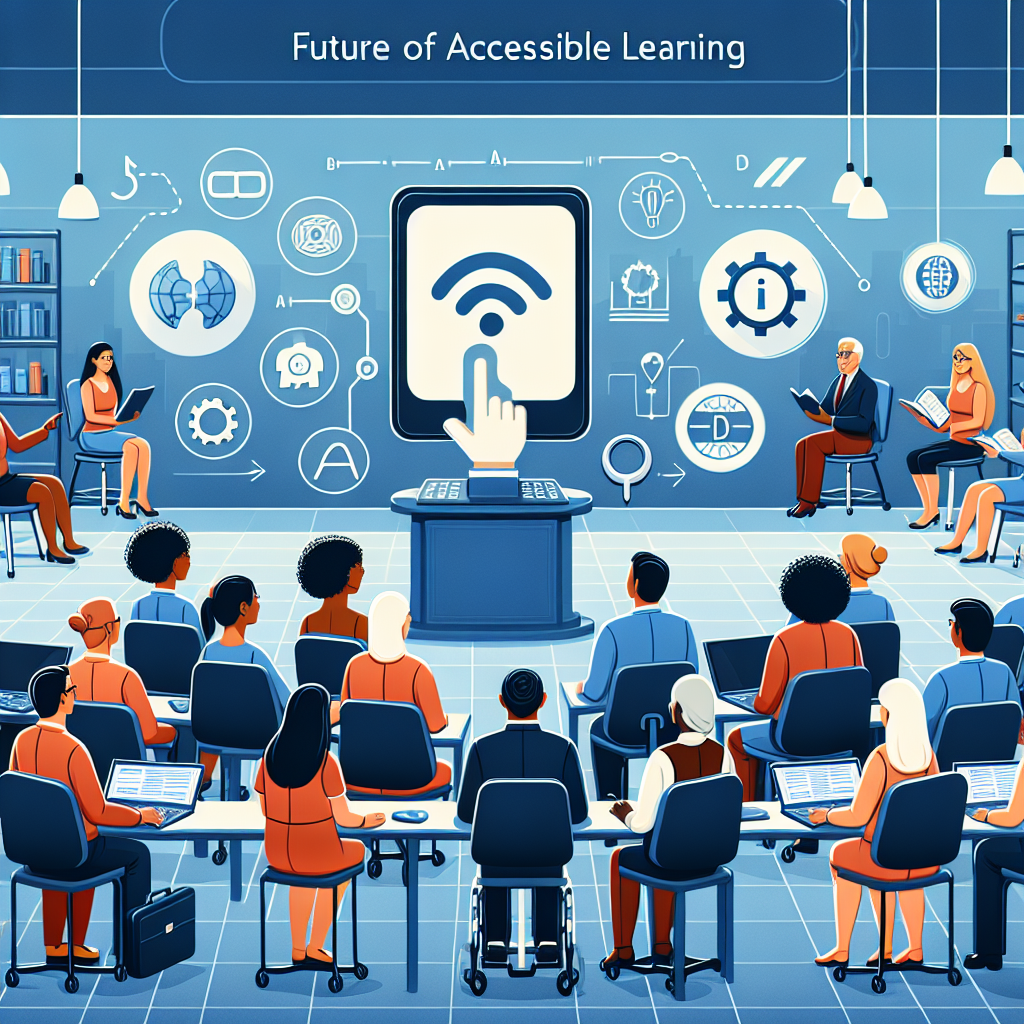
The Americans with Disabilities Act (ADA) stands as a cornerstone in the fight for equality and accessibility for individuals with disabilities in the United States. Since its enactment in 1990, the ADA has played a crucial role in ensuring that people with disabilities can access public services, participate in the workforce, and enjoy equal rights and opportunities. As technology continues to evolve, so does the need for accessibility, particularly in the realm of e-learning platforms. E-learning has revolutionized education, providing learners with the flexibility to access knowledge from virtually anywhere. However, this digital shift also presents challenges in ensuring that these platforms are accessible to everyone, regardless of their abilities. This article delves into the recent developments in technology and accessibility, shedding light on the future of accessible learning and how ADA compliance is shaping e-learning platforms.
Understanding ADA Compliance in E-Learning
The ADA mandates that electronic and information technology be accessible to people with disabilities. This includes websites, online courses, and learning management systems (LMS). For e-learning platforms, ensuring ADA compliance means providing course materials, videos, quizzes, and other online content in accessible formats. The goal is to design e-learning experiences that are inclusive, allowing students with varying needs—such as visual, auditory, or physical impairments—to fully participate. Institutions and companies offering e-learning solutions must consider a wide range of accessibility features. These can include providing screen reader compatibility, ensuring keyboard navigability, using captions and audio descriptions for video content, and offering alternative text for images. Adhering to these standards not only makes educational platforms more inclusive but also opens them up to a broader audience, enhancing learning outcomes for all students.
Technological Advancements Driving Accessibility
Technological advancements are continuously reshaping the landscape of e-learning. Innovations such as artificial intelligence (AI), virtual reality (VR), and augmented reality (AR) are paving the way for more immersive and personalized learning experiences. When these technologies are harnessed with an eye toward accessibility, they can significantly enhance learning for students with disabilities. For instance, AI-driven tools can provide real-time transcription services for live lectures, making it easier for deaf or hard-of-hearing students to follow along. Similarly, VR and AR can create interactive simulations that cater to different learning needs, including customizable interfaces for students with mobility or cognitive challenges. As these technologies continue to mature, their integration into e-learning platforms holds enormous potential for creating more engaging and accessible learning environments.
The Role of Universal Design in E-Learning
Universal Design for Learning (UDL) is a framework aimed at creating educational environments that accommodate the diverse needs of learners. The idea is to develop flexible learning experiences that provide various ways of engagement, representation, and expression. By incorporating UDL principles, e-learning platforms can better adhere to ADA guidelines while fostering a more inclusive educational setting. UDL encourages the use of multiple means of representation, such as text, audio, and visuals, to cater to different learning preferences. It also suggests offering multiple forms of engagement, such as interactive activities, to motivate learners with different interests. Furthermore, providing various means of expression allows students to demonstrate their knowledge in ways that suit their abilities and preferences. By embedding UDL principles into their design, e-learning platforms can not only meet legal accessibility requirements but also enhance the educational experiences for all users.
Challenges in Implementing ADA in E-Learning
Despite the clear benefits of making e-learning platforms accessible, there are significant challenges involved in implementing ADA compliance. One major obstacle is the lack of awareness or understanding of ADA requirements among developers and educators. This can result in poorly designed systems that inadvertently exclude students with disabilities. Another challenge lies in the financial and resource constraints faced by educational institutions. Ensuring accessibility often requires a significant investment in terms of time, money, and expertise. Educators and administrators need to be trained on the importance of accessibility, which can be a daunting task without proper support and resources. Furthermore, the constantly evolving nature of technology means that maintaining accessibility is an ongoing process, with platforms needing regular updates and assessments to remain compliant.
Case Studies: E-Learning Platforms Advancing Accessibility
Several e-learning platforms have taken significant strides in advancing ADA accessibility. For example, Coursera, one of the world’s largest online learning platforms, has implemented a range of accessibility features to enhance the learning experience for users with disabilities. These include screen reader support, keyboard navigation, and closed captions for their video content. Similarly, platforms like LinkedIn Learning and Khan Academy have prioritized accessibility by offering transcript options and ensuring their content is compatible with assistive technologies. These case studies highlight that with the right commitment and investment, e-learning platforms can make substantial progress toward creating inclusive educational environments. By analyzing these examples, other platforms can glean insights into effective strategies and practices for integrating accessibility features into their courses and interfaces.
Conclusion: The Future of Accessible E-Learning
The future of e-learning promises a more inclusive educational landscape where students with disabilities have equal opportunities to participate and thrive. As advancements in technology continue to open new possibilities, the integration of ADA compliance into e-learning platforms should be at the forefront of educational innovation. The combination of ADA guidelines, technological advancements, and frameworks like Universal Design for Learning will be instrumental in shaping platforms that are not only accessible but also enriching and engaging for all learners. This forward-thinking approach will require collaboration among developers, educators, policymakers, and advocacy groups to ensure that accessibility remains a priority in the digital education sector. As institutions and platforms embrace this vision, the possibility of a future where all learners, regardless of their abilities, can access high-quality educational resources is within reach.
Frequently Asked Questions
1. What is ADA accessibility, and why is it important for e-learning platforms?
ADA accessibility refers to the compliance with the Americans with Disabilities Act, ensuring that all people, irrespective of their physical or cognitive capabilities, have equal access to digital content. This is crucial because e-learning platforms, by their very nature, should provide an inclusive environment where individuals can pursue education and professional growth without facing barriers. As education increasingly shifts to online platforms, there’s a growing imperative to ensure these platforms are designed to cater to everyone, including those with disabilities. This means incorporating features like screen reader compatibility, keyboard navigability, and closed captioning in video content to accommodate the widest array of needs. Beyond legal compliance, prioritizing ADA accessibility is a moral obligation that aligns with the values of equality and inclusivity.
2. How have e-learning platforms evolved to incorporate accessibility features?
Over the years, e-learning platforms have significantly evolved to include an array of accessibility features. Initially, these platforms were quite basic, focusing mainly on delivering content without much thought for universal design. However, as awareness around disability rights has grown, there has been a concerted push towards designing courses that everyone can access. Today, many platforms include features like adjustable text sizes, color contrast customization, voiceover and screen reader compatibility, and transcripts for audio content. Developers also embed focus indicators and keyboard shortcuts to navigate online environments with ease. Moreover, with advances in technology, there’s ongoing research and development aimed at integrating more sophisticated tools like AI-driven content personalization that adapts to the unique needs of each user. As the drive for inclusivity becomes more entrenched in digital practices, we can expect even more innovations tailored to enhance ADA accessibility in e-learning.
3. What challenges do developers face in making e-learning platforms ADA compliant?
Developers often encounter multiple challenges when striving to make e-learning platforms ADA compliant. Firstly, there is the complexity of the compliance guidelines themselves. While there are established standards, such as the Web Content Accessibility Guidelines (WCAG), interpreting and implementing these guidelines can be intricate given the variety of disabilities involved. Additionally, retrofitting an existing platform for accessibility can be resource-intensive and may require significant redesigns. Another hurdle is the lack of awareness or understanding of accessibility needs among many developers, which can lead to unintentional oversights. Furthermore, ensuring accessibility can sometimes be erroneously perceived as sacrificing design aesthetics or user experience, even though well-implemented accessibility enhances usability for all. Developers must also stay updated with rapid technological changes and evolving best practices for accessibility. Despite these challenges, ongoing training, community support, and leveraging emerging technologies can enable developers to better integrate ADA-compliant features.
4. Are there any legal implications if an e-learning platform is not ADA compliant?
Yes, there are significant legal implications for e-learning platforms that fail to comply with ADA standards. Under the ADA, digital platforms are considered places of public accommodation, and thus, they are legally obligated to be accessible to people with disabilities. Non-compliance can lead to lawsuits, which have been on the rise as more individuals become aware of their digital rights. Such legal actions can be costly, not just in terms of financial penalties and legal fees, but also in reputational damage, which could diminish user trust and affect customer relationships. Additionally, failing to adhere to ADA standards can restrict market reach and competitiveness, as inaccessible platforms alienate potentially large user segments. To mitigate these risks, organizations are increasingly investing in thorough accessibility audits, regular compliance updates, and an organizational culture that prioritizes inclusion as a fundamental ethos.
5. What are the future trends in ADA accessibility for e-learning platforms?
The future of ADA accessibility in e-learning platforms is headed toward greater personalization and tech-driven innovation. One major trend is the integration of artificial intelligence (AI) to create adaptive learning environments that automatically adjust content presentation based on user needs. Machine learning algorithms can be trained to detect accessibility gaps and suggest modifications, ensuring a dynamic and responsive learning experience. Moreover, the use of virtual and augmented reality in e-learning poses exciting opportunities to develop immersive, accessible simulations that cater to diverse learning styles. There’s also an increasing focus on universal design, moving beyond mere compliance to enhance usability for all users, regardless of disability status. Additionally, mobile accessibility is becoming a pivotal concern as more learners access educational content via smartphones and tablets. As educational providers recognize the advantages of inclusivity – from ethical responsibility to broader engagement and retention rates – we can expect continued advancements in making e-learning platforms more accessible and empowering for everyone.


