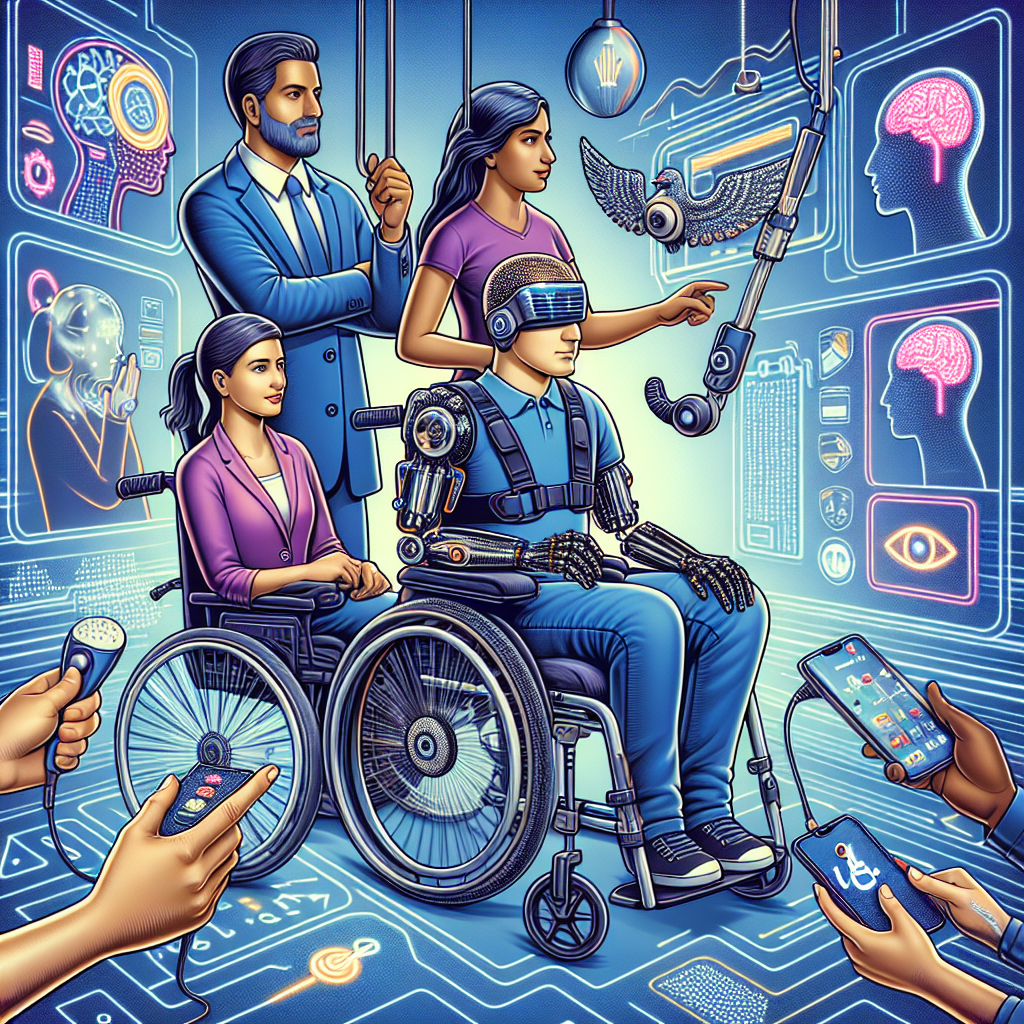
In recent years, innovative technological advancements have significantly transformed various sectors, including those catering to individuals with disabilities. One of the most intriguing and promising technologies currently emerging is haptic technology. This technology fundamentally changes how we interact with our devices and environment, providing tactile feedback through vibrations and motions that simulate the sense of touch. For many, especially those with disabilities, haptic technology offers new levels of accessibility and interaction that were previously unimaginable. As we continue to strive for a more inclusive society, aligning with the principles of the Americans with Disabilities Act (ADA), the integration of haptic technologies in public and private sectors presents a tremendous opportunity to enhance accessibility and independence for individuals with disabilities. The ADA, established in 1990, mandates equal access and protection from discrimination, focusing on areas such as telecommunications, public services, and employment. Haptic technology is proving to be a pivotal development in achieving these goals by enabling enhanced communication and interaction across various platforms and environments.
Understanding Haptic Technology and Its Applications
Haptic technology, at its core, involves simulating the sense of touch through mechanical or electronic devices, providing a layer of sensory feedback that enriches user interaction. In simple terms, it allows users to ‘feel’ virtual objects or receive tactile information without the need for visual cues. This technology has found applications far beyond its initial emergence in gaming consoles and smartphones. For instance, in recent years, haptic technology has made significant inroads in areas such as education, where it aids students with visual impairments by offering tactile educational tools that convey information through touch rather than sight. Moreover, in the medical field, haptic feedback is utilized in virtual reality-based surgical simulations, allowing trainees to experience lifelike procedures without the associated risks. For individuals with disabilities, haptic technology represents a powerful tool for accessibility. Imagine a visually impaired person navigating their environment with the help of a haptic-equipped cane, which relays tactile feedback about surroundings, offering crucial cues that aid in safe and independent movement. Similarly, individuals with auditory impairments can benefit from devices that translate sound into tactile feedback, such as wristbands that vibrate in response to doorbells or alarms.
Haptic Technology and ADA Compliance
Incorporating haptic technology into products and environments can markedly enhance ADA compliance by ensuring inclusivity and accessibility. Consider public spaces like museums, where traditional text and audio guides may not suffice for individuals with disabilities. By integrating haptic feedback features into exhibits, museums can provide multisensory experiences that cater to a wider audience, ensuring ADA guidelines for accessibility are met. Similarly, public transportation systems equipped with haptic displays on ticket vending machines can vastly improve accessibility for individuals with visual impairments, offering tactile feedback that guides users through the purchasing process. Road safety is another field benefiting from haptic integration, with tactile paving and haptic feedback in crosswalk signals enhancing the safety and independence of pedestrians with disabilities. As technology continues to evolve, manufacturers and service providers must prioritize inclusivity, ensuring that innovations adhere to ADA standards and principles. By doing so, they not only comply with regulations but also enhance user experiences, broadening the reach of their services and products to a more diverse population.

Future Trends in Haptic Technology for Accessibility
The future of haptic technology is exceptionally promising, offering numerous avenues for enhancing accessibility in line with ADA requirements. One trend gaining momentum is the development of advanced wearable haptic devices, such as gloves that provide immersive tactile feedback, allowing users to experience the sensation of touching various virtual surfaces. These innovations hold potential not only in entertainment or professional training but also in daily activities for individuals with disabilities, enabling them to experience their environment more intuitively and independently. Additionally, researchers are exploring bio-integrated haptic systems, which merge seamlessly with the user’s nervous system to provide precise and personalized feedback. This cutting-edge approach could revolutionize how prosthetic limbs function, providing users with a sensory experience more akin to natural limb usage. Moreover, advancements in artificial intelligence are enabling haptic devices to adapt and personalize feedback based on an individual’s specific needs and preferences, fostering even greater self-reliance and engagement with the world.
Case Studies: Success Stories in Haptic Technology Adoption
Numerous real-world examples demonstrate the successful integration of haptic technology to meet ADA standards and foster inclusivity. One notable case is the collaboration between tech companies and educational institutions to develop haptic-based learning tools, such as tactile tablets and braille readers, that significantly broaden the learning scope for visually impaired students, providing them with opportunities previously unavailable. In healthcare, hospitals have adopted advanced haptic feedback systems in patient-care interfaces, making it easier for individuals with disabilities to interact with medical devices and receive intuitive feedback critical to their health and well-being. The automotive industry also showcases haptic technology’s transformative potential; several car manufacturers have integrated haptic feedback into their vehicle designs, enhancing accessibility features for drivers with disabilities and improving overall driving safety through tactile alerts that ensure focus and attention.
Challenges and Considerations in Implementing Haptic Technology
Despite its vast potential, the widespread implementation of haptic technology for enhancing accessibility does come with challenges. Cost is often a significant barrier, as the development and deployment of haptic systems can require substantial investment, potentially limiting access to organizations with fewer resources. Moreover, the technology’s complexity requires a high level of expertise for successful integration and maintenance, creating additional hurdles for widespread adoption. Standardization remains a critical issue, with varying haptic systems lacking a universal protocol for operation and feedback, which can result in inconsistencies and accessibility challenges for users. Additionally, privacy and data security are growing concerns, particularly as haptic devices become more interconnected and reliant on user data to personalize experiences. Organizations must prioritize secure data handling and compliance with legal standards to protect user privacy and foster trust. By addressing these challenges, industries and developers can further enhance the opportunities and accessibility that haptic technology offers, ensuring its benefits align seamlessly with ADA compliance goals.
Conclusion: Haptic Technology Paving the Path to Inclusivity
Haptic technology represents a vital component of the modern accessibility landscape, offering innovative solutions that align with ADA principles and foster more inclusive environments. As we embrace these advances, it’s essential to remain focused on developing user-friendly systems that prioritize accessibility, affordability, and safety. Continued collaboration between tech developers, policymakers, and disability advocates will be crucial to refining haptic solutions, ensuring they meet the diverse needs of individuals with disabilities while adhering to ADA requirements. This collective effort promises a future where technology serves as an empowering tool, enhancing independence and engagement for everyone. As these trends evolve, they offer a roadmap toward a more equitable society where accessibility is a given, not an afterthought. By embracing the possibilities that haptic technology presents and tackling current challenges head-on, we can pave the path to a more inclusive future that upholds the core tenets of the ADA and benefits all members of our communities.
Frequently Asked Questions
What is haptic technology and why is it important for ADA compliance?
Haptic technology refers to devices that interact with users through the sense of touch by applying forces, vibrations, or motions. This technology is crucial for ADA (Americans with Disabilities Act) compliance because it helps in making devices and environments more accessible to individuals with disabilities, particularly those with visual impairments. By simulating the sense of touch, haptic feedback provides an alternate means for understanding and interacting with various technology interfaces.
For example, a touchscreen device equipped with haptic technology can provide textured feedback, allowing a visually impaired user to ‘feel’ different buttons and options. This tactile interaction can enhance accessibility, ensuring individuals can navigate and operate devices independently, thereby aligning with ADA’s goal of removing barriers and providing equal access to all.
How has haptic technology evolved to improve accessibility for the disabled community?
The evolution of haptic technology has been quite remarkable, with significant advancements in precision, responsiveness, and customization. Initially, basic vibration feedback was used, but today’s haptic systems offer highly sophisticated tactile sensations. With better actuators and sensors, devices can now simulate various textures, temperatures, and even complex movement sensations.
For the disabled community, these improvements mean enhanced interaction with technology. For instance, in virtual reality (VR) environments, haptic technology allows users to ‘touch’ and interact with objects within a digital space, giving those with mobility issues a greater sense of presence and control. Moreover, the development of wearable haptic devices has enabled users to receive alerts or interpret information through nuanced tactile signals, thus further breaking down accessibility barriers in daily life.
What are some examples of haptic technology applications that comply with ADA standards?
There are numerous applications of haptic technology that align with ADA standards, ranging from consumer electronics to specialized equipment for accessibility. For example, in smartphones, the Taptic Engine developed by Apple provides subtle tactile feedback, improving accessibility for users with visual impairments by allowing them to ‘feel’ notifications and interact with digital elements.
Beyond consumer electronics, haptic technology is also used in public infrastructure. For instance, haptic feedback in pedestrian crosswalk buttons can inform visually impaired individuals when it is safe to cross the street via vibrations. In educational tools, haptic-enabled devices can create raised diagrams and maps, providing students with tactile access to visual content that would otherwise be inaccessible.
What challenges does haptic technology face in achieving full ADA compliance?
Despite its potential, haptic technology faces several challenges in achieving full ADA compliance. One major challenge is the integration with existing infrastructure and ensuring the technology is affordable and accessible to all who need it. Many of the advanced haptic solutions come with high developmental and manufacturing costs, making widespread adoption difficult.
Additionally, there is a need for standardized protocols and interfaces. Without uniform standards, developers may create incompatible systems that do not work well together, limiting the technology’s effectiveness. Educating designers and developers about the specific needs of the disabled community is crucial in ensuring that haptic solutions are truly beneficial and meet ADA criteria.
What future trends can we expect in haptic technology for enhancing ADA compliance?
The future of haptic technology looks promising, with several exciting trends that could further enhance ADA compliance. One such trend is the miniaturization and improvement in battery efficiency of haptic devices, which would allow for more seamless integration into both wearable technology and everyday objects.
Another significant trend is the increased focus on personalization and adaptive haptic feedback. As artificial intelligence (AI) becomes more integrated with haptic systems, devices will be able to learn from user interactions and provide personalized feedback that adapts to individual needs and preferences. This could greatly enhance the independence and autonomy of users with disabilities.
We can also expect advancements in wireless haptic communication, allowing for more sophisticated multi-device networks where information can be transmitted and received through touch seamlessly. This could revolutionize accessibility in settings like smart homes and public spaces, creating an inclusive environment for all users.


