
The Americans with Disabilities Act (ADA), a landmark civil rights law, has been instrumental in promoting accessibility and prohibiting discrimination against individuals with disabilities. Since its enactment in 1990, the ADA has not only reshaped the physical world by requiring public spaces to be accessible, but it has also set the stage for significant advancements in technology aimed at making life easier for people with disabilities. In today’s digitally driven era, technological solutions influenced by the ADA extend far beyond mere compliance. They represent a vibrant frontier where innovation meets inclusion.
Recent developments in assistive technology are a testament to the growing movement toward making products and services more inclusive. From smart home devices to mobile applications, technology has become a powerful enabler for those with disabilities, helping to bridge gaps in communication, mobility, and access to information. In this article, we’ll delve into some key areas where technology, guided by the principles of the ADA, is making the world more accessible. We’ll look into how these technologies are transforming lives and breaking down barriers, ensuring that everyone can participate fully in society.
Smart Home Technologies and the Influence of ADA
The concept of a smart home, equipped with interconnected devices that can be controlled remotely, is revolutionizing the way people with disabilities interact with their homes. By leveraging technologies such as voice control and automation, individuals with mobility impairments can command their environment more independently, enhancing their quality of life.
Devices like Amazon Echo and Google Home offer voice-activated controls for various home functions like lighting, heating, and entertainment systems. This hands-free approach favours those with physical hindrances, allowing for effortless control over their surroundings. The ADA’s focus on accessibility inspires greater inclusion, enabling tech companies to design products that accommodate users’ diverse needs.
Beyond convenience, these smart systems incorporate safety features crucial for individuals with disabilities. Smart locks, security cameras, and sensors connected to a central hub provide peace of mind by notifying caregivers and family members of any unusual activity. By integrating these smart technologies, homes become safer and more manageable for people with disabilities, showcasing how ADA principles are propelling technological strides.
Communication Aids and Mobile Applications: The ADA’s Role
One of the ADA’s significant influences on technology is seen in the realm of communication. The emergence of advanced communication aids and mobile applications has transformed how individuals with hearing and speech disabilities interact with others. With the help of the ADA’s guidelines advocating for broader accessibility, tech developers are more conscientious about creating inclusive communication tools.
Applications like Ava and Speechify utilize artificial intelligence to convert spoken language into text, facilitating real-time conversation for those with hearing challenges. Tools such as Picture Exchange Communication System (PECS) and Proloquo2Go help individuals with speech impairments communicate by translating sign language or symbols into spoken words. These advancements in assistive communication technologies reflect the ADA’s vision of breaking barriers in social interaction.
Moreover, the development of video relay services (VRS) significantly enhances communication for the deaf community, empowering users to place online calls using videophones to communicate via a sign language interpreter. These solutions, rooted in ADA’s advocacy, continue to transform personal and professional communication dynamics while fostering an inclusive community for individuals with communication barriers.
Navigational Advances: ADA Compliance in Public and Digital Spaces
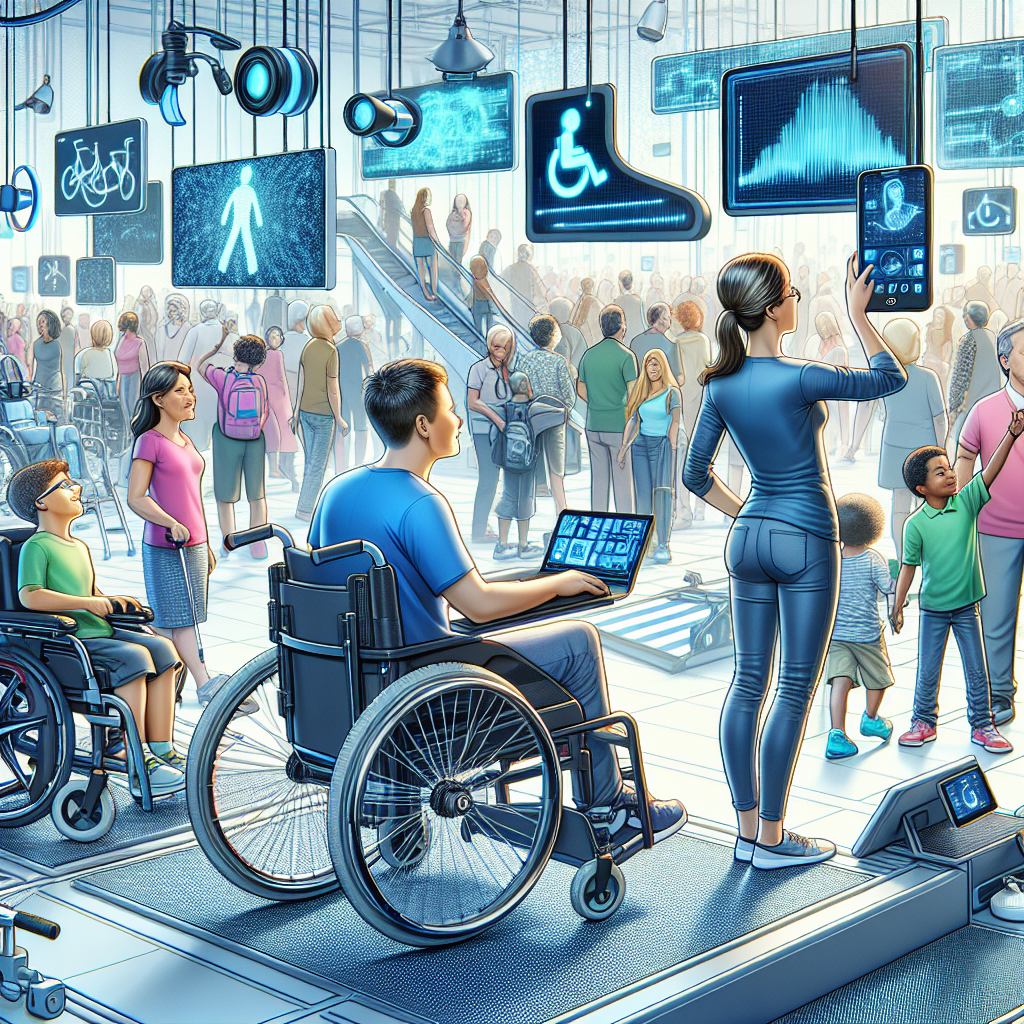
Navigational technologies, driven by ADA compliance, are significantly evolving to ensure that public and digital spaces are more accessible to those with disabilities. GPS systems and mobile applications are being refined to assist individuals in navigating both physical environments and digital platforms more easily.
Applications such as AIRA and Be My Eyes provide visually impaired users with real-time visual descriptions from volunteers or professionals through their smartphones. These apps enhance mobility by offering assistance in real-world navigation, thus promoting independence and confidence among users.
Public transportation systems have also adopted ADA guidelines to improve accessibility. Innovations such as tactile paving, audible traffic signals, and real-time public transit applications have made commuting safer and more convenient. Furthermore, the push for ADA compliance in digital spaces has led to the growth of screen reader-friendly websites and applications, ensuring that individuals with visual impairments can access online content effortlessly. These technological advances, inspired by the ADA, are ushering in a more inclusive era where both physical and virtual barriers are eliminated.
The Evolution of Prosthetics and Robotics under ADA’s Influence
Prosthetic technology has undergone revolutionary changes, largely influenced by the ADA’s emphasis on equality and accessibility. Modern prosthetic devices are not just meeting the basic functional needs of users but are also offering advanced features to enhance the quality of life for individuals with limb differences.
Researchers and engineers are leveraging robotics and AI to create highly responsive and intelligent prosthetics that rival the dexterity of natural limbs. Some of these devices use brain-computer interface (BCI) technology, which enables users to control their prosthetic limbs with thought alone. This remarkable fusion of technology and accessibility offers unprecedented levels of freedom and functionality, echoing ADA’s principles of fostering independence and inclusivity.
The ADA’s framework also supports research and development efforts in the field of exoskeletons. Originally developed for medical and military use, exoskeletons are now being adapted for individuals with mobility impairments, offering them an opportunity to walk or stand independently. By pushing the boundaries of assistive technology, the ADA ensures that users of prosthetics and robotics can lead more autonomous and fulfilling lives.
Virtual Reality and Gaming: Building Inclusive Experiences
Virtual reality (VR) and gaming industries are incorporating ADA concepts to craft immersive experiences that are accessible to everyone. By acknowledging diverse user needs, these sectors are designing inclusive virtual environments that provide equal opportunities for enjoyment and engagement.
Developments in adaptive gaming controllers, such as Microsoft’s Xbox Adaptive Controller, allow individuals with physical disabilities to play video games using customized setups. These devices can be tailored to individual user capabilities, ensuring that gaming is accessible and enjoyable for all.
Furthermore, VR platforms are becoming more inclusive by integrating features like customizable avatars and adjustable interfaces. These enhancements empower users with disabilities to participate in virtual experiences fully. As VR and gaming technologies progress, they pave the way for more accessible leisure activities, adhering to the ADA’s vision of equal participation and enjoyment.
Conclusion: The Future of Assistive Technologies and ADA
The Americans with Disabilities Act continues to be a pivotal force in shaping the landscape of assistive technology. Its influence not only challenges the boundaries of what technology can achieve but also reaffirms the commitment to inclusivity and accessibility. As developers, companies, and innovators collaborate, guided by ADA principles, the future of assistive technologies promises to be groundbreaking.
Looking ahead, we can anticipate further advancements in areas like artificial intelligence, wearables, and autonomous technologies, where inclusivity is a foundational design element. The growing focus on user-centered design and technological empathy ensures that products and services will cater to the unique needs of individuals with disabilities, driving societal progress toward equality.
The continuing evolution of assistive technologies signals a transformative shift in how we perceive and accommodate disabilities. The ADA’s enduring legacy in advocating for accessibility and inclusivity serves as a guiding light for future innovations, ensuring that as technology advances, it does so in a way that leaves no one behind.
Frequently Asked Questions
1. How has the Americans with Disabilities Act (ADA) inspired advancements in assistive technologies?
The ADA has played a crucial role in advancing assistive technologies by establishing a legal framework that advocates for equal access and opportunity for individuals with disabilities. Since its inception in 1990, the ADA has laid the groundwork for technological innovations that aim to enhance the quality of life for people with disabilities. This landmark legislation mandates businesses, public entities, and educational institutions to provide accessible environments, which has driven the development of technologies that improve accessibility. For instance, the need for ADA compliance has led tech companies to innovate with voice recognition, screen readers, and advanced hearing aids. Moreover, the ADA has raised awareness about the importance of inclusive design, fostering a market for new assistive devices such as wheelchairs with enhanced mobility features, and creating technologies like automatic door openers, braille displays, and more sophisticated augmentative and alternative communication (AAC) devices.
2. What are some examples of assistive technologies that have been developed as a result of ADA’s influence?
As a consequence of the ADA’s influence, we have seen the development and widespread implementation of numerous assistive technologies. One prominent example is the evolution of screen reader technology that enables visually impaired users to navigate computers and mobile devices by reading text aloud. Similarly, voice-to-text applications have become mainstream, allowing individuals with mobility or dexterity impairments to communicate and control devices through speech. Moreover, modern hearing aids have advanced significantly, incorporating features like Bluetooth connectivity and real-time language translation, which can dramatically enhance the hearing experience. Additionally, improvements in mobility aids, such as powered wheelchairs equipped with smart navigation systems and adaptive seating, promote independence and accessibility. Also, educational tools like text-to-speech software have been vital in supporting students with learning disabilities, ensuring they receive the benefits of an equitable education.
3. How have advancements in assistive technology impacted the everyday lives of people with disabilities?
The impact of advancements in assistive technology on the lives of people with disabilities is profound and transformative. These technologies empower individuals by enhancing communication, mobility, learning, and independence. For example, individuals who are deaf or hard of hearing can now use real-time captioning technology to participate more fully in conversations, live events, and media consumption. Furthermore, devices like smart prosthetics and exoskeletons have revolutionized mobility for those with physical impairments, providing greater freedom of movement and accessibility. Technology has also improved workplace inclusivity, offering adaptive software and hardware that allow people with disabilities to compete in the job market on an equal footing. The integration of assistive technologies into daily life fosters an environment of inclusivity and equal opportunity, reducing barriers and enabling fuller participation in society.
4. What role does collaboration between the tech industry and the ADA play in the advancement of assistive technologies?
Collaboration between the tech industry and the principles established by the ADA is essential in the advancement and development of assistive technologies. The ADA’s requirement for accessibility provides a framework and motivation for tech companies to innovate and design inclusive products. This partnership encourages the tech industry to prioritize accessibility in their research and development processes, often leading to groundbreaking innovations that may not have otherwise been pursued. By aligning with the ADA’s values, companies are incentivized to consider the wide range of needs present in the global population, thereby expanding their market and enhancing brand reputation through corporate social responsibility. Furthermore, tech companies often collaborate with disability advocacy groups and individuals with disabilities to create user-centric designs that directly address real-world challenges, ensuring that assistive technologies are practical, effective, and user-friendly.
5. What future advancements in assistive technologies can be expected as a result of the continued influence of the ADA?
The continuing influence of the ADA promises exciting future advancements in assistive technologies that will cater to an ever-broader spectrum of disabilities. We can expect to see more integration of artificial intelligence to customize assistive devices to individual user needs and preferences, enhancing personalization and effectiveness. Wearable technology, such as smart glasses and health-monitoring devices, is likely to become more prevalent, offering real-time support and health insights for users. Additionally, advancements in virtual and augmented reality could offer immersive learning experiences and new ways to engage with the world for individuals with various disabilities. Innovations in robotics and automation are also poised to transform assistive technology, potentially providing robotic companions or assistance in daily tasks for those who require constant support. As the demand for inclusive technology grows, we anticipate a surge in innovative solutions that expand accessibility and promote independence for individuals with disabilities across all facets of life.


