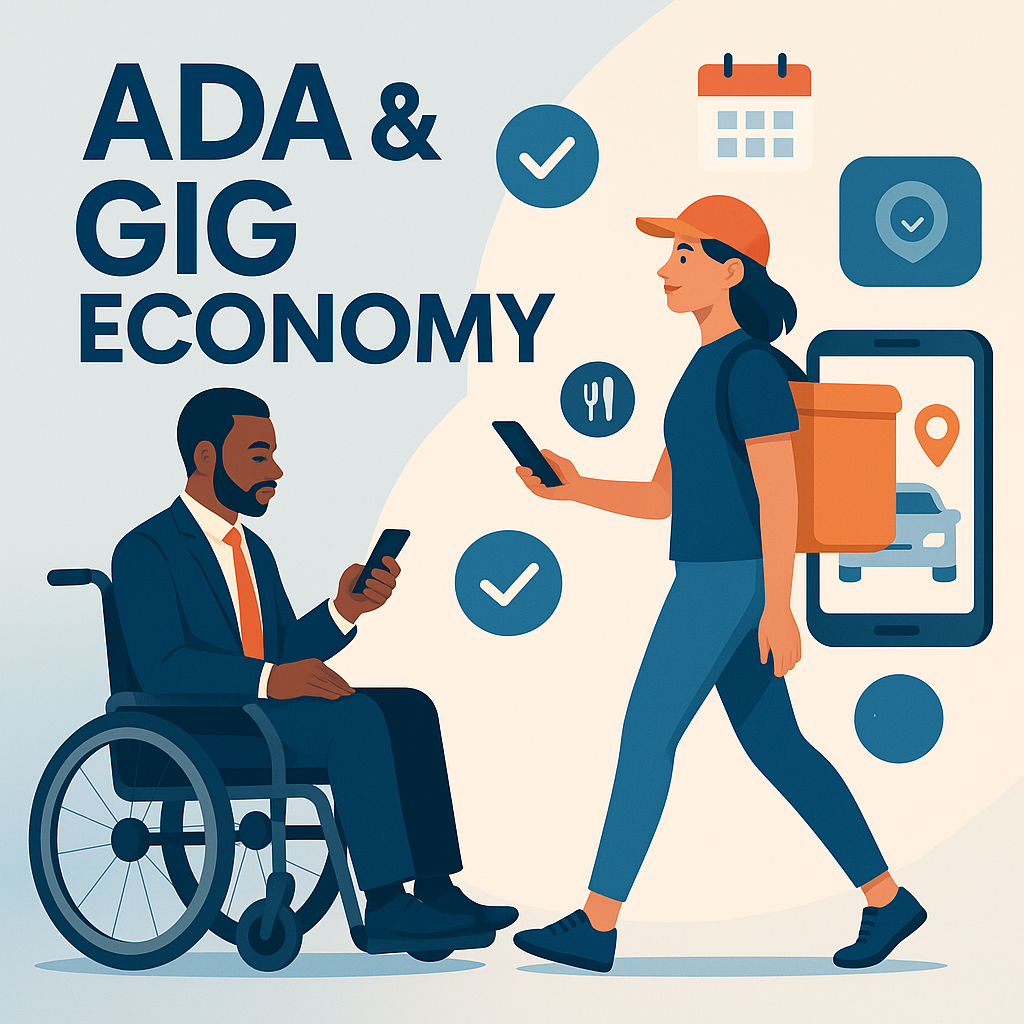
The rise of the gig economy has transformed the employment landscape, providing flexibility for workers while creating new challenges regarding legal protections and classifications. Among these challenges is the applicability of the Americans with Disabilities Act (ADA) to gig workers. This is particularly noteworthy in the case of Lawson v. Grubhub, which raises critical questions about worker classification and ADA protections in the gig economy. Understanding this intersection between the ADA and gig economy not only sheds light on worker rights but also has broader implications for businesses and policymakers alike. As businesses increasingly rely on gig workers, addressing the legal gaps becomes crucial to ensuring equitable treatment under the law for all workers, regardless of their employment classification.
Understanding the Americans with Disabilities Act (ADA)
The Americans with Disabilities Act (ADA) is a civil rights law enacted in 1990, providing protection against discrimination based on disability. It aims to ensure that people with disabilities have the same opportunities as everyone else, including in the workplace. The ADA requires employers to provide reasonable accommodations to qualified individuals with disabilities, as long as it does not impose an undue hardship on the operation of the business. However, the application of the ADA to gig workers, typically classified as independent contractors, remains complex and contentious.
In a traditional employment setting, the ADA mandates that employers make necessary modifications to job duties or workplace policies to accommodate workers with disabilities. However, when it comes to gig economy companies, the question of whether gig workers should be classified as employees or independent contractors complicates this requirement. Without a clear classification, workers may find themselves without the rights and protections they would otherwise be entitled to under the ADA.
Lawson v. Grubhub illustrates these complexities and highlights the urgent need to address ADA applications in this evolving labor market. In this context, understanding how ADA regulations intersect with the gig economy is essential for fair employment practices.
The Complexity of Worker Classification
One of the most significant challenges in applying the ADA to gig workers is the question of worker classification. In the U.S., workers are generally classified as either employees or independent contractors. This classification determines their eligibility for certain legal protections, including those offered under the ADA. Employees are usually entitled to workplace protections such as minimum wages, tax withholdings, and anti-discrimination laws. In contrast, independent contractors do not typically enjoy these rights.
The gig economy blurs the traditional distinctions between employees and contractors. Companies like Grubhub categorize their workers as independent contractors, arguing that the flexibility and autonomy provided are incompatible with traditional employment structures. However, this classification has been increasingly challenged in courts, including the Lawson v. Grubhub case.
In this case, Raef Lawson, a Grubhub delivery driver, argued that he should be considered an employee rather than an independent contractor, thereby qualifying for benefits under the ADA. Lawson’s case against Grubhub brought to light the ready potential for exploitation of gig workers, highlighting the ongoing debate over worker classification in the gig economy.
Lawson v. Grubhub: The Legal Battle
The case of Lawson v. Grubhub marks one of the first instances where a gig economy worker challenged their classification status in the context of disability rights. Raef Lawson, who worked as a delivery driver for Grubhub, filed a lawsuit asserting that he was misclassified as an independent contractor and should be recognized as an employee, eligible for protections under the ADA.
Lawson contended that Grubhub exercised sufficient control over its drivers, akin to that of an employer. He cited practices such as delivery schedules, performance monitoring, and payment structures as evidence of this control, arguing that he should be afforded employee status and, consequently, ADA protections. This case raised the crucial question: Do gig economy companies maintain enough control over their workers to qualify these workers as employees under the law?
This legal battle is emblematic of broader trends within the gig economy. Workers seek recognition and protection, while companies aim to maintain flexibility and cost efficiencies. The outcome of this case holds significant implications for similar litigation involving gig workers challenging their employment status in seeking legal protections.
Implications for the Gig Economy
The case outcome has implications far beyond the ADA. It questions the operational models of many gig economy companies reliant on independent contractor classifications. With an increase in similar lawsuits, gig companies are facing pressure to revisit their classification practices and consider offering protections and benefits akin to those given to traditional employees.
Should courts increasingly side with workers seeking employee status, gig economy platforms could face increased operational costs, potentially limiting their ability to offer competitive pricing and flexible work opportunities. Conversely, recognizing gig workers as employees could lead to more equitable treatment, providing access to essential protections such as healthcare, unemployment benefits, and anti-discrimination rights.
In addressing the broader implications, businesses and policymakers must find a delicate balance between preserving the gig economy’s advantages and ensuring fair and equitable treatment for workers. The evolution of this legal landscape is crucial to develop frameworks that protect worker rights without stifling innovation or flexibility.
Visual Representation: Lawsuit Outcomes in the Gig Economy
| Case | Year | Outcome | Impact |
|---|---|---|---|
| Lawson v. Grubhub | 2018 | Grubhub wins | Reaffirmation of contractor status |
| O’Connor v. Uber | 2019 | Settlement | Partial benefits and changes |
| Dynamex Decision | 2018 | Court reclassifies workers | Worker protection expansion |
Conclusion: Bridging the Gap
The crossroads of ADA and the gig economy, as illustrated by Lawson v. Grubhub, emphasizes a vital discussion about worker rights, classification, and protections in a rapidly evolving labor market. As the number of gig workers continues to increase, the relevance and application of traditional laws like the ADA must be reconsidered and adapted to modern work structures. While some advancements have been made through court rulings, there remains considerable work in crafting consistent and fair legal protections.
For policymakers, businesses, and workers alike, the key takeaway is the importance of striking a balance that respects worker rights while preserving the benefits of flexibility that characterize the gig economy. Policymakers should focus on developing inclusive legal frameworks, while businesses should proactively seek strategies that offer necessary protections without compromising their operational models.
As we move forward, continued dialogue and cooperation among all stakeholders will be essential to ensure that the gig economy remains a viable and equitable option for millions of workers. Employers should evaluate their classification practices critically, and workers should advocate for their rights vigilantly. The case of Lawson v. Grubhub presents insights into necessary adjustments, prompting us to act decisively and thoughtfully. Stay informed, engage in the legal processes, and hold employers accountable to build a just gig economy.
Frequently Asked Questions
1. What is the case of Lawson v. Grubhub about?
The case of Lawson v. Grubhub is a pivotal legal dispute that focuses on the classification of gig workers as independent contractors or employees, and whether these workers are entitled to protections under the Americans with Disabilities Act (ADA). Raef Lawson, a former Grubhub driver, sued the company claiming that he was misclassified as an independent contractor and therefore denied various employment protections, including those under the ADA. This case is significant because it questions whether gig economy companies like Grubhub should classify their workers as employees, who would be eligible for a wider array of benefits and legal protections, as opposed to independent contractors, who traditionally do not enjoy the same protections.
2. How does the ADA apply to gig economy workers?
The Americans with Disabilities Act (ADA) is a federal law that prohibits discrimination based on disability and mandates reasonable accommodations for disabled individuals in the workplace. The application of the ADA to gig economy workers primarily hinges on their classification. If gig workers are considered employees, they are entitled to ADA protections, which include non-discriminatory practices and accommodations for disabilities. However, if they are classified as independent contractors, these protections do not automatically apply. The challenge in the gig economy lies in the ambiguity of worker classifications, which affects the legal protections these workers can access. This area remains a contentious issue as courts and lawmakers continue to grapple with how existing labor laws fit within the modern gig economy framework.
3. What are the implications of worker classification in the gig economy?
Worker classification as an independent contractor or employee has profound implications on the rights and benefits gig workers can claim. Employees typically have access to a suite of benefits and protections including minimum wage, overtime pay, health insurance, unemployment benefits, and protection from workplace discrimination under laws like the ADA. In contrast, independent contractors have greater flexibility but receive none of these traditional employee benefits. This classification impacts not only individual workers but also broader economic structures, influencing how businesses operate and how labor laws are enforced in an evolving market. The case of Lawson v. Grubhub brings to light the challenges of applying traditional employment laws to new, non-traditional work arrangements inherent to the gig economy.
4. Why is the Lawson v. Grubhub case important for understanding ADA protections in the gig economy?
The Lawson v. Grubhub case is critical because it serves as a potential precedent for how courts might handle the issue of ADA protections for gig economy workers. As the gig economy grows, more people are working jobs that don’t fit the traditional employer-employee model, raising questions about access to legal protections like those offered by the ADA. The outcome of this case could shape future litigation and legislation by clarifying the application of the ADA and similar statutes to gig workers. It highlights the need for evolving labor laws to keep pace with the changing nature of work, ensuring that all workers, regardless of their classification, are protected against discrimination and have equal access to necessary accommodations.
5. How could the outcome of Lawson v. Grubhub affect gig economy companies?
If the courts rule in favor of Lawson and determine that he and other gig workers should be classified as employees, gig economy companies could face significant changes to their business models. This could lead to increased operational costs as companies would be required to provide employee benefits, adhere to minimum wage laws, and ensure ADA compliance, among other obligations. Such a ruling could also drive broader regulatory changes, influencing how gig economy companies classify their workforce across various jurisdictions. Furthermore, it might encourage other gig workers to pursue similar claims, potentially leading to a ripple effect of litigation and a reshaping of gig economy labor practices. This case underscores the ongoing tension between regulatory frameworks and the innovative, flexible work arrangements that define the gig economy.


