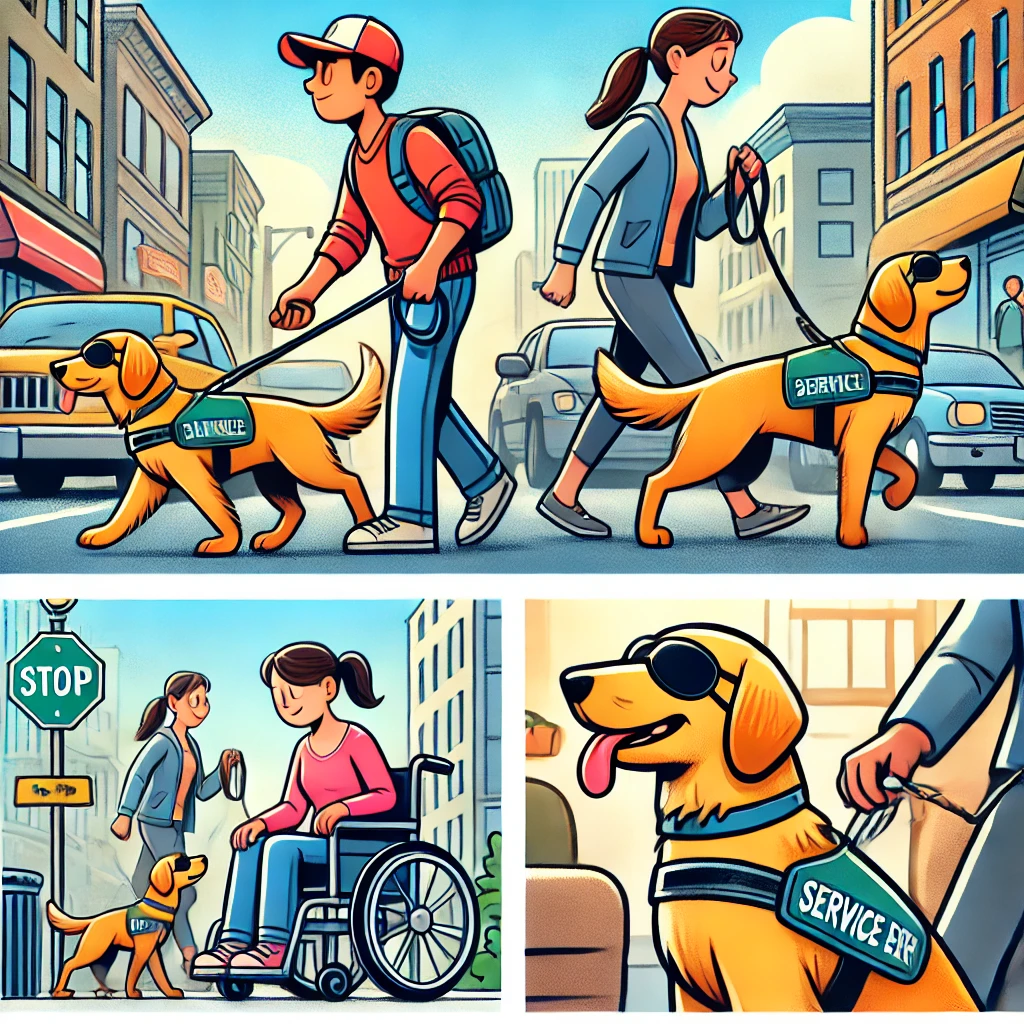
The Americans with Disabilities Act (ADA), enacted in 1990, is a landmark civil rights law that aims to provide equal opportunities and protect the rights of individuals with disabilities. One critical aspect of the ADA focuses on service animals, which play a crucial role in assisting and enhancing the lives of people with disabilities. Service animals, particularly dogs, perform vital tasks that mitigate the challenges faced by their handlers, including guiding individuals with visual impairments, alerting those with hearing impairments, pulling wheelchairs, and even providing emotional support during anxiety or PTSD episodes.
Understanding the rights and regulations surrounding service animals under the ADA is essential for handlers, businesses, and the general public to ensure compliance and foster an inclusive environment. This comprehensive article delves into the definition of service animals, the legal rights of handlers, the responsibilities of businesses, and common misconceptions about service animals. By illuminating these aspects, we aim to bridge the knowledge gap and advocate for the full and equal participation of individuals with disabilities in all areas of public life.
What Defines a Service Animal Under the ADA?
A service animal, as defined by the ADA, is a dog that has been individually trained to perform tasks or do work for a person with a disability. These tasks must be directly related to the person’s disability. It’s essential to note that the ADA’s definition is specific and does not broadly include pets or other animals, although there is a provision for miniature horses under certain conditions.
Service dogs can be trained to perform a wide array of tasks, such as guiding people who are blind, alerting individuals who are deaf, pulling a wheelchair, fetching dropped items, assisting during a seizure, reminding a person to take prescribed medications, and calming a person with PTSD during an anxiety attack. Each of these tasks helps the individual navigate their day-to-day life more independently, safely, and effectively.
While emotional support animals, therapy animals, and comfort animals provide valuable companionship and emotional support, they do not qualify as service animals under the ADA if they have not been trained to perform specific tasks for a person with a disability. Consequently, these animals are generally not granted the same public access rights as service animals.
Legal Rights of Service Animal Handlers
Under the ADA, individuals who rely on service animals for their disabilities are entitled to certain rights that ensure equal access and non-discrimination. This means service animals are permitted to accompany their handlers in areas where the general public is allowed to go, including restaurants, hotels, retail stores, taxis, and public transportation.
Handers are not required to provide documentation or proof of their disability or the training of the service animal. Public entities can only ask two specific questions when the animal’s purpose is not apparent: 1) Is the dog a service animal required because of a disability? and 2) What work or task has the dog been trained to perform? These questions are intended to confirm the legitimacy of the service animal without invading the privacy of the handler.
Moreover, the ADA mandates that public entities must accommodate service animals, meaning they must permit the animal to accompany its handler even if general policies would typically prohibit animals. For instance, establishments that have a “no pets” policy must make an exception for service animals as stipulated by federal law.

Responsibilities of Businesses and Public Entities
While the ADA affords significant rights to individuals using service animals, it also outlines responsibilities for businesses and public entities to ensure compliance and non-discriminatory practices. Businesses must familiarize themselves with ADA requirements to foster a welcoming environment for all patrons, including those with disabilities.
Businesses are expected to allow service animals into any area where customers are typically allowed and cannot impose additional fees or surcharges. Denying access to a service animal is only permissible if the animal poses a direct threat to health and safety or if its presence fundamentally alters the nature of the business operations. However, such decisions must be based on objective evidence and not generalized fears or stereotypes about service animals.
In situations where a service animal’s behavior is disruptive, unclean, or aggressive, businesses have the right to require that the animal be removed. However, the handler must still be allowed access to the premises without the animal. Business owners should train their staff to understand and implement these ADA guidelines to avoid potential legal repercussions and promote inclusivity.
Common Misconceptions About Service Animals
There are several misconceptions surrounding service animals, largely due to a lack of awareness or misinformation. One common myth is that service animals must wear vests, ID tags, or specific harnesses to be recognized under the ADA. In reality, service animals are not required to wear any special identification.
Another widespread misconception is that service animals must be professionally trained by accredited organizations. While professional training is beneficial, the ADA does not stipulate such a requirement. Handlers can train their service animals themselves or with the assistance of a trainer without the need for formal certification.
Misunderstandings also arise regarding the types of animals considered service animals. As previously mentioned, only dogs (and in some cases, miniature horses) are recognized as service animals by the ADA. This excludes other animals, regardless of their training or the support they provide. Clarifying these misconceptions helps ensure that all parties involved have a transparent understanding of the ADA’s stipulations.
The Role of Emotional Support Animals
Emotional support animals (ESAs) differ significantly from service animals in terms of their roles and legal recognition. Unlike service animals, ESAs are not trained to perform specific tasks related to a disability. Instead, they provide therapeutic benefits by offering companionship and emotional comfort to individuals facing mental health challenges.
The legal protections granted to ESAs are more limited compared to those for service animals. Under the Fair Housing Act (FHA) and the Air Carrier Access Act (ACAA), individuals with ESAs may be entitled to accommodation in housing and air travel. However, ESAs do not have the same public access rights as service animals under the ADA, meaning they may not be allowed in restaurants, stores, and other public places where service animals are permitted.
Understanding the distinct roles and regulations of ESAs is crucial for both handlers and businesses. This ensures that the rights of individuals with service animals are upheld, while also recognizing the separate category and protections for emotional support animals.
Conclusion
The Americans with Disabilities Act (ADA) has made significant strides in ensuring the rights and protections of individuals with disabilities, particularly through its recognition and support of service animals. Service animals provide indispensable assistance, enabling individuals with disabilities to navigate their daily lives with greater independence and confidence. By understanding the definitions, rights, and responsibilities associated with service animals, both handlers and businesses can foster a more inclusive and supportive society.
It is important for everyone, from policymakers and business owners to the general public, to be informed about the regulations and protections under the ADA. This awareness helps prevent discrimination, promotes accessibility, and ensures equal opportunities for individuals with disabilities. As we continue to advance towards a more inclusive society, the role of service animals and the enforcement of their rights under the ADA remains a cornerstone of this progress.
For individuals with disabilities, having a reliable and well-trained service animal can make a world of difference. By respecting and upholding the guidelines set forth by the ADA, we contribute to a more compassionate and equitable world where everyone, regardless of their ability, can thrive.
Frequently Asked Questions
1. What is considered a service animal under the ADA?
The ADA (Americans with Disabilities Act) defines a service animal as a dog that is individually trained to perform tasks or do work for a person with a disability. The tasks performed by the service animal must be directly related to the person’s disability. For example, guide dogs used by individuals with visual impairments help navigate public spaces, hearing dogs alert those with hearing loss to sounds like a doorbell or approaching vehicles, and service dogs trained to recognize the onset of seizures can significantly aid individuals with epilepsy by signaling them before a seizure occurs. It’s important to note that under the ADA, the scope is strictly limited to dogs, although in specific circumstances, miniature horses may also qualify.
2. Are emotional support animals considered service animals under the ADA?
No, emotional support animals (ESAs) do not qualify as service animals under the ADA. While emotional support animals do provide comfort with their presence, they are not specifically trained to perform tasks directly related to a person’s disability. ESAs are meant to provide emotional comfort and are sometimes prescribed by healthcare professionals for individuals dealing with psychiatric conditions such as depression or anxiety. However, while they may be granted certain housing allowances under the Fair Housing Act, they do not have the same public access rights as service animals under the ADA. Thus, it’s crucial for individuals to understand this distinction to ensure compliance with regulations and avoid potential legal issues.
3. What rights do businesses have regarding service animals on their premises?
Businesses have the right to ask only two specific questions to determine if a dog is a service animal when it is not apparent: (1) Is the dog a service animal required because of a disability? (2) What work or task has the dog been trained to perform? Businesses cannot demand any documentation for the dog, require that the dog demonstrate its task, or inquire about the nature of the person’s disability. Importantly, a service animal and its handler have the right to enter any area that the general public can go, and the animal must be under control at all times, either tethered, leashed, or harnessed unless such devices interfere with the service animal’s work or the handler’s disability prevents using them. If a service animal is out of control or not housebroken, a business can ask the handler to remove the animal from the premises. However, the handler must still be allowed to receive services and enjoy the access provided to all patrons.
4. Can service animals accompany their handlers in hospitals and other healthcare facilities?
Yes, service animals are allowed in hospital and other healthcare facility premises under the ADA. Handlers are allowed to have their service animals accompany them in such settings as long as the animal’s presence does not interfere with the health and safety of others or cause a sterile environment to be compromised, such as in operating rooms or burn units where maintaining sterile conditions is crucial. It is vital for healthcare providers to recognize the rights of individuals with disabilities and facilitate necessary accommodations while simultaneously balancing health and safety requirements for all patients. Clear communication between healthcare staff and handlers can ensure that patient care and service animal accommodation are managed appropriately.
5. What should an individual do if they encounter discrimination due to their service animal?
If an individual with a disability experiences discrimination because of their service animal, they have several options. First and foremost, they can try to resolve the issue directly with the business or facility, sometimes a simple and informative conversation can resolve misunderstandings. If that’s ineffective, they may file a complaint with the U.S. Department of Justice, which oversees ADA enforcement. It is helpful to document the incident carefully, noting the date, time, location, and individuals involved, as well as any communications exchanged. Legal action is another possibility, although it often incurs greater time and expense. Advocacy and education play crucial roles in reducing discrimination, and individuals should not hesitate to assert their rights and educate others to help foster understanding and compliance with ADA guidelines. Pursuing these actions not only upholds the rights of the individual in question, but also contributes to broader change promoting accessibility and equity for individuals with disabilities across the board.