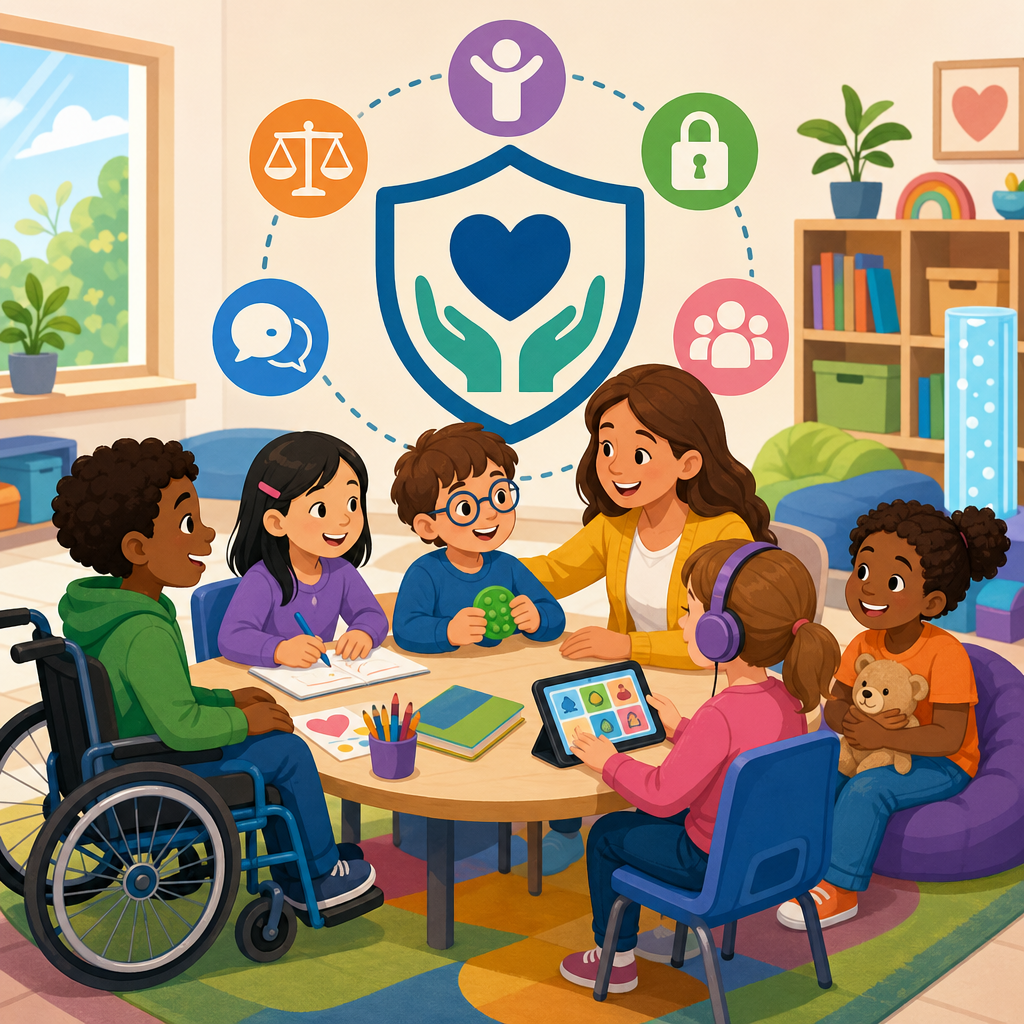
Rights and protections in specialized education settings determine whether students with disabilities, medical needs, behavioral challenges, or gifted learning profiles receive meaningful access to education rather than a seat in a classroom without support. In practice, these rights govern how schools identify needs, evaluate students, design services, protect privacy, prevent discrimination, and resolve disputes when families and educators disagree. Specialized education settings include public school special education programs, inclusive classrooms with supports, therapeutic day schools, residential placements, hospital instruction, alternative programs, charter schools, and some private placements funded by districts. The legal foundation usually comes from disability law, civil rights law, state education codes, and procedural safeguards that give families enforceable remedies. I have worked with families and school teams through eligibility meetings, manifestation reviews, placement disputes, and transition planning, and one lesson remains constant: rights only matter when people understand how to use them. This hub explains rights in action through case studies and real-world applications so readers can connect broad protections to daily decisions about access, safety, placement, discipline, transportation, communication, and long-term outcomes.
What rights apply in specialized education settings
The core question most families ask is simple: what rights does a student actually have when learning needs are complex? The practical answer is that students are entitled to equal access, appropriate supports, individualized planning when eligible, protection from discrimination, and fair procedures before schools change placement, deny services, or impose certain disciplinary consequences. In the United States, the most common legal anchors are the Individuals with Disabilities Education Act, Section 504 of the Rehabilitation Act, the Americans with Disabilities Act, the Family Educational Rights and Privacy Act, and state-level rules. These laws overlap but do different work. IDEA creates an affirmative obligation to identify eligible students, evaluate them in all suspected areas of disability, provide special education and related services, and deliver a free appropriate public education in the least restrictive environment. Section 504 and the ADA reach more broadly, prohibiting disability discrimination and requiring reasonable accommodations even when a student is not IDEA-eligible. FERPA governs access to records and confidentiality, which matters when medical, behavioral, and evaluation data are shared across teams.
In specialized settings, these rights become concrete through documents and decisions. An individualized education program sets annual goals, services, accommodations, minutes, placement, and how progress will be measured. A 504 plan outlines accommodations and sometimes health supports. Prior written notice explains what a district proposes or refuses and why. Evaluation reports, behavior intervention plans, manifestation determinations, transportation plans, nursing protocols, and transition services all carry legal weight. Rights also extend to process. Families can consent or refuse consent in specific situations, request independent educational evaluations, examine records, bring advocates or attorneys to meetings, use mediation, file state complaints, and pursue due process hearings. For students approaching adulthood, rights may transfer at the age set by state law, usually eighteen, unless guardianship or supported decision-making arrangements change that outcome.
Rights in action through identification, evaluation, and eligibility
Many rights problems begin before a student ever receives services. A school may describe a child as struggling, unmotivated, or disruptive for years without initiating a full evaluation. Child find obligations exist to prevent that delay. Districts must locate, identify, and evaluate students suspected of having disabilities, including students who earn passing grades, attend private school, move frequently, or also qualify as multilingual learners. In real cases, missed identification often appears in patterns: repeated reading intervention with no comprehensive testing, escalating discipline without functional behavioral assessment, or anxiety-related absences treated solely as truancy. When families document concerns in writing and request evaluation in all suspected areas, the quality of the response usually improves because the school must either proceed or formally refuse and explain its reasoning.
A common case study involves a student with average intelligence and severe dyslexia whose school points to decent report card grades as proof that special education is unnecessary. That reasoning is legally weak. Appropriate evaluation looks beyond grades to decoding, fluency, writing output, fatigue, access to curriculum, and the level of informal support needed to maintain performance. Another frequent example involves autism in girls or high-masking students. Teams may overlook sensory overload, social communication differences, or shutdown behavior because the student is not outwardly disruptive. Comprehensive assessment should include observation, speech-language evaluation when communication is implicated, rating scales interpreted carefully, and input from home and community settings. Eligibility decisions must reflect data, not stereotypes. When evaluation is narrow, an independent educational evaluation at public expense can become an important remedy if parents disagree with the district’s assessment.
Placement, inclusion, and the least restrictive environment
Placement disputes are often framed as inclusion versus specialized programming, but legally and educationally the issue is whether the student can be educated satisfactorily in the general education environment with supplementary aids and services before a more restrictive option is chosen. The least restrictive environment is not a slogan; it is a structured analysis. Teams should examine classroom supports, assistive technology, schedule adjustments, paraprofessional assistance, behavior plans, sensory accommodations, adapted curriculum, co-teaching, and related services before concluding that removal is necessary. At the same time, inclusion without adequate support is not compliance. I have seen students placed in general education for optics while spending the day isolated, missing instruction, or cycling through crisis responses because staffing and training were insufficient.
Real-world applications show why placement must be individualized. A student with significant communication needs may thrive in a general education classroom with augmentative and alternative communication, speech therapy embedded into routines, and trained staff who model language across the day. Another student with severe emotional disturbance may need a therapeutic day placement after repeated hospitalizations and failed in-district supports, particularly when clinical services and low student-to-staff ratios are essential for educational access. Residential placement is even more restrictive and should be driven by educational necessity, not simply social need or family stress. Transportation can itself be part of placement. If a student’s disability makes long bus rides destabilizing, a route modification, monitor, or specialized transportation may be required to make the program accessible.
Discipline, behavior, restraint, and safety protections
Discipline is where rights violations become most visible. Students with disabilities are suspended and removed at disproportionate rates, especially when disability-related behavior is interpreted as defiance. Schools can enforce codes of conduct, but they must also consider whether behavior was caused by, or had a direct and substantial relationship to, the student’s disability, or whether it resulted from failure to implement the IEP. That manifestation determination review is not a paperwork exercise. It should examine incident reports, service logs, staff testimony, behavioral data, and whether supports were actually delivered. If the conduct is a manifestation, the team generally must return the student to the prior placement unless a narrow exception applies and must address behavior through assessment and planning rather than simple punishment.
Safety interventions carry additional protections. Functional behavioral assessments identify triggers, consequences, and the purpose behavior serves, while behavior intervention plans translate that analysis into proactive supports. Positive behavioral interventions are the standard because punishment alone rarely changes disability-related behavior. Restraint and seclusion rules vary by state, but nationwide best practice limits them to imminent danger and requires documentation, debriefing, and parent notice. In one case I handled, a student with sensory dysregulation was repeatedly restrained during transitions. Review showed no sensory supports, no visual schedule, and no staff training in de-escalation. Once the team implemented predictable routines, movement breaks, and crisis prevention methods, incidents dropped sharply. The legal lesson was clear: schools must not rely on emergency measures where planned supports could reduce risk.
How common rights issues play out across settings
The same core protections apply differently depending on the program type, staffing model, and student profile. The examples below show how rights in action often look in day-to-day decision making.
| Setting or issue | Typical rights question | Practical application |
|---|---|---|
| Inclusive public classroom | Is support sufficient for meaningful participation? | Check service minutes, co-teaching quality, assistive technology, and whether accommodations are used consistently. |
| Therapeutic day school | Is restrictive placement educationally necessary? | Require data on failed less restrictive supports, treatment integration, and progress monitoring. |
| Hospital or homebound instruction | Does temporary instruction preserve access to curriculum? | Review instructional hours, related services continuity, and reintegration planning. |
| Charter school | Can the school limit enrollment based on disability needs? | No; charter schools receiving public funds must provide access and cannot counsel students out unlawfully. |
| Discipline change of placement | Was behavior a manifestation of disability? | Examine disability connection, IEP implementation, and whether compensatory services are owed. |
| Private placement funded by district | Who ensures services and compliance? | The public district retains responsibility for ensuring the student receives the ordered program and protections. |
Access, accommodations, related services, and health supports
Specialized education rights are not limited to classroom instruction. Access often depends on related services and accommodations that remove barriers outside the lesson itself. Speech-language therapy can be essential for social communication and classroom comprehension. Occupational therapy may address sensory regulation, handwriting, executive functioning, or access to tools. Physical therapy can support mobility and participation in school routines. Counseling, school psychology, adapted physical education, orientation and mobility, interpreting services, and nursing support can all be required when necessary for educational benefit. Under Section 504 and the ADA, accommodations may include extended time, breaks, alternate formats, captioning, preferential seating, medication access, allergen protocols, diabetes management, seizure response plans, or modified attendance procedures for health-related disabilities.
Case studies repeatedly show that implementation matters as much as drafting. A student with ADHD may have extended time on paper yet still fail tests because assignments are missing from the learning platform, reminders are inconsistent, and the student lacks support for task initiation. A student with epilepsy may have a strong academic program but face exclusion from field trips because staff are untrained in seizure protocols. A medically fragile student may lose weeks of school because transportation contractors are not equipped to handle equipment or nursing needs. In each example, the right at issue is practical access. Compensatory education can be an appropriate remedy when services were not delivered, but prevention is better. Clear service logs, trained staff, backup plans for absences, and measurable implementation checks reduce disputes and improve outcomes.
Procedural safeguards, family advocacy, and dispute resolution
When systems work, disputes are resolved in meetings with data on the table and student needs at the center. When they do not, procedural safeguards become essential. Families should request concerns in writing, ask for prior written notice when the district refuses a service or placement, and keep organized records of evaluations, emails, progress reports, and incident documentation. These basics matter because school memories change, but written timelines do not. Many disagreements can be narrowed by asking direct questions: What data supports the district’s position? What alternatives were considered? How will progress be measured? What staff training is in place? What is the plan if the intervention fails? Those questions move meetings from opinion to evidence.
Formal options include facilitated IEP meetings, mediation, state administrative complaints, federal civil rights complaints in some circumstances, and due process hearings. Each tool serves a different purpose. Mediation can preserve relationships and produce creative solutions. State complaints often work well for clear procedural violations such as missed service minutes or timeline failures. Due process is more resource-intensive and typically used for major disputes involving eligibility, placement, evaluations, or denial of appropriate education. Remedies may include reimbursement, compensatory education, corrective action, revised plans, or ordered placement. Families do not need to approach every issue as a legal battle, but they do need to understand that rights become enforceable through documentation, deadlines, and persistence. The most effective advocacy is usually calm, specific, and relentlessly tied to educational impact.
Transition planning and preparing for adult life
Rights in specialized education settings extend beyond current services to future readiness. Transition planning, which under federal law must begin by age sixteen and earlier in some states, should identify postsecondary goals and the services needed to reach them. Strong transition plans address education, employment, independent living when appropriate, travel training, self-advocacy, vocational assessment, community experiences, and connections to adult agencies. Weak plans rely on generic language like “student will explore careers” without linking services, responsibilities, or measurable outcomes. In practice, transition is where schools reveal whether they are preparing students for real adult participation or simply managing them until exit.
Consider two students nearing graduation. One has autism and strong academic skills but limited self-advocacy; the school embeds transition by teaching disclosure decisions, connecting the student with disability services at a community college, and practicing workplace communication. Another has multiple disabilities and requires significant support; the team coordinates with vocational rehabilitation, adult developmental services, guardianship or alternatives, transportation training, and family planning years before exit. Both students need rights in action, not promises. Specialized education settings should help students understand accommodations, consent, records, and responsibilities after high school. That preparation is one of the strongest protections a school can provide.
Rights and protections in specialized education settings are most powerful when translated into daily practice: timely evaluation, individualized planning, inclusive placement with real supports, fair discipline, safe behavior intervention, accessible services, and credible transition preparation. The recurring theme across every case study is that compliance on paper is not enough. Students need plans that are implemented, reviewed with data, and adjusted when they do not work. Families need clear explanations, usable records, and meaningful participation in decisions. Educators need training, staffing, and systems that let them meet legal obligations while serving students effectively. When those pieces align, rights stop being abstract and become a structure for educational access, safety, dignity, and progress.
Use this hub as your starting point for deeper work on rights in action and real-world applications. Review your student’s current plan, identify any gap between written supports and actual delivery, and document the questions that remain unanswered. Then move to the next article in this subtopic with a specific issue in mind, whether that issue is evaluation, placement, discipline, accommodations, or transition. Focused, informed action is how protections become results.
Frequently Asked Questions
What rights do students have in specialized education settings?
Students in specialized education settings generally have the right to meaningful access to education, not just physical placement in a classroom or program. That means schools must do more than admit a student; they must provide the supports, services, accommodations, and instructional methods necessary for the student to participate and make appropriate progress. These rights often apply to students with disabilities, medical conditions, behavioral needs, communication challenges, and, in some settings, advanced or gifted learning profiles that require specialized instruction. Depending on the school type and the laws that apply, these protections can include the right to individualized evaluation, the right to a written service or education plan, the right to related services such as speech therapy or counseling, and the right to access programs and activities on an equal basis with peers.
Students are also protected from discrimination based on disability or other protected characteristics. In practical terms, that can affect discipline, admissions, accessibility, transportation, testing, health supports, and participation in extracurricular activities. Families often assume rights begin only after a formal diagnosis, but schools may have obligations when they know or should know that a student is struggling due to a disability-related need. Another important protection is the right to be educated in an appropriate setting, which usually means considering whether the student can learn with nondisabled peers and what supports would make that possible before moving to a more restrictive placement. Privacy rights also matter. Educational and health-related information is typically subject to rules about confidentiality, access, and consent. Taken together, these protections are designed to ensure that specialized education is responsive, individualized, and legally accountable.
How are students identified and evaluated for special education services or accommodations?
Identification and evaluation are the starting point for many specialized education protections. A student may be referred for evaluation by a parent, teacher, school administrator, counselor, physician, or other professional who notices academic, behavioral, developmental, communication, social, or medical concerns. In many cases, schools are expected to respond when there are clear signs that a student may need specialized support. That response should not be delayed simply because the student is passing classes, because some students compensate for significant challenges while still lacking equal access to instruction. Evaluations should be sufficiently comprehensive to identify all areas of suspected need, which may include learning disabilities, autism, speech and language issues, emotional or behavioral concerns, physical impairments, sensory needs, executive functioning difficulties, or health-related limitations.
A strong evaluation process usually includes multiple sources of information rather than a single test score. Schools may review classroom performance, teacher reports, parent input, medical information, observations, standardized assessments, behavior data, and progress monitoring records. Families should have an opportunity to share concerns and relevant history, including outside diagnoses or treatment records. In many systems, parental consent is required before formal evaluation begins, and timelines govern how quickly schools must complete the process. Once the evaluation is complete, a team reviews the results and determines eligibility for special education, related services, accommodations, or other supports. If parents disagree with the evaluation, they may have the right to request additional testing, seek an independent educational evaluation, or use dispute resolution procedures. The key legal principle is that evaluation must be individualized, timely, and accurate enough to guide appropriate services rather than simply classify the student.
What is the difference between accommodations, modifications, and specialized instruction?
These terms are often used interchangeably in everyday conversation, but they have different meanings and legal consequences. Accommodations change how a student accesses instruction or demonstrates learning without lowering the core academic expectations. Common examples include extended time on tests, preferential seating, assistive technology, visual schedules, breaks during tasks, access to a nurse, or alternative formats for reading and writing. The goal of an accommodation is to remove barriers caused by a disability or other qualifying condition so the student can participate more fully in the general curriculum or school environment. Accommodations are common in both special education plans and broader disability support plans.
Modifications, by contrast, change what the student is expected to learn or produce. That may mean reduced assignments, altered grading standards, simplified content, or instruction at a different academic level than the general classroom standard. Because modifications can significantly affect academic trajectory, credits, and diploma pathways, they usually require careful team discussion and clear documentation. Specialized instruction goes a step further by addressing the student’s unique learning needs through individualized teaching strategies, goals, methodologies, or interventions. Examples include direct reading intervention for dyslexia, behavior instruction and supports, functional communication training, occupational therapy integrated into classroom participation, or social skills instruction tailored to the student’s profile.
Understanding the difference matters because a student may need one, two, or all three forms of support. A child with a medical condition may only need accommodations. A student with a learning disability may need accommodations plus specialized instruction. Another student with significant cognitive needs may require modifications as well. Schools should not substitute minimal accommodations when a student actually needs targeted instruction, and they should not place a student on a modified curriculum without informed team review. The right support depends on the student’s actual needs, not on what is easiest for the school to deliver.
How do privacy, discipline, and anti-discrimination protections work in specialized education settings?
Privacy, discipline, and anti-discrimination protections are central because students in specialized education settings often have sensitive records and may be more vulnerable to exclusionary practices. Privacy rules generally limit who can access a student’s educational records, evaluation data, behavior information, and health-related documentation. Parents usually have the right to inspect records, request corrections in some circumstances, and control certain disclosures. Schools should only share personally identifiable information with staff who have a legitimate educational interest or when disclosure is otherwise legally permitted. This is especially important when a student’s disability, mental health condition, medication needs, or behavioral history could stigmatize the student if handled carelessly.
Discipline raises additional concerns. Students with disabilities are not exempt from school rules, but schools often must consider whether behavior is linked to the student’s disability, whether supports were properly implemented, and whether disciplinary action would unlawfully deny access to education. In many systems, repeated suspensions, removals, shortened school days, or informal requests that a parent keep a student home can trigger legal protections and procedural obligations. Schools may need to conduct a manifestation determination, review the student’s plan, strengthen behavior supports, or consider whether the placement remains appropriate. Informal exclusion can be just as problematic as formal discipline if it effectively removes the student from services without proper process.
Anti-discrimination protections also reach beyond the classroom. Schools generally must provide equal access to programs, field trips, athletics, transportation, meals, communication, technology, and extracurricular activities. They may need to make reasonable adjustments unless doing so would fundamentally alter the program or create an undue burden under the governing law. Harassment based on disability can also violate a student’s rights, particularly if the school knows about it and fails to respond effectively. In short, these protections work together to ensure that students are treated fairly, their information is respected, and their needs are not used as a basis for exclusion or unequal treatment.
What can families do if they disagree with a school about services, placement, or eligibility?
Disagreements are common in specialized education because families and schools may view the student’s needs, progress, or placement options differently. The first step is usually to ask for clear documentation and a detailed explanation of the school’s decision. Families should request copies of evaluations, progress reports, data used to support recommendations, draft plans, and notes from team meetings if available. It is often helpful to put concerns in writing and be specific about what the family believes is missing or incorrect. For example, a parent may disagree that the evaluation was comprehensive, may believe the services are too limited, or may argue that the proposed placement is too restrictive. Written communication creates a record and often leads to more focused responses from the school.
If informal problem-solving does not resolve the issue, families may have several procedural options depending on the setting and applicable law. These can include requesting another meeting, seeking an independent educational evaluation, using mediation, filing an administrative complaint, requesting a due process hearing, or pursuing disability discrimination remedies through a government agency. Some families also work with advocates, attorneys, educational consultants, or clinicians who can help interpret data and identify whether the school’s plan is legally and educationally sound. In disputes over placement, services, or discipline, timelines and procedural safeguards can be extremely important, so acting promptly matters.
Families should also remember that effective advocacy is strongest when it combines collaboration with evidence. Bringing outside reports, examples of unfinished work, behavior logs, attendance patterns, and notes about how the student functions at home can help the team see the full picture. At the same time, many disputes can be resolved without litigation when everyone stays focused on the student’s actual educational needs rather than labels or budget constraints. The purpose of dispute procedures is not simply to win an argument. It is to make sure the student receives an appropriate, legally compliant program that provides real access, real support, and a fair chance to succeed.