Disability rights have come a long way since the adoption of the Americans with Disabilities Act (ADA) in 1990. While the journey towards equality and non-discrimination continues, the ADA has been instrumental in making significant strides. It provides legal protections that have empowered millions with disabilities, fostering a more inclusive society. However, the real impact of the ADA is best understood through personal stories – narratives of real people who have confronted discrimination and triumphantly asserted their rights. This article explores several such stories, each highlighting the vital role of ADA protections and demonstrating how legislation can support individuals in reclaiming their dignity and rights.
Facing Workplace Discrimination
Maria, a software engineer from California, was excited when she secured employment at a reputed tech company. However, her enthusiasm soon waned as she faced discrimination due to her mobility impairment. Despite excelling in her field and meeting expectations, Maria noticed a pattern: she was often bypassed for promotions and critical projects.
Her employer’s reluctance to provide reasonable accommodations became apparent when Maria requested an adjustable desk and ergonomic chair to alleviate her back pain, a consequence of her disability. The request was denied without a valid explanation, pushing Maria to experience increased discomfort and exacerbating her health condition.
Determined not to let her disability define her career, Maria decided to take action. With the support of ADA provisions, she filed a complaint with the Equal Employment Opportunity Commission (EEOC). Her case was investigated, and after mediation, her employer agreed to not only provide the necessary accommodations but also re-evaluate promotion procedures to ensure fair treatment of all employees.
Maria’s case highlights the ADA’s power in safeguarding employee rights, demonstrating how the law can hold employers accountable and encourage them to create inclusive workplaces. Her courage in confronting discrimination has paved the way for others to assert their rights, fostering a more equitable work environment for all.
Barrier-Free Access to Public Spaces
Public spaces are meant to be accessible to everyone. However, for James, a wheelchair user from New York, even a simple task like visiting the local library was once a formidable challenge. The library, a beautiful historic building, was unfortunately not accessible – narrow doorways, high steps, and no ramps posed a significant barrier.
Frustrated by the limitation, James couldn’t participate in community events or access educational resources available at the library. Upon learning about his rights under the ADA, which mandates public entities to remove physical barriers and provide accessible services, James reached out to local advocacy groups for support.
The process to resolve the issue was gradual but impactful. James’ efforts, backed by ADA guidelines, led to a community-driven initiative that secured funding and professional expertise to renovate the library. The building now boasts ramps, automatic doors, and accessible restrooms, making it a welcoming space for everyone, regardless of their physical abilities.
James’ story underscores the importance of accessibility in public spaces. It highlights how ADA provisions can be leveraged to bring about tangible improvements in community environments, ensuring that public spaces truly serve the entire public, including those with disabilities.
Ensuring Educational Equity
For children with disabilities, accessing quality education should be a right, not a privilege. Hannah, a high school student with a visual impairment from Texas, was keenly aware of this. Despite being a dedicated student, Hannah often struggled with the standard curriculum materials provided at her school.
Her textbooks and educational resources were not available in Braille or digital formats, making it challenging for her to keep up with coursework and limiting her potential. Knowing her rights under the ADA and the Individuals with Disabilities Education Act (IDEA), Hannah and her family advocated for necessary adjustments.
After numerous discussions with school administrators and a formal complaint, the school district recognized the oversight and committed to improving accessibility. They introduced digital devices that supported text-to-speech software and ensured that all future educational materials were available in Braille or digital format. Additionally, they facilitated staff training on accommodating students with disabilities.
Hannah’s perseverance reflects how ADA protections can be vital in ensuring educational equity. Her actions have not only enriched her academic experience but also paved the way for systemic changes, ensuring that current and future students receive the support they need to succeed.
Access to Healthcare Services
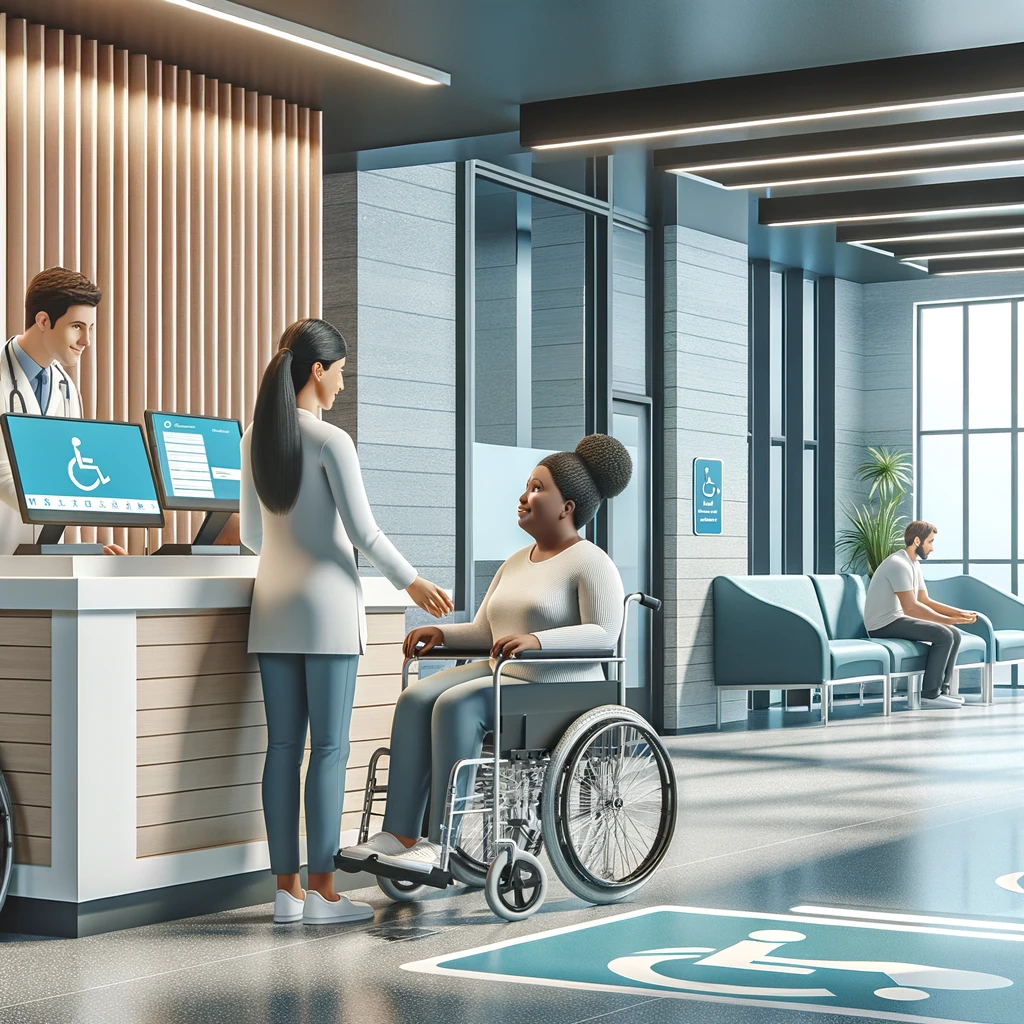
Healthcare is a fundamental right, yet access remains a hurdle for many, particularly individuals with disabilities. David’s experience illustrates the barriers and triumphs associated with navigating healthcare systems. A wheelchair user living in Florida, David faced numerous challenges in accessing healthcare services due to physical barriers and a lack of understanding from medical professionals.
Routine medical appointments became a source of stress, as examination rooms were not equipped to accommodate his wheelchair, and staff often lacked training on how to assist patients with mobility impairments. The situation worsened when David was referred to a specialist whose office was located in a building without accessible entry or elevators.
Refusing to be denied essential services, David filed a complaint under the ADA. He worked with a disability rights attorney to ensure healthcare providers adhered to ADA standards. Over time, David’s advocacy led to critical changes, such as the installation of ramps and elevators, and the implementation of sensitivity training for healthcare staff.
David’s perseverance serves as a reminder of the importance of equitable healthcare access. Through his efforts, healthcare facilities became more inclusive, improving service delivery for all patients, especially those with disabilities.
Embracing Technology for Accessibility
Technology has the potential to bridge many accessibility gaps for individuals with disabilities, but only if it’s designed inclusively. Sarah, a hearing-impaired college student from Illinois, found herself excluded from many virtual resources because they lacked closed captions or other accessible features.
Struggling to participate in online classes and group discussions, Sarah was determined not to let technology become a barrier. She began documenting her challenges and those of her peers, reaching out to tech developers and educational institutions, urging them to integrate accessible design in their platforms.
Her advocacy, reinforced by ADA technology guidelines, was instrumental in sparking changes. Universities started revising their digital policies to include captioning services for videos and alternative text for visual content. Tech companies also began incorporating broader accessibility options in their software, considering features like real-time transcription and user customization.
Sarah’s story highlights the intersection of technology and accessibility, demonstrating how the ADA can influence digital innovation. Her efforts underscore the need for ongoing advocacy to ensure that digital transformation is inclusive, allowing everyone to participate fully in the digital age.
Conclusion
The Americans with Disabilities Act has transformed lives and communities by providing powerful protections that enable individuals with disabilities to overcome discrimination and embrace their full potential. The personal stories highlighted in this article illustrate not only the challenges people face but also their tremendous resilience and the positive change that can occur when rights are asserted and protections are enforced.
Whether in the workplace, public spaces, educational institutions, healthcare settings, or through technology, the ADA remains a crucial tool in fostering equity and inclusion. These real-world applications of ADA protections reinforce the importance of understanding and exercising one’s rights. They serve as a potent reminder that while significant progress has been made, ongoing efforts and vigilance are essential to ensure a society that respects and values the dignity and contributions of individuals with disabilities.
Frequently Asked Questions
1. What is the Americans with Disabilities Act (ADA), and how does it help in overcoming discrimination?
The Americans with Disabilities Act (ADA) is a landmark civil rights law enacted in 1990. It’s designed to ensure people with disabilities have equal rights and opportunities in several areas, including employment, public accommodations, transportation, and communication. Think of it as a rulebook that mandates fairness by prohibiting discrimination against individuals with disabilities in all areas of public life, ensuring that they have the same rights and opportunities as everyone else. The ADA tackles barriers by requiring reasonable accommodations in the workplace, mandating accessibility in public spaces, and promoting effective communication. It’s a powerful tool that empowers individuals to stand up against discrimination, contributing to a more inclusive society. This law is indeed a game-changer, directly impacting millions of lives by leveling the playing field. It’s not just about legal sovereignty but about recognition and respect, helping people with disabilities participate fully in society.
2. How have businesses adapted to ADA requirements to support people with disabilities?
Since the ADA’s enactment, businesses across the nation have increasingly focused on accessibility and inclusivity. Employers have integrated inclusive practices and accessibility modifications into their environments, which often means altering physical spaces to accommodate wheelchairs, providing Braille signage, or implementing technology solutions that support individuals with various disabilities. Beyond physical changes, there’s an evolving culture shift among businesses striving to cultivate inclusive organizational cultures. This cultural shift means training employees about disability awareness and promoting diverse hiring practices that include individuals with disabilities. As businesses prioritize these adaptations, they’re not just complying with the law but are also opening doors to a broader customer base and a wealth of untapped talent, which in turn boosts innovation and reflects positively on their public image.
3. What does “reasonable accommodation” mean, and can you give examples?
“Reasonable accommodation” refers to modifications or adjustments to a job, work environment, or the way things are usually done, enabling a person with a disability to have equal employment opportunities. This concept is pivotal under the ADA because it ensures people with disabilities can work and perform their roles like anyone else, tailored to their needs. For instance, it might involve something like restructuring a role, altering a work schedule to allow for medical appointments, or modifying equipment to be more accessible. It’s about creating an environment where capabilities can flourish without being hindered by preventable barriers. Importantly, the accommodations are considered reasonable if they don’t cause undue hardship on the operation of the business, balancing practicality with the necessity of equal opportunity.
4. How does the ADA affect public transportation systems?
Public transportation is a significant component of daily life and needs to be accessible for everyone, including individuals with disabilities. The ADA has paved the way for substantial reforms in this area. Public transportation authorities are required to ensure that buses, trains, subways, and other transit systems are accessible. This can include features like low-floor buses, wheelchair lifts, and announcers indicating stops for those with visual or auditory disabilities. Moreover, new transit facilities must be readily accessible, and plans must be in place for older facilities to improve accessibility where feasible. These measures foster independence and empowerment, allowing individuals with disabilities to travel safely and conveniently, opening up access to education, employment, and community involvement.
5. What should someone do if they experience discrimination despite the ADA?
Experiencing discrimination, even with ADA protections in place, can be daunting, but there are clear steps to address these situations. If you believe your rights under the ADA have been violated, the first step is to try to resolve the issue directly with the involved party, be it an employer, business, or service provider. Open communication and documentation are crucial here. However, when self-advocacy isn’t sufficient, the ADA provides avenues for filing complaints. For employment-related grievances, you would contact the Equal Employment Opportunity Commission (EEOC), while issues involving public accommodations or services can be addressed to the Department of Justice or other relevant agencies. Seeking the guidance of an attorney specialized in disability rights is also a viable option for navigating these processes. Remember, standing up against discrimination is not only a personal right but a societal advancement, reinforcing the fight for an inclusive environment where everyone is treated with dignity and equality.