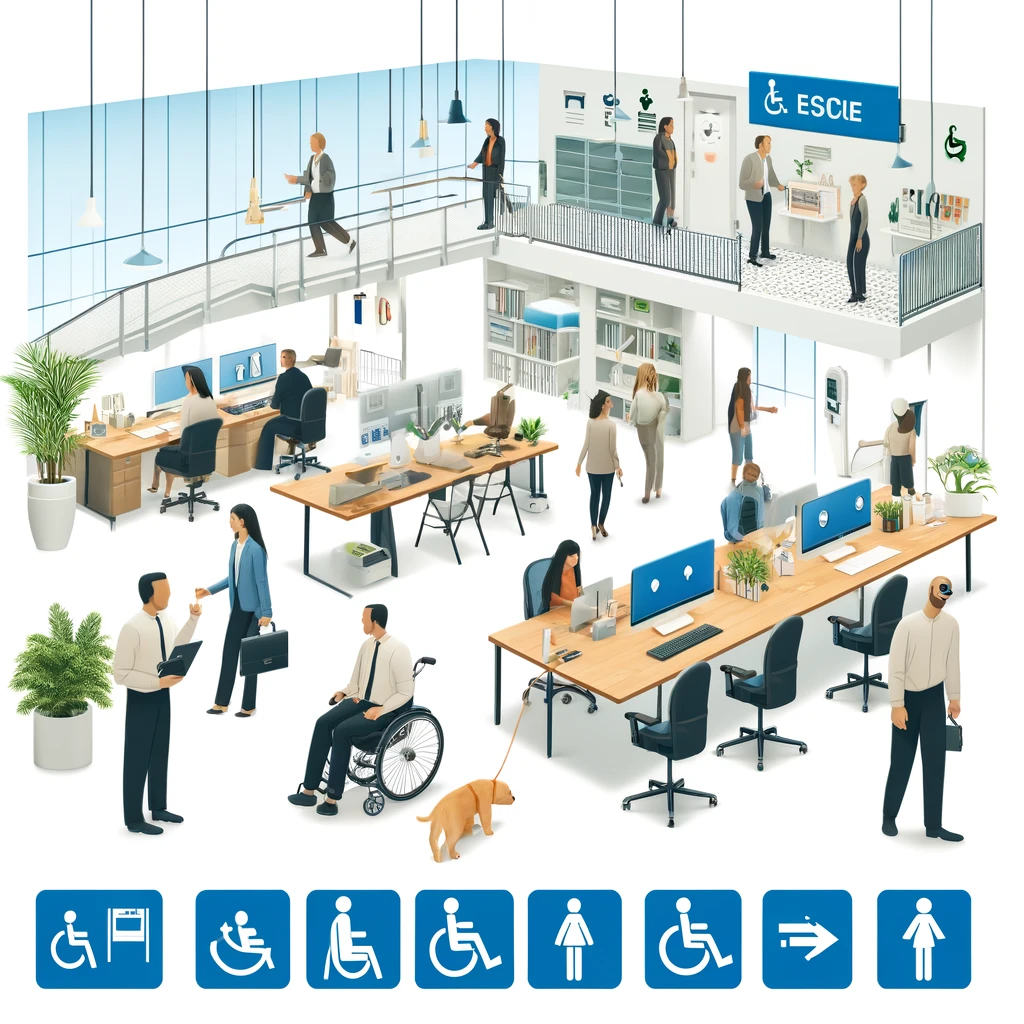
ADA compliance is not a one-time project; it is an ongoing duty that requires continuous attention, documented processes, and regular updates as laws, technologies, facilities, and customer expectations change. The term ADA refers to the Americans with Disabilities Act of 1990, the federal civil rights law that prohibits discrimination based on disability in employment, state and local government services, public accommodations, transportation, and telecommunications. Compliance means meeting the practical requirements that let people with disabilities access buildings, services, information, and digital experiences on equal terms.
For organizations, the question matters because treating compliance like a finish line creates legal, operational, and reputational risk. I have seen teams invest heavily in an initial accessibility retrofit, only to introduce new barriers during a website redesign, office renovation, procurement change, or content migration six months later. Accessibility is dynamic. A compliant entrance can become noncompliant after maintenance is deferred. An accessible PDF workflow can break when a new vendor takes over. A website that passes an audit today can fail after a plugin update tomorrow. That is why the most durable approach is to build accessibility into governance, training, purchasing, design, development, facilities management, and customer support.
This article serves as a hub for Introduction to ADA Compliance within the broader Compliance and Implementation topic. It explains what ADA compliance covers, who must pay attention, what standards organizations commonly use, where one-time remediation makes sense, and why ongoing monitoring is essential. It also clarifies the difference between legal obligations and technical standards. The ADA itself is a civil rights statute, while implementation often relies on regulations, design standards, settlement terms, agency guidance, and recognized technical benchmarks such as the 2010 ADA Standards for Accessible Design and the Web Content Accessibility Guidelines, commonly called WCAG. Understanding that structure helps organizations move from abstract obligation to daily practice.
What ADA Compliance Includes in Practice
ADA compliance spans physical spaces, digital properties, policies, and interactions. Title I addresses employment and reasonable accommodation. Title II governs state and local government programs and services. Title III applies to places of public accommodation and commercial facilities, including retail stores, hotels, restaurants, healthcare offices, schools run by private entities, and many service businesses. Different titles create different obligations, but the common principle is effective access. In practice, that means removing barriers where required, providing auxiliary aids and services when needed, modifying policies when reasonable, and avoiding eligibility criteria that screen out people with disabilities unless truly necessary.
In buildings, compliance can involve parking, routes, entrances, restrooms, service counters, signage, seating, alarms, and lodging features. In digital environments, it often means keyboard accessibility, sufficient color contrast, alternative text, captions, headings, form labels, error identification, predictable navigation, and compatibility with assistive technologies such as screen readers and refreshable Braille displays. In operations, it includes staff training, accommodation procedures, service animal policies, communication access, and complaint handling. These areas overlap. A medical clinic, for example, may need an accessible entrance, height-appropriate check-in counters, online appointment booking that works by keyboard, accessible intake forms, and a process for securing sign language interpreters when necessary.
The most important takeaway is that compliance is not only about construction or websites. It is about the full user journey. If a customer can enter the building but cannot read the menu, complete checkout, hear safety instructions, or use the mobile app tied to the service, access is incomplete. That is why mature programs evaluate every touchpoint rather than relying on a single audit category.
Why It Is an Ongoing Duty, Not a Single Milestone
The ADA creates continuing obligations because organizations continually change. Staff members rotate. Content is published daily. Software versions update. Tenants change layouts. Products are added, services expand, and policies evolve. Every change can create new barriers. A one-time audit identifies issues at a moment in time; it does not guarantee future accessibility. I have watched otherwise careful organizations lose ground because accessibility was handled as a special project owned by one consultant instead of as a recurring business function with executive sponsorship and operational owners.
Several legal and practical realities drive this ongoing duty. First, maintenance of accessible features is itself required. An accessible route blocked by storage, a broken automatic door, or a captioning workflow abandoned after launch can create immediate access problems. Second, reasonable modifications and effective communication obligations arise whenever people interact with your organization. You cannot satisfy those duties once and assume they are finished forever. Third, digital content is inherently fluid. News updates, product uploads, seasonal campaigns, and third-party integrations all affect accessibility. Finally, courts and regulators look at whether an organization has taken sustained, good-faith steps, not simply whether it once commissioned a report.
That does not mean every task is perpetual. Some issues are project based. You may complete a restroom renovation, remediate a batch of legacy PDFs, or rebuild a navigation component. But those projects sit inside a broader system of governance, monitoring, and accountability. The practical model is straightforward: remediate known barriers, establish standards, train the people who create change, and verify that new work stays accessible.
Core Areas Organizations Must Manage Continuously
The operational scope of ADA compliance becomes clearer when you break it into repeatable domains. The list below reflects the areas I most often see in successful programs, whether the organization is a university, healthcare provider, retailer, municipality, or software company.
- Facilities and built environment: parking, routes, entrances, elevators, counters, restrooms, seating, alarms, and maintenance of accessible features.
- Websites and applications: templates, code, content, media, forms, authentication, documents, and third-party tools.
- Employment practices: recruitment, interviews, onboarding, workplace accommodations, accessible communications, and HR procedures.
- Customer service and communications: phone access, relay services, interpreter processes, captioning, alternative formats, and complaint response.
- Policies and governance: assigned ownership, escalation paths, procurement requirements, vendor contracts, training schedules, and audit cycles.
- Procurement and vendor management: purchasing software, kiosks, documents, learning tools, or construction services with accessibility requirements built in.
Each area requires different expertise, but they depend on one another. A company may have an accessible website and still fail customers if call center staff do not know how to handle relay calls or if a contractor installs inaccessible self-service kiosks. Durable compliance comes from coordination across legal, IT, facilities, HR, marketing, procurement, and frontline operations.
Standards, Guidelines, and the Role of Audits
Organizations often ask what standard proves ADA compliance. The accurate answer is nuanced. For physical spaces, the 2010 ADA Standards for Accessible Design are central, along with applicable building codes and, in some contexts, state accessibility requirements. For digital accessibility, WCAG 2.1 Level AA has become the most widely used benchmark in settlements, policies, and procurement, although WCAG 2.2 is increasingly relevant for new work. Section 508 standards matter for federal agencies and often influence contractors and public institutions. None of these standards eliminate the need for judgment, but they provide measurable criteria.
Audits are essential, yet limited. An accessibility audit tells you where barriers exist and often prioritizes remediation. In digital work, a thorough audit blends automated scanning tools like axe, WAVE, or Siteimprove with manual keyboard testing, screen reader testing using NVDA, JAWS, or VoiceOver, and review of user flows such as checkout, scheduling, and account creation. In facilities work, audits examine dimensions, slopes, clearances, maneuvering spaces, hardware, signage, and path continuity. The best audits include severity ratings, code references, screenshots or photos, and specific remediation guidance.
Still, no audit is permanent proof. Accessibility can regress. Automated tools usually detect only a portion of digital issues, often estimated at around 30 to 40 percent of WCAG failures depending on the content set. A facility survey can miss operational barriers that appear only during peak use. That is why leading organizations pair audits with policies, design reviews, acceptance testing, and periodic reevaluation.
Real-World Examples of Ongoing Compliance
Consider a hotel group that renovates guest rooms to add compliant clear floor space, roll-in showers in designated rooms, and visual alarms. That capital project is important, but the compliance duty continues. Reservation systems must accurately describe accessible room features. Housekeeping cannot store carts in access aisles. Staff must know how to hold accessible rooms when required and how to respond when a guest requests an accommodation. If the booking engine update removes keyboard access from date pickers, the guest experience becomes inaccessible before arrival, even though the physical renovation was successful.
A second example is a city government launching an accessible website. The initial redesign may meet recognized standards, add captions to council videos, and fix online payment forms. Ongoing duty begins the next day. Departments upload meeting agendas, scanned PDFs, maps, and emergency notices. New staff members may not know how to create tagged documents or accessible tables. Third-party payment vendors may change interfaces. Because local governments deliver essential services, they need content governance, training, and recurring testing, not a single redesign budget.
Healthcare offers another clear illustration. A clinic may install compliant entrances and exam rooms, but patients still face barriers if portals are unreadable by screen readers, consent forms are inaccessible, or staff do not know how to secure communication supports. The Department of Justice and Department of Health and Human Services have repeatedly emphasized effective communication in care settings because inaccessible communication can directly affect safety, informed consent, and treatment outcomes.
How to Build a Sustainable ADA Compliance Program
The strongest programs treat accessibility as an operating discipline. Start by assigning ownership. Someone should be accountable at the leadership level, and each department should know its responsibilities. Next, establish a baseline through audits of your highest-risk assets: key facilities, core web journeys, employment touchpoints, and heavily used documents. Prioritize issues based on legal exposure, user impact, and business criticality. A checkout barrier or inaccessible hiring portal usually matters more than a low-traffic archive page.
Then create controls that prevent rework. Write accessibility requirements into design systems, content templates, development definitions of done, procurement language, and renovation scopes. Train the people who produce change: designers on contrast and focus order, developers on semantic markup and ARIA use, content authors on headings and link purpose, HR teams on accommodation workflows, and facilities teams on maintaining accessible features. Build review checkpoints before launch, not after complaints. For digital teams, that means accessibility acceptance criteria in tickets, component testing in staging, and periodic manual audits. For facilities teams, it means preventive maintenance, post-construction verification, and documented correction of deficiencies.
Finally, create a feedback loop. Publish an accessibility contact method, respond promptly, track issues, and use complaints as operational data. Organizations that improve fastest are usually the ones that listen carefully to disabled users and incorporate that feedback into roadmaps, training, and vendor management.
Common Misconceptions and Practical Next Steps
Several misconceptions slow progress. The first is that ADA compliance applies only to large enterprises. In reality, obligations vary by title and circumstance, but many small businesses, nonprofits, schools, and professional practices still need to address accessibility. The second is that a plugin, overlay, or single statement on a website creates compliance. It does not. Tools may assist, but they cannot replace accessible code, content, and processes. The third is that accessibility is only about avoiding lawsuits. The stronger business case is broader: accessible experiences increase reach, improve usability for everyone, reduce rework, and support consistent service quality.
The simplest next step is to stop framing compliance as a one-time fix. Conduct a baseline assessment, identify the highest-impact barriers, adopt recognized standards, and assign ownership for ongoing monitoring. If this page is your starting point within Compliance and Implementation, use it as the hub for deeper work on audits, website remediation, document accessibility, facility reviews, training, procurement, and policy development. ADA compliance succeeds when it becomes routine. Start with one concrete workflow, improve it, document it, and expand from there.
Frequently Asked Questions
Is ADA compliance a one-time project or an ongoing duty?
ADA compliance is an ongoing duty, not a one-time project that can be completed and forgotten. The Americans with Disabilities Act of 1990 is a federal civil rights law that prohibits discrimination based on disability across key areas of public life, including employment, state and local government services, public accommodations, transportation, and telecommunications. Because businesses, facilities, policies, technologies, and customer interactions constantly change, compliance must be treated as a continuous operational responsibility. A building may be altered, a website may be redesigned, new software may be introduced, staff may turn over, or customer service practices may drift away from accessible standards over time. Any of these changes can create new barriers if accessibility is not built into regular decision-making.
In practical terms, ongoing ADA compliance means routinely evaluating how people with disabilities access your services, physical spaces, digital tools, and communications. It also means documenting processes, assigning responsibility, training employees, addressing complaints, and updating practices as legal interpretations and industry expectations evolve. Organizations that treat ADA compliance as a living program are far better positioned to reduce risk, improve access, and serve the public consistently. The central idea is simple: accessibility must be maintained, monitored, and improved over time, not checked off once.
Why does ADA compliance require continuous attention?
ADA compliance requires continuous attention because the environment in which organizations operate never stays still. Laws and regulations may be clarified through agency guidance, court decisions, and updated standards. Technology changes quickly, which affects digital accessibility for websites, online forms, mobile apps, kiosks, and customer portals. Physical facilities also evolve through renovations, equipment replacement, layout changes, and routine maintenance. Even small changes, such as moving furniture, replacing door hardware, updating signage, or launching a new checkout process, can affect accessibility for customers, visitors, employees, or program participants with disabilities.
Continuous attention is also necessary because compliance depends heavily on daily practices, not just design standards. A compliant entrance does not help much if staff block it with deliveries. An accessible website can become inaccessible after a content update. A written accommodation policy is not enough if supervisors are not trained to apply it properly. Accessibility failures often happen when organizations make ordinary operational changes without considering disability access. That is why regular reviews, periodic audits, employee training, and internal accountability matter so much. Ongoing attention helps organizations catch issues early, respond before barriers become systemic, and demonstrate a good-faith commitment to equal access.
What does an effective ongoing ADA compliance program usually include?
An effective ongoing ADA compliance program usually includes a combination of assessment, policy development, training, monitoring, documentation, and corrective action. It often starts with a baseline review of physical spaces, digital assets, policies, communication methods, and service practices to identify existing barriers. From there, organizations should establish clear accessibility policies and procedures that explain how accommodations are requested, how issues are escalated, who is responsible for implementation, and how complaints are handled. Assigning ownership is especially important. When accessibility is everyone’s job but no one’s responsibility, important issues can fall through the cracks.
Strong programs also include scheduled reviews. These may involve periodic facility inspections, website accessibility testing, document remediation checks, vendor evaluations, and audits of customer-facing processes. Employee training is another major component. Frontline staff, managers, HR personnel, facilities teams, IT professionals, marketing departments, and procurement staff all affect compliance in different ways, so training should be tailored to each role. Documentation is equally important because it shows that accessibility is being addressed systematically rather than reactively. Records of audits, repairs, policy updates, accommodation requests, training sessions, and remediation efforts can help organizations track progress and support their legal and operational position. In short, an effective program treats accessibility as part of governance, operations, and quality control.
How often should a business or organization review its ADA compliance efforts?
There is no single review schedule that fits every organization, but ADA compliance efforts should be reviewed regularly and whenever meaningful changes occur. At a minimum, many organizations benefit from annual or semiannual reviews of their facilities, policies, and digital platforms. However, relying only on a calendar can be risky. Accessibility should also be reviewed when launching a new website, updating online content, renovating a facility, adopting new software, revising employment practices, changing service models, or introducing new customer communication channels. Any operational change that affects how people interact with the organization should trigger an accessibility check.
The right frequency depends on the size of the organization, the complexity of its operations, the number of public touchpoints involved, and the pace of change. A business with multiple locations, online scheduling tools, mobile apps, and frequent marketing updates will usually need more frequent monitoring than a smaller operation with limited changes. Complaint trends are another signal. If customers, employees, or visitors are reporting access problems, reviews should happen immediately rather than waiting for a scheduled audit. The best approach is to combine routine assessments with event-driven reviews so accessibility remains integrated into business planning instead of becoming an afterthought.
What are the risks of treating ADA compliance as a one-and-done task?
Treating ADA compliance as a one-and-done task creates legal, financial, operational, and reputational risks. From a legal standpoint, an organization can face complaints, investigations, demand letters, or lawsuits if barriers prevent people with disabilities from accessing employment opportunities, goods, services, programs, or information. A past accessibility effort does not shield a business if new barriers emerge later. Courts and enforcement agencies generally care about actual access and whether the organization is meeting its obligations in practice, not whether it once completed a project years earlier.
There are also broader business consequences. Accessibility failures can lead to lost customers, damaged public trust, strained employee relations, and avoidable remediation costs that become more expensive when addressed late. When accessibility is ignored during normal updates, organizations often have to fix the same systems twice: first to launch them, then again to make them usable. That is inefficient and disruptive. By contrast, treating ADA compliance as an ongoing duty helps organizations build accessibility into procurement, design, operations, and customer service from the start. That proactive approach not only reduces exposure but also supports a more inclusive experience for everyone who interacts with the organization.