Pharmacies face a distinctive accessibility challenge because care moves through physical counters, digital apps, and drive-thru lanes in a single customer journey, and each touchpoint can create Americans with Disabilities Act exposure if it excludes people with disabilities. In healthcare retail, ADA risk means the possibility that a patient cannot access medication information, communicate with staff, complete payment, or receive services with substantially equal convenience and privacy. For pharmacies, that risk is not abstract. It can arise from a pickup counter that is too high for a wheelchair user, a mobile refill app that cannot be used with VoiceOver or TalkBack, a signature pad that times out before a customer with limited dexterity can respond, or a drive-thru speaker that is unintelligible for a patient who is deaf or hard of hearing. I have worked with multi-site operators reviewing these exact points of failure, and the pattern is consistent: small design choices become legal and operational problems when accessibility is not built into routine pharmacy workflows.
The reason this matters is broader than litigation avoidance. Pharmacies sit inside a regulated healthcare environment shaped by the ADA, Section 504 for covered entities, state disability laws, HIPAA privacy expectations, Board of Pharmacy rules, and consumer protection standards. Accessibility failures therefore affect safety, not just convenience. If a patient cannot independently confirm dosage instructions, request a consultation, understand side effects, or navigate identity verification, the pharmacy risks medication error, abandonment, and loss of trust. The highest-performing pharmacy teams treat accessibility as part of patient safety, risk management, and service design. This healthcare hub explains how pharmacies can reduce ADA risk across counters, apps, and drive-thrus by auditing barriers, fixing common points of exclusion, training staff, and building repeatable controls that hold up across chains, hospitals, independents, and clinic-based pharmacies.
Counter accessibility: where most pharmacy risk begins
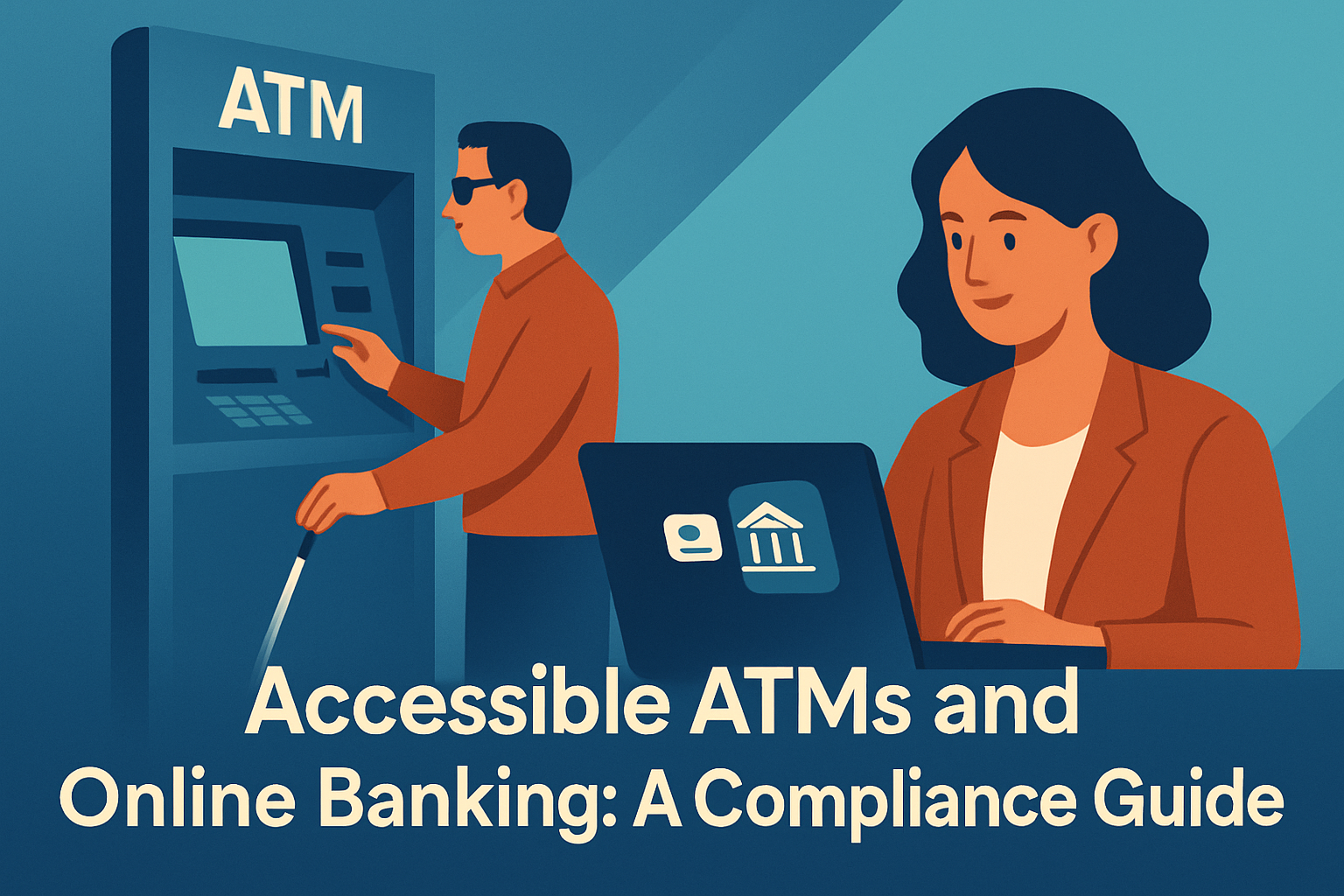
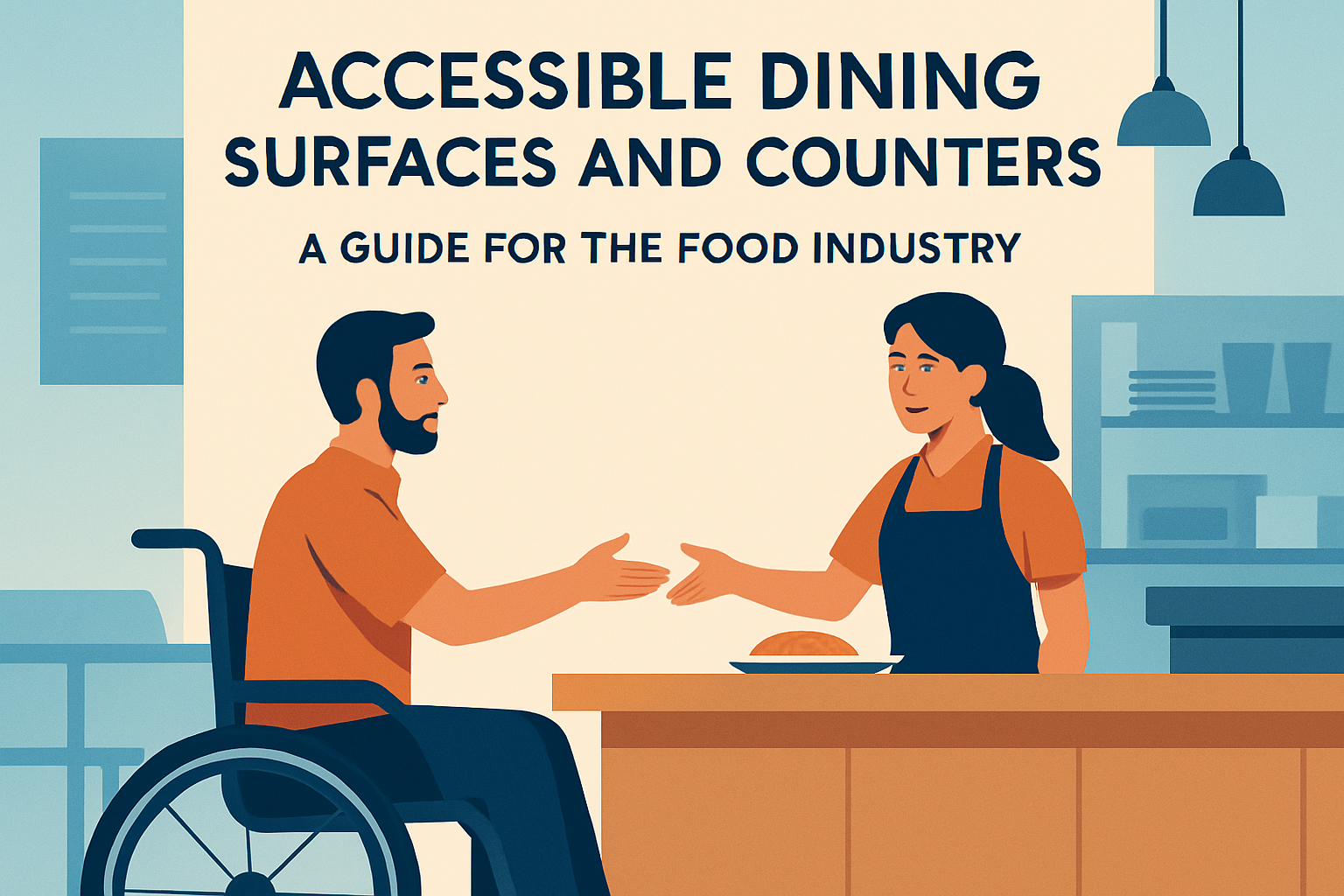
The front counter is the most visible accessibility point, and it is still where many pharmacies fail. A compliant strategy starts with the path of travel and service posture, not just one lowered transaction ledge. Patients need an accessible route from parking or store entrance to the pharmacy area, sufficient clear floor space for approach, and at least one service position that supports communication, document review, and payment. In practice, I advise operators to examine five counter elements together: height, reach range, queue layout, device placement, and privacy accommodations. A lowered portion of the counter is useful only if the card reader, signature device, pens, handouts, and pickup bin are also within reach. If the patient must stretch across a high ledge to insert a card or sign a screen, the accessible feature is cosmetic.
Communication access at the counter deserves equal attention. Under ADA principles, pharmacies must provide effective communication, which often means auxiliary aids and services depending on the interaction. For a routine transaction, clear speech, written notes, and a well-positioned hearing loop may be enough. For a detailed medication consultation with a patient who is deaf, hard of hearing, or has limited speech, staff may need real-time text options, video remote interpreting readiness, or a quieter consultation area. Counter design should also account for customers with low vision or cognitive disabilities. High-contrast signage, large-print pickup instructions, plain-language forms, and uncluttered wayfinding reduce confusion and speed service. These measures are inexpensive compared with the cost of complaints, failed mystery-shop visits, or preventable medication misunderstandings.
Digital pharmacy access: apps, websites, portals, and refill tools
Digital pharmacy services have become core healthcare infrastructure. Patients now refill prescriptions, review medication histories, compare pricing, schedule vaccines, message pharmacists, and receive notifications through apps and web portals. When these tools are inaccessible, pharmacies create a denial of service that is often broader than an inaccessible doorway because it affects every step before arrival. The standard I use in audits is straightforward: if a patient relying on a screen reader, keyboard navigation, screen magnification, voice input, captions, or reduced-motion settings cannot complete the same high-value tasks as other users, the digital experience is creating ADA risk.
In pharmacy apps, the most common failures are predictable. Buttons lack accessible names, so a screen reader announces “unlabeled button” instead of “Refill prescription.” Time-sensitive security codes expire too quickly for users with motor impairments. Color alone indicates refill status. Error messages appear visually but are not announced to assistive technology. PDF medication guides are image-based and unreadable. Appointment widgets embedded from third parties trap keyboard focus. Identity verification flows use drag puzzles or gesture-heavy interfaces without alternatives. Every one of these issues blocks access to essential healthcare functions. Teams should align design and QA practices with WCAG 2.2 Level AA, test on iOS and Android with native assistive tools, and include real refill, transfer, payment, and consultation journeys in user acceptance testing. Accessibility statements and feedback channels help, but they do not replace remediation.
Drive-thru pharmacy accessibility: convenience must still be equal access
Drive-thrus create a special risk because they are often treated as convenience features rather than healthcare service counters. Yet for many patients, especially those with mobility limitations, chronic illness, or caregiving responsibilities, the drive-thru is the most practical way to obtain medication. Problems typically arise in two forms: communication barriers and policy barriers. Communication barriers include poor speaker volume, distorted audio, lack of visual backup, and staff who are not trained to adapt when speech or hearing differences make the intercom ineffective. Policy barriers arise when a pharmacy directs some patients to “come inside” without considering whether the interior route, waiting process, or counter setup is meaningfully accessible.
A defensible drive-thru process provides alternatives that preserve privacy and timeliness. Pharmacies can use portable writing boards, secure text-on-arrival workflows, dedicated phone numbers posted at the lane, or tablet-based communication for difficult interactions. Staff should know when to move from the speaker to face-to-face service at the window and how to offer consultation without forcing a patient to choose between understanding instructions and disclosing health details in public. If controlled substances or ID checks require extra steps, those steps should be reviewed for accessibility as carefully as payment devices. The practical test is simple: can a patient with hearing, speech, dexterity, vision, or mobility limitations complete pickup, verification, payment, and counseling in the drive-thru with substantially equal effectiveness?
Common barriers and practical fixes across pharmacy settings
Across chain, independent, hospital outpatient, and clinic-based pharmacies, the same barriers recur. The fastest way to reduce ADA risk is to identify them systematically and assign each one to facilities, digital, operations, or vendor management. The table below summarizes recurring issues I see during healthcare accessibility reviews and the controls that typically resolve them.
| Area | Common barrier | Operational risk | Practical fix |
|---|---|---|---|
| Counter | Card reader mounted too high or too far back | Patients cannot pay independently | Use movable devices within reach range and train staff not to anchor them behind displays |
| Queue | Narrow turns blocked by merchandise or stanchions | Wheelchair users cannot approach service point | Maintain clear width, inspect daily, and remove promotional clutter |
| Consultation | No quiet or private communication option | Misunderstood instructions and privacy concerns | Offer a nearby consultation space, written summaries, and communication aids |
| App | Refill controls unlabeled for screen readers | Patients cannot request medication digitally | Implement semantic labels and test with VoiceOver and TalkBack |
| Portal | CAPTCHA or timeout without accessible alternative | Users abandon login and care tasks | Provide accessible verification methods and adjustable time limits |
| Drive-thru | Intercom is unclear for deaf or hard-of-hearing patients | Failed transactions and safety issues | Post alternate contact methods and equip staff with written or tablet-based communication |
| Documents | Medication guides only available as image PDFs | Patients with low vision cannot review instructions | Publish tagged accessible PDFs and plain-text alternatives |
The strongest pharmacy operators treat these fixes as standard operating controls, not ad hoc accommodations. That means daily opening checks for physical access, release gates in app development, and escalation paths when a staff member encounters an accessibility issue they cannot solve immediately. It also means including accessibility requirements in vendor contracts for kiosks, payment devices, scheduling platforms, and telepharmacy tools. Many pharmacies assume third-party software shifts risk away from them. In practice, the patient experiences one brand, one service, and one failure point, so the pharmacy still absorbs the complaint, operational disruption, and reputational damage.
Policies, training, and documentation that lower legal exposure
Most ADA complaints in pharmacy settings are not caused by bad intent. They are caused by inconsistent execution. A written accessibility policy reduces that inconsistency by defining who handles accommodation requests, how communication aids are provided, when maintenance issues are escalated, and how digital defects are prioritized. Staff training then translates policy into patient-facing behavior. Front-end associates, pharmacy technicians, pharmacists, district managers, and app product teams need different training modules, but all of them should understand the same baseline principle: do not guess what a patient needs, ask and respond with workable options. In live reviews, I often find that a location has an accessible card reader in a drawer, a portable clipboard for signatures, or an alternate communication method, but staff do not know it exists or when to use it.
Documentation matters because it proves accessibility is being managed like any other healthcare risk. Keep audit logs, work orders, digital bug tickets, vendor remediation commitments, and training records. Track complaints by category such as parking access, service animal handling, app refill barriers, inaccessible PDFs, and drive-thru communication breakdowns. Then look for patterns by store format, region, or vendor. This is where healthcare operators gain leverage. Once the data shows recurring issues, leadership can prioritize capital improvements, redesign workflows, or renegotiate technology contracts with specific acceptance criteria. Internal links from this hub to deeper guidance on accessible healthcare websites, clinic check-in, telehealth, and medical documentation also help teams build a complete compliance roadmap rather than fixing pharmacy issues in isolation.
Auditing pharmacies like a healthcare operator, not a generic retailer
An effective pharmacy accessibility audit is broader than a retail walkthrough. It should evaluate the complete medication journey: finding the pharmacy, entering the site, waiting, identifying oneself, exchanging protected health information, paying, receiving counseling, and using digital follow-up tools. I recommend a blended audit method. Start with a physical survey using 2010 ADA Standards concepts for routes, clearances, service counters, and operable parts. Pair that with task-based observation: can a wheelchair user actually navigate the queue during peak hours; can a customer with low vision read pickup instructions under existing lighting; can someone with limited dexterity sign, tap, and retrieve a receipt without staff taking over unnecessarily? Then run a digital audit against WCAG 2.2 AA, followed by manual testing on the devices and assistive technologies patients really use.
Healthcare context changes the priority order. A minor inconvenience in another industry may be a serious risk in pharmacy operations because timing, dosage, and privacy affect outcomes. That is why I rank barriers affecting prescription access, consultation, consent, and payment above cosmetic issues. The best audits also include scenario testing. For example, test a vaccination appointment booked through the app, checked in at the counter, documented with consent forms, and followed by aftercare instructions. Test a drive-thru pickup for a hearing-impaired patient during a staffing rush. Test a controlled-substance pickup requiring ID and signature from a person with tremors. These scenarios reveal the gap between theoretical accessibility and actual service delivery.
Reducing ADA risk in pharmacies requires a hub-level strategy for healthcare, not isolated fixes. Counters must support equal physical and communication access. Apps and portals must let patients refill, pay, schedule, and read medication information with mainstream assistive technology. Drive-thrus must offer workable alternatives when speakers, signatures, or verification steps create barriers. The common thread is patient safety: accessibility failures delay care, increase misunderstanding, and undermine trust at the moment people need reliability most. Pharmacies that perform well in this area build accessibility into store design, product development, vendor oversight, and staff training instead of treating it as an exception.
The most practical next step is to run a pharmacy-specific accessibility audit across one in-store journey, one digital journey, and one drive-thru journey, then convert the findings into dated corrective actions. Start with the highest-risk tasks: prescription pickup, payment, consultation, refill, and identity verification. From there, expand into forms, documents, scheduling, and post-visit communications. Healthcare operators that do this consistently reduce complaint volume, strengthen defensibility, and serve more patients effectively. Use this page as the central guide for your healthcare accessibility program, then map related clinic, hospital, telehealth, and patient portal content around it so every care touchpoint meets the same standard.
Frequently Asked Questions
What does ADA risk look like in a pharmacy environment?
ADA risk in a pharmacy is broader than wheelchair access at the front door. It includes any barrier that prevents a patient with a disability from getting medication information, communicating with staff, completing payment, protecting privacy, or receiving service with substantially equal ease and dignity. In practice, that can happen at a prescription counter with fixed-height writing surfaces, in consultation areas with poor acoustics, on payment terminals that cannot be used independently by someone with low vision, inside mobile apps that are not compatible with screen readers, or at drive-thru lanes where a patient with hearing or speech disabilities cannot effectively communicate with staff.
Pharmacies face a unique exposure because the patient journey often moves across several channels in one visit. A customer may refill online, check status in an app, confirm identity at the counter, ask a pharmacist a question, and pick up medication through the drive-thru on a later visit. If any one of those steps is inaccessible, the pharmacy can create unequal access even if other parts of the experience are technically available. The legal and operational issue is not just whether a service exists, but whether it can be used meaningfully, privately, and without unnecessary burden by people with different disabilities.
That is why pharmacies should think about ADA risk as a full-service design issue. Counters, waiting areas, kiosks, websites, mobile workflows, telephonic systems, and drive-thru communication tools all matter. The strongest approach is to map the entire customer journey, identify where communication or physical access can break down, and make changes before a complaint, demand letter, or patient safety incident occurs.
How can pharmacies reduce ADA risk at the prescription counter and in-store service areas?
The prescription counter is one of the highest-risk points because it combines physical access, verbal communication, private health discussions, paperwork, and payment. A pharmacy can reduce ADA exposure by making sure at least one service position is accessible in a practical, everyday sense. That means appropriate counter height or an alternative writing and transaction surface, clear floor space for wheelchair users, accessible signature and payment methods, and a layout that does not force customers with mobility devices into awkward or unsafe positioning.
Communication access is equally important. Staff should be trained to provide effective communication for customers who are deaf, hard of hearing, blind, have low vision, have speech disabilities, or have cognitive disabilities. Depending on the situation, that may include exchanging written information, using assistive listening tools, reading key documents aloud, offering large-print materials, ensuring that consultation can occur in a quieter area, or providing auxiliary aids and services where required. The goal is not to improvise only when a problem arises, but to establish repeatable procedures that preserve safety, privacy, and consistency.
Pharmacies should also review how protected health information is communicated at the counter. Patients with disabilities should not be pushed into less private interactions simply because accessible methods were not planned in advance. For example, if a patient cannot hear through a noisy environment, moving the conversation to a more private and quieter consultation space may be more appropriate than speaking louder in public. Regular walkthroughs, mock patient scenarios, and frontline training can reveal practical barriers that are easy to miss on paper. Small design and process improvements at the counter often have an immediate effect on both customer service and compliance risk.
What makes a pharmacy app or website accessible, and why does that matter for ADA compliance?
A pharmacy app or website should allow patients with disabilities to complete the same essential tasks as other users: create or access an account, request refills, check prescription status, read medication instructions, manage delivery or pickup, communicate with the pharmacy, and make payments. Accessibility usually depends on whether digital content works with assistive technologies and whether key functions are designed in a clear, usable way. Common issues include unlabeled buttons, poor screen reader compatibility, low color contrast, missing form instructions, timeouts that are too short, inaccessible PDFs, and authentication steps that are difficult for users with visual, motor, or cognitive disabilities.
This matters because digital tools are no longer optional convenience features. They are part of the pharmacy service model. If a patient cannot independently refill a medication in the app, review drug information online, or complete payment because the interface is inaccessible, that can create both customer harm and legal exposure. For many pharmacies, digital barriers are especially risky because they affect a large number of users at once and are often easier to document through screenshots, testing reports, and user recordings.
To reduce that risk, pharmacies should build accessibility into procurement, design, development, and quality assurance. Internal teams and vendors should test against recognized accessibility standards, evaluate real-world usability with assistive technology, and remediate issues in high-priority workflows first, such as login, refill, checkout, and secure messaging. Accessibility should also be treated as an ongoing maintenance issue. Every software update, content change, and third-party integration can introduce new barriers. A documented digital accessibility program, supported by testing and remediation records, puts the pharmacy in a much stronger position than reacting only after complaints are made.
How should pharmacies address accessibility challenges at drive-thru lanes?
Drive-thru lanes create a very specific accessibility challenge because they often rely on fast audio communication, vehicle positioning, and limited time for clarification. For patients who are deaf, hard of hearing, have speech disabilities, have limited dexterity, or process information differently, the standard drive-thru model may not provide effective communication. ADA risk arises when the pharmacy treats the drive-thru as a separate convenience feature without considering whether disabled patients can use it with substantially equal access.
Reducing that risk starts with recognizing that not every patient can communicate safely or effectively through a speaker system. Pharmacies should assess audio quality, background noise, visual display options, staff communication protocols, and backup methods when the speaker interaction fails. In some settings, practical solutions may include written communication methods, visual confirmation of key information, alternative pickup procedures, or clear instructions for obtaining equivalent service without forcing the patient into a more burdensome process. The key question is whether the patient can complete the transaction, receive necessary information, and protect privacy in a way that is genuinely usable.
Staff training is critical here. Employees should know how to recognize communication barriers, slow down the interaction, confirm understanding, and move to an alternative method without treating the customer as an exception or inconvenience. Pharmacies should also review how medication counseling is handled at the drive-thru. If the environment does not support confidential and effective communication, there should be a defined process for providing equivalent counseling through another accessible channel. A drive-thru policy that balances speed with effective communication can significantly lower both operational mistakes and ADA-related complaints.
What practical steps should pharmacy leaders take first to lower ADA exposure across counters, apps, and drive-thrus?
The best first step is a structured accessibility assessment of the full patient journey rather than isolated spot checks. Pharmacy leaders should document how a patient accesses services from refill request to pickup, including website or app use, telephone interactions, in-store navigation, consultation, payment, and drive-thru service. That process usually reveals where barriers overlap. For example, a patient might be able to place a refill online but encounter inaccessible identity verification in the app, a crowded and noisy counter, and a drive-thru speaker that does not allow clear communication. Seeing the full chain helps leaders prioritize the issues that most affect equal access and patient safety.
Next, leaders should separate fixes into three categories: physical access, communication access, and digital access. Physical access may involve counters, reach ranges, floor space, and service layouts. Communication access may involve staff protocols, auxiliary aids, privacy procedures, and consultation methods. Digital access may involve mobile apps, websites, kiosks, forms, and payment workflows. Assigning ownership to operations, facilities, IT, compliance, and training teams makes the work more manageable and reduces the chance that important problems fall between departments.
Finally, pharmacies should create a living compliance process instead of a one-time project. That means updating policies, training staff regularly, testing systems after changes, collecting customer feedback, and keeping records of assessments and remediation efforts. Leaders do not need to solve every issue overnight, but they do need a credible plan that addresses the highest-risk barriers first. In a pharmacy setting, accessibility is closely tied to health outcomes, customer trust, and privacy. Treating it as a core service obligation rather than just a legal checklist is the most effective way to reduce ADA risk over time.