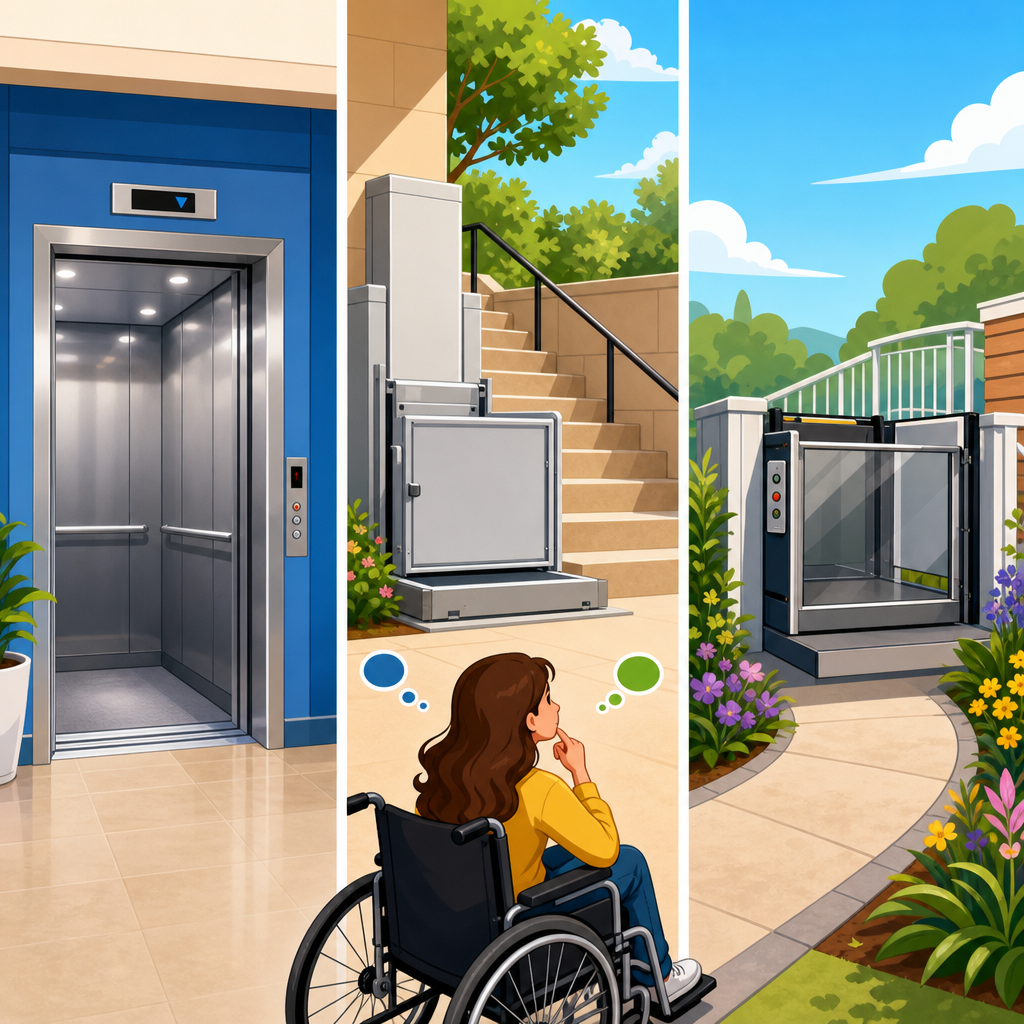
Choosing between an elevator, a LULA, and a platform lift is one of the most important decisions in any accessibility project because the wrong choice can create compliance risk, poor user experience, unnecessary cost, and long-term operational headaches. Under ADA Accessibility Standards, Chapter 4 governs accessible routes, connecting entrances, rooms, amenities, and levels through paths that people with mobility, sensory, and other disabilities can use independently. In practice, that means more than adding a device between floors. It means understanding when a full passenger elevator is required, when a limited-use limited-application elevator is permitted, and when a platform lift can legally serve an accessible route. I have worked through these decisions with architects, facility managers, school operators, churches, and retail owners, and the pattern is consistent: the best solution comes from matching code allowances, building constraints, traffic expectations, and maintenance realities. This hub article explains Chapter 4 accessible routes in plain terms, then shows how elevator, LULA, and platform lift options fit within that framework so you can move into design, permitting, and procurement with confidence.
What Chapter 4 Accessible Routes Requires
Chapter 4 focuses on how people get from one place to another within a site and building. An accessible route is a continuous, unobstructed path connecting accessible elements, spaces, and facilities. That path may include walking surfaces, doorways, ramps, curb ramps, elevators, and platform lifts where specifically allowed. The central rule is straightforward: if a person can enter, work, shop, study, worship, or receive services in a space, there must be an accessible way to reach it. Accessible routes generally must coincide with or be located in the same area as general circulation paths, and they must connect parking, passenger loading zones, public streets, entrances, vertical circulation, toilet rooms, areas of rescue assistance where required, and primary function areas. Width, slope, cross slope, maneuvering clearances, door operation, protruding objects, and turning space all affect whether a route is actually usable. This is why vertical access cannot be evaluated in isolation. A perfectly compliant lift does not solve a noncompliant route if the landing is too small, the door swing blocks maneuvering, or the connecting corridor is too narrow.
For multi-story buildings, the most common question is whether every floor must be on an accessible route. In many occupancies, the answer is yes, subject to limited exceptions for very small buildings or specific conditions under federal standards, model codes, and local amendments. Designers also have to coordinate ADA Standards with the International Building Code, ASME A17.1 or A18.1 safety standards, state elevator regulations, and fire and life safety rules. The practical lesson is simple: treat Chapter 4 as the circulation backbone of the project. Then choose the vertical transportation method that satisfies the route requirement without creating conflicts elsewhere.
When a Full Passenger Elevator Is the Right Choice
A full passenger elevator is usually the best ADA solution when a building has multiple occupied floors, higher traffic, public use, or long-term growth plans. It provides the most flexible accessible route because it is designed for broad, continuous use rather than narrow exceptions. In offices, medical buildings, hotels, schools, mixed-use developments, and municipal facilities, a passenger elevator is often the default answer because it handles wheelchair users, parents with strollers, delivery carts, aging occupants, and people who simply cannot use stairs safely. It also supports operational resilience. If a tenant changes on an upper floor from low-traffic storage to a clinic, classroom, or assembly use, a compliant passenger elevator is already in place.
From a technical perspective, passenger elevators are governed by stricter shaft, pit, overhead, machine room or machine-room-less design, fire recall, signaling, and car size requirements than smaller lift types. They usually involve the highest upfront cost, but they also provide the strongest code position and the best user experience. In existing buildings, I have seen owners initially resist elevator costs, then reverse course after realizing that a platform lift allowed in one permitting scenario would not support future tenant improvements. That is the hidden value of a full elevator: it reduces redesign risk. It also improves marketability, especially where upper floors generate revenue. If your project serves the public daily, expects steady traffic, or may change use over time, a passenger elevator is typically the safest and smartest long-range choice.
Where a LULA Fits Best
A LULA, or limited-use limited-application elevator, sits between a full passenger elevator and a platform lift. It is intended for buildings with lower traffic and more limited travel demand, while still offering an enclosed car and a familiar elevator experience. In churches, smaller schools, libraries, low-rise offices, and community buildings, a LULA can be a very effective way to satisfy an accessible route when permitted by the applicable code. It typically requires less space than a full passenger elevator and can reduce construction complexity, especially in retrofit conditions where shaft dimensions are tight. That space efficiency is often what saves a project.
However, a LULA is not just a cheaper elevator. Its use is limited by building type, size, rise, and code provisions, so the design team must confirm early that it is allowed both by the accessibility standards and by the adopted building code. Capacity, speed, and duty cycle are also lower than a full passenger elevator, which matters more than many owners expect. If a school chapel releases a crowd or an office has all-hands meetings on the second floor, waiting times can become frustrating. I have advised clients to model peak movement rather than average use because accessibility cannot depend on impractical wait times. A LULA works best where traffic is predictable, occupancy is moderate, and the owner understands that the unit is for functional access, not high-volume circulation.
When a Platform Lift Is Allowed
Platform lifts are the most misunderstood option in Chapter 4 accessible routes. They can be code-compliant, but only in specific situations. Under ADA rules, platform lifts are typically permitted in limited applications such as existing site constraints, wheelchair spaces in assembly areas, certain stages and speaker platforms, incidental spaces not open to the general public, specific residential or transient lodging conditions, and some alterations where other solutions are not feasible. The exact allowance depends on the use, whether the project is new construction or alteration, and how the route serves the space. The key point is that a platform lift is not a universal substitute for an elevator.
Because platform lifts are compact and can avoid large shafts, owners often ask for them first. Sometimes that is appropriate. In historic buildings, split-level worship spaces, small raised dining areas, and short vertical transitions created during renovations, a platform lift may be the most practical way to preserve architecture while maintaining access. But there are tradeoffs. Open lifts can feel less private. Weather exposure matters for exterior units. Enclosure, door interlocks, landing gates, emergency lowering, power requirements, and approach clearances all need close review. Most important, reliability and service support vary widely by manufacturer and installer. In my experience, platform lifts succeed when they solve a narrow circulation problem with clear code backing. They fail when used to avoid a required elevator or when they are installed in high-traffic public paths they were never intended to serve.
Comparing Elevator, LULA, and Platform Lift Options
The best choice depends on traffic, space, code allowance, budget, and future flexibility. This comparison reflects how these options perform in real projects.
| Option | Best Use Case | Main Advantages | Main Limitations |
|---|---|---|---|
| Passenger Elevator | Public, multi-story, higher-traffic buildings | Broad code acceptance, best user experience, supports future changes | Highest cost, more space, greater structural and MEP coordination |
| LULA | Low-rise buildings with moderate traffic and limited shaft space | Smaller footprint, lower cost than full elevator, enclosed car | Code use limits, lower speed and capacity, can create peak-time delays |
| Platform Lift | Specific allowed conditions, short rises, difficult retrofits | Compact, useful in historic or constrained projects, simpler installation | Not broadly allowed, lower throughput, can feel secondary to users |
If a facility expects frequent public circulation, a passenger elevator usually wins even when a smaller device is technically permitted. If the route serves a contained, low-volume environment, a LULA can be efficient. If the project involves a short rise in a narrowly defined exception, a platform lift may be ideal. The mistake is deciding by equipment price alone. You have to compare total installed cost, structural work, electrical upgrades, inspection requirements, maintenance contracts, expected wait times, and the possibility of future re-permitting.
New Construction Versus Alterations and Historic Buildings
Chapter 4 decisions become more nuanced in existing buildings. New construction is less forgiving because the expectation is that accessible routes will be fully integrated from the start. If a new two-story public building is being designed, trying to justify a platform lift where an elevator is expected is usually a losing strategy. Alterations are different. Existing structural bays, low headroom, landmark restrictions, shallow foundations, and occupied construction conditions can narrow the options quickly. In those cases, the design team may be able to use equivalent facilitation reasoning, technical infeasibility analysis, or specific scoping allowances, but these judgments must be documented carefully.
Historic buildings deserve particular care. Preservation teams often fear that an elevator shaft will destroy significant features, while accessibility advocates rightly insist that access cannot be treated as optional. The best projects resolve both concerns early. I have seen successful solutions place a LULA in a rear addition, use a sensitively detailed platform lift at a half-level change, or route a passenger elevator through secondary service space to preserve character-defining interiors. Early dialogue with the authority having jurisdiction, preservation consultants, and elevator contractors saves time here. Waiting until permit review almost always produces expensive redesign.
Design and Operational Factors Owners Overlook
Most compliance problems are not caused by selecting the wrong equipment category; they come from neglecting the route around it. Landings need adequate clear floor space. Doors need proper maneuvering clearance on pull and push sides. Thresholds, hardware, closing speed, call button height, hall signals, car controls, tactile markings, and communication features all matter. If the lift opens into a dead-end alcove or forces a wheelchair user to back into traffic, the experience is poor even if the equipment itself passes inspection. Vertical circulation should feel like a normal part of the building, not an afterthought tucked behind storage.
Maintenance planning is just as important. Elevators, LULAs, and platform lifts all require periodic service, inspections, and prompt repairs. Before specifying a unit, ask who services that brand within your region, what parts lead times look like, whether remote monitoring is available, and how entrapment calls are handled after hours. I have seen owners choose low-bid equipment only to struggle with week-long outages because no local technician stocked parts. For schools, healthcare spaces, and public facilities, downtime is not an inconvenience; it is a service failure and sometimes a legal exposure. Reliability should be weighted almost as heavily as initial cost.
How to Choose the Right ADA Solution
Start with the route, not the machine. Map every required accessible connection from site arrival to building entrance, between floors, and into all primary function spaces. Then confirm scoping under ADA standards, the adopted building code, and state elevator rules. Next, define the real use pattern: daily trips, peak occupancy, public versus staff access, carts or equipment, and future tenant changes. After that, test building constraints such as available shaft area, pit depth, overhead clearance, structural capacity, and utility locations. Only then should you compare elevator, LULA, and platform lift manufacturers.
In straightforward terms, choose a passenger elevator when your building is public, busy, or likely to evolve. Choose a LULA when code permits it, traffic is moderate, and space savings materially improve the design. Choose a platform lift only when the route falls within a specific allowed condition and the lift can provide dignified, reliable access. Document the reasoning in the accessibility narrative, drawings, and specifications so reviewers and future owners understand the basis of the decision. That discipline prevents disputes later and strengthens the entire Chapter 4 accessible route strategy.
Accessible routes are the core of practical ADA compliance because they determine whether people can move through a site and building with independence, safety, and dignity. Elevators, LULAs, and platform lifts each have a valid role, but they are not interchangeable. A passenger elevator offers the broadest compliance path and the best long-term flexibility. A LULA can be an efficient middle-ground solution in the right low-rise setting. A platform lift works best in carefully defined situations, especially challenging alterations and short-rise conditions. The right answer always comes from balancing legal allowances, building constraints, user experience, maintenance support, and future change.
If you are planning a new facility, renovating an older property, or resolving an accessibility barrier, review Chapter 4 accessible routes before selecting equipment. Build the circulation strategy first, verify the code path early, and involve your architect, accessibility consultant, and lift contractor at schematic design. That process leads to a solution that passes review, serves users well, and protects the value of the building for years to come.
Frequently Asked Questions
What is the main difference between an elevator, a LULA, and a platform lift in an ADA accessibility project?
The main difference comes down to capacity, application, travel needs, code limitations, and user experience. A traditional elevator is the most robust option and is typically designed for higher traffic, greater travel distances, larger cabs, and broader building integration. It is often the best fit when multiple floors must be connected as part of an accessible route, when public use is frequent, or when the building requires a durable long-term vertical transportation solution that can support a wide range of users comfortably and independently.
A LULA, which stands for Limited Use/Limited Application elevator, fills the gap between a full commercial elevator and smaller lift systems. It is intended for lower-rise, lower-traffic applications where a full elevator may not be necessary or practical. A LULA can often work well in schools, churches, small offices, and similar buildings where there is a real need for enclosed vertical access but usage levels are more limited. It generally offers a more complete elevator-style experience than a platform lift, but it still comes with specific code restrictions related to speed, travel, and use conditions.
A platform lift, sometimes called a wheelchair lift, is usually the most compact and specialized option. It is designed primarily to carry a wheelchair user and sometimes an attendant over a shorter vertical rise. Platform lifts can be useful in very targeted situations, such as a stage, a short level change, or an area where space constraints make other systems difficult. However, they are not automatically the right answer simply because they appear less expensive or easier to fit. Depending on the building type, occupancy, route requirements, and local code interpretation, a platform lift may be restricted or may not provide the best independent user experience for an important public accessible route.
In ADA-related planning, the critical point is that these systems are not interchangeable just because they all move people vertically. The right choice depends on whether the lift is serving a required accessible route, how often it will be used, who will use it, what the building code allows, and whether the result will feel dignified, dependable, and compliant over time. That is why the decision should be driven by function and code analysis first, not just initial cost.
How do ADA and building code requirements affect whether I should choose an elevator, LULA, or platform lift?
ADA and building code requirements play a decisive role because they determine not just whether vertical access is needed, but also what type of system can legally and practically satisfy that obligation. Under ADA Accessibility Standards, accessible routes must connect entrances, stories, rooms, amenities, and other spaces so people with disabilities can move through the building independently. In many projects, that means vertical circulation is not optional. If key functions are located on different levels, the design team must provide an accessible route that is appropriate for the use of the building and the spaces being served.
The ADA establishes the accessibility goal, while the adopted building code, accessibility code, elevator code, and local enforcement policies shape what equipment is acceptable in that situation. A full elevator is often the clearest compliance path when the route serves the general public, multiple occupied levels, or areas with regular and varied use. A LULA may be permitted in certain low-rise buildings where the code specifically allows it, but those allowances are not universal in every jurisdiction or every occupancy type. A platform lift may be allowed only in limited scenarios, such as specific existing conditions, performance areas, raised speaking platforms, or certain short-rise applications, depending on the code framework in force.
This is where many projects go wrong. Owners sometimes assume that if a platform lift can physically move a wheelchair from one level to another, it must satisfy accessibility requirements. In reality, that assumption can create serious compliance risk. The route might not qualify under ADA expectations for independence and usability, or the local building official may not approve that solution for the intended use. Even when technically permitted, a lift that requires more staff involvement, slower operation, or awkward maneuvering may undermine the practical accessibility of the space.
The safest approach is to evaluate the project through both lenses at the same time: federal accessibility obligations and local code enforcement. That means reviewing occupancy classification, number of stories, travel distance, public versus restricted use, new construction versus alteration status, and the exact spaces being connected. Early coordination among the architect, accessibility consultant, lift manufacturer, and authority having jurisdiction can prevent costly redesigns and help ensure the selected system is compliant, approvable, and genuinely usable.
When is a LULA a better choice than a full commercial elevator?
A LULA is often a better choice when the building needs an enclosed, code-recognized vertical access solution but does not have the usage demands, budget, or physical conditions that justify a full commercial elevator. It is especially attractive in smaller buildings where traffic is relatively light, the number of stops is limited, and the building owner wants a more polished and inclusive experience than a platform lift typically provides. In these environments, a LULA can balance accessibility, space efficiency, and cost more effectively than a full elevator.
Typical examples include small schools, houses of worship, community buildings, professional offices, libraries, and low-rise commercial or institutional projects. In these settings, users may need a dependable accessible route between levels, but the building may not experience the sustained passenger volume that would call for a larger, faster, more infrastructure-intensive elevator. A LULA can often be installed with a smaller footprint and less structural impact than a standard commercial elevator, which can be a major advantage in tight floor plans or renovation work.
That said, a LULA should not be viewed as simply a cheaper elevator. It is a distinct code category with limitations. Its speed, travel, and use parameters are narrower, and those limitations matter. If the lift will serve a heavily used public space, connect multiple frequently visited levels, or be relied on continuously throughout the day, a full elevator may still be the better long-term solution. The lower first cost of a LULA can be offset over time if the unit is undersized for the building’s real operational needs or if users experience delays and congestion.
The best reason to choose a LULA is that it matches the building’s actual function. If the project needs a high-quality accessible route in a low-rise, limited-use setting, and the applicable code permits a LULA for that exact condition, it can be an excellent middle-ground solution. It often offers better privacy, weather protection, ride quality, and perceived dignity than a platform lift, while avoiding some of the cost and construction demands associated with a full elevator. The key is confirming that “limited use” truly describes the building’s present and future use, not just the owner’s preferred budget target.
Are platform lifts a good way to save money on ADA access?
Platform lifts can save money in the right situation, but they are not a universally cost-effective substitute for an elevator or LULA. The idea that a platform lift is always the budget-friendly ADA solution is one of the most common misconceptions in accessibility planning. While the equipment itself may have a lower initial price and may require less space, the total value of the solution depends on where it is used, how often it is used, whether it is allowed by code, and how well it serves the people who depend on it.
In a narrow, well-defined application, a platform lift can be extremely practical. For example, overcoming a short rise to a stage, connecting a small split-level condition, or providing access in a constrained existing building can make a platform lift an efficient and reasonable choice. In those cases, it may solve a very specific accessibility barrier without major structural intervention. That is where it tends to perform best: short travel, targeted use, and code-permitted contexts.
Problems arise when a platform lift is used to avoid the cost of a more appropriate system. If the lift serves a primary public route, carries frequent traffic, requires awkward turning or gate operation, or is prone to slower service and more visible mechanical limitations, the user experience can suffer significantly. People may have to wait longer, maneuver more carefully, or rely on assistance in ways that reduce independence. In addition, if the platform lift is challenged during plan review, inspection, or later legal scrutiny, any perceived savings can disappear quickly through redesign, delays, retrofits, or enforcement issues.
Operational costs also matter. A lift that is frequently out of service, difficult to maintain, or unpopular with users can become a long-term burden. Building owners should think beyond purchase price and consider reliability, service availability, aesthetics, exposure to weather, security, and how the equipment fits the dignity and accessibility expectations of the facility. A platform lift can be the right solution, but only when it is selected for a situation it is truly meant to serve. Saving money upfront is helpful; choosing the wrong system for a required accessible route is expensive in every other way.
What factors should building owners and design teams evaluate before choosing the right ADA vertical access solution?
The most important factors are code compliance, building function, user experience, space constraints, long-term operations, and total project cost. The starting point should always be the accessible route itself: what spaces need to be connected, who will use them, how often they will be used, and whether users can reach them independently and with dignity. If the vertical access system serves a main entrance sequence, core public functions, classrooms