Platform lifts are allowed under ADA Standards in specific, limited situations where they provide access without undermining safety, usability, or the requirement for an accessible route. In Chapter 4: Accessible Routes, this question matters because designers, building owners, and facility managers often assume either that platform lifts are broadly prohibited or that they can substitute for ramps and elevators whenever space is tight. In practice, neither view is correct. The ADA Standards regulate accessible routes with detailed technical and scoping provisions, and platform lifts occupy a narrow but important place within that framework. I have worked through these decisions on renovation projects, tenant fit-outs, and public accommodations where every inch of floor area, existing structure, and budget pressure tempted teams toward the wrong solution. The standards are clear when read closely.
An accessible route is a continuous, unobstructed path connecting all accessible elements and spaces in a site or building. Chapter 4 addresses the core technical requirements for these routes, including walking surfaces, changes in level, doors, ramps, curb ramps, elevators, and platform lifts. The central purpose is simple: a person using a wheelchair, scooter, walker, cane, or other mobility aid must be able to move through the environment independently and safely. That means route width, slope, cross slope, maneuvering space, door operation, and vertical access all work together. Platform lifts are only one piece of that system, but they raise frequent compliance questions because they bridge vertical changes where a full elevator may seem disproportionate and a ramp may be spatially impractical.
Understanding when platform lifts are allowed under ADA Standards matters for compliance, project planning, and user experience. A wrong choice can trigger plan review comments, permit delays, costly redesign, or civil rights complaints after opening. More importantly, a technically legal solution can still be a poor accessibility outcome if the lift is hard to find, requires staff intervention, or fails in daily use. The best compliance decisions align the letter of Chapter 4 with the practical reality of independent access. That is why this hub article covers platform lifts within the broader logic of accessible routes, showing where they fit, where they do not, and how related route requirements affect the final design decision.
Chapter 4: Accessible Routes and the role of platform lifts
Chapter 4 of the ADA Standards establishes how people travel from arrival points to entrances and from one accessible element to another. In plain terms, if an accessible parking space exists, there must be an accessible route from that space to an accessible entrance. If a dining room, stage, toilet room, sales floor, or courtroom is required to be accessible, an accessible route must connect to it. The route can include walking surfaces, ramps, curb ramps, elevators, and, where specifically permitted, platform lifts. The route must be continuous and generally cannot depend on detours through service areas, freight paths, or employee-only spaces unless the standards allow that arrangement.
Platform lifts, sometimes called wheelchair lifts, are not interchangeable with elevators. They are vertical platform devices intended for shorter rises and more constrained conditions. Under the ADA Standards, they are permitted only in enumerated circumstances. The allowance is not open-ended. If a project team asks, “Can we use a platform lift because there is no room for a ramp?” the right answer is, “Only if the use case falls within an allowed condition.” That distinction is critical. On projects I have reviewed, many noncompliant designs started with a spatial problem and searched backward for a device, instead of starting with the scoping rules and confirming what Chapter 4 allows.
The practical hierarchy is straightforward. A compliant accessible route at the same level is simplest. If vertical access is needed, a ramp may work for small rises when enough run length and landings can be provided. Elevators usually serve general vertical circulation across stories. Platform lifts fill gaps in specific contexts, especially alterations and certain constrained occupancies. They are lawful tools, but not convenience devices.
When platform lifts are allowed under ADA Standards
The ADA Standards permit platform lifts as part of an accessible route in a defined set of cases. The clearest examples include providing an accessible route to a performance area, including a speaker platform; wheelchair spaces in assembly areas; incidental spaces that are not public use and that occupy no more than 300 square feet; judicial spaces such as raised courtrooms and witness stands; and recreational boating boarding piers and slips in certain conditions. They are also allowed in existing site constraints and alterations in some limited situations, especially where installing a ramp or elevator is not feasible without significant disruption or where a qualified historic facility demands a more restrained intervention. The exact scoping always must be checked against the applicable sections, because the permissibility depends on building type, use, and whether the work is new construction or alteration.
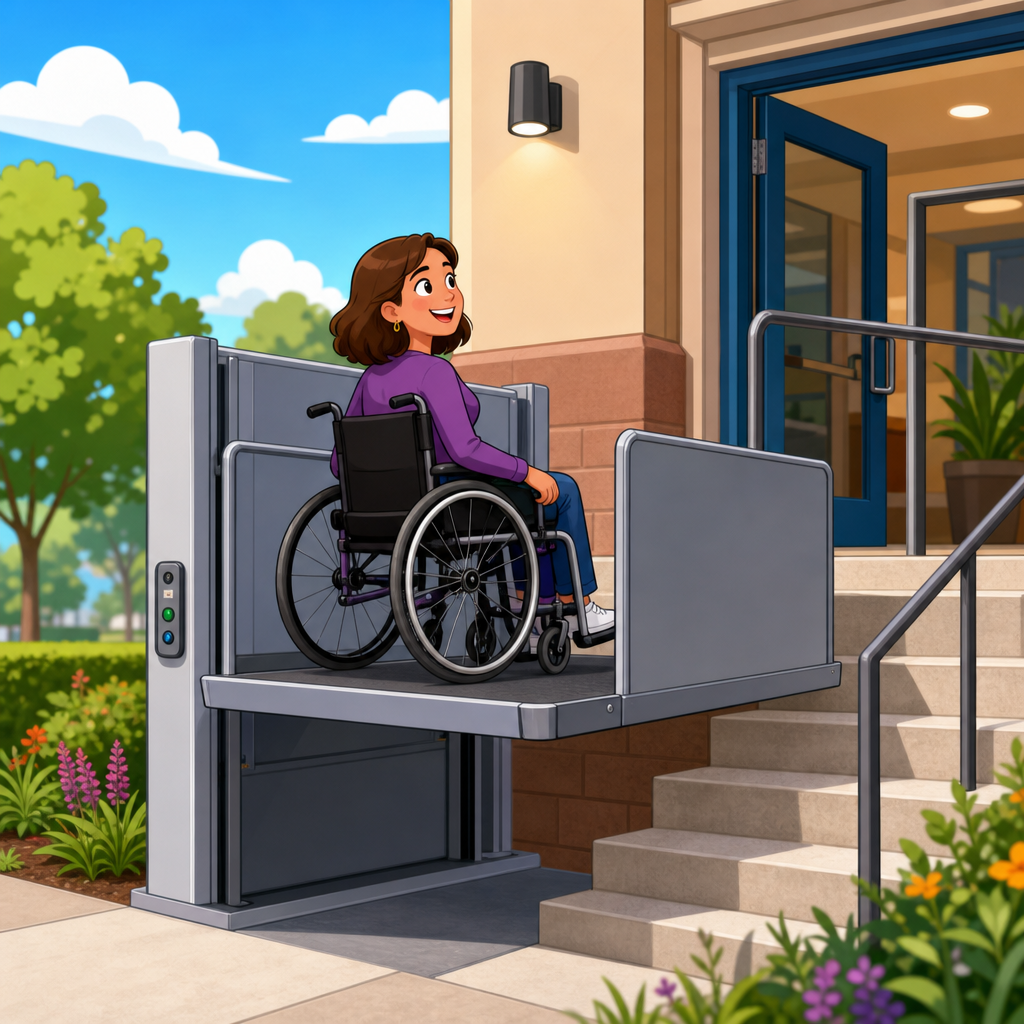
One of the most common lawful applications is a raised stage or speaking platform in a school, church, hotel ballroom, or municipal chamber. A short platform lift can connect the audience floor to the stage where a full elevator would be excessive and a ramp would consume too much usable floor area. Another common example is assembly seating where a small vertical change separates a wheelchair seating platform from the main route. In courthouses, raised participant areas may use platform lifts because the standards recognize the unique design of judicial spaces. I have also seen successful use at historic entrances where preserving character-defining stairs while adding a sensitively located lift provided access that regulators accepted, though these cases require careful documentation and often early coordination with preservation authorities.
What does not qualify is just as important. A restaurant cannot typically use a platform lift simply to connect the main dining floor to a mezzanine open to customers if the standards require an accessible route through a more general vertical access method. A retail store should not default to a platform lift between public sales levels when an elevator is the expected accessible route. If the space functions like ordinary public circulation, teams should assume the standards favor the more robust route unless a specific exception applies.
Technical requirements that affect platform lift compliance
Even where platform lifts are allowed, the lift itself and the route leading to it must satisfy technical requirements. Chapter 4 does not operate in isolation. The accessible route to the lift must meet width, slope, cross slope, and changes-in-level rules. Clear floor space at controls and entries matters. Doors and gates must provide appropriate clear width and maneuvering clearances. The lift must comply with referenced safety standards, typically ASME A18.1, which governs platform lift design, operation, and safety features. In enforcement reviews, a legally permitted lift often fails because surrounding clearances or approach geometry were ignored.
Operability is another major issue. Users must be able to reach controls, call the lift, enter, and exit with independence. If a lift is keyed off, blocked by furniture, or parked in a way that requires staff retrieval, the accessible route may be functionally broken. I have seen compliant drawings become inaccessible facilities because the installed platform lift sat behind movable banquet staging or because staff treated it as special equipment rather than a permanent route. Maintenance also matters. A ramp rarely goes out of service; a platform lift can. That risk does not make lifts unlawful, but it does mean owners should plan inspections, service contracts, and clear operating policies from the start.
| Access option | Best use case | Main advantage | Main limitation |
|---|---|---|---|
| Accessible route at grade | Site and floor planning with no level change | Most reliable and intuitive | May not fit existing topography or structure |
| Ramp | Short vertical rise with enough run length | No mechanical dependency | Requires substantial space and landings |
| Platform lift | Specific ADA-permitted conditions, constrained rises | Useful in tight or sensitive locations | Limited allowed uses, maintenance dependent |
| Elevator | Regular public vertical circulation between stories | Supports broad, routine access | Higher cost and larger shaft requirements |
How accessible route rules shape the decision
To decide whether a platform lift is appropriate, start with the route, not the device. Ask where people arrive, where they need to go, and whether the route remains continuous, obvious, and equitable. Chapter 4 requires accessible routes to connect site arrival points, accessible entrances, and accessible spaces and elements. That means a platform lift cannot be treated as an isolated accommodation tucked away in a back corridor if the primary public route is elsewhere. Equal experience is not stated as a slogan in the technical text, but it is embedded in the requirement for connected, usable paths.
Ramps illustrate the tradeoff well. A ramp for a 30-inch rise at 1:12 needs 30 feet of run, plus landings, turning space, edge protection considerations, and compliant handrails when required. In a small renovation, that may consume a lobby or cut deeply into seating capacity. A platform lift may therefore look attractive. But before specifying it, check whether the location is one of the allowed cases and whether the route to and through the lift remains intuitive. If the lift is around a corner, behind a locked door, or dependent on staff, a plan reviewer may question the arrangement and users will certainly feel the friction.
Doors are another common pinch point. The route to a platform lift may pass through doors with inadequate maneuvering clearance or excessive opening force. In older buildings, the lift itself may fit, but the approach does not. Similarly, route width and turning spaces can fail at landings. The lesson from real projects is that platform lift compliance is rarely decided by the machine alone. It is decided by the complete path of travel.
New construction, alterations, and historic buildings
The answer to when platform lifts are allowed under ADA Standards changes meaningfully depending on project type. In new construction, the standards are generally stricter because the design starts with a blank slate or a fully planned new facility. Where an elevator or ramp is expected, a platform lift usually cannot replace it unless a specific allowance applies. In alterations, there may be more flexibility, especially where existing conditions constrain structural changes. That does not mean anything goes. It means the analysis becomes fact-specific, and teams need to document why a conventional accessible route is not feasible within the project scope or existing building conditions.
Historic properties require special care. Preservation concerns do not eliminate accessibility obligations, but they can influence the method of compliance. A platform lift may be accepted where a long exterior ramp would damage historic features or where a new elevator shaft would destroy significant fabric. The strongest historic access solutions are developed collaboratively among the owner, design team, code consultant, disability stakeholders, and preservation officials. I have found that early sketches, circulation diagrams, and photographs of the affected features help everyone see why a discreet lift may be the least intrusive compliant option. Waiting until permit submission usually creates conflict.
For existing facilities, reliability and management practices should weigh heavily. If a historic inn installs a platform lift at its front entry but trains no one to monitor service, snow clearance, or battery backup, the route may fail in real use. Compliance is not just approval on paper. It is sustained accessibility over the life of the building.
Common mistakes and best practices for project teams
The most common mistake is treating a platform lift as a shortcut rather than a code-governed exception. The second is forgetting that Chapter 4 is an interconnected system: route width, level changes, door clearances, hardware, turning space, controls, and vertical access all interact. The third is operational neglect after installation. I have seen excellent specifications undermined by poor placement of trash receptacles, movable displays, or security barriers that blocked lift access within weeks of opening.
Best practice starts with a route map. Identify every required accessible connection from site arrival to program spaces. Then test options in order: can the level change be eliminated, can grading solve it, can a ramp fit, is an elevator required, and only then does a platform lift analysis become appropriate. Verify the specific ADA allowance that applies. Coordinate the lift with ASME A18.1 requirements, electrical power, clear floor space, call stations, emergency operation, and weather protection if outdoors. Write maintenance procedures into facility operations. Signage should direct users clearly, but signage is not a cure for poor route planning.
For this Chapter 4 hub, the larger takeaway is that platform lifts sit within a family of accessible route topics that should be studied together: walking surfaces, changes in level, door clearances, ramps, curb ramps, elevators, and route continuity. When these elements are coordinated early, projects avoid last-minute compromises. When they are ignored, the platform lift becomes a symptom of deeper route planning problems rather than a compliant solution.
Platform lifts are allowed under ADA Standards, but only in specific circumstances defined within the broader requirements of Chapter 4: Accessible Routes. They can be the right answer for raised stages, certain assembly conditions, some judicial spaces, limited incidental areas, and select alteration or historic scenarios. They are not a general substitute for ramps, elevators, or thoughtful floor planning. The governing question is always whether the accessible route remains continuous, usable, independent, and compliant from arrival to destination.
The safest approach is to evaluate platform lifts as part of the whole route system. Confirm the scoping basis, check technical clearances, coordinate with ASME A18.1, and plan for daily operation and maintenance. In my experience, projects succeed when teams decide early, document the justification, and design the surrounding route with the same rigor they apply to the lift itself. That method protects both compliance and usability.
If you are building out this subtopic under ADA Accessibility Standards, use this page as your hub for every Chapter 4 decision. Review related articles on ramps, elevators, doors, walking surfaces, and changes in level next, then compare your project conditions against the specific allowances before selecting a platform lift.
Frequently Asked Questions
When are platform lifts allowed under ADA Standards?
Platform lifts are allowed under ADA Standards, but only in specific situations identified in the standards rather than as a general substitute for an accessible route. In other words, they are not automatically permitted just because a project has limited space, a challenging layout, or a desire to avoid the cost of a ramp or elevator. The standards treat platform lifts as a limited exception, not a default design solution. They are typically allowed where the change in level occurs in a setting such as a wheelchair space in an assembly area, a performance area, certain incidental spaces not open to the public, altered areas where existing conditions make full compliance impracticable, or within qualified historic facilities where preserving historic significance is a major concern. They may also be used in some residential dwelling contexts covered by the standards.
The key point is that a designer or owner must be able to point to a standards-based condition that specifically permits the lift. If the space does not fall within one of those recognized categories, then a compliant accessible route usually must be provided by ramp or elevator, depending on the circumstances. This is why platform lifts are neither broadly banned nor freely interchangeable with other vertical access solutions. The ADA Standards allow them, but in a narrow and structured way that balances accessibility with safety, usability, and the realities of certain building types and alterations.
Can a platform lift replace a ramp or elevator whenever space is limited?
No. Lack of space by itself does not automatically justify using a platform lift instead of a ramp or elevator. This is one of the most common misunderstandings in accessibility planning. The ADA Standards do not say that a platform lift can be used any time a ramp would be too long or an elevator would be too expensive or difficult to install. Instead, the project must fit within one of the situations where platform lifts are expressly permitted. If it does not, then the accessible route must be provided in another compliant way.
This matters because accessible routes are one of the core requirements in Chapter 4 of the ADA Standards. An accessible route is supposed to be reliable, usable, and integrated into the path of travel. In many buildings, a ramp or elevator is the more appropriate and expected way to achieve that result. Platform lifts can present operational limitations if they require staff assistance, use special controls, have slower travel, or are treated as secondary access rather than equal access. For that reason, the standards do not allow them to become a convenience-based workaround for design constraints. If a team is considering a platform lift, it should first confirm that the location and use actually qualify under the standards, and then make sure the lift itself meets all applicable technical requirements for operation, clearances, and usability.
What kinds of locations or building areas commonly qualify for platform lifts?
Several types of locations are commonly associated with permitted platform lift use under ADA Standards. One of the clearest examples is access to wheelchair spaces in assembly areas, such as theaters, lecture halls, or similar venues, where the lift helps users reach seating levels designed to provide comparable lines of sight and integrated seating choices. Platform lifts are also commonly allowed for access to performance areas, including stages and raised speaking locations, where occasional vertical access is necessary but a full elevator may not be warranted by the specific use of the space. Another recognized situation involves certain incidental spaces that are not generally open to the public and that have limited occupancy or use, depending on the exact application of the standards.
They may also be permitted in alteration projects, especially where existing structural conditions create significant barriers to installing a ramp or elevator in a fully compliant manner. Historic properties are another important category. In qualified historic facilities, a platform lift may be allowed when it offers access while minimizing damage to historic features or materials. In these settings, the standards acknowledge that preserving historic significance can affect how accessibility is achieved. Even then, the lift is not automatically approved; it must still be an appropriate solution under the standards and should be selected carefully. The best approach is always to review the exact occupancy, use, and project type against the text of the ADA Standards rather than assuming that any raised area or older building automatically qualifies.
Are there special rules a platform lift must meet to be considered compliant?
Yes. Even where a platform lift is allowed, the lift itself must still comply with applicable ADA technical criteria and relevant safety codes. Permission to use a platform lift in a particular location does not mean any lift installation will do. The equipment must provide usable access for people with disabilities, including appropriate platform size, entry and exit clearances, operable controls, edge protection, and other safety and accessibility features. It also needs to be installed and maintained so that it is actually available when needed, not locked out, obstructed, or dependent on burdensome staff intervention unless that arrangement is specifically acceptable under the governing requirements.
Usability is especially important. A lift that technically exists but is difficult to locate, hard to operate, frequently out of service, or segregated from the primary circulation path may create practical access barriers even if the project team assumed the issue was solved. Designers and facility managers should also remember that ADA compliance often intersects with building code requirements, referenced lift standards, and manufacturer specifications. That means proper compliance review should include more than just confirming that a platform lift is allowed in concept. It should also include checking the technical details, the path leading to and from the lift, door maneuvering clearances where applicable, signage, and ongoing maintenance obligations. A compliant platform lift is both permitted in location and properly designed in operation.
How should building owners and designers decide whether a platform lift is the right ADA solution?
The best starting point is to treat the question as a standards analysis, not a space-planning shortcut. Owners and designers should ask first whether the area in question requires an accessible route under Chapter 4, and then whether the standards specifically allow a platform lift for that particular condition. If the answer is no, the project likely needs a ramp or elevator instead. If the answer is yes, the next step is to evaluate whether the lift will provide meaningful, reliable, and dignified access in actual use. That includes looking at independence of operation, expected frequency of use, maintenance demands, emergency procedures, and whether the lift supports an integrated experience comparable to that of other users.
In many cases, a platform lift may be legally permissible but still not be the best design choice. For example, a lift that creates delays, requires users to request assistance, or feels like a back-of-house accommodation may undermine the broader accessibility goals of the project. On the other hand, in a historic building, a small assembly venue, or a limited alteration where structural constraints are genuine and recognized by the standards, a platform lift may be both compliant and appropriate. The most effective decisions come from reading the ADA Standards closely, coordinating early with accessibility consultants and code officials, and documenting why the selected approach is permitted. That process helps avoid the two biggest errors: assuming platform lifts are never allowed, and assuming they are always an acceptable substitute when design gets difficult.