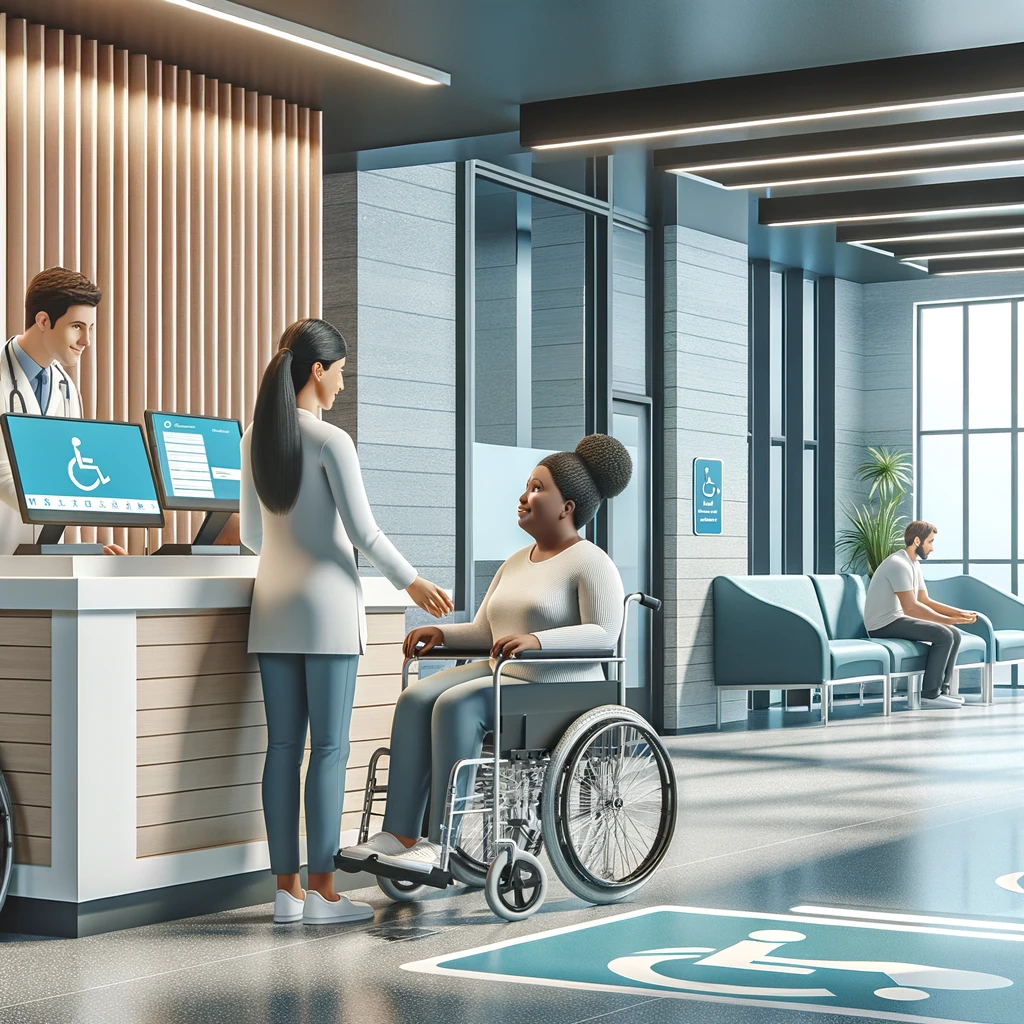
Detailed Look at Rights in Transportation: Air Travel and Beyond begins with a practical truth: disability rights in transportation are only meaningful when they work during real trips, real delays, and real interactions with staff, equipment, and infrastructure. In practice, travelers need to understand how legal protections apply across airports, airplanes, buses, trains, ride services, sidewalks, stations, and digital booking systems. The Americans with Disabilities Act, or ADA, is the central civil rights law prohibiting disability discrimination in many areas of public life, but transportation rights are spread across multiple statutes, regulations, and agencies. I have worked through these issues with travelers, advocates, and service providers, and the most common problem is not the absence of rules. It is confusion about which rule applies, who must comply, and what a traveler can do when access fails.
That confusion matters because transportation is the gateway to work, school, health care, family life, voting, and recreation. A missed wheelchair transfer at an airport can mean a missed medical appointment. An inaccessible rail platform can mean lost wages. A rideshare refusal involving a service animal can strand a passenger late at night. Rights in transportation are therefore not technical side issues. They determine whether disabled people can participate in ordinary civic and economic life on equal terms.
Key terms help frame the discussion. Accessibility means facilities, vehicles, communications, and digital tools can be used by people with disabilities. Reasonable modification means a provider changes a policy or practice when needed to avoid discrimination, unless doing so would fundamentally alter the service or create a direct safety threat. Effective communication means providing communication that is as clear and usable for disabled passengers as it is for others, which may involve captioning, visual announcements, accessible websites, or qualified interpreters in some settings. Service animal rules, mobility device standards, and complaint procedures each have their own specifics, and those specifics often decide the outcome of a dispute.
For air travel, another law is especially important: the Air Carrier Access Act, enforced by the U.S. Department of Transportation, governs disability rights in air transportation. The ADA generally covers airports as public entities or public accommodations, while airlines themselves are primarily regulated under the ACAA rather than the ADA. That distinction is essential. A broken airport elevator may raise ADA issues. Mishandling of a wheelchair by an airline usually falls under the ACAA and DOT disability rules. Understanding the split between airport, airline, and contractor responsibility is the starting point for any effective complaint or legal analysis.
How ADA transportation rights work in everyday travel
The ADA applies differently depending on the mode of transportation and the entity operating it. Title II covers state and local government services, including public transit agencies operating buses, subways, commuter systems, and paratransit. Title III covers private entities that operate places of public accommodation, which can include terminals, depots, ticket counters, and some transportation-related services. The U.S. Department of Justice issues and enforces many ADA regulations, while the Federal Transit Administration oversees major public transit accessibility obligations. In practical terms, this means a city bus system has specific duties on vehicle accessibility, stop announcements, maintenance of lifts, route accessibility, and complementary paratransit for riders who cannot use fixed-route service.
Paratransit is one of the clearest examples of rights in practice. Under ADA transit rules, eligible riders must receive comparable service when they cannot independently use the regular fixed-route system because of disability. Comparability is not a vague concept. It includes response time, fares, geographic service area, trip purpose, hours and days of service, and capacity constraints. When I review transit complaints, the recurring issue is not whether an agency offers paratransit in name. It is whether long hold times, repeated denials, restrictive no-show policies, or poor scheduling effectively strip the service of comparability. A transit agency can violate the law even while technically running paratransit if the actual service is unreliable.
Rail and station accessibility present another recurring challenge. Accessible routes are not just ramps. They require continuous, usable paths of travel, functioning elevators, detectable warnings where required, accessible signage, boarding solutions, and policies for outages. If an elevator is out for weeks with no meaningful alternative, a station may be functionally inaccessible even though it was compliant on paper when built. This is where maintenance becomes a civil rights issue. Accessibility features must be operable. A transit provider cannot install compliant equipment and then treat outages as a routine inconvenience.
Digital access now shapes physical access. If a traveler cannot book, modify, or track a trip because a website, kiosk, or app is incompatible with screen readers, magnification, keyboard navigation, or captioning needs, the transportation service is not fully accessible. Courts and regulators increasingly evaluate digital tools as part of the service itself, not as optional extras. In daily operations, that means accessible trip planning, fare payment, disruption alerts, and customer service channels matter as much as curb cuts and lifts.
Air travel rights: where airport access ends and airline duties begin
Air travel produces the most confusion because multiple actors control one journey. Airports may be owned by public authorities, airlines control boarding and in-flight service, and contractors often provide wheelchair assistance, baggage handling, and security-adjacent customer support. For travelers with disabilities, each handoff is a risk point. Under DOT rules implementing the ACAA, airlines must provide assistance with enplaning, deplaning, making flight connections, moving within terminals where the carrier operates, and loading and stowing assistive devices. Passengers are entitled to respectful, prompt assistance, not treatment that is delayed until after all other travelers have boarded or exited without necessity.
Wheelchair handling is one of the most consequential issues in air travel. A custom power wheelchair is not ordinary luggage. Damage can eliminate a person’s mobility, independence, and ability to work. DOT data has repeatedly shown thousands of wheelchairs and scooters mishandled each year by airlines operating in the United States. The legal issue is not only compensation after damage occurs. It is prevention through trained staff, proper loading procedures, accurate labeling, and communication with the passenger about battery type, disassembly instructions, and seating transfers. In my experience, the best outcomes happen when travelers bring written handling instructions, photographs, and dimensions, but the legal duty to handle the device properly still belongs to the carrier.
Airlines must also provide onboard accommodations within aircraft design limits and safety rules. That includes assistance with moving to and from seats, accessible lavatory features on certain aircraft, priority storage for manual wheelchairs, and permission for service animals that meet current DOT standards. Airlines are not required to provide extensive personal care, such as feeding or medical services, but they must not use disability as a basis for unnecessary refusal of transportation. If a carrier believes a passenger presents a direct threat or cannot comply with legitimate safety requirements, the decision must be grounded in an individualized assessment rather than stereotype.
Complaint Resolution Officials, commonly called CROs, are a critical but underused protection. A CRO must be available, in person or by phone, during times the airline is operating. When a gate agent or contractor gives incorrect information about boarding assistance, seating, or mobility devices, asking for a CRO often changes the outcome because the CRO is specifically trained in disability regulations. Travelers should document names, times, flight numbers, photos, and written communications. In transportation disputes, contemporaneous records are far more persuasive than general recollections made days later.
| Issue | Main legal framework | Typical responsible party | Best immediate action |
|---|---|---|---|
| Broken airport elevator | ADA | Airport authority or facility operator | Report to airport and document outage |
| Damaged wheelchair on flight | ACAA and DOT rules | Airline | File claim before leaving airport and request CRO |
| Denied paratransit trip | ADA Title II transit rules | Public transit agency | Request denial reason and appeal record |
| Rideshare service animal refusal | ADA or state law depending on service model | Platform and driver | Report in app and preserve screenshots |
Public transit, paratransit, and the limits of formal compliance
Public transit agencies often meet basic procurement and design rules yet still fail riders operationally. The ADA requires lifts and ramps to be maintained, drivers to announce stops on fixed routes, priority seating policies to be implemented, and boarding assistance to be provided when needed. But compliance problems usually arise in training and supervision. Drivers may pass waiting riders using mobility devices, fail to secure wheelchairs properly, or make discretionary judgments that conflict with agency policy. These are not minor service glitches. They can amount to discriminatory denial of access.
Paratransit eligibility decisions are another pressure point. Agencies must assess functional ability to use fixed-route transit, not rely on diagnosis alone, and not deny eligibility through overly narrow assumptions. Conditional eligibility is often lawful and appropriate, for example when a rider can use fixed-route service under some conditions but not others, such as extreme weather, steep terrain, or inaccessible bus stops. Problems begin when assessments are rushed, forms are treated as the whole record, or appeals are perfunctory. A defensible eligibility process uses interviews, professional review, actual route analysis, and a meaningful appeal mechanism.
Funding pressures are real, but they do not erase legal obligations. Transit agencies often face aging infrastructure, operator shortages, and capital backlogs. Still, federal accessibility requirements are not optional line items. Agencies receiving federal funds must align procurement, maintenance, service planning, and complaint resolution with accessibility standards. Strong agencies do this by tracking on-time performance for paratransit, elevator uptime, lift failures, complaint categories, and repeat incident locations. What gets measured gets fixed.
Emerging issues: apps, autonomous systems, micromobility, and enforcement gaps
The newest transportation access disputes increasingly involve technology-mediated services. Rideshare platforms, e-scooters, bike-share systems, and app-based reservation systems affect whether disabled people can move through cities, yet legal accountability is fragmented. A rideshare refusal because of a wheelchair or service animal may involve company policy, driver conduct, state public accommodations law, municipal licensing rules, and, in some circumstances, ADA analysis. The practical problem is speed. Transportation is immediate, while enforcement is slow. That gap leaves many riders with rights on paper but no ride in the moment.
Autonomous vehicles and advanced driver assistance systems raise a different set of accessibility questions. If a vehicle can operate without a human driver, can a blind passenger independently start, monitor, and end the trip through accessible interfaces? Can a wheelchair user physically enter, secure, and exit safely without relying on an absent attendant? Can an automated system recognize a passenger with a speech disability or respond to nonvisual inputs? These are design questions, not afterthoughts. Accessibility must be built into procurement standards, testing protocols, and human-machine interface design from the start.
Micromobility also deserves attention because sidewalk access is transportation access. Poorly parked scooters can block curb ramps, narrow pedestrian paths, and create hazards for blind travelers and wheelchair users. Cities cannot treat micromobility deployment as successful if it improves convenience for some users while undermining basic pedestrian accessibility for others. Effective regulation includes parking corrals, geofenced slow zones, enforceable placement rules, and accessible reporting channels for obstructions.
Enforcement remains uneven across all modes. Many travelers do not file complaints because the process is burdensome, retaliation feels possible, or they assume nothing will change. Yet complaints matter. They create records, reveal patterns, support audits, and often trigger staff retraining or policy revision. The strongest hub strategy for anyone navigating transportation rights is to connect mode-specific protections with practical evidence gathering: save booking confirmations, take photos, request written denial reasons, identify witnesses, and escalate promptly to the correct agency or internal reviewer.
Building a rights-focused travel strategy
The most effective approach combines preparation with documentation. Before travel, confirm accessibility features in writing, disclose equipment dimensions when relevant, screenshot app promises, and learn the complaint channel for the provider. During travel, note every handoff, delay, denial, or equipment problem. After travel, file concise complaints tied to specific duties: failure to provide boarding assistance, inaccessible communications, inoperable elevator, paratransit no-show, service animal denial. Broad statements about poor treatment are less effective than factual timelines linked to legal obligations.
This hub article is the foundation for understanding ADA rights in practice and emerging issues across transportation, especially where air travel intersects with public infrastructure, digital systems, and new mobility models. The core lesson is simple: rights depend on knowing which law applies, who was responsible, and what evidence proves the failure. Use that framework on every trip, and when access breaks down, act quickly, document carefully, and press for correction.
Transportation rights are not abstract promises. They are enforceable protections that determine whether disabled travelers can move through the world safely, independently, and with dignity. As you explore the rest of this subtopic, focus on the details that decide outcomes: jurisdiction, documentation, timelines, operational practices, and emerging technology design. That is where access is won or lost. Review your own travel routines, identify weak points, and strengthen your plan before the next trip.
Frequently Asked Questions
How do disability rights differ between air travel and other forms of transportation?
Disability rights in transportation are shaped by where and how a person travels, which is why it is important to understand that legal protections are not identical across every mode of transportation. In air travel, the primary federal law is the Air Carrier Access Act, or ACAA, which prohibits disability-based discrimination by airlines and sets rules for assistance, seating-related accommodations, mobility devices, boarding support, and handling of wheelchairs and other assistive equipment. By contrast, many other parts of the transportation system, including public transit, rail stations, sidewalks, transportation terminals, and many local government services, are governed by the Americans with Disabilities Act, or ADA. The ADA plays a central role in creating accessibility obligations for buses, trains, stations, pedestrian routes, and digital access in many public-facing transportation services.
That distinction matters in real travel situations. A traveler moving from a city sidewalk to an airport shuttle, then into an airport, onto a plane, and later into a rideshare or hotel shuttle may be protected by different rules at each step. Airports themselves may involve overlapping responsibilities, because airport operators, airlines, contractors, security processes, and concession areas may each have different duties. The practical takeaway is that rights do not disappear when a trip crosses from one transportation setting into another, but the source of those rights and the process for enforcing them may change. Travelers benefit from documenting requests, confirming accommodations in advance, and understanding which entity is responsible for fixing a problem when accessibility breaks down.
What accessibility rights do passengers with disabilities have when flying?
Passengers with disabilities have meaningful rights during air travel, even though those rights do not always operate perfectly in practice. Airlines generally must provide assistance that allows disabled travelers to access the flight experience on a nondiscriminatory basis. That can include help with check-in, moving through the airport, boarding and deplaning assistance, transfer support to an aisle chair, and handling of wheelchairs, scooters, walkers, oxygen concentrators, and other assistive devices under applicable rules. Airlines also must not refuse transportation simply because a passenger has a disability, except in narrow safety-based circumstances allowed by law. In many situations, carriers must make modifications to policies and procedures to support access.
Passengers also have rights related to communication and dignity. Airline staff should communicate directly and respectfully, provide information in accessible formats when required, and avoid assumptions about what a disabled passenger can or cannot do. Travelers with mobility disabilities may have rights concerning onboard wheelchairs, accessible lavatory features on certain aircraft, seating accommodations tied to disability-related needs, and careful return of mobility equipment at the aircraft door when applicable. If a wheelchair or scooter is damaged, delayed, or lost, that is not a minor inconvenience; it can be a serious denial of independence and mobility, and airlines can face significant obligations to repair, replace, or compensate for that damage.
A practical point many travelers overlook is that advance notice can help, but it does not erase the airline’s responsibility. A passenger should still confirm requests early, keep records of communications, arrive with enough time for assistance coordination, and immediately report any failure, damage, or denial before leaving the airport if possible. Asking for a Complaint Resolution Official, often called a CRO, can be especially important when an issue is not being handled appropriately. That step can help escalate disability-related concerns in real time while the trip is still in progress.
Does the ADA cover buses, trains, stations, sidewalks, and ride services?
Yes, the ADA can apply broadly across the transportation environment, although the exact coverage depends on whether the service is public, private, fixed-route, demand-responsive, or operated under contract. Public transit systems such as city buses, subway systems, commuter rail, and many paratransit services are classic examples of transportation governed by the ADA. These providers generally must offer accessible vehicles, accessible stations where required, usable boarding areas, communication access, and policies that do not screen out or unfairly burden disabled riders. In many cases, complementary paratransit service is required for people who cannot use fixed-route systems because of disability.
The ADA also reaches beyond the vehicle itself. Transportation access can fail at the curb, the sidewalk, the station entrance, the elevator, the ticket machine, or the website used to plan and purchase a trip. Sidewalks, curb ramps, pedestrian signals, station pathways, and public rights-of-way can all be essential parts of equal transportation access. If a wheelchair user cannot get from the sidewalk into the station, or if a blind traveler cannot use a digital ticketing system with screen-reader technology, the barrier is still a transportation access problem. Accessibility is not limited to the moment of boarding; it includes the entire chain of travel.
Ride services can be more complicated. Coverage may depend on the business model, whether the provider is a public entity or private company, how the service is classified, and what related state or local rules apply. Even where the ADA applies differently than it does to public transit, companies still face serious questions about nondiscrimination, accessible app design, communication access, service animal handling, and equivalent transportation options for disabled users. The safest assumption is that transportation accessibility is a system-wide issue, not just a vehicle issue, and both physical and digital barriers can create legal and practical access failures.
What should a traveler do if accessibility fails during a trip?
When accessibility fails during a trip, the first priority is addressing the immediate problem safely and clearly. A traveler should report the issue as soon as possible to the staff member, driver, gate agent, station employee, or service representative in a position to help. If the initial response is inadequate, ask for a supervisor or the specific disability resolution process available in that setting. In air travel, asking for a Complaint Resolution Official can be critical. In public transit or rail settings, that may mean contacting station management, customer relations, or the agency’s ADA coordinator. The earlier the issue is raised, the better the chance of fixing it before the travel disruption becomes more serious.
Documentation is extremely important. Take photographs if appropriate, save screenshots from booking apps or service alerts, keep receipts for extra transportation costs, write down names and job titles, note times and locations, and record exactly what was requested and what response was given. If a wheelchair, scooter, or other assistive device is damaged, document the condition immediately and do not rely on a later memory of what happened. If communication access failed, note whether interpreters, captions, accessible announcements, or alternative formats were requested and denied. This kind of detail can make a major difference in a later complaint or reimbursement request.
After the trip, submit a written complaint to the company or agency involved and keep a copy. Depending on the transportation mode, additional complaints may be filed with the U.S. Department of Transportation, the Department of Justice, a public transit agency, a state civil rights office, or another oversight body. Some problems can also support legal action, especially when the failure is repeated, systemic, or causes substantial harm. The key is to treat an accessibility failure as a serious service breakdown, not a personal inconvenience that must simply be endured. Transportation rights are meant to work in real life, and reporting violations helps push systems toward actual compliance.
Are digital booking systems, websites, and transportation apps part of disability rights in transportation?
Absolutely. Modern transportation begins long before a person reaches a station, terminal, or vehicle. Travelers now depend heavily on websites, mobile apps, electronic kiosks, online ticketing systems, digital boarding passes, service alerts, maps, and customer support platforms. If those tools are inaccessible, the transportation service itself may become unusable. A rider who cannot independently book a ticket, request assistance, read gate changes, use a trip-planning app, or access cancellation information is facing a real transportation barrier, even if the physical vehicle is technically accessible. Accessibility in transportation therefore includes both the physical journey and the digital pathway that makes the journey possible.
Depending on the provider and context, digital access obligations may arise under the ADA and related nondiscrimination principles, especially for public entities and public-facing services. Accessibility issues can include poor screen-reader compatibility, unlabeled form fields, color contrast failures, inaccessible CAPTCHA tools, videos without captions, maps that cannot be interpreted by assistive technology, app features that time out too quickly, and customer service systems that are difficult for people with speech, hearing, vision, or cognitive disabilities to use. These barriers can block independence, delay travel, or force disabled users to depend on others for tasks that non-disabled travelers complete routinely.
From a practical perspective, transportation providers should treat digital accessibility as essential infrastructure, not a secondary technical issue. For travelers, it helps to save screenshots of inaccessible pages or app errors, note what device and assistive technology was being used, and report the problem to the provider in writing. If the digital barrier caused a missed trip, extra expense, or inability to request needed accommodations, that should be documented as well. In today’s transportation environment, equal access means being able to plan, book, monitor, and manage travel independently across both physical spaces and digital systems.