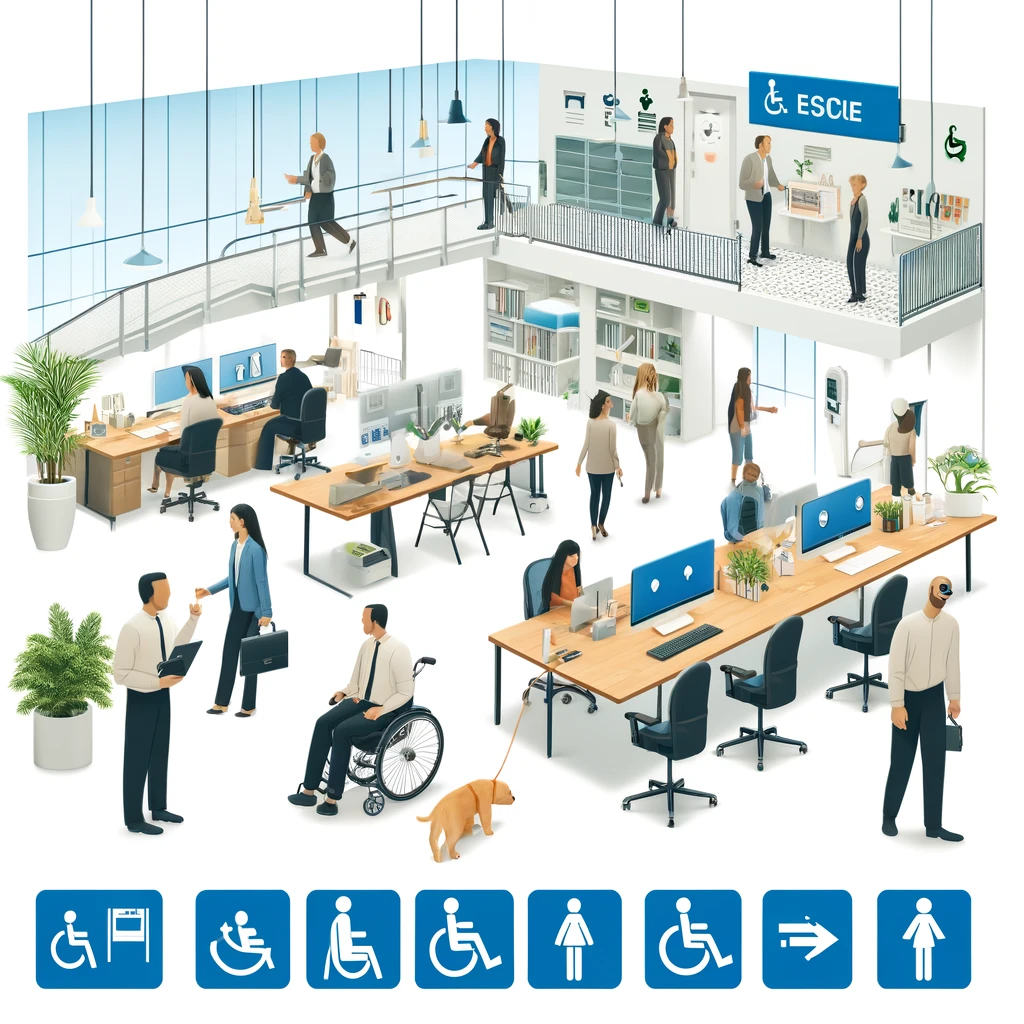
Creating an ADA escalation process for customer-facing teams starts with a simple reality: accessibility problems rarely stay isolated. A missed accommodation request at a retail counter can become a discrimination complaint, a social media issue, an operational failure, and a legal risk within hours. In practical implementation of ADA compliance, the escalation process is the operating system that connects frontline employees, supervisors, legal review, facilities, digital teams, and executive leadership. Without it, even well-intentioned organizations respond inconsistently, improvise under pressure, and expose customers to avoidable barriers.
The Americans with Disabilities Act, or ADA, is a federal civil rights law that prohibits discrimination against individuals with disabilities in employment, public services, public accommodations, transportation, and telecommunications. For customer-facing teams, the most common operational obligations sit in public accommodations and effective communication. That includes providing reasonable modifications to policies when necessary, maintaining accessible routes and service areas, communicating effectively with people who have vision, hearing, speech, cognitive, or mobility disabilities, and avoiding eligibility criteria that screen out disabled customers unless truly necessary. In day-to-day operations, these duties surface through requests for assistance, service animal interactions, captioning needs, alternate formats, inaccessible check-in systems, and complaints about physical or digital barriers.
An ADA escalation process is the documented path for recognizing an accessibility issue, assessing urgency, assigning decision-makers, implementing an interim solution, recording what happened, and closing the loop with the customer. I have helped teams build these workflows across retail, hospitality, healthcare-adjacent services, financial services, and local government vendors, and the same pattern always appears: the organizations with the fewest serious complaints are not the ones with the longest policies. They are the ones where frontline staff know exactly when to solve the issue themselves, when to call a manager, when to involve specialists, and how to document both the request and the response.
This matters because practical implementation of ADA compliance depends less on abstract awareness and more on response discipline. Customer-facing employees encounter accessibility issues in live environments, often with incomplete information and under time pressure. If the process is vague, employees may deny a request they should have accommodated, promise a solution they cannot deliver, or fail to escalate a safety-sensitive barrier quickly enough. A strong escalation model reduces legal exposure, improves customer trust, creates cleaner records for audits, and generates data that can drive broader remediation. It also supports related work across policy design, staff training, vendor management, digital accessibility, facilities maintenance, and complaint handling, which is why this topic functions well as a hub within a compliance and implementation program.
What an ADA escalation process must cover in real operations
The best ADA escalation processes are built around categories of issues, not generic statements about inclusion. In real operations, customer-facing teams usually need decision trees for five recurring situations: communication access, physical access barriers, policy modification requests, service animal issues, and technology barriers. Communication access includes requests for auxiliary aids and services such as sign language interpreters, CART captioning, large print, braille, plain language support, or staff assistance completing forms. Physical access barriers include blocked accessible parking, broken automatic doors, missing counter access, inaccessible restrooms, or queues that cannot accommodate mobility devices. Policy modification requests often involve food outside a venue, alternate check-in procedures, extra time, or exceptions to no-pet or no-outside-assistance rules when disability-related. Technology barriers include kiosks, websites, apps, and payment devices that cannot be used independently.
Each category needs clear thresholds. Frontline staff should know what they can authorize immediately, such as reading a form aloud, moving a conversation to a quieter area, providing curbside service if the entrance is temporarily blocked, or admitting a service animal when the legal criteria are met. Supervisors should own time-sensitive judgment calls that affect staffing, security, scheduling, or customer flow. A designated accessibility lead, compliance officer, legal counsel, or operations director should review high-risk issues, repeat complaints, denials of requested modifications, and barriers that require capital spending or vendor intervention. The process must also define emergencies. If a barrier affects safe egress, medication access, transportation boarding, or urgent service delivery, the response clock is immediate, not next business day.
One mistake I regularly see is treating every accessibility issue as a complaint. Many are simply service requests that can be resolved quickly if the employee is empowered and trained. Another mistake is the opposite: minimizing a complaint as routine when it signals a systemic failure. If three customers report that a touchscreen check-in station has no speech output or tactile controls, that is not a one-off inconvenience. It is evidence of a repeatable access barrier that likely requires procurement review, vendor remediation, and interim alternatives. Escalation design must distinguish individual service recovery from enterprise corrective action.
Core roles, decision rights, and service levels
An effective ADA escalation process works because responsibility is assigned in advance. Frontline employees identify and respond to basic requests, supervisors approve immediate operational modifications, accessibility or compliance leads interpret policy and coordinate resources, facilities teams fix built-environment barriers, digital teams address website or kiosk defects, procurement manages vendor obligations, and legal reviews high-risk denials or complaint responses. Human resources may support training, but HR should not own customer accommodation decisions unless the issue overlaps with employment. This separation matters because employment accommodation frameworks and customer-facing ADA obligations are related but distinct.
Document service levels with realistic timelines. Immediate issues include accessible entrance failures during operating hours, communication barriers affecting a live transaction, and service animal disputes at the point of service. Same-day issues often include alternate format delivery, temporary physical rerouting, manual transaction support when technology fails, and supervisor review of a requested policy modification. Multi-day issues include interpreter scheduling for future appointments, vendor remediation tickets, permanent signage replacement, and formal complaint review. When organizations publish internal service levels, teams stop improvising and customers get more consistent treatment.
| Issue type | Frontline action | Escalate to | Target response time |
|---|---|---|---|
| Broken accessible entrance | Offer nearest equivalent entry and staff assistance | Manager and facilities | Immediate |
| Request for interpreter at scheduled appointment | Capture details and confirm preferred method | Accessibility lead | Same day intake, schedule promptly |
| Service animal challenged by staff or patrons | Apply permitted ADA questions only | Supervisor if dispute continues | Immediate |
| Inaccessible kiosk or payment device | Provide staffed alternative transaction | Digital or operations owner | Immediate workaround, formal ticket same day |
| Request to modify policy | Assess whether modification is reasonable and necessary | Supervisor or compliance lead | Immediate to same day |
Decision rights need precision. For example, frontline staff should never debate the legitimacy of a visible disability, request medical documentation from a customer in ordinary public accommodation contexts, or create ad hoc rules for service animals. They should be trained on the two permissible questions under federal guidance when the need for the animal is not obvious: whether the animal is required because of a disability and what work or task the animal has been trained to perform. They also need scripts for what not to do, such as asking for certification or excluding the animal because another customer is uncomfortable. Precision at this level is what turns policy into practical implementation of ADA compliance.
How to build the workflow from intake through resolution
The workflow should begin with standardized intake. Every employee needs a short method for capturing who needs assistance, what barrier exists, what the customer is requesting, whether the issue is happening now or concerns a future interaction, and whether there is a safety or communication risk. A simple digital form in a CRM, help desk, incident platform, or operations app works better than email because it creates timestamps, routing, accountability, and searchable records. Tools like ServiceNow, Zendesk, Salesforce Service Cloud, Microsoft Dynamics, or even a structured SharePoint form can support this if fields are mandatory and reporting is enabled.
After intake, triage determines severity and ownership. I recommend three levels. Level 1 issues are resolvable at the point of service with no policy exception and no delayed access, such as reading content aloud, retrieving merchandise from an inaccessible shelf, or moving a meeting to an accessible room. Level 2 issues require supervisor approval or cross-functional support, such as a temporary policy modification, alternate method of completing a transaction, or interpreter coordination. Level 3 issues involve denial risk, repeat barriers, safety implications, media attention, regulator contact, or likely legal review. Those must be routed to the accessibility lead and, when appropriate, legal and senior operations.
Interim access is the most overlooked part of the workflow. Even when a permanent fix takes time, the customer still needs access now. If an accessible entrance is out of service, there must be a staffed alternative with equivalent dignity, not a back-of-house workaround that makes the customer feel segregated. If a website form is inaccessible, there must be a staffed phone or in-person option that can complete the same transaction without added burden. If an event registration platform cannot process assistive technology requests, staff need a manual intake path. An escalation process fails if it only opens tickets and does not restore access in the moment.
Closure should include customer communication, internal documentation, and root-cause classification. Tell the customer what was done, what will happen next if the issue is not fully resolved, and who to contact if they face the barrier again. Internally, log whether the issue involved training, maintenance, design, vendor performance, staffing, policy wording, or procurement. Over time, these codes reveal patterns. In one rollout I supported, over 40 percent of escalations traced back to a single kiosk vendor and a weak acceptance-testing process. Without disciplined closure coding, that trend would have stayed hidden inside scattered incident notes.
Training customer-facing teams to escalate correctly and confidently
Training should focus on recognition, response, and restraint. Recognition means employees can identify common accessibility barriers without waiting for a formal complaint. Response means they know the immediate steps, scripts, and tools available. Restraint means they understand the limits of their role and avoid unnecessary questioning, defensiveness, or denials. In practice, the most effective training uses realistic scenarios from the business, not generic slide decks. A hotel should rehearse roll-in shower room failures, visual fire alarm questions, and service animal breakfast-area interactions. A bank should rehearse signature alternatives, inaccessible ATM contingencies, and communication support for deaf customers. A retailer should rehearse fitting-room access, checkout lane alternatives, and mobility device navigation during peak hours.
Managers need separate training on balancing operational concerns with legal obligations. A common friction point is the phrase undue burden or fundamental alteration. These are real limits, but they are often misunderstood and invoked too casually by untrained supervisors. The right approach is to escalate before denying a requested modification on those grounds. Decision-makers should consider cost, resources, effectiveness of alternatives, and whether the requested change would materially alter the nature of the goods or services. That analysis belongs with experienced leadership, not a hurried frontline manager at a busy counter.
Refreshers matter because processes decay. Include ADA escalation scenarios in onboarding, annual compliance training, manager workshops, and post-incident reviews. Spot-audits are useful: ask employees how they would respond if a customer cannot use the self-service kiosk, if a captioning request arrives an hour before an event, or if an accessible restroom is closed for maintenance. If answers vary wildly across locations, the process is not embedded. Practical implementation of ADA compliance requires repetition until the response becomes operational muscle memory.
Metrics, governance, and the broader implementation hub
To manage ADA compliance well, track more than complaint volume. Useful metrics include number of accessibility requests by category, first-response time, time to interim access, time to permanent remediation, repeat incidents at the same location, percentage of issues resolved at Level 1, training completion by role, vendor-related incidents, and customer satisfaction after resolution. Review these metrics monthly with operations, facilities, digital, procurement, and legal stakeholders. Governance should include a standing owner for the escalation process, a change-control method for scripts and forms, and periodic audits against ADA standards, state law overlays, and company policy.
This article functions as a hub because an escalation process touches every area of practical implementation of ADA compliance. It should link internally to deeper guidance on customer communication, service animals, physical accessibility maintenance, digital accessibility remediation, event accommodations, vendor contract language, documentation standards, and complaint investigation. In mature programs, escalation data directly informs capital planning, software procurement requirements, QA testing, and frontline coaching. In other words, the process is not just a safety net for mistakes. It is a feedback loop that helps the organization remove barriers before customers encounter them.
The organizations that handle ADA issues best do three things consistently: they define common scenarios in plain language, they assign decision rights before incidents happen, and they treat every escalation as both a customer-service moment and a source of operational intelligence. That approach reduces inconsistency, improves response speed, and produces cleaner evidence that the business takes accessibility seriously. If you are building or revising your program, start by mapping your top customer-facing barriers, set response levels, and train every team member on the exact path from request to resolution.
Frequently Asked Questions
What is an ADA escalation process for customer-facing teams, and why is it so important?
An ADA escalation process is a clear, repeatable internal procedure that tells customer-facing employees exactly what to do when a customer raises an accessibility concern, requests an accommodation, or encounters a barrier to access. In practice, it is the framework that moves an issue from the frontline to the right internal decision-makers quickly and appropriately. That may include a supervisor, store or site leadership, human resources, facilities, digital support, risk management, compliance personnel, or legal counsel depending on the nature of the issue. Without that structure, organizations often rely on ad hoc judgment, which creates inconsistency, delays, and unnecessary risk.
It is especially important because accessibility problems rarely remain small. A missed request at a reception desk, call center, retail counter, clinic check-in area, or online chat can quickly become a formal complaint, a public relations issue, or evidence of a broader compliance failure. Customer-facing teams are often the first point of contact, which means they are also the first line of risk management. If employees do not know how to respond, document, and escalate, even well-intentioned organizations can end up mishandling situations that require urgency, sensitivity, and cross-functional coordination.
A strong ADA escalation process also improves customer experience. It signals that the organization takes accessibility seriously, empowers staff to act with confidence, and helps ensure that customers are not forced to repeat their concerns multiple times. Just as importantly, it creates accountability. Leadership can identify patterns, track response times, correct operational gaps, and allocate resources where barriers are recurring. In other words, the escalation process is not simply a legal safeguard; it is the operating system that connects frontline service, accessibility compliance, and organizational decision-making.
When should a customer-facing employee escalate an ADA-related issue instead of resolving it on the spot?
Frontline employees should always try to provide respectful, immediate assistance within their training and authority, but they should escalate whenever the issue involves uncertainty, denial of access, a requested modification they cannot approve, safety concerns, repeated barriers, or the possibility of legal exposure. The key principle is simple: if an employee cannot fully and confidently resolve the issue in the moment without guessing, delaying, or creating inconsistency, the matter should move up the chain right away.
Common escalation triggers include requests for auxiliary aids or effective communication support, disputes about service animals, inaccessible entrances or restrooms, mobility barriers, inaccessible digital tools used during the customer interaction, transportation or queueing problems, inability to provide forms or documents in an accessible format, and any situation in which the customer states they are being excluded or treated differently because of a disability. Complaints that involve dignity, refusal of service, privacy, or repeated prior incidents should also be escalated immediately. If the issue affects multiple locations, systems, or departments, it is especially important to document and route it beyond the local team.
Organizations should define escalation thresholds in writing so employees do not have to make legal judgments themselves. For example, a staff member may be authorized to relocate a meeting to an accessible room, read a form aloud, or obtain a temporary communication workaround, but not to decide whether a requested policy modification can be denied. Similarly, a manager may be able to address an on-site facilities barrier, while digital accessibility defects may need to go directly to IT or web teams. The best escalation process removes ambiguity by telling employees what they can solve, what they must report, whom to contact, and how fast the response must occur.
Who should be involved in an ADA escalation process, and what roles should each team play?
An effective ADA escalation process should involve more than just frontline staff and a manager. Because accessibility issues often cut across physical spaces, communication methods, policies, technology, and legal risk, the process needs clearly defined roles for multiple teams. At a minimum, customer-facing employees, supervisors, operational leaders, and an internal compliance or accessibility lead should be included. Depending on the organization, additional stakeholders may include facilities, IT, digital product teams, human resources, security, procurement, communications, risk management, and legal counsel.
Frontline employees are responsible for recognizing potential ADA-related issues, responding respectfully, documenting the facts accurately, and initiating escalation when required. Supervisors or local managers typically serve as first-level decision-makers who can coordinate immediate remedies, support the customer interaction, and make sure reporting happens promptly. An accessibility, compliance, or risk lead should oversee the consistency of the process, identify patterns, advise on more complex requests, and help ensure that resolutions align with policy and legal expectations.
Facilities teams should handle structural and environmental access barriers such as entrances, restrooms, counters, signage, parking, and route accessibility. Digital and IT teams should address website issues, kiosk access, online forms, customer service platforms, captioning, chat accessibility, and other technology-related barriers. Legal or compliance functions should become involved when there is a threat of complaint, significant denial of access, repeat failure, policy conflict, reputational risk, or uncertainty about how ADA obligations apply in a specific context. Executive leadership also plays a role by setting response expectations, approving resources, and reinforcing that accessibility escalation is a business priority rather than an optional courtesy.
The most important point is role clarity. Every participant should know what types of issues they own, when they must respond, what authority they have, and how information moves between teams. Without that clarity, issues stall, customers get inconsistent answers, and organizations lose the ability to respond quickly and defensibly.
What should be included in a well-designed ADA escalation procedure?
A well-designed ADA escalation procedure should include a clear intake method, defined escalation triggers, named points of contact, response time expectations, documentation standards, interim accommodation guidance, and a process for resolution review. It should be simple enough for frontline teams to use in real time, but detailed enough to support consistency across locations, channels, and departments. The goal is not to create bureaucracy. The goal is to create a reliable pathway from first notice to informed resolution.
Start with intake. Employees should know how to capture the essential facts: what happened, when and where it happened, what barrier was reported, what the customer requested, what immediate steps were taken, and whether the issue is ongoing. The procedure should then spell out what must be escalated immediately versus what can be handled locally. For example, a temporary workaround may be appropriate for a short-term access issue, but anything involving denial of service, communication failure, safety risk, or repeated barriers should trigger immediate review by a designated leader or specialist.
The procedure should also identify response timelines. Some issues require real-time intervention during the customer interaction. Others may need same-day follow-up or formal review within a set number of business days. Including service-level expectations helps prevent delays and demonstrates organizational discipline. In addition, the process should require documentation of both the issue and the resolution, including whether the matter revealed a broader policy, training, facilities, or digital accessibility problem.
Another critical element is interim problem-solving. Teams should not wait for a perfect long-term answer before helping the customer. The procedure should guide employees on how to provide temporary alternatives where appropriate while the organization works on permanent correction. Finally, the process should include post-incident review. That means looking beyond the single event to determine root cause, identify trends, assign corrective actions, and improve training or systems. The strongest escalation procedures do not just close tickets; they reduce the chances of the same accessibility breakdown happening again.
How can organizations train customer-facing teams to use an ADA escalation process effectively?
Training should focus on practical decision-making, not just policy awareness. Customer-facing employees need to understand what accessibility issues can look like in real interactions, how to respond respectfully, what they can handle immediately, and when escalation is required. The most effective programs combine basic ADA principles with scenario-based instruction tailored to the employee’s role and environment. A cashier, receptionist, call center representative, hospitality worker, security officer, and online support agent may all face different accessibility situations, so training should reflect those operational realities.
At a minimum, staff should be taught how to recognize accommodation requests even when customers do not use legal terminology, how to avoid making assumptions about disability, how to communicate with empathy and clarity, and how to document facts without editorializing. They should also know the internal chain of escalation, including backup contacts if a manager or specialist is unavailable. Quick-reference tools are especially useful, such as one-page escalation maps, decision trees, approved scripts, and contact lists for after-hours support. These resources make it easier for employees to act consistently under pressure.
Managers and supervisors need a deeper level of training because they often become the first escalation point. They should understand how to assess urgency, coordinate interim solutions, involve the correct support functions, and preserve documentation for compliance review. Cross-functional tabletop exercises can be extremely valuable here. By walking through realistic examples such as an inaccessible entrance, a request for effective communication support, or a digital booking failure, organizations can test whether the process works before a live incident exposes its weaknesses.
Training should also be ongoing. Accessibility expectations, technologies, and business operations change, so refresher sessions, audits, and trend reviews are important. Organizations should monitor whether employees are escalating appropriately, whether response times are being met, and whether recurring issues point to training gaps. When leaders treat ADA escalation as part of service quality and operational readiness