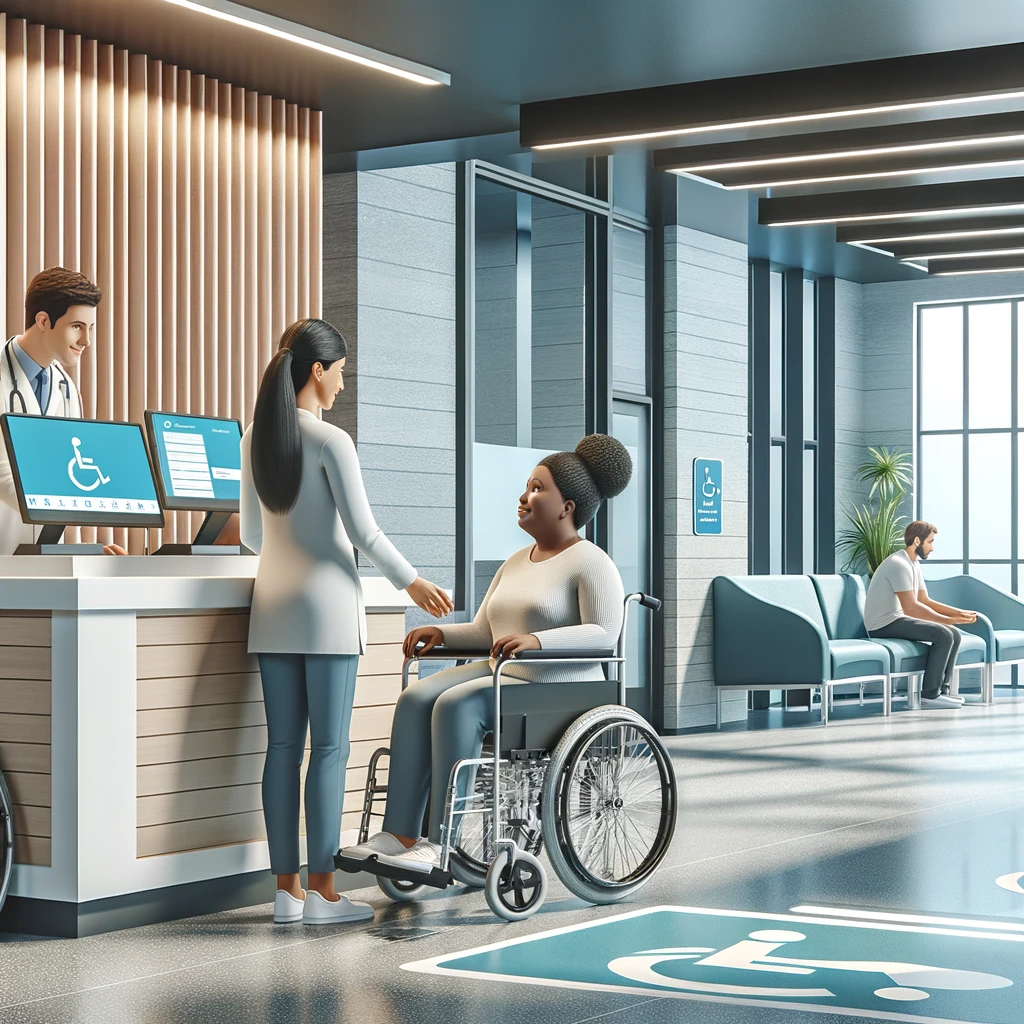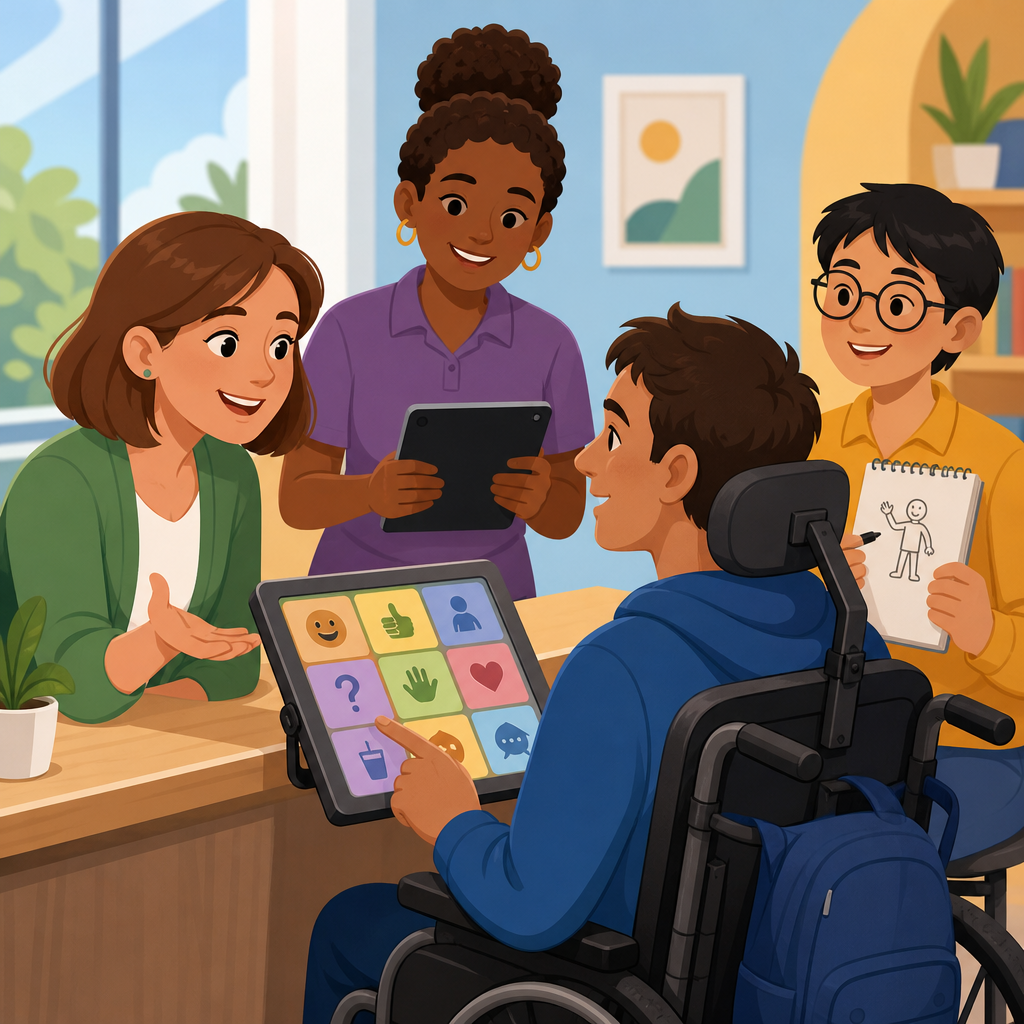
Communication access for people with speech disabilities is a civil rights issue, a customer service issue, and a daily operational responsibility for any organization that serves the public. In practice, “speech disability” refers to a communication impairment that affects a person’s ability to produce spoken language clearly or consistently enough to be understood in typical interactions. It may result from cerebral palsy, stroke, traumatic brain injury, ALS, Parkinson’s disease, Down syndrome, stuttering, laryngectomy, or other conditions. “Effective communication” means exchanging information accurately, timely, and in a manner the person can use. “Auxiliary aids and services” are tools and supports that make communication possible, including speech-generating devices, communication boards, trained staff techniques, writing materials, captioned telephones, and qualified communication support. Staff need to understand this topic because legal compliance, safety, informed consent, dignity, and equal participation all depend on it. I have trained frontline teams on these interactions, and the difference between helpful support and exclusion usually comes down to whether staff know how to slow down, listen, confirm meaning, and offer the right communication options without making assumptions.
Many organizations focus heavily on mobility access and overlook communication access until a difficult encounter happens at a front desk, clinic, classroom, housing office, courtroom, or call center. That is a mistake. A person may arrive able to understand everything being said but unable to answer in speech that unfamiliar listeners can follow. Another person may use a tablet with text-to-speech output, a letter board, gestures, or a communication app. Others may communicate by typing on a phone, pointing to choices, vocalizing, or using partner-assisted scanning. Staff who rush, interrupt, pretend to understand, or demand a companion interpret can create immediate barriers. Staff who use plain language, ask one question at a time, verify key details, and provide auxiliary aids create equal access. This hub article explains what effective communication requires, what auxiliary aids are, how staff should respond in real situations, and where organizations should build stronger policies, training, and linked guidance across the broader rights and protections framework.
What effective communication means in everyday service
Effective communication is not measured by whether an interaction feels fast or familiar to staff. It is measured by whether the person with a speech disability can receive information and express information with substantially equal accuracy, privacy, and independence. Under disability law and established accessibility guidance, the appropriate aid or method depends on the nature, length, complexity, and context of the communication. A yes-or-no question about store hours may be handled through gesture, writing, or a device in seconds. Discussing symptoms before surgery, reporting abuse to law enforcement, completing a housing appeal, or making decisions about financial benefits requires a more deliberate process and often multiple communication supports.
In my experience, staff often misunderstand “effective” to mean “we eventually got through it.” That standard is too low. If a patient cannot describe pain because a nurse kept finishing their sentences, if a client gives up because no one waited for their device to load, or if a customer shares private information through a family member because staff offered no direct communication method, communication was not effective. Equal access includes time to communicate, direct engagement with the person, and an opportunity to ask and answer questions without unnecessary burden. It also includes documenting preferred communication methods so the person does not need to re-educate staff at every visit.
Understanding auxiliary aids and services for speech disabilities
Auxiliary aids and services for speech disabilities range from simple low-tech tools to advanced augmentative and alternative communication systems. Low-tech options include pen and paper, dry-erase boards, alphabet boards, picture boards, yes-no cards, and printed choice lists. Mid-range tools include communication books, preprogrammed message devices, and speech amplification when the issue is low volume rather than language formulation. High-tech solutions include tablet-based AAC apps such as Proloquo2Go, TouchChat, TD Snap, or LAMP Words for Life, as well as dedicated speech-generating devices from companies such as Tobii Dynavox. Some people also use mainstream tools like smartphone notes apps, text messaging, relay services, or email to support live conversations.
The right auxiliary aid is the one that works for the individual in the specific setting. Staff should not substitute a method simply because it is more convenient. If a person uses a speech-generating device, taking it away, speaking over it, or insisting on handwriting can block communication. If someone’s speech is clearer when they spell key words, use first-letter pointing, or type sensitive terms, staff should support that process. People with speech disabilities are often the best source on what works. Asking “How do you prefer to communicate today?” is a practical starting point. The answer may vary by fatigue, environment, medication timing, noise level, and the complexity of the topic.
Core staff practices that prevent communication breakdowns
Most successful interactions depend less on expensive equipment than on staff behavior. Start by addressing the person directly, not a companion, aide, or interpreter. Maintain ordinary eye contact, use a respectful adult tone, and avoid acting embarrassed if speech is hard to understand. Reduce background noise when possible, move to a quieter area, and allow extra time. Ask one question at a time. Use plain language rather than long, compound explanations. If you do not understand, say so honestly and neutrally: “I want to make sure I get this right. Could you repeat that?” If repetition does not work, suggest alternatives such as writing, typing, pointing, or using a communication board.
Confirmation is essential for names, dates, addresses, medication details, numbers, consent terms, and safety-critical information. I train teams to repeat back what they think they heard and ask for verification. That method is faster than guessing and prevents serious errors. Staff should also understand that speech disabilities do not automatically indicate cognitive impairment or hearing loss. Many people know exactly what they want to say and understand complex information fully. Interrupting, oversimplifying, or talking to them as if they were children is both disrespectful and obstructive. Patience is not passive; it is an active accessibility skill that produces more accurate communication.
| Situation | Common barrier | Better staff response | Useful aid or method |
|---|---|---|---|
| Front desk check-in | Staff rushes and asks several questions at once | Ask one item at a time and confirm spelling | Writing pad, phone typing, yes-no card |
| Medical intake | Clinician relies on companion to answer | Speak directly to patient and verify symptoms carefully | AAC device, picture pain scale, typed responses |
| Emergency report | Background noise and time pressure reduce intelligibility | Move to quieter space and use short prompts | Keyword writing, communication board, text-based relay |
| Benefits interview | Long explanations overwhelm the exchange | Break information into steps and summarize decisions | Printed checklist, plain-language forms, email follow-up |
Settings where communication access has the highest stakes
Healthcare is one of the highest-risk environments because consequences of miscommunication include wrong medication histories, invalid consent, missed symptoms, and unsafe discharge instructions. The Joint Commission has long emphasized patient-provider communication as a safety issue, and communication accommodation should be treated with the same seriousness as allergy documentation. In hospitals and clinics, preferred communication methods should be recorded in the chart, visible to relevant staff, and honored across registration, nursing, physician visits, therapy, and billing. A patient may need extra time for triage, access to charged devices, a mount for their communication system, or a support person who knows their communication style while still preserving the patient’s own decision-making role.
Public-facing government offices also need strong protocols. Social service agencies, DMV counters, housing authorities, courts, and voting sites often depend on fast oral exchanges and dense forms. Without communication access, people can lose benefits, miss deadlines, misunderstand orders, or abandon their rights entirely. Schools, colleges, and workforce programs face similar obligations. For employees and job applicants with speech disabilities, communication access can affect interviews, training, supervision, and emergency procedures. Retail and hospitality settings may seem lower stakes, but they shape everyday inclusion. Booking a room, explaining a food allergy, disputing a charge, or asking for directions should not require a companion to speak for the customer.
Legal and policy foundations staff should understand
In the United States, communication access for people with speech disabilities is grounded primarily in the Americans with Disabilities Act and, for federally funded programs, Section 504 of the Rehabilitation Act. Depending on the setting, Titles II and III of the ADA require state and local governments and public accommodations to furnish appropriate auxiliary aids and services when necessary to ensure effective communication, unless doing so would fundamentally alter the service or create an undue burden. Those defenses are narrow and fact-specific. They do not excuse routine inattention, lack of training, or a blanket refusal to use common communication supports.
Organizations should also know that the method chosen must give primary consideration to the individual’s stated preference in many contexts, especially in public entities, unless another equally effective means is available. Privacy matters as much as access. Requiring a spouse, child, or friend to interpret or answer questions can compromise confidentiality and accuracy. Internal policies should define how staff identify communication needs, what aids are available onsite, how to obtain additional supports quickly, how to document preferences, and how to escalate complex cases. Complaint procedures should be easy to use in writing, online, and through alternative communication methods, not only by phone.
How to build a communication access system, not just a one-time fix
Reliable access comes from systems. Every organization should have a communication access policy, a short frontline protocol, and role-specific training. At minimum, staff should know how to recognize a possible speech disability, offer options without stigma, retrieve basic tools, and document what worked. Managers should audit common contact points including reception, phone systems, telehealth platforms, self-service kiosks, complaint lines, and emergency alerts. Procurement teams should review whether technology supports typed chat, relay compatibility, captioning, and integration with AAC devices. Facilities teams should include quiet spaces and charging access in accessibility planning.
Training works best when it uses realistic scenarios instead of abstract reminders to “be patient.” I have seen dramatic improvement when teams practice check-in, consent, de-escalation, and complaint handling with sample AAC users and timed exercises. Measures of success should include reduced abandoned transactions, fewer complaints, better documentation, and stronger customer satisfaction from disabled users. This hub should connect to deeper guidance on disability etiquette, healthcare consent, emergency communication, digital accessibility, complaint resolution, and service animal and mobility access rules, because communication barriers often overlap with other rights and protections issues. Review your current practices, fill the gaps, and make effective communication a standard part of service delivery.
The central lesson is simple: people with speech disabilities do not need pity or guesswork; they need communication methods that work. Effective communication means the person can understand and be understood accurately, privately, and with as much independence as the situation allows. Auxiliary aids and services may be low-tech, high-tech, or entirely procedural, but they must match the individual and the moment. When staff address the person directly, allow time, verify key information, and use the right supports, they reduce errors and open access to healthcare, government services, education, work, and daily commerce.
For organizations, the benefit is broader than compliance. Strong communication access improves safety, service quality, trust, and reputation. It also prevents the hidden costs of failed interactions, repeated appointments, complaints, and avoidable conflict. As a rights and protections hub, this topic should guide readers to more detailed resources on specific settings and accommodations while establishing one clear standard: access must be practical, consistent, and person-centered. Review your policies, train staff with real scenarios, equip frontline teams with basic aids, and ask disabled users where barriers still exist. Then act on what you learn.
Frequently Asked Questions
What is a speech disability, and why should staff understand it as an access issue?
A speech disability is a communication impairment that affects a person’s ability to produce spoken language clearly, consistently, or at a pace that is easily understood in everyday interactions. It can be associated with conditions such as cerebral palsy, stroke, traumatic brain injury, ALS, Parkinson’s disease, and Down syndrome, among many others. Some people may speak slowly, use a different rhythm or volume, pronounce words in ways unfamiliar to listeners, or experience fatigue that affects speech over time. Others may communicate using only a few spoken words and rely on communication boards, writing, text-to-speech apps, speech-generating devices, gestures, or a support person to supplement or interpret their communication.
Staff should understand speech disability as an access issue because communication is central to nearly every service interaction. Whether a person is checking in for an appointment, asking a question, reporting a problem, making a purchase, or seeking emergency help, the ability to be heard and understood affects their safety, dignity, independence, and equal participation. When organizations fail to communicate effectively with people who have speech disabilities, the result is not just inconvenience. It can mean delayed service, denial of service, mistakes in records, privacy breaches, humiliation, and exclusion.
This is also a civil rights issue. Public-facing organizations have a responsibility to provide equal access and effective communication, not simply good intentions. Staff training matters because many barriers are created not by the disability itself, but by impatience, assumptions, interruptions, and rigid procedures. When employees know how to slow down, listen carefully, offer options, and use available communication supports, they make services more accurate, respectful, and legally compliant. In short, understanding speech disability helps staff move from frustration or uncertainty to practical, inclusive service.
What should staff do when they are having trouble understanding a customer or client with a speech disability?
The most important first step is to stay calm, attentive, and respectful. If staff do not understand what a person is saying, they should not pretend to understand, guess carelessly, or direct questions to a companion instead. Instead, they should address the person directly and let them know, politely, that clarification is needed. A simple response such as, “I’m sorry, I didn’t catch that. Could you please repeat it?” is appropriate and respectful. Tone matters. The goal is to solve the communication issue without making the interaction awkward, rushed, or patronizing.
Staff should give the person time to finish speaking without interrupting or completing sentences for them. Many people with speech disabilities can be understood more easily when listeners pay close attention, reduce background noise, maintain eye contact, and focus on context. If repeating the message does not help, staff can try breaking the conversation into smaller parts. For example, they might ask yes-or-no questions, request one piece of information at a time, or confirm key details by repeating them back. “Did you say your appointment is at 2:30?” or “Are you asking about billing?” can help narrow down the message accurately.
It is also best practice to offer alternative ways to communicate. Staff can ask, “Would you like to write that down?” “Would it be easier to type it on your phone?” or “Do you use a communication device?” Some people may prefer to use an AAC method, including a speech-generating device, communication app, keyboard, or pen and paper. Others may have a familiar support person who can help clarify their message, but staff should still continue speaking to the individual, not around them. If privacy is involved, staff should be especially careful not to push the person into sharing information through a companion when another accessible option is available.
Above all, staff should avoid common mistakes: raising their voice unnecessarily, acting embarrassed, talking to the person as if they are a child, or assuming the person has a cognitive disability because their speech is difficult to understand. Difficulty with speech is not the same as difficulty with understanding. A respectful, flexible approach usually leads to better communication, better customer service, and fewer errors.
How can organizations prepare staff and systems to provide better communication access every day?
Good communication access does not happen by accident. It requires training, planning, and consistent operational practices. Organizations should begin by teaching staff what speech disabilities are, why communication access matters, and what practical strategies employees can use in real interactions. Training should cover respectful etiquette, active listening, use of plain language, how to ask for repetition or clarification, when to offer alternative communication methods, and how to avoid ableist assumptions. Staff should also understand that communication needs vary widely from person to person, so flexibility is essential.
Beyond staff behavior, systems and environments should support accessible communication. Front desks, call centers, clinics, stores, schools, government offices, and service counters should have simple backup tools available, such as paper and pens, tablets, text-based check-in options, online forms, accessible messaging systems, and space for private written communication when sensitive information is involved. Organizations can also review whether their intake processes rely too heavily on fast verbal exchanges. If every important step requires quick speech under pressure, many people will face avoidable barriers.
Policies matter too. Staff should know what to do if a person uses a speech-generating device, communicates through typing, or needs extra time to complete an interaction. Procedures should make clear that these communication methods are acceptable and should not trigger suspicion, ridicule, or refusal of service. Organizations should also examine emergency procedures, complaint systems, and phone workflows. For example, if a person cannot be understood easily on a voice call, is there a text, email, relay, portal, or in-person alternative that works just as well?
Finally, preparation should include accountability. Supervisors can reinforce expectations through onboarding, refresher training, observation, and policy review. Gathering feedback from customers or community members with disabilities can reveal barriers staff may overlook. The strongest organizations treat communication access as part of daily operations, just like safety, privacy, and customer care. That approach helps create a culture where access is not an exception, but a standard.
Is it appropriate to communicate through a family member, friend, or support person?
Sometimes a family member, friend, aide, or other support person may help facilitate communication, but staff should not assume that this is the preferred or appropriate method in every situation. The best practice is to address the person with the speech disability directly and ask what communication method works best for them. Some people may want a support person to repeat or interpret part of their message. Others may prefer to use a device, write, type, gesture, or speak for themselves with extra time. Respecting the individual’s choice is key.
There are important reasons not to default to companions. First, doing so can undermine autonomy and dignity by treating the person as though they are not the primary participant in the interaction. Second, it can create serious privacy problems, especially in healthcare, financial services, education, housing, legal matters, and other settings involving confidential information. A person may not want sensitive details shared with the individual who accompanied them. Third, companions can sometimes misunderstand, summarize inaccurately, or answer based on convenience rather than the speaker’s exact intent.
That said, if the person clearly indicates that they want a support person involved, staff can work with that arrangement while still keeping the person at the center of the conversation. For example, staff can maintain eye contact with the individual, ask questions directly to them, and confirm key information with them whenever possible. If the support person is clarifying speech, staff should ensure that the person with the speech disability has an opportunity to confirm that the message is accurate. This preserves both respect and accuracy.
The guiding rule is simple: communicate with the person, not past them. A support person can be part of the access solution, but they should not automatically become the substitute voice for the individual. Staff who follow this principle are more likely to provide service that is respectful, legally sound, and responsive to the person’s actual preferences.
What are the most common mistakes staff make with people who have speech disabilities, and how can they avoid them?
One of the most common mistakes is assuming that unclear speech means the person does not understand what is happening. This can lead staff to oversimplify, speak in a patronizing tone, or ignore the person altogether in favor of a companion. Another frequent mistake is rushing the interaction. Staff may interrupt, finish sentences, guess at what was said, or move on without confirming important details. These habits often create errors and can be deeply disrespectful. People with speech disabilities are often highly aware of when others are dismissing them, and those moments can discourage them from seeking help or services in the future.
Another major problem is failing to offer communication options. If staff rely only on spoken communication, they may unintentionally block access for someone who could communicate effectively by writing, typing, or using an AAC device. Some employees also react visibly with discomfort or impatience, especially if a line is forming or the interaction is taking longer than expected. Even subtle behaviors such as sighing, avoiding eye contact, or speaking only to a companion can send the message that the person is a burden rather than a valued customer, patient, student, or community member.
These mistakes can be avoided through a few consistent habits. Staff should listen without interrupt