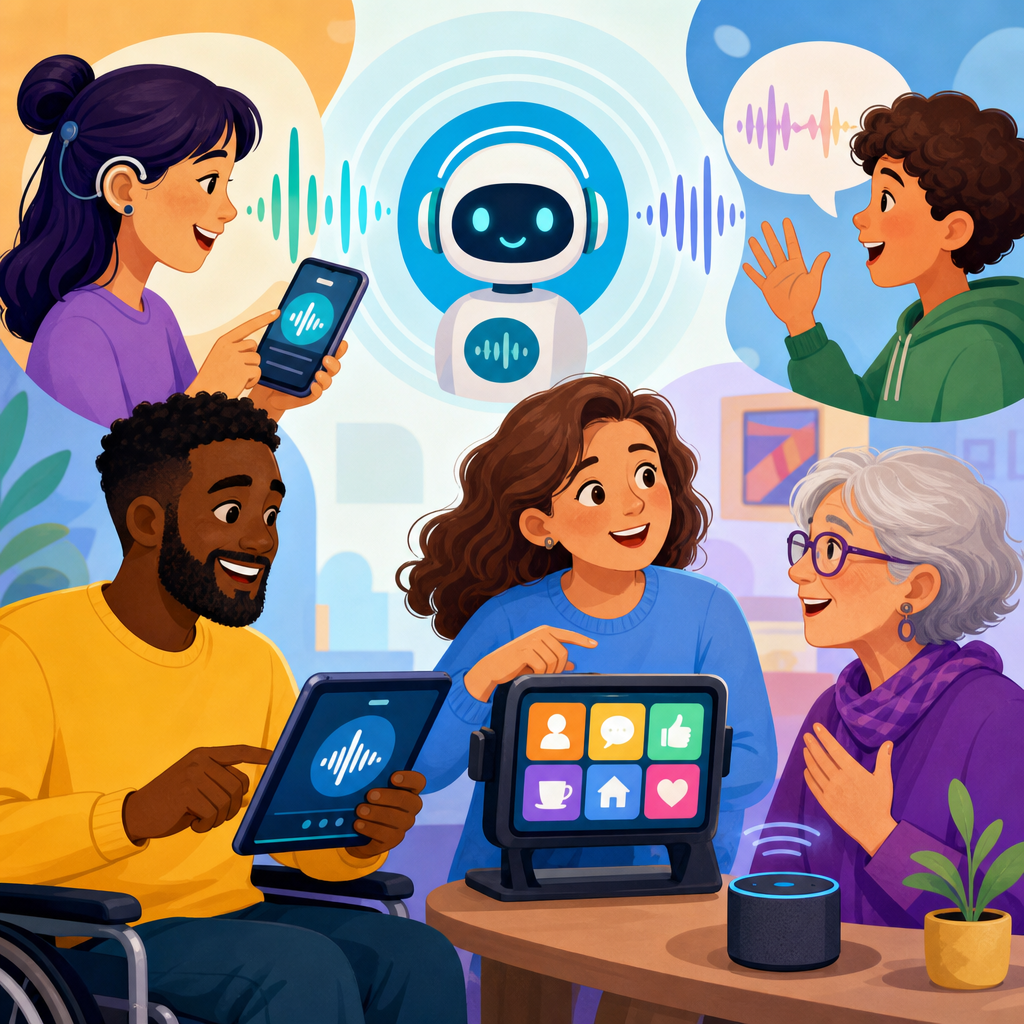
AI voice agents are rapidly becoming the front door to customer service, healthcare scheduling, workplace support, and public information, which makes communication access a civil rights issue rather than a product preference. In the context of speech disabilities, communication access means a person can reliably exchange information, complete tasks, and receive services without being excluded because their speech does not match what a system was trained to recognize. The Americans with Disabilities Act, or ADA, is the core U.S. law shaping that obligation, but the practical question for organizations is more specific: when an AI voice agent answers the phone or powers a kiosk, what must it do to avoid discrimination and support equal access?
I have worked on conversational systems where recognition accuracy looked excellent in lab tests yet broke down as soon as real callers with dysarthria, stutters, apraxia, cerebral palsy, ALS, Parkinsonian speech, or post-stroke impairments entered the flow. That gap matters because voice interfaces are often deployed in high-stakes settings. A missed medication refill, failed benefits verification, or dropped emergency transfer is not just a usability bug. It can become a barrier to essential services, trigger legal exposure, and erode trust among the very people accessibility laws are designed to protect.
AI voice agents combine automatic speech recognition, natural language understanding, dialogue management, text-to-speech, and routing logic. Each layer can create friction for disabled speakers. Recognition engines may map atypical speech to the wrong words, confidence thresholds may reject valid utterances, interruption handling may cut off slower speakers, and identity checks may rely on speech patterns that some users cannot consistently produce. Communication access therefore requires more than “better accuracy.” It requires inclusive design, alternative pathways, measurable testing, and governance aligned with disability law, procurement standards, and operational risk management.
This hub article explains how AI and ADA intersect when voice technology meets speech disability. It defines the legal baseline, shows where systems typically fail, outlines design and evaluation practices that reduce exclusion, and identifies the procurement questions organizations should ask vendors. It also connects this issue to broader legal and technological frontiers: algorithmic bias, documentation duties, public accommodation obligations, employment law, healthcare compliance, and the growing expectation that automated systems be explainable, auditable, and adaptable. For teams building or buying AI voice agents, the central principle is straightforward: if speech is the interface, accessibility must be engineered into the interface from the start.
What the ADA requires when voice AI is part of a service
The ADA does not contain a section written specifically for large language models or speech recognizers, but its nondiscrimination framework applies to the services those tools deliver. Title II governs state and local government services. Title III covers places of public accommodation, including many private businesses serving the public. Title I applies in employment. Across these contexts, the recurring standard is effective communication and equal access. If an organization uses an AI voice agent to provide information, accept requests, screen applicants, or route customers, it cannot design that system in a way that predictably excludes people with speech disabilities when reasonable modifications or auxiliary aids would make access possible.
For public entities and many covered businesses, effective communication is not satisfied merely because a phone number exists. The communication offered must be as effective as communication with others in terms of timeliness, accuracy, and privacy. That matters for voice AI because some organizations assume an automated phone tree with an eventual human fallback is enough. In practice, if the fallback is buried, delayed, or unavailable after hours while the voice agent handles most tasks instantly for nondisabled callers, access is not equivalent. The Department of Justice has long emphasized that accessibility is about the actual ability to obtain the service, not the existence of a theoretical alternative.
The ADA also intersects with Section 504 of the Rehabilitation Act for federally funded programs, Section 1557 in healthcare nondiscrimination, and, in digital settings, the practical influence of WCAG-based procurement and settlement expectations. While WCAG does not map neatly onto conversational AI, its principles still help: information must be perceivable, operable, understandable, and robust. For speech interfaces, that translates into multimodal input, clear prompts, recoverable errors, and compatibility with relay services, captions, chat, SMS, keyboards, and human assistance.
A useful legal framing is this: an inaccessible voice agent can function as a screening criterion. If a bank requires callers to speak a phrase to authenticate, and some disabled customers cannot reliably produce that phrase in a machine-recognizable way, the design excludes them unless an equally secure alternative exists. The same analysis can apply to job application hotlines, hospital scheduling bots, pharmacy refill lines, and municipal information systems. The law does not require perfect recognition of every speaker. It does require organizations to avoid preventable barriers and provide reasonable alternatives that preserve meaningful access.
Where AI voice agents fail people with speech disabilities
Most failures happen in predictable places. Automatic speech recognition systems are often trained on large datasets dominated by nondisabled speakers, mainstream accents, and relatively fluent conversational patterns. As a result, word error rates rise sharply for atypical articulation, variable pacing, reduced volume, involuntary repetitions, or atypical prosody. A system may misrecognize “prescription refill” as unrelated words, reject a valid response because confidence is below threshold, or repeatedly reprompt until the user abandons the call. In testing, I have seen callers become trapped in loops because the agent interpreted “representative” differently each time and never exposed a keypad or text option.
Dialogue design can make recognition problems worse. Narrow grammars, aggressive timeout settings, and interruption rules often assume fast, linear speech. People with stutters may need more time to begin speaking. People with dysarthria may be understood more accurately when allowed to finish a full phrase instead of being cut off after a partial hypothesis. Some systems ask compound questions such as “Please say or enter your member ID and date of birth,” which raises memory and production demands at the same time. A better approach is one piece of information per turn, with confirmation in plain language and low-friction correction.
Authentication is another common barrier. Voice biometrics can be difficult for users whose speech changes day to day because of fatigue, medication, disease progression, or environmental conditions. Liveness checks that require repeating a phrase at a certain pace or volume can fail for reasons unrelated to identity. Organizations that rely on voiceprint verification need backup methods such as SMS codes, email links, device-based passkeys, secure knowledge-based flows used carefully, or immediate transfer to trained staff. Security is legitimate, but security that only works for a subset of users is poorly designed security.
Accessibility failures also appear downstream in operations. If the bot cannot understand a caller and transfers them without context, the person must repeat themselves to each new agent. If transcripts are inaccurate, human staff may inherit incorrect facts. If analytics only track containment and average handle time, teams may miss that disabled callers abandon at higher rates. Communication access requires measuring the failure modes that matter, not just the efficiency metrics executives like to see.
Design practices that create real communication access
Accessible voice AI starts with a simple rule: never force speech as the only path. Every critical task should have at least one non-speech route available at the same point in the journey. That can include DTMF keypad entry, SMS handoff, secure web chat, email follow-up, relay-compatible support, or immediate transfer to a human representative. The key is parity. The alternative cannot be hidden behind repeated failed attempts or limited to narrow business hours if voice automation is always on.
Prompt design matters more than many teams expect. Short prompts outperform dense prompts. Explicit options outperform vague instructions like “How can I help you today?” when users are likely to encounter recognition difficulty. Confirmations should be lightweight: “I heard prescription refill. Is that right?” Error recovery should branch intelligently after the first failure rather than endlessly repeating the same wording. In production systems, I recommend a maximum of two failed speech attempts before offering keypad, text, or human assistance. That single rule prevents a large share of abandonment.
Testing must include people with diverse speech disabilities early and continuously, not as a final compliance check. Organizations should measure task completion rate, transfer rate, abandonment rate, time to resolution, reprompt frequency, false acceptance, false rejection, and subjective effort. Compare those metrics across disability groups and general population baselines. If an insurer’s refill bot completes 92 percent of calls overall but only 54 percent for callers with dysarthria, the issue is not edge-case performance; it is unequal access. Vendor claims about generic accuracy should never replace task-based testing in the actual domain.
| Design area | Common inaccessible pattern | Accessible implementation |
|---|---|---|
| Input method | Speech required for every step | Parallel keypad, SMS, chat, and human options available immediately |
| Prompting | Long, open-ended prompts with fast timeouts | Short prompts, single intent per turn, extended response windows |
| Error recovery | Same reprompt repeated indefinitely | Escalation after two failures with contextual alternatives |
| Authentication | Voiceprint as sole verification method | Multiple secure fallback methods with equal account access |
| Evaluation | Only overall accuracy and containment tracked | Disaggregated accessibility metrics and disability-inclusive user testing |
Another strong practice is preserving context across channels. If a caller moves from speech to chat or from bot to human, the system should pass intent, prior inputs, and error history so the person does not start over. This is especially important in healthcare, government benefits, and employment support, where repeated explanation creates both burden and privacy risk. Accessible design is not simply an interface choice. It is a service design discipline that connects models, prompts, routing, workforce training, and quality assurance.
Procurement, governance, and sector-specific risk
Organizations often inherit accessibility problems because procurement focuses on feature lists instead of evidence. When evaluating AI voice agent vendors, ask for speech-disability testing methodology, representative dataset information, known limitations, confidence-threshold controls, interruptibility settings, authentication alternatives, relay compatibility, transcript accuracy rates, and audit logs. Request domain-specific pilots with real users and require remediation commitments in the contract. If the vendor cannot explain how the system performs for speakers with dysarthria, stuttering, or voice changes after stroke, the buyer should assume the risk has not been managed.
Different sectors face different consequences. In healthcare, inaccessible scheduling or nurse triage can implicate disability nondiscrimination, patient safety, and informed consent. Under Section 1557 and related obligations, covered entities should treat speech-access barriers as a serious compliance issue. In employment, a recruiting bot that screens applicants by phone may trigger ADA accommodation duties and disparate impact concerns if qualified candidates are filtered out because the recognizer cannot parse their speech. In banking, inaccessible authentication can block account access and raise fair servicing questions. In government, automated information lines affect public participation, benefits access, and emergency communication, where delays can have severe consequences.
Good governance means assigning ownership. Accessibility cannot sit only with the legal team or only with engineering. Product, compliance, procurement, security, operations, and frontline staff all have roles. Publish escalation paths. Train human agents to handle transferred calls respectfully and efficiently. Retain logs sufficient for auditing failures while protecting privacy. Review complaints for patterns, not one-off exceptions. Most importantly, treat accessibility defects with the same urgency as security defects when they block essential tasks.
The strategic benefit is broader than risk reduction. When voice AI is built for speakers with varied abilities, it usually works better for everyone in noisy environments, under stress, with temporary impairments, or when language production is difficult. That is the practical lesson I have seen across deployments: inclusive design improves resilience. Teams that build multimodal, low-friction, well-instrumented systems create services that are more reliable, more humane, and more defensible under the law.
Building the AI and ADA hub forward
AI voice agents sit at the intersection of disability rights, machine learning, and everyday service delivery, which is why they belong at the center of any serious AI and ADA strategy. The core takeaway is clear: if an organization uses automated speech systems to deliver essential functions, it must design for people whose speech differs from the training norm. That means alternative channels, accessible prompts, secure fallback authentication, disability-inclusive testing, and procurement standards grounded in evidence rather than marketing claims.
This hub should guide related work across the broader legal and technological frontiers landscape. Deeper articles can examine AI in employment screening, healthcare intake, public-sector automation, relay interoperability, voice biometrics, procurement clauses, complaint handling, and audit frameworks. But the principles remain constant across those subtopics. Equal access is measured by outcomes. Effective communication requires timeliness, accuracy, and dignity. Accessibility is an operational requirement, not a post-launch patch.
For leaders, the next step is simple: audit every voice-dependent journey your organization offers, identify where speech is mandatory, and add equivalent alternatives before users are forced to fail. Then test those journeys with people who have real speech disabilities, review the data, and fix what breaks. That is how AI voice agents move from convenience tools to accessible infrastructure.
Frequently Asked Questions
Why are AI voice agents and speech disabilities a communication access issue, not just a convenience issue?
AI voice agents are increasingly the first point of contact for essential services, including customer support, medical scheduling, benefits information, workplace tools, transportation assistance, and public agency services. When these systems fail to understand people with speech disabilities, the result is not a minor inconvenience. It can mean being unable to book an appointment, report a problem, verify an account, request an accommodation, or obtain time-sensitive information. That is why communication access must be understood as a matter of equal participation and civil rights rather than a matter of product preference.
For people with speech disabilities, access means being able to reliably exchange information and complete tasks without being screened out by speech recognition models trained primarily on narrow speech patterns. If a system repeatedly asks a caller to repeat themselves, transfers them to nowhere, disconnects, or blocks progress because the person’s speech does not fit expected acoustic patterns, the technology is functioning as a barrier. In practical terms, that barrier can prevent access to healthcare, employment, education, financial services, and government programs. The issue becomes even more serious when there is no easy path to a human representative or alternative communication method.
This framing also matters legally and ethically. As voice interfaces become part of mainstream service delivery, organizations cannot assume that a speech-first workflow works equally well for everyone. If a company or agency chooses AI voice agents as the front door, it also takes on responsibility for making that front door usable by people with disabilities. In that sense, communication access is about whether essential systems are designed to include the full range of human communication, not just whether they are efficient for the majority of users.
How can AI voice agents create barriers for people with speech disabilities?
AI voice agents can create barriers in several predictable ways. The most common problem is recognition failure: the system does not accurately interpret speech that differs from the patterns in its training data. This may affect people with dysarthria, stuttering, apraxia of speech, cerebral palsy, ALS, Parkinson’s disease, stroke-related speech changes, or other conditions that influence speech production. In these cases, the agent may mishear words, fail to detect intent, or repeatedly prompt the user to start over, which can make even simple tasks exhausting or impossible.
Another major barrier is rigid conversation design. Many voice systems expect users to answer in a very specific format, respond quickly, or navigate fixed menus that offer little room for clarification. A person may know exactly what they need but still be unable to proceed because the system only accepts narrow command structures or interprets pauses, repetitions, or atypical cadence as errors. Voice biometrics can create additional problems if a person’s speech changes over time, varies day to day, or does not consistently match the model used for identity verification.
Access barriers are also often compounded by poor fallback options. If the only alternatives are to keep repeating oneself, get disconnected, or wait through long loops before reaching a human, the experience becomes exclusionary. Some systems also make it difficult to switch to keypad input, text-based chat, relay-supported communication, captioned support, or other methods that may work better. In real-world settings, these failures have consequences: missed appointments, inability to report fraud, loss of work time, delayed accommodations, or failure to receive urgent public information. In short, the barrier is usually not one single error. It is the combination of recognition limits, inflexible workflows, and weak backup pathways.
What does the ADA require when organizations use AI voice agents?
The Americans with Disabilities Act, or ADA, does not require a specific brand of technology or a single technical solution, but it does establish a broad obligation not to exclude people with disabilities from accessing goods, services, programs, or activities. When an organization uses AI voice agents as a primary service channel, that obligation still applies. The central question is whether people with disabilities, including speech disabilities, can effectively access the service in practice. If they cannot, the organization may need to modify its systems, provide auxiliary aids and services, or offer alternative methods that provide meaningful access.
In practical terms, that means organizations should not assume that deploying an automated voice system satisfies accessibility simply because it is available to the general public. If a voice agent is the first or only route for completing important tasks, the organization should evaluate whether users with speech disabilities can use it successfully and independently. It should also provide effective fallback options, such as a prompt route to a trained human representative, keypad alternatives, text channels, relay-compatible options, or other communication methods that do not depend on conventional speech recognition. The availability of alternatives matters, but so does their quality. An alternative that is buried, delayed, or functionally useless may not provide equal access.
Because legal obligations can vary by setting, organizations should treat ADA compliance as an operational responsibility, not a one-time procurement checkbox. That includes testing with disabled users, documenting failures, monitoring outcomes, and fixing barriers as part of regular service delivery. It is also wise to consider related obligations under Section 504, Section 1557 in healthcare contexts, state disability laws, and procurement standards where applicable. The larger point is simple: if AI voice agents are being used to deliver services, accessibility must be built into how those services actually work for people in the real world.
What should inclusive AI voice agent design look like for users with speech disabilities?
Inclusive design starts with the assumption that users communicate in different ways and that a voice-only success path is not sufficient. A well-designed AI voice agent should support multiple input methods from the beginning, including speech, keypad input, text-based pathways, and fast transfer to a human without penalty. It should allow users to slow the interaction down, repeat or confirm recognized content, and complete tasks even when speech recognition confidence is low. Instead of treating nonstandard speech as a failure case, the system should be designed to recover gracefully and preserve the user’s progress.
Training and evaluation practices are equally important. Systems should be tested with diverse speech patterns, including those of people with speech disabilities, across different accents, devices, environments, and task types. Organizations should measure not just average recognition accuracy, but also whether users can successfully complete the full interaction. That means tracking transfer rates, abandonment rates, repeated prompts, authentication failures, and time-to-resolution for users encountering recognition difficulties. If a system performs well in demos but routinely locks real users out of essential tasks, it is not accessible in any meaningful sense.
Inclusive design also requires operational safeguards. Human agents should be trained not to treat speech differences as suspicious, uncooperative, or low-priority. Escalation should be easy, respectful, and fast. Scripts should avoid blaming the user for recognition failures. Privacy and security controls should be flexible enough to support alternative verification methods when voice biometrics do not work reliably. Most importantly, disabled users should be involved throughout design, testing, procurement, and governance. The organizations that get this right usually do not treat accessibility as a late-stage patch. They treat it as a core quality requirement tied directly to usability, fairness, and service access.
What can businesses, healthcare providers, and public agencies do now to improve communication access?
The most important first step is to audit where AI voice agents sit in the service journey and identify whether they control access to high-stakes tasks. If people must go through a voice bot to schedule care, manage accounts, request workplace support, or receive public information, that channel should be reviewed immediately for accessibility barriers. Organizations should test with people who have speech disabilities, not just with internal teams or generic benchmark datasets. Real-user testing will reveal where recognition breaks down, where prompts are too rigid, and where fallback options fail.
Next, organizations should implement practical safeguards. These include offering a clearly stated option to use keypad input, making transfer to a human easy and prompt, supporting relay and text-based communication, and ensuring that users do not lose their place when an interaction shifts channels. Healthcare providers should pay special attention to scheduling, medication support, patient portals, and urgent message lines, since delays or failures in those areas can directly affect health outcomes. Employers should review HR help lines, IT support, accommodations processes, and internal service desks to ensure workers with speech disabilities are not excluded from routine workplace functions. Public agencies should ensure that automated systems for benefits, transportation, emergency information, and community services remain accessible under real conditions, not just in theory.
Finally, organizations should establish ongoing accountability. Accessibility should be part of procurement requirements, vendor contracts, quality assurance, complaint handling, and performance reporting. It helps to define clear metrics, such as successful task completion across communication modes, speed of escalation, and rates of unresolved access complaints. Leaders should also recognize that communication access is not a niche issue. As AI voice agents become more common, the risk of exclusion grows unless systems are deliberately built to accommodate human variation. The organizations that act now will be better positioned to meet legal obligations, serve a broader public, and build trust with users who have too often been left out of automated systems.


