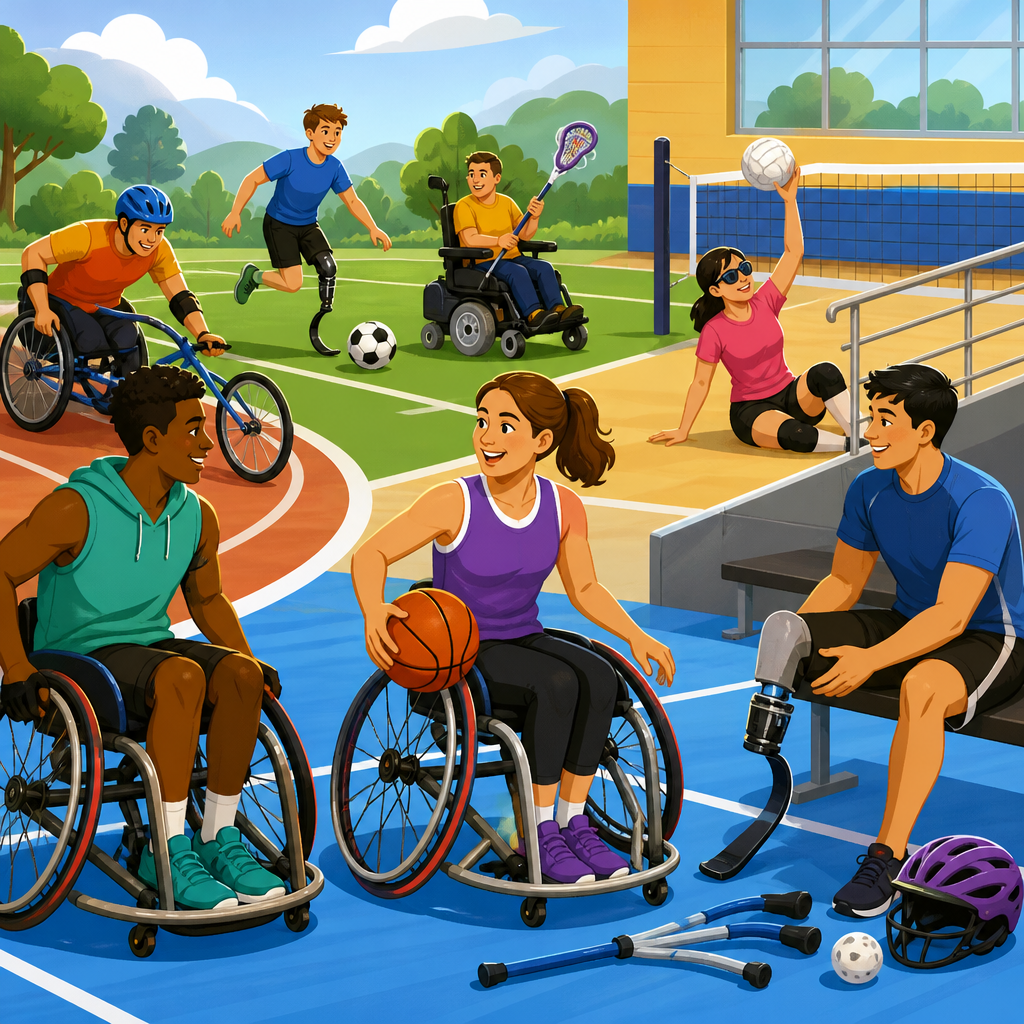
Adaptive sports programs and the ADA shape how parks, recreation departments, schools, and nonprofits open athletics to participants with disabilities through accessible facilities, inclusive policies, modified rules, and specialized equipment. In practice, this work goes far beyond buying a sports wheelchair or adding an accessible parking space. It requires understanding disability law, sport-specific safety standards, program design, staff training, and the difference between equal treatment and effective access. For agencies responsible for parks, recreation, and adaptive sports, this topic matters because participation in sport affects health, social connection, confidence, and community belonging, while legal mistakes can exclude athletes and expose an organization to preventable complaints or litigation.
The Americans with Disabilities Act, or ADA, is the core federal civil rights law governing access for people with disabilities in public life. Title II generally applies to state and local government parks and recreation systems, while Title III applies to many private recreation providers and places of public accommodation. Section 504 of the Rehabilitation Act may also apply when federal funding is involved, and the Individuals with Disabilities Education Act can intersect with school-based athletics. Across these frameworks, the basic principle is consistent: programs must offer people with disabilities an equal opportunity to participate, unless a requested change would fundamentally alter the nature of the activity or create a direct threat that cannot be mitigated.
Key terms drive day-to-day decisions. Adaptive sports are sports modified to enable participation by athletes with physical, sensory, intellectual, or developmental disabilities, or sports designed specifically for those athletes, such as goalball. Reasonable modifications are changes to policies, practices, or procedures when necessary to avoid discrimination. Auxiliary aids and services include interpreters, captioning, assistive listening systems, and visual supports. Accessible equipment may include sport wheelchairs, transfer systems, hand cycles, pool lifts, audible signals, or grip adaptations. I have worked with recreation operators that assumed accessibility ended with the built environment; in reality, the legal and operational analysis reaches registration, communication, supervision, competition formats, emergency response, and maintenance protocols.
How the ADA applies to parks, recreation, and adaptive sports programs
The ADA does not require every sport to look identical for every participant, but it does require meaningful access. That distinction is central. A city recreation department cannot automatically deny a player with a disability entry into a tennis league because staff are unfamiliar with modifications. The correct approach is an individualized assessment: what does the participant need, would the modification allow safe and fair participation, and would it fundamentally alter the sport or impose an undue burden? The Department of Justice has consistently framed this as a case-specific analysis rather than a blanket rule.
For public entities, program accessibility is broader than facility accessibility. A baseball complex may meet architectural standards and still violate the law if registration software is unreadable by screen readers, coaches refuse common modifications, or inaccessible dugouts isolate players. The 2010 ADA Standards for Accessible Design matter for routes, seating, locker rooms, play areas, swimming pools, and boating facilities, but compliance with construction standards alone does not satisfy operational obligations. Policies, scheduling, communication, and staffing are equally important. I have seen agencies invest in renovations while overlooking the simpler fixes that determine whether an athlete can actually join practice.
Reasonable modifications often involve timing, equipment use, support persons, communication methods, or competition structure. Examples include allowing a visual cue in addition to a whistle, permitting a guide runner, modifying a starting position, adding rest breaks for an athlete with heat intolerance, or adjusting a no-food policy to accommodate diabetes management. By contrast, a request that changes the essential nature of a sport may not be required. In wheelchair basketball, classification and chair specifications are integral to competitive structure; removing those elements would affect the sport itself. The key is to identify essential eligibility criteria before disputes arise.
Equipment selection, maintenance, and procurement standards
Equipment is often the first issue organizations think about, but effective adaptive sports programs treat equipment as part of a larger access system. Sport wheelchairs differ substantially from daily mobility chairs: they use cambered wheels for stability, lower seat positions for maneuverability, anti-tip casters, and reinforced frames for impact. Hand cycles may be recumbent, kneeling, or upright depending on trunk control and intended terrain. In aquatics, transfer walls, sloped entries, accessible locker layouts, and pool lifts all affect whether a swimmer can reach the water with dignity and safety. In blind and low-vision sports, audible balls, tactile boundary markings, and high-contrast visual targets can be essential rather than optional.
Procurement should start with program goals and participant profiles. A department running introductory clinics needs durable, adjustable entry-level equipment that fits varied body sizes. A competitive program may need sport-specific models from manufacturers such as RGK, Invacare Top End, Freedom Concepts, or Move United-affiliated vendors, along with spare tires, gloves, straps, and maintenance tools. Purchasing only one or two expensive devices without a replacement plan usually creates downtime, inequity, and safety issues. The most successful systems I have seen build life-cycle costs into budgets, including storage, sanitation, repair, and staff training.
| Program Area | Common Equipment | Key Access Consideration | Operational Risk if Ignored |
|---|---|---|---|
| Wheelchair court sports | Sport wheelchairs, straps, gloves, spare wheels | Proper fit, anti-tip function, transfer space | Falls, repetitive strain, inability to participate |
| Aquatics | Pool lift, transfer wall, aquatic wheelchairs | Independent or assisted water entry options | Exclusion from swim programs, unsafe manual lifts |
| Cycling | Hand cycles, tandems, adaptive pedals | Route width, turning radius, secure mounting | Crash risk, unusable trails, equipment damage |
| Blind and low-vision sports | Audible balls, tactile markers, contrast tape | Consistent auditory and tactile cues | Confusion, missed plays, preventable collisions |
Maintenance deserves the same rigor applied to playground inspections or fitness equipment logs. Tire pressure, wheel alignment, caster wear, brake function, strap integrity, and frame cracks should be checked routinely. Shared helmets require sanitation protocols. Batteries on powered devices and lift systems need scheduled testing. Documented inspections are not bureaucratic excess; they are evidence of a competent safety program. If an athlete is injured because a borrowed racing chair had a failed quick-release axle that nobody inspected, the problem is not simply bad luck. It reflects a preventable operational failure.
Rules, classification, and modifying play without undermining the sport
Adaptive sports succeed when modifications are purposeful, transparent, and consistent with the sport’s core objectives. Rule changes should increase access while preserving safety and competitive integrity. For example, in wheelchair basketball, players propel, dribble, and pass under rules adapted from basketball, with the addition of the two-push traveling rule and point classifications to balance lineups. In sled hockey, equipment and contact rules recognize seated play on ice while keeping the essential challenge of scoring and defending. In track, para classifications group athletes by functional impact, not by diagnosis alone, which produces more meaningful competition.
Not every recreation program needs a formal classification system, but every program should define what can and cannot be modified. Introductory leagues may allow a beeper ball, shorter distances, or extra touches to build inclusion. Tournament play may require alignment with recognized governing bodies such as U.S. Paralympics, Move United, USA Wheelchair Football League, or sport-specific national federations. Using published competition rules reduces conflict, helps coaches train appropriately, and strengthens defensibility when a requested change would alter the game too much. Clear criteria are particularly important when mixing disabled and nondisabled participants in unified or integrated formats.
A common mistake is assuming fairness means identical rules for everyone. Fairness in adaptive sports usually means rules that account for functional differences without predetermining outcomes. Consider a municipal pickleball program serving players with mobility impairments. Allowing two bounces for wheelchair players, a rule recognized in wheelchair pickleball, expands access without changing the purpose of rallying, shot placement, and strategy. That is a strong example of a reasonable modification that preserves the sport. By contrast, eliminating all out-of-bounds calls or removing time limits entirely might change the activity so dramatically that it no longer operates as the same game.
Program design, staff training, and participant assessment
Strong adaptive sports programs are built long before the first whistle. Registration forms should ask only for information necessary to provide access and manage risk, not broad medical details unrelated to participation. Staff need a structured intake process that identifies accommodation needs, emergency contacts, communication preferences, medication self-management issues, transfer assistance limits, and transportation considerations. The best programs separate disability-related support planning from assumptions about ability. An athlete who uses a wheelchair may need no assistance at all, while another participant without visible disability may need careful fatigue management due to a cardiac or neurological condition.
Training should cover disability etiquette, person-first or identity-first language preferences, safe transfer basics, communication with deaf or hard-of-hearing participants, sighted-guide techniques, concussion recognition, heat illness, and de-escalation. Coaches must also know when they are out of scope. They should not improvise medical judgments or manually lift athletes if safer mechanical options exist. The Centers for Disease Control and Prevention concussion guidance, American Red Cross first aid standards, and sport governing body coaching modules offer practical baselines. In my experience, confidence rises quickly when staff receive scenario-based training rather than abstract policy slides.
Assessment should be individualized and ongoing. For example, a participant with cerebral palsy joining an adaptive cycling program may begin on a stationary trainer to evaluate trunk control, leg alignment, and fatigue, then progress to a recumbent trike on a closed course, and eventually transition to community trail rides. That progression respects both inclusion and safety. Similarly, an athlete with a recent spinal cord injury may need a skin-integrity protocol for wheelchair seating pressure during long practices. Good programs document these decisions, review them with participants and families, and adjust supports as skills or health status change.
Facilities, communication access, and emergency planning
Facility accessibility affects every stage of participation: arrival, check-in, changing, play, spectating, and departure. For parks and recreation operators, accessible routes must connect parking, transit stops, entrances, restrooms, benches, fields, courts, and viewing areas. Surface firmness and stability matter on trails and around sidelines. Team areas need enough clear floor space for turning and transfers. Aquatic centers require accessible entries and usable deck circulation, not simply a lift placed behind stored furniture. Signage should be readable, directional, and consistent. When I audit recreation sites, circulation bottlenecks and storage spillover are among the most frequent barriers.
Communication access is just as critical. Registration portals should work with screen readers, color contrast should support low-vision users, and video content should include captions. Public meetings about recreation programs may require sign language interpreters or real-time captioning when requested. On the field, coaches may need visual cue cards, tactile demonstrations, or portable assistive listening technology. Emergency alarms should use both audible and visual signals where required. These measures are not niche upgrades. They directly determine whether participants understand instructions, consent to risks, and respond during emergencies.
Emergency planning in adaptive sports needs specificity. Evacuation chairs, refuge procedures, weather shelter plans, seizure protocols, autonomic dysreflexia awareness for athletes with spinal cord injuries, and backup communication methods should be addressed in writing. Staff should know who calls emergency services, who retrieves medication or adaptive gear, and how to preserve a participant’s mobility equipment during transport. A generic emergency action plan is not enough for complex recreation environments. The strongest agencies run drills that include adaptive equipment, transfer scenarios, and communication barriers, then revise procedures based on observed gaps.
Building an inclusive adaptive sports hub across a recreation system
As a hub topic for parks, recreation, and adaptive sports, this subject connects to budgeting, capital planning, volunteer management, transportation, partnerships, and community outreach. No single article can answer every sport-specific question, which is why organizations should build linked guidance for aquatics access, accessible playgrounds, inclusive camps, trail accessibility, special event planning, wheelchair court sports, and communication access. Internally, adaptive sports should not sit in isolation as a special program with separate standards. It should influence procurement templates, coaching manuals, website design, sponsorship packages, risk management, and strategic planning across the entire recreation portfolio.
Partnerships often determine whether programs thrive. Veteran service organizations, school districts, rehabilitation hospitals, Centers for Independent Living, and national nonprofits such as Move United can support outreach, equipment loans, coach development, and athlete pipelines. Data collection also matters. Track participation rates, waitlists, accommodation requests, incident reports, equipment downtime, and satisfaction feedback, then compare outcomes across sites and seasons. If one community center has twice the dropout rate of another, investigate transportation barriers, inaccessible restrooms, poor staff training, or scheduling conflicts. Inclusion improves when agencies measure it like any other service objective.
Adaptive sports programs and the ADA are ultimately about building recreation systems where access is planned, funded, and delivered with the same seriousness as any other public service. The practical questions are straightforward: can people get there, register, understand instructions, use the equipment, play safely, compete fairly, and return next season with dignity? When parks and recreation leaders answer those questions well, participation expands and legal risk drops. Review your policies, facilities, equipment plans, and staff training now, then map the next improvements across your entire adaptive sports program.
Frequently Asked Questions
What does the ADA require from adaptive sports programs beyond accessible buildings and parking?
The Americans with Disabilities Act reaches much further than ramps, curb cuts, accessible restrooms, and designated parking spaces. For adaptive sports programs, ADA compliance also involves how a program is designed, advertised, staffed, and delivered. Parks and recreation departments, schools, colleges, and nonprofit organizers must make sure qualified participants with disabilities have an equal opportunity to take part in athletics, practices, clinics, leagues, camps, and related events. That means looking at policies, registration processes, communication methods, tryout procedures, safety protocols, and whether program rules unnecessarily exclude someone with a disability.
In practical terms, an organization may need to provide reasonable modifications to rules or procedures, allow certain adaptive equipment, ensure effective communication for participants with hearing, vision, or speech disabilities, and train staff on inclusion and safe implementation. Equal access does not always mean identical treatment. In many cases, meaningful inclusion requires adjustments that account for disability-related barriers so that participants have a genuine chance to engage. The ADA generally supports these changes unless they would fundamentally alter the nature of the activity or create a direct safety threat that cannot be reduced through reasonable measures.
Adaptive sports planning should therefore include more than facility audits. Organizations should review intake forms, emergency action plans, equipment policies, coaching expectations, supervision levels, and grievance procedures. They should also consider whether spectators, family members, and personal care attendants can access the program environment. A strong ADA approach treats accessibility as a program-wide responsibility, not a one-time construction issue.
How do reasonable modifications work in adaptive sports, and when can a program say no?
Reasonable modifications are changes to policies, practices, or rules that help a person with a disability participate more fully in a program. In adaptive sports, these modifications might include allowing extra transfer time, adjusting participation formats, permitting a support person in certain settings, modifying drills, changing how instructions are delivered, or adapting nonessential rules during recreation-based play. The goal is to remove disability-related barriers without stripping the sport of its core character or compromising legitimate safety requirements.
The key legal and operational question is whether the requested change is reasonable under the circumstances. A program is not typically required to approve every request exactly as presented, but it should engage in an individualized assessment rather than relying on assumptions. Staff should ask what barrier exists, how the requested modification would help, whether there are effective alternatives, and whether the change would fundamentally alter the program. For example, some timing, scoring, classification, or contact rules may be essential to a competition format, while others may be flexible in instructional or recreational settings.
A program may deny a request if it can show that the modification would fundamentally alter the nature of the activity, create an undue administrative or financial burden in the specific context, or pose a direct threat to health or safety that cannot be mitigated. However, those decisions should be grounded in evidence, sport-specific standards, and actual risk analysis rather than stereotypes about disability. Blanket exclusions are especially risky. If a request cannot be granted as asked, the organization should explore other accommodations or modifications that would still provide meaningful access. Documented decision-making, consultation with knowledgeable professionals, and a consistent review process are all important parts of lawful and defensible program administration.
What kinds of adaptive equipment may be needed, and who is responsible for providing it?
Adaptive sports equipment can include a wide range of devices and modifications depending on the activity and the participant’s needs. Common examples include sports wheelchairs, handcycles, sit-skis, adaptive paddles, bowling ramps, audible balls, visual cueing systems, transfer supports, prosthetic adaptations, grip aids, and specialized protective gear. Some participants bring highly individualized equipment that is fitted to their body and sport, while programs may also maintain shared equipment for introductory use, clinics, or broad community access. In many cases, the most inclusive approach is a combination of participant-owned and program-supplied equipment.
Responsibility depends on the setting, the nature of the program, and the type of equipment involved. The ADA does not necessarily require an organization to purchase every possible piece of high-cost specialized equipment on demand, but it does require thoughtful consideration of what is needed to provide equal opportunity. A public recreation provider or school running adaptive athletics should assess what equipment is reasonably necessary to make the program accessible and whether less expensive alternatives, partnerships, grants, equipment-sharing arrangements, or phased purchasing can meet participant needs. For many organizations, core adaptive equipment is part of program infrastructure, not an optional extra.
Just as important, equipment decisions are about more than acquisition. Programs need policies for inspection, maintenance, fitting, sanitation, storage, transportation, and replacement. Staff should understand which devices can be used safely in which settings and whether a participant’s personal equipment is compatible with the facility surface, competition environment, or emergency procedures. If equipment restrictions are imposed, they should be based on legitimate safety or sport-specific reasons, not discomfort with unfamiliar technology. A well-run adaptive sports program evaluates equipment as part of inclusion, risk management, and participant performance—not as an afterthought.
How should programs balance inclusion, competitive fairness, and safety when modifying rules or allowing adaptive devices?
This is one of the most important and misunderstood issues in adaptive sports. Inclusion does not mean ignoring the structure of a sport, and competitive fairness does not justify excluding athletes with disabilities from participation. The right balance comes from understanding the purpose of the program, the essential elements of the sport, the level of competition, and the actual impact of a proposed modification or device. A beginner clinic, youth recreation league, intramural activity, and sanctioned tournament may each require a different analysis.
Safety decisions should be individualized and rooted in current knowledge, manufacturer guidance, sport governing body standards, and direct observation. Programs should ask whether an adaptive device changes risk in a meaningful way, whether the environment can be adjusted, whether protective measures can reduce hazards, and whether rule modifications affect only the method of participation or alter the competition itself. For example, allowing an athlete to use an adaptive cycle, an audible ball, or a modified release method may preserve the central nature of the activity while opening access. In contrast, some requested changes in elite or tightly regulated competition may affect scoring, classification, or essential skill components in ways that require more careful review.
The best practice is to create a structured process for evaluating requests before a dispute arises. That process should involve coaches, administrators, risk managers, and when appropriate, medical or therapeutic professionals and sport-specific experts. Programs should distinguish between necessary safety rules and traditions that simply have not been revisited through an accessibility lens. They should also communicate clearly with all participants about the program’s inclusion goals and the reasons for approved modifications. When fairness and access are discussed openly and professionally, organizations are better positioned to build trust while complying with the ADA and preserving the integrity of the sport.
What should schools, parks, and nonprofits do to build an ADA-informed adaptive sports program from the ground up?
Building a strong adaptive sports program starts with planning accessibility into the program from day one instead of reacting only when a participant requests help. Organizations should begin with an ADA-focused review of facilities, routes, locker rooms, restrooms, spectator areas, registration systems, websites, waivers, communication methods, and transportation logistics. From there, they should define which sports and participation levels they will offer, what equipment is needed, what partnerships can support implementation, and how they will respond to requests for modifications. Clear written policies help everyone understand that inclusion is an operational standard, not a special exception.
Staff training is equally critical. Coaches, officials, volunteers, front-desk staff, and administrators should understand disability etiquette, emergency procedures, effective communication, adaptive equipment basics, and how to recognize the difference between equal treatment and equal opportunity. Programs should also establish a consistent process for individualized assessment, documentation, and follow-up. That process should include how to handle concerns about safety, how to escalate complex decisions, and how to respond if a requested modification cannot be granted in its original form. Many ADA problems arise not from bad intent, but from inconsistent staff responses and lack of preparation.
Successful programs also listen to participants with disabilities and involve them in design and evaluation. That can mean advisory groups, pilot sessions, participant surveys, or collaboration with disability organizations, therapists, and adaptive sport specialists. Data on participation, retention, injuries, equipment use, and unmet needs can help refine the program over time. Finally, organizations should remember that ADA-informed adaptive sports are not just about compliance. Done well, they expand community access, improve program quality, reduce avoidable barriers, and create more durable pathways for athletes of all ages and abilities to participate, compete, and belong.


