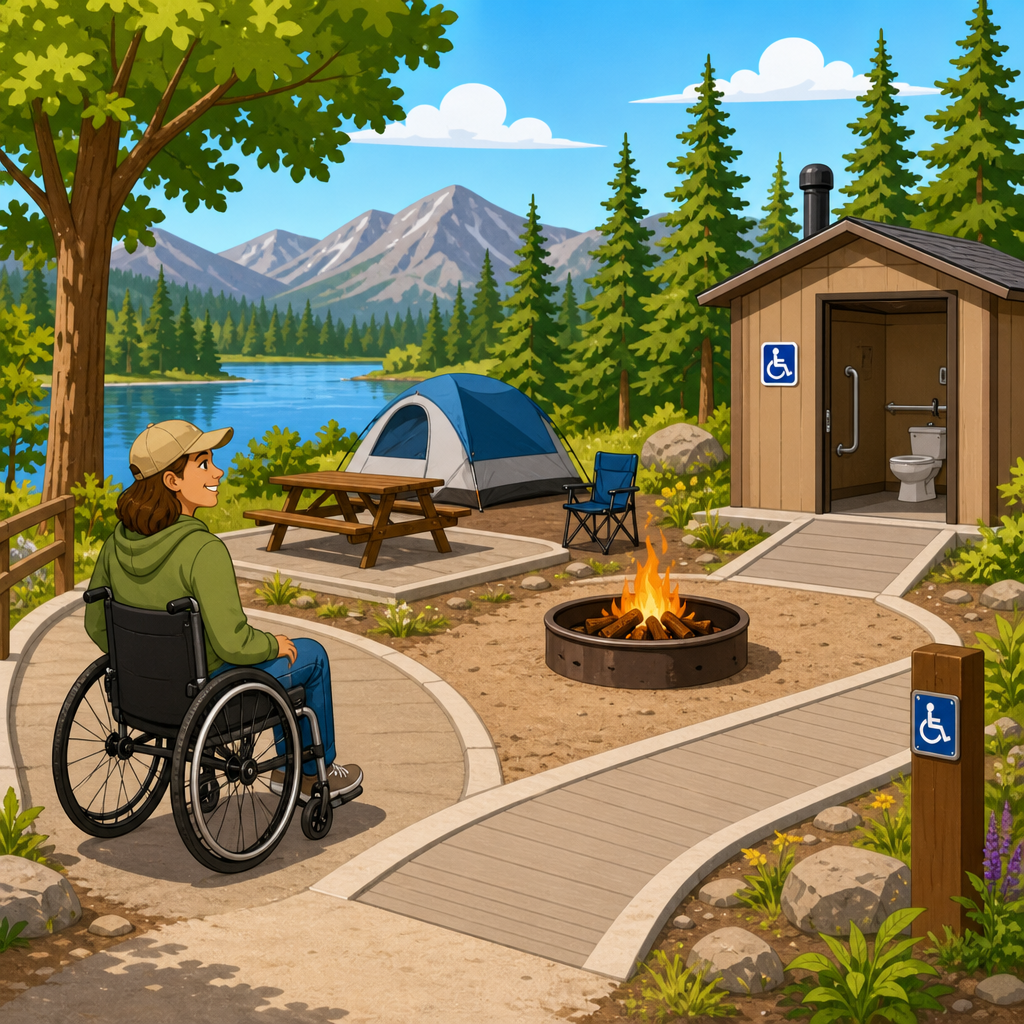
Accessible campgrounds make outdoor travel possible for more people by ensuring campsites, fire rings, toilets, and routes are designed for wheelchair users, older adults, people with limited stamina, blind visitors, Deaf campers, and families managing temporary injuries or medical equipment. In park planning, accessibility means more than a single ramp or wider doorway. It means a connected system that lets a visitor arrive, unload, move through the site, cook, rest, use the restroom, and reach recreation features with dignity and without unnecessary assistance. When I have evaluated campgrounds with operations teams and design consultants, the same lesson appears every time: one accessible picnic table does not create an accessible camping experience if the parking spur is sloped, the path is soft, or the toilet is too far away.
This matters because campgrounds are a core access point for parks, recreation, and adaptive sports programs. A family choosing a state park, a veterans group organizing adaptive paddling, or a nonprofit hosting an inclusive fishing weekend all depend on reliable site information and usable infrastructure. In the United States, accessibility expectations are shaped by the Americans with Disabilities Act, Architectural Barriers Act standards on federal sites, and U.S. Access Board guidance for outdoor developed areas. Those frameworks influence how camp units, trail connections, toilet rooms, and shared amenities should be planned. They also shape procurement, capital planning, maintenance schedules, reservation systems, and staff training.
As a hub for parks, recreation, and adaptive sports, this article explains the components that define an accessible campground and how they work together in practice. It covers campsite layout, fire ring reach and transfer considerations, restroom and shower access, route design, surfacing, signage, and program operations. It also addresses common questions park managers and visitors ask: What makes a campsite truly accessible? How close should toilets be? Which surfaces hold up best? How do reservation systems communicate access features clearly? The goal is straightforward: help agencies, concessionaires, camp operators, and inclusive recreation planners create campground experiences that are genuinely usable, not merely labeled accessible.
What Makes a Campground Accessible
An accessible campground is a network of features that works from arrival to departure. At minimum, visitors need an accessible parking area or spur, a stable route from vehicle to campsite elements, clear space around furnishings, and access to essential shared facilities. In practice, that includes stable and firm surfacing, manageable running slopes and cross slopes, reachable controls and fixtures, and predictable circulation. Accessibility also depends on the distance between features. A compliant toilet building that requires a long, steep approach still fails many users.
Operators should think in terms of use sequences. A camper arrives, exits a vehicle, unloads gear, reaches the tent pad or cabin entrance, cooks or uses a grill, gathers around a fire ring, stores food, and uses restrooms after dark and in bad weather. Every step introduces potential barriers. Loose gravel catches front casters. Raised lips at shower thresholds stop rolling shower chairs. Poorly placed bollards narrow paths. Signage with low contrast disappears at dusk. Accessible campgrounds reduce friction across this entire sequence, which is why site-specific audits are more valuable than checkbox reviews.
Accessible Campsites and Site Furnishings
The campsite is the core unit of campground accessibility. A usable site starts with dimensions and circulation. Campers need space to deploy van lifts, transfer to mobility devices, move around picnic tables, and reach tent pads or cabin porches. Parking spurs should connect directly to the main outdoor living area with a firm, stable route. Site furnishings should sit on the same accessible surface, not isolated on islands of concrete surrounded by deep gravel. Where tent camping is offered, the pad should be level enough for safe setup and nighttime movement, with a clear connection to tables, grills, water, and routes to toilet buildings.
Picnic tables deserve special attention because they often become the social and functional center of a site. At least one table should allow wheelchair users to pull in without awkward side approaches, and knee and toe clearance matter as much as tabletop height. I have seen renovated campgrounds install heavy timber tables marketed as accessible, only to place braces where a wheelchair user needs foot space. The result looks inclusive in photographs but fails in actual use. Similar issues appear with bear boxes, lantern posts, water hydrants, and utility hookups. Reach ranges, operable parts, and turning space determine whether a feature can be used independently.
For operators serving adaptive sports groups, campsite selection should match program needs. Anglers using transfer boards need closer access to fishing piers or shoreline routes. Handcyclists benefit from longer, smoother campground loops and wider parking. Groups with sit-ski or sports wheelchair users often carry larger gear, making unloading zones and storage more important. The best campground inventories classify accessible sites by their actual characteristics rather than a single generic label. That lets reservation staff guide visitors to the right fit and reduces unpleasant surprises on arrival.
Fire Rings, Grills, and Cooking Areas
Fire rings are iconic campground features, but they are also common barriers. Accessible fire rings need clear ground space around them, usable edge heights, and placement that allows approach without crossing loose ash pits or uneven stones. Some designs support a side approach for someone seated; others permit a safer front reach. The point is not to force one exact model everywhere. The point is to make fire building, tending, and social use possible without dangerous overreaching or unstable positioning. In group sites, multiple fire features may be appropriate so one accessible ring is not monopolized during events.
Grills and cooking surfaces should be approached with the same rigor. Adjustable grates, reachable handles, and firm surfacing at the cooking edge matter more than decorative masonry. Heat protection is also part of practical accessibility. A wheelchair user positioned close to a fixed grill can face burn risks if clearances are tight or controls require crossing over a hot surface. At several parks I have reviewed, simple modifications such as relocating the grill onto the accessible pad, widening the route, or replacing a high-sided fire ring dramatically improved independence without changing the rustic character of the site.
| Campground feature | Common barrier | Better accessible solution |
|---|---|---|
| Fire ring | Set in deep gravel with no clear approach | Placed on firm surface with adjacent clear maneuvering space |
| Picnic table | Cross brace blocks knee space | Extended top and unobstructed knee and toe clearance |
| Grill | Controls positioned over hot grate | Side-operable handles reachable from seated position |
| Tent pad | Lipped edge and soft perimeter | Flush transition and stable route to site features |
| Toilet route | Steep, unlit path with loose aggregate | Firm, stable route with appropriate slope and lighting |
Accessible Toilets, Showers, and Hygiene Facilities
Toilets are often the deciding factor in whether a campground is usable for an overnight stay. Visitors can adapt to some campsite inconvenience, but inaccessible hygiene facilities quickly end a trip. Accessible toilet rooms require compliant door widths, maneuvering clearances, grab bars, toilet placement, sink access, mirror visibility, and operable hardware. In campgrounds, location matters just as much. Toilet buildings should sit on accessible routes that remain usable in rain, low light, and peak traffic. If the route floods, washes out, or becomes blocked by picnic overflow parking, the restroom is not functionally accessible.
Shower rooms add another layer. Roll-in showers, handheld sprayers, seating, hooks, shelves, and slip-resistant floors support a wider range of users, including older adults and athletes transferring from adaptive equipment after trail or water programs. Privacy and family assistance layouts are equally important. A parent helping an older child, a spouse assisting a partner, or a support worker traveling with a camper may need larger compartments or family rooms. Good campground design also addresses drying and changing areas, because bottlenecks often happen just outside the shower stall where benches or hooks are missing.
Maintenance is the hidden driver of accessibility here. Even well-designed restrooms fail when closers are too strong, dispensers are empty, thresholds swell, drains pond water, or textured coatings become slippery under soap residue. Operators should build restroom inspections into daily rounds, especially in high-use seasons and during adaptive sports events. Reliable maintenance logs, photo documentation, and work-order response times matter as much as design drawings. Accessible hygiene facilities are not one-time projects; they are operational commitments.
Routes, Surfaces, Parking, and Wayfinding
Accessible routes connect everything. In outdoor environments, that means planning beyond the minimum path from parking to one feature. Visitors need routes from parking to campsite pads, toilets, showers, camp stores, amphitheaters, boat launches, fishing access points, and program areas. Surface selection is critical. Stabilized aggregate can work in some climates and budgets, but only if compaction, edging, drainage, and maintenance are taken seriously. In many high-traffic campgrounds, asphalt or concrete provides the most reliable long-term performance for primary accessible routes, especially where freeze-thaw cycles, roots, and stormwater regularly distort softer surfaces.
Parking design should support real vehicle use. Van-accessible spaces need room for side or rear deployment, and campgrounds with trailer traffic must prevent encroachment into access aisles. Signage should identify accessible sites clearly at both reservation and field levels. I recommend route signs that include destination, distance, and grade expectations where terrain is challenging. That helps visitors make informed choices and mirrors best practice on accessible trails. Wayfinding should also consider low-vision users through contrast, legibility, and consistent placement, while audible information or QR-linked maps can supplement printed kiosks.
Lighting deserves careful balance. Campgrounds aim to preserve dark skies, yet completely unlit accessible routes can create safety problems for people with low vision, balance limitations, or those traveling to toilets at night. The answer is not floodlighting every loop. It is targeted, shielded lighting at key decision points, restroom approaches, and major transitions. Operators should test routes after dark, in rain, and during shoulder seasons, because accessibility failures often appear outside ideal daytime conditions.
Operations, Reservation Systems, and Adaptive Recreation Planning
Accessible infrastructure works best when paired with accurate information and trained staff. Reservation systems should describe each accessible site in practical terms: parking type, route surface, distance to toilet building, fire ring style, table configuration, and whether the site suits tents, RVs, or both. Generic badges frustrate travelers who need to know whether a powerchair can traverse the route or whether a shower includes a handheld unit. Leading park systems increasingly attach photos, dimensional notes, and amenity lists to site profiles, which reduces cancellations and improves trust.
Staff training should cover respectful communication, accessible equipment handling, emergency evacuation, and event setup. During adaptive sports weekends, small operational choices have oversized effects. Temporary fencing can narrow paths. Portable toilets can block transfer space. Event tents can be placed on inaccessible turf while the paved plaza remains empty. I have seen excellent capital investments undercut by one poorly planned event layout. A simple pre-event access review, involving program leaders and if possible disabled participants, prevents most of these failures.
This hub also connects to the wider parks and recreation ecosystem. Accessible campgrounds support inclusive kayaking, mountain biking, birding, equestrian programs, fishing clinics, and winter recreation. They link with accessible trails, beach access mats, all-terrain wheelchairs, transfer systems at docks, and inclusive playgrounds in adjacent day-use areas. Agencies that treat campgrounds as isolated assets miss these synergies. The strongest systems plan access across arrival, overnight stay, recreation participation, and departure, using audits, capital improvement plans, and visitor feedback to guide upgrades.
Common Mistakes and Practical Upgrade Priorities
The most common mistake is treating accessibility as a single designated campsite rather than a campground-wide strategy. Other frequent errors include labeling steep gravel sites accessible, placing amenities outside reachable ranges, creating accessible toilets without accessible routes, and overlooking maintenance budgets. Another issue is failing to verify installations in the field. A drawing may show compliant clearances, yet a contractor shifts a picnic table, adds a curb, or changes surfacing depth, creating a barrier that remains unnoticed until visitors complain.
For most operators, the best upgrade sequence starts with routes, toilets, and campsite surfaces because those changes unlock the largest share of usability. Next come furnishings such as tables, grills, and fire rings, followed by wayfinding, lighting, and digital reservation content. Accessibility audits should include disabled users with different mobility and sensory profiles, not only checklist inspectors. Their feedback reveals practical issues like gate latch force, nighttime glare, or the effort required to roll uphill on decomposed granite. Those observations lead to smarter spending and better outcomes.
Accessible campgrounds succeed when every basic camping task can be completed through a connected, usable system. Campsites need firm surfaces, workable clearances, and furnishings that support seated and standing users. Fire rings and grills should allow safe approach and operation. Toilets and showers must be both compliant and close enough to reach on dependable routes. Parking, wayfinding, lighting, maintenance, and reservations all shape whether access works in real life. For parks, recreation, and adaptive sports providers, this is not a niche issue. It directly affects participation, visitor satisfaction, and the credibility of inclusion efforts.
If you manage, design, or market campgrounds, start with an honest site audit and fix the barriers that interrupt the full visitor journey. Document actual features, improve routes first, train staff, and update reservation details so guests can choose with confidence. That approach creates better campgrounds for disabled visitors, aging travelers, families, and organized adaptive recreation groups alike.
Frequently Asked Questions
What makes a campground truly accessible, beyond just having one ADA campsite?
A truly accessible campground works as a connected system, not as a single modified campsite placed in isolation. Accessibility begins at arrival, with clear signage, accessible parking, stable unloading areas, and a route that allows a visitor to move safely from their vehicle to the campsite. From there, the site should support the full camping experience: a tent pad or parking spur with enough room to transfer and maneuver, a reachable fire ring and grill, accessible picnic tables, and a reliable route to restrooms, water sources, and other shared amenities. If one part of that chain is missing, the campground may technically include an accessible feature while still being difficult or impossible for many people to use comfortably.
Good campground accessibility also considers a wide range of visitors, including wheelchair users, older adults, people with limited balance or stamina, blind or low-vision campers, Deaf visitors, families caring for someone with a temporary injury, and people traveling with medical equipment. That means surfaces should be firm and stable, routes should be easy to follow, and important information should be communicated clearly through visual, tactile, and straightforward written cues where possible. In practice, an accessible campground is one where a visitor can arrive, set up, cook, rest, use the restroom, and move around independently or with minimal assistance, rather than constantly having to improvise or ask for help.
What features should accessible campsites include for comfort, safety, and independent use?
Accessible campsites should provide enough usable space and predictable design so campers can manage everyday tasks without unnecessary barriers. A site should usually include a firm, stable, and reasonably level surface at key activity areas such as the parking spur, tent pad, picnic table location, and route to the restroom. Space matters just as much as slope. Campers may need room to transfer from a vehicle, position a wheelchair beside a picnic table, move around coolers or medical gear, or assist a child or family member. Narrow layouts, steep grade changes, deep gravel, or abrupt edge transitions can make a site much harder to use, even if it meets a basic checklist on paper.
Comfort and safety also depend on how the site functions as a whole. Picnic tables should offer knee and toe clearance for seated use. Cooking surfaces and fire features should be reachable without forcing someone to lean dangerously or navigate loose ground. Shade, proximity to water, and distance to restrooms can be important for people with limited stamina or heat sensitivity. Site numbers and wayfinding should be easy to see and understand. An accessible campsite should feel practical, not merely compliant. The goal is to make ordinary camping activities like eating, resting, organizing gear, and spending time outdoors manageable and enjoyable for people with different mobility, sensory, and endurance needs.
How should accessible fire rings, grills, and picnic areas be designed?
Accessible fire rings and grills should be designed so campers can safely approach, use, and move away from them without dealing with unstable ground or awkward reach distances. The area around the fire feature should be firm, level enough for maneuvering, and connected to the main campsite by an accessible route. If a wheelchair user or someone with limited balance cannot get close enough to place wood, adjust cookware, or warm themselves safely, the feature may be present but not truly usable. Fire rings that are too high, too deep, or blocked by stones and loose soil can create real hazards. A more usable setup allows side or front approach, reachable controls or cooking surfaces, and enough nearby space for circulation.
Picnic areas matter just as much because they are central to how people gather, prepare meals, and spend time at camp. Accessible picnic tables should include extended tops or seating arrangements that allow a wheelchair user to sit with the rest of the group rather than off to the side. The ground underneath and around the table should be stable enough for rolling and turning. Grills should be positioned where campers can approach them without crossing mud, soft sand, or thick gravel. In a well-designed accessible campground, these features work together so that cooking, eating, and socializing remain shared experiences rather than activities that exclude someone because of poor placement or difficult terrain.
What should visitors look for in accessible campground restrooms and routes?
Accessible restrooms should be close enough to campsites that reaching them does not become an exhausting or unsafe task, especially at night or in bad weather. Visitors should look for a continuous accessible route from the campsite to the toilet building or vault toilet, with a firm and stable surface, manageable slope, and enough width for mobility devices or walking assistance. At the restroom itself, practical details matter: a door that can be opened without excessive force, enough interior turning space, grab bars placed correctly, fixtures within reach range, and a layout that allows someone to transfer, position equipment, or assist a family member. Lighting, visibility, and privacy are also important for a campground setting, where conditions are often more variable than in urban buildings.
Routes deserve special attention because they connect every other feature in the campground. An accessible restroom does not help much if the path to it is steep, deeply rutted, covered in loose gravel, or interrupted by roots and curbs. Campers should also consider whether routes remain usable in rain, low light, or busy periods when people, bikes, and gear may narrow the path. Wayfinding can be a major factor for blind or low-vision visitors, as well as for first-time campers navigating unfamiliar park layouts. Ideally, routes are direct, clearly defined, and easy to follow from parking to campsite to restroom and other shared amenities. When evaluating a campground, it is smart to ask about route surfaces, slope, nighttime conditions, and the exact distance between major features rather than relying only on a general “accessible” label.
How can campers confirm whether a campground will meet their specific accessibility needs before booking?
The best approach is to gather detailed, feature-by-feature information before making a reservation. “Accessible” can mean different things depending on the park, the age of the facility, and the person’s needs. A wheelchair user may need exact surface details and transfer space measurements. An older adult with limited stamina may care most about distance to the restroom and grade of the route. A blind camper may want clear site numbering, route predictability, and staff orientation on arrival. Someone traveling with oxygen, refrigeration needs for medication, or other medical equipment may need to understand parking proximity, power availability, emergency access, and shelter from extreme heat. Asking targeted questions is often far more helpful than accepting a broad accessibility description.
When contacting a park or campground, ask about the campsite surface, slope, width of routes, restroom location, picnic table design, fire ring access, parking layout, and any barriers that appear in wet conditions. It is also useful to ask whether staff have recent photos of the exact site, restroom entrance, and main travel paths. If online maps are available, check how close the site is to shared facilities and whether the route appears straightforward. Reviews from other campers can help, but direct confirmation from staff is still important because conditions can change seasonally or after maintenance work. The most reliable campground information explains not only what accessible features exist, but how a visitor actually moves through the space from arrival to departure.


