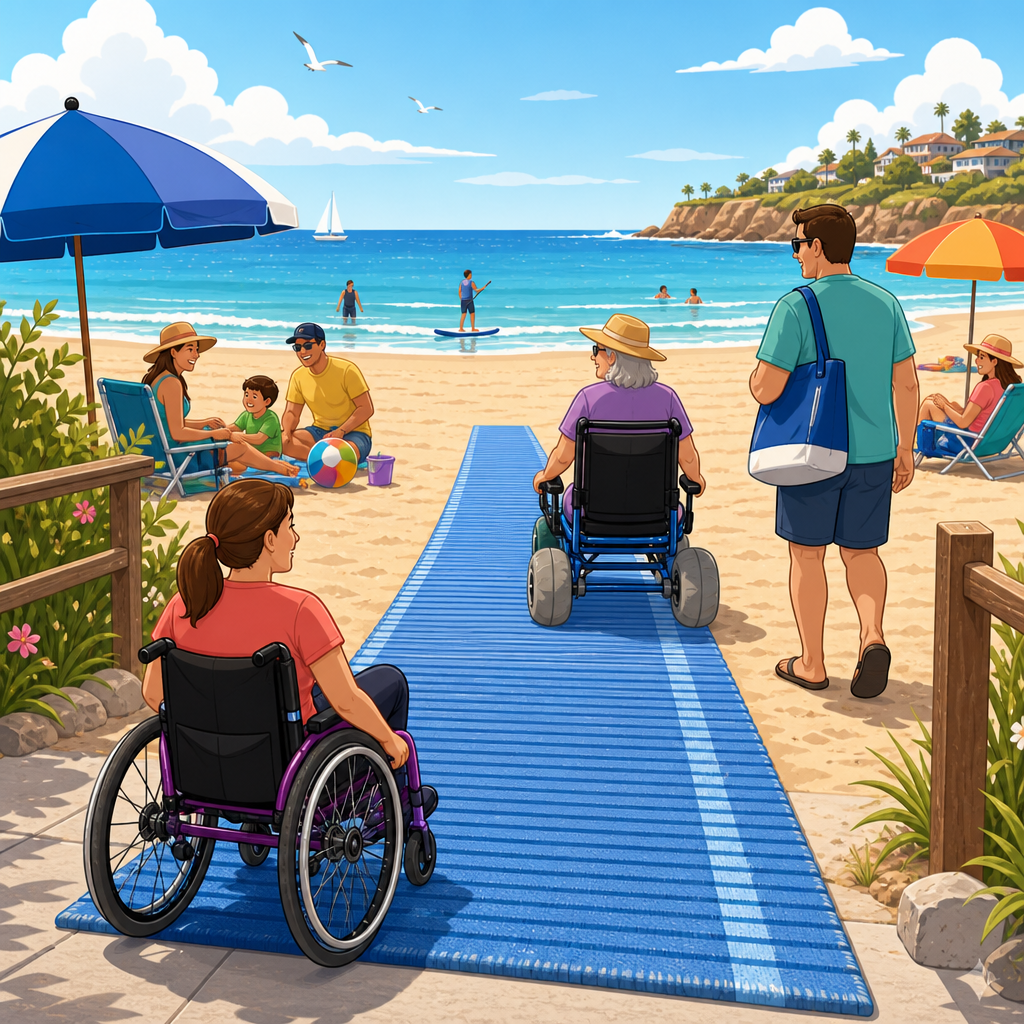
ADA access at beaches depends on more than a ramp to the sand. It requires an integrated approach that connects arrival, circulation, recreation, and communication so people with mobility, sensory, cognitive, and medical disabilities can use the shoreline with dignity and independence. In parks and recreation work, I have seen agencies invest in a beautiful accessible parking lot yet leave the final hundred feet to deep, shifting sand that stops a wheelchair cold. That gap is exactly what this article addresses.
Three terms frame the discussion. A beach access route is a continuous, usable path that links parking, transit stops, drop-off areas, restrooms, concessions, viewing areas, and the water-side experience where feasible. A mobility mat is a temporary or semi-permanent surface laid over sand to improve wheelchair and stroller travel. Program accessibility means the beach is not only physically reachable, but also usable through inclusive policies, adaptive equipment, staff training, communication access, and reasonable modifications.
This matters because beaches are core public amenities, and public entities as well as private operators open to the public have legal obligations under the Americans with Disabilities Act. For state and local governments, Title II requires programs, services, and activities to be accessible when viewed in their entirety. For private lodging, concessions, and attractions, Title III applies. Beaches also intersect with Architectural Barriers Act standards on federal sites, U.S. Access Board guidance, and Department of Justice enforcement expectations. Good access planning reduces complaints, broadens participation, improves safety, and extends benefits to older adults, injured visitors, parents pushing strollers, and anyone carrying gear across unstable terrain.
As a hub for parks, recreation, and adaptive sports, this guide explains how beach routes, mobility mats, and program accessibility fit together. It also points toward the operational details that separate symbolic compliance from a shoreline people can actually use.
Understanding beach access obligations and design basics
The ADA does not say every inch of sand must be made traversable. It does require a meaningful, usable experience. The practical question agencies should ask is simple: can a person with a disability arrive, orient themselves, move through key amenities, and participate in the primary beach program with substantially equivalent convenience? If the answer is no, access work is incomplete.
Beach design usually starts with the accessible route from site arrival points. Parking should include compliant access aisles, stable surfaces, signage, and a direct connection to beach amenities. Restrooms, rinse stations, ticket windows, picnic shelters, and concessions need turning space, reach ranges, and clear floor areas. Signage should identify accessible entries, beach wheelchairs, hearing assistance, and emergency contacts. On large shorefront sites, wayfinding must be visible, high contrast, and simple enough for first-time users.
The hardest design issue is the transition from hardscape to sand. Traditional concrete walks often stop where dunes, erosion controls, tidal movement, or environmental restrictions begin. At that point, planners typically evaluate elevated boardwalks, hardened beach access routes, or mobility mats. The best choice depends on maintenance capacity, tide range, storm exposure, habitat impacts, and intended destination. A route to an overlook solves one problem. A route to the firm wet-sand zone or to an accessible seating area solves a different one.
In my experience, agencies that perform best treat the shoreline as a system. They map each user journey from parking reservation or bus stop all the way to seating, restrooms, shade, and water-adjacent recreation. That systems view prevents the common failure of installing one accessible feature without the others needed to make it useful.
Beach routes: what makes a route actually usable
A beach route should be continuous, stable enough for the intended users, wide enough for wheelchairs and companions, and aligned with real destinations. Continuity matters more than any single component. A beautifully engineered route that ends at a locked gate, a steep lip, or a soft-sand choke point will not support independent use.
Width is a practical issue. A route should allow forward travel, occasional passing, and maneuvering at entries and junctions. Surface firmness and stability are equally important. On beaches, users often rely on front casters, canes, walkers, prosthetics, and power chair drive wheels that react badly to rutting, edge drop-off, and loose granular fill. Even slight cross slopes can cause drift. Abrupt level changes at the top of a mat or boardwalk create a stopper effect that many designers underestimate.
Destination choice should reflect how people use the site. A route to restrooms alone is not enough if the primary purpose is shoreline recreation. Better routes connect to viewing decks, accessible picnic tables, kayak launch preparation areas, fishing zones, and beach wheelchair transfer stations. At some ocean sites, agencies create a primary route to an accessible seating terrace above the high-tide line and a seasonal extension mat toward firmer wet sand during calmer months.
Environmental context also matters. Dune systems, turtle nesting zones, and erosion patterns may limit permanent construction. In those cases, a managed seasonal route can still be effective if public information is accurate. Visitors need to know route length, slope, seasonal availability, tide constraints, and where assistance can be requested. Publishing those details online reduces failed trips and builds trust.
Mobility mats: where they work, where they fail, and how to manage them
Mobility mats are often the fastest way to improve sand access because they install with less site disturbance than permanent boardwalks. Most are made from high-strength composite, polyester, PVC, or recycled materials designed to distribute weight over sand. When selected and maintained well, they can dramatically improve travel for manual wheelchairs, power chairs, walkers, and beach carts. They are also useful for event access, temporary adaptive sports setups, and pilot projects before larger capital work.
The limits are just as important as the benefits. Mats do not perform equally in every climate or beach morphology. Windblown sand can bury sections or create side berms. Edges can curl, fray, or sink. Heat buildup can affect bare feet. Heavy storms can displace anchors or shred panels. On steep slopes, some mats become difficult for independent ascent even when technically passable. I have seen agencies market mat access aggressively, only to field complaints because the route ended too far from the usable shoreline or because maintenance lagged after high surf.
Successful mat programs rely on operations, not just procurement. Staff should inspect alignment, seams, anchors, edge transitions, and buried hazards daily during peak season. Maintenance plans should specify who clears drifted sand, how quickly after storms inspection occurs, and when a section is closed. Agencies should keep spare connectors and patch materials on hand. If the mat surface changes with tide or weather, that condition belongs in public-facing advisories, not buried in a maintenance binder.
| Access option | Best use | Main advantages | Main limitations |
|---|---|---|---|
| Permanent boardwalk | High-use beaches with predictable routes | Durable, stable, strong wayfinding value | Higher cost, permitting complexity, habitat impacts |
| Mobility mat | Seasonal access or sensitive dunes | Lower installation impact, flexible alignment, faster deployment | Needs frequent maintenance, weather vulnerability, variable firmness |
| Hybrid route | Sites needing hardscape plus sand extension | Balances durability and reach to activity zones | Coordination between surfaces is critical |
A mat should never be treated as a complete solution by itself. It works best when paired with nearby accessible restrooms, shade, seating, and beach wheelchair service. Without those supports, the mat may satisfy a narrow route objective while failing the broader recreation experience.
Program accessibility: beyond the path to the sand
Program accessibility is the difference between access on paper and access in practice. Public beaches typically offer swimming areas, camps, surf lessons, fishing clinics, paddle programs, festivals, concession service, and environmental interpretation. Each of those programs must be evaluated for reasonable modifications, communication access, equipment policies, registration systems, and emergency procedures.
Adaptive equipment is central. Beach wheelchairs with balloon tires, transfer systems, accessible picnic furniture, all-terrain walkers, and accessible launch supports expand who can participate. However, equipment only works when reservation procedures are clear, hours are reliable, batteries are charged when relevant, and staff know how to assist without taking over. I have trained teams that owned excellent adaptive gear but stored it in locked sheds with no visible checkout process. From the visitor perspective, that is not access.
Communication access is equally important. Websites and reservation platforms should state exactly what is available: route surface, length, grade changes, restroom features, beach wheelchair dimensions, transfer assistance policies, service animal expectations, and whether aquatic chairs can enter the surf. Visual maps should be paired with text descriptions for screen readers. Printed signs should use concise language, high contrast, and recognizable symbols. For programs and events, agencies should have a process to provide sign language interpreters, captioning, assistive listening, alternative formats, and allergy or medication accommodation information when appropriate.
Staff training shapes every interaction. Frontline employees should know how to describe access features accurately, offer assistance respectfully, handle maintenance closures, and implement reasonable modifications. They also need emergency protocols that account for evacuation of wheelchair users, heat-related illness, seizure response, and lost participants with cognitive disabilities. Training should include disability etiquette, transfer safety, incident documentation, and when to escalate a barrier report for immediate correction.
Adaptive sports and inclusive recreation at the shore
Beaches are increasingly used for adaptive sports, and that changes planning priorities. Wheelchair rugby exhibitions on hard courts near the shore, beach volleyball adaptations, surf therapy, outrigger paddling, open-water swim clinics, and fishing programs all require equipment staging, participant screening, accessible spectator areas, and trained staff or volunteers. A basic route to the sand is not enough if athletes cannot reach check-in, changing areas, hydration stations, and the actual activity zone.
Surf programs offer a useful example. An accessible operation includes online intake forms that can be completed with assistive technology, a drop-off zone near the program hub, accessible restrooms and outdoor showers, a protected transfer area, storage for personal mobility devices, and clear communication about wave conditions and support ratios. Many successful programs partner with organizations such as Disabled Sports USA chapters, local adaptive surf nonprofits, or hospital rehabilitation teams. Those partnerships improve referral pipelines and bring expertise in risk management, equipment fitting, and volunteer training.
Inclusive beach events should also address spectators and families. Parents or partners may need shade, accessible seating, charging access for power mobility devices, refrigeration for medication, and predictable quiet areas for neurodivergent participants. These are not luxury add-ons. They are common supports that determine whether people stay for thirty minutes or can enjoy a full day.
Funding often comes from a mix of capital budgets, coastal grants, tourism revenue, community foundations, and sponsorships. The strongest proposals tie access improvements to measurable outcomes: increased participation, reduced complaints, broader event attendance, and alignment with parks master plans. When agencies can show that beach access supports both civil rights compliance and recreation goals, projects move faster.
Operations, maintenance, and evaluation for long-term compliance
Long-term beach accessibility is an operations discipline. Conditions change weekly through tides, storms, staffing fluctuations, and wear. Agencies need inspection checklists, closure criteria, work order pathways, and documentation standards. If a mat is buried, if a route edge drops off, or if the only accessible restroom is locked after hours while the beach remains open, the accessibility program has failed at that moment.
Data helps prioritize improvements. Track equipment reservations, denied requests, route closures, response times, incident reports, and visitor feedback. Conduct seasonal audits with people who use wheelchairs, walkers, hearing aids, low-vision tools, and cognitive supports. Their observations often reveal barriers that design teams miss, such as unreadable glare on signs, unstable transfer surfaces, or staff instructions that are too vague during emergencies.
Procurement language should require durability, replacement parts availability, warranties, and maintenance training for specialty equipment. Capital planning should account for lifecycle cost, not just purchase price. A cheaper mat that fails in two seasons can cost more than a robust system with predictable upkeep. The same principle applies to accessible beach wheelchairs, shower controls, and pathway materials.
The central lesson is straightforward: beaches become accessible when routes, mats, equipment, information, and staff practices work together. If you manage parks, recreation, or adaptive sports facilities, audit the full visitor journey, fix the weak links, and publish accurate access details so every guest can plan with confidence.
Frequently Asked Questions
What does ADA access at a beach actually include beyond a ramp or accessible parking space?
ADA access at a beach involves the entire user journey, not just one compliant feature at the entrance. An accessible beach should connect arrival, circulation, recreation, and communication in a way that allows people with disabilities to reach and use the shoreline with dignity, safety, and as much independence as possible. That means accessible parking, an accessible route from parking or transit stops, clear wayfinding, stable connections to beach amenities, access to restrooms and rinse stations, and inclusive access to beach programs and services. If a person can park in an accessible space but cannot cross the final stretch of deep, loose sand to reach the waterline, shaded seating, or a public program, the experience is not meaningfully accessible.
In practice, beach access should be evaluated as a system. The route to the beach matters, but so do transfer points, mobility mat locations, beach wheelchair availability, surface stability, seating opportunities, emergency access, signage readability, and staff preparedness. ADA access also extends to people with sensory, cognitive, and medical disabilities. For example, communication should be clear and available in accessible formats, staff should know how to assist without creating barriers, and programs should be structured so participants with disabilities can join in rather than being separated or excluded. The strongest beach access plans treat the shoreline as a public experience that must be usable from arrival to departure, not as a checklist item solved by one ramp.
What is a beach route, and how does it differ from a mobility mat or a boardwalk?
A beach route is the accessible path that connects key elements of the site and allows people with disabilities to travel from one point to another. At a beach, that may include the connection from parking, passenger drop-off, or transit to restrooms, picnic areas, viewing areas, concessions, beach wheelchairs, and portions of the sandy beach itself. A beach route can take different forms depending on site conditions, environmental constraints, and how close the route needs to get to the water. The important point is that it must function as part of an accessible circulation system rather than as an isolated feature.
A mobility mat is one tool often used as part of that route. Mobility mats are typically durable, roll-out surfaces placed over sand to create a firmer, more stable path for wheelchairs, walkers, strollers, and others who have difficulty moving through loose sand. They can be extremely effective for closing the “last hundred feet” gap that often undermines otherwise accessible beach facilities. However, a mobility mat is not automatically the same thing as a complete beach route. If the mat starts too far from accessible parking, ends before reaching meaningful destinations, is too narrow for practical use, or is not maintained, then it may not provide real access.
Boardwalks, by contrast, are more permanent structures and may provide a highly stable route across dunes or sand. They can offer excellent access when carefully designed, but they also involve larger construction impacts, permitting issues, and long-term maintenance responsibilities. Many agencies use a mix of approaches: permanent accessible routes from arrival points to beach access nodes, mobility mats extending onto the sand, and supporting features such as transfer systems, viewing decks, or accessible seating areas. The best solution depends on the setting, but the design goal is always the same: a connected, usable route that leads to actual participation, not just to the edge of the problem.
How far should mobility mats or accessible beach routes extend onto the sand?
There is no one-size-fits-all distance that works for every beach, because shoreline conditions, tides, erosion, seasonal changes, and environmental protections all affect what is feasible. That said, the route should extend far enough to provide meaningful access to the beach experience. In many cases, stopping a mat well short of the active beach area leaves people with disabilities stranded at the edge of loose sand, unable to reach the social, recreational, or scenic features everyone else can enjoy. A route that only looks accessible in a site plan but does not get users to a practical destination is not a strong access solution.
Agencies should think in terms of destinations and use patterns. Does the route connect to shaded seating, beach wheelchair deployment areas, an accessible viewing point, program gathering spaces, or a reasonably usable approach toward the shoreline during normal conditions? Can someone travel with family or companions instead of being parked at an isolated endpoint? If the mat cannot safely reach the water due to tides or environmental factors, it should still extend to a location where the beach can be experienced in a meaningful way, with support features that reduce exclusion.
Seasonal management is also critical. Some beaches install mats only during peak season or move them as shoreline conditions change. That can be appropriate, but it should be paired with accurate public information so visitors know what to expect before they arrive. A route that is technically available but frequently buried, curled, blocked, or cut off by erosion is not dependable access. In short, the route should be long enough and well placed enough to connect people to actual beach use, not just to the beginning of the sand.
Does ADA beach accessibility also apply to programs, events, and services offered at the beach?
Yes. Program accessibility is a core part of ADA compliance and inclusive public service. A beach may have accessible parking, mats, and restrooms, but if a visitor cannot participate in a guided nature walk, adaptive recreation event, youth camp, surf lesson, or public education program because of avoidable barriers, access is still incomplete. The ADA is not only about physical features; it also applies to how programs, services, and activities are designed and delivered.
For beach programs, that means agencies should look at registration methods, communication formats, gathering locations, equipment, staffing, and policies. Registration platforms should be usable by people using assistive technology. Event notices should include accessibility information and contact options for accommodation requests. Gathering points should be located on accessible routes, not out on soft sand with no way to reach them. If a program relies on specialized equipment, agencies should consider adaptive options such as beach wheelchairs, accessible seating, quieter spaces, assistive listening support, or modified participation methods where appropriate.
Staff training is just as important as infrastructure. Employees and volunteers should understand disability etiquette, know where accessible features are located, and be prepared to respond to accommodation requests consistently. They should also understand that accessibility is not limited to mobility disabilities. Visitors may need clear verbal directions, low-sensory options, extra time, medication-related considerations, or alternate communication methods. A well-designed beach program anticipates those needs instead of waiting for a problem to occur. When physical access and program access are planned together, beaches become more usable, welcoming, and legally resilient.
What are the most common mistakes agencies make when trying to improve ADA access at beaches?
One of the most common mistakes is treating accessibility as a single construction item instead of a continuous experience. Agencies may invest in accessible parking, a new restroom, or a striking entry plaza, then overlook the unstable sand, missing route connection, or inaccessible program setup that prevents people from actually using the beach. Another frequent problem is installing a mobility mat or accessible feature without considering where it begins, where it ends, how it is maintained, and whether it serves meaningful destinations. Access that breaks down at the final approach is one of the most persistent failures in beach design.
Maintenance is another major issue. Even well-designed features can become unusable if mats buckle, edges lift, sand buries transitions, signage fades, or beach wheelchairs are unavailable when promised. Accessibility at beaches is dynamic because site conditions change constantly. Wind, tides, salt, sun, and heavy use can quickly undermine access if there is no inspection and maintenance plan. Agencies also sometimes fail to provide accurate public information. Visitors need to know whether mats are seasonal, how far they extend, whether beach wheelchairs require reservation, and what amenities are currently available. Unclear or overly optimistic descriptions can create frustration and safety concerns.
A final mistake is overlooking users with disabilities during planning and evaluation. The most effective beach access improvements usually come from direct input by people who use wheelchairs, walkers, scooters, service animals, communication supports, or medical equipment, as well as people with sensory and cognitive disabilities. Their experience often reveals where access truly works and where it breaks down. Agencies that conduct on-site reviews, test routes in real conditions, evaluate programs as well as facilities, and update plans over time are far more likely to create beach access that is functional rather than symbolic. Good ADA access at beaches is not about checking a box; it is about removing the practical barriers that stop people from fully participating.


