In a world where access and equality are cornerstones of a just society, the Americans with Disabilities Act (ADA) stands as a beacon of hope and empowerment. This powerful piece of legislation, enacted in 1990, forms the very foundation upon which the rights of individuals with disabilities are built. By its mere existence, the ADA has sought to level the playing field, ensuring that people with disabilities receive the same opportunities as anyone else. But what does this mean in practical terms, particularly within the realm of healthcare? After all, healthcare is a critical aspect of life that no individual should be denied due to accessibility barriers. In this article, we’ll explore ADA protections in action through a series of compelling healthcare accessibility stories that underscore the significance and impact of this vital law.
Access to healthcare involves more than just the ability to visit a doctor. It’s about ensuring that facilities, communication, and services are accommodating to individuals of all abilities. The ADA covers various aspects of accessibility, such as physical accessibility in hospitals and clinics, non-discriminatory practices by healthcare providers, and effective communication with patients who have different sensory or cognitive needs. These aspects are crucial for allowing patients to navigate the healthcare system with dignity and independence. Through real-world applications and case studies, we gain a clearer understanding of how the ADA opens doors and breaks down barriers, providing stories of empowerment and success.
Join us as we delve into these accounts from across the United States, showcasing how ADA protections make a tangible difference in people’s lives. Through these stories, you’ll not only grasp the real-world impact of the ADA but also become inspired by the resilience and advocacy of individuals determined to forge a path toward equality. Let’s step into the lives of those who have faced obstacles head-on and discover how they navigated the healthcare landscape, thanks in part to the protections offered by the ADA.
A Victory for Access: The Story of Maria’s Hospital Stay
Maria, a vibrant young woman with a passion for painting, never let her wheelchair define her. However, when Maria faced a hospital stay following a surgery, she encountered unforeseen challenges that put her determination to the test. Initially, the hospital seemed unprepared to accommodate her specific needs—a common issue faced by many individuals with disabilities. The path to the operating room was clear, but post-operative care posed a meticulous challenge as staff overlooked the critical need for ADA-compliant bedside setups and appropriate communication tools.
This oversight prompted Maria to advocate fiercely for herself, invoking her rights under the ADA. Her persistence led to an immediate review and revision of the hospital’s practices and policies. The healthcare facility swiftly transitioned into adopting more inclusive practices, such as ensuring accessible examination tables and having sign language interpreters readily available. Maria’s insistence on fair treatment highlighted the power of self-advocacy, which in turn resulted in systemic changes beneficial to countless future patients.
It’s a reminder that while obstacles may arise, the ADA serves as a strong ally in navigating these situations. Healthcare accessibility shouldn’t be an afterthought but a prepared stance. Through Maria’s story, we witness the transformation of a healthcare facility witnessing its triumph in inclusivity and equality. Stories like Maria’s showcase how the ADA fosters an environment where healthcare professionals and facilities actively work to improve their practices, ultimately promoting a healthcare system where every patient feels valued and cared for.
Effective Communication: Brian’s Journey with Visual Impairment
Brian’s story is one that illuminates the importance of effective communication in healthcare. A software developer by profession, Brian has been living with visual impairment for over a decade. His routine visit to his primary care physician’s office revealed shortcomings when it came to relaying information in a way that he could easily process. Prescription details printed in small font and inaccessible digital platforms were obstacles that hindered his ability to manage his health independently.
Brian was not without hope or tools to tackle these challenges. Armed with the ADA’s provisions, which emphasize equal opportunity and effective communication, he engaged in a proactive conversation with his healthcare provider. The outcome was transformational: a new protocol was introduced that included the utilization of large print formats, alternative digital accessibilities, and a dedicated staff member trained to assist with visual accessibility needs.
Such initiatives are not merely procedural adjustments; they represent a profound shift in acknowledging diverse patient needs. The transformation in Brian’s healthcare experience illustrates the significant role of the ADA in advocating for and enforcing communication solutions that respect patient autonomy. His journey reiterates the fundamental truth that effective communication is integral not only to humane healthcare but also to patient satisfaction and safety.
The Power of Advocacy: Tanya’s Fight for Accessible Clinics
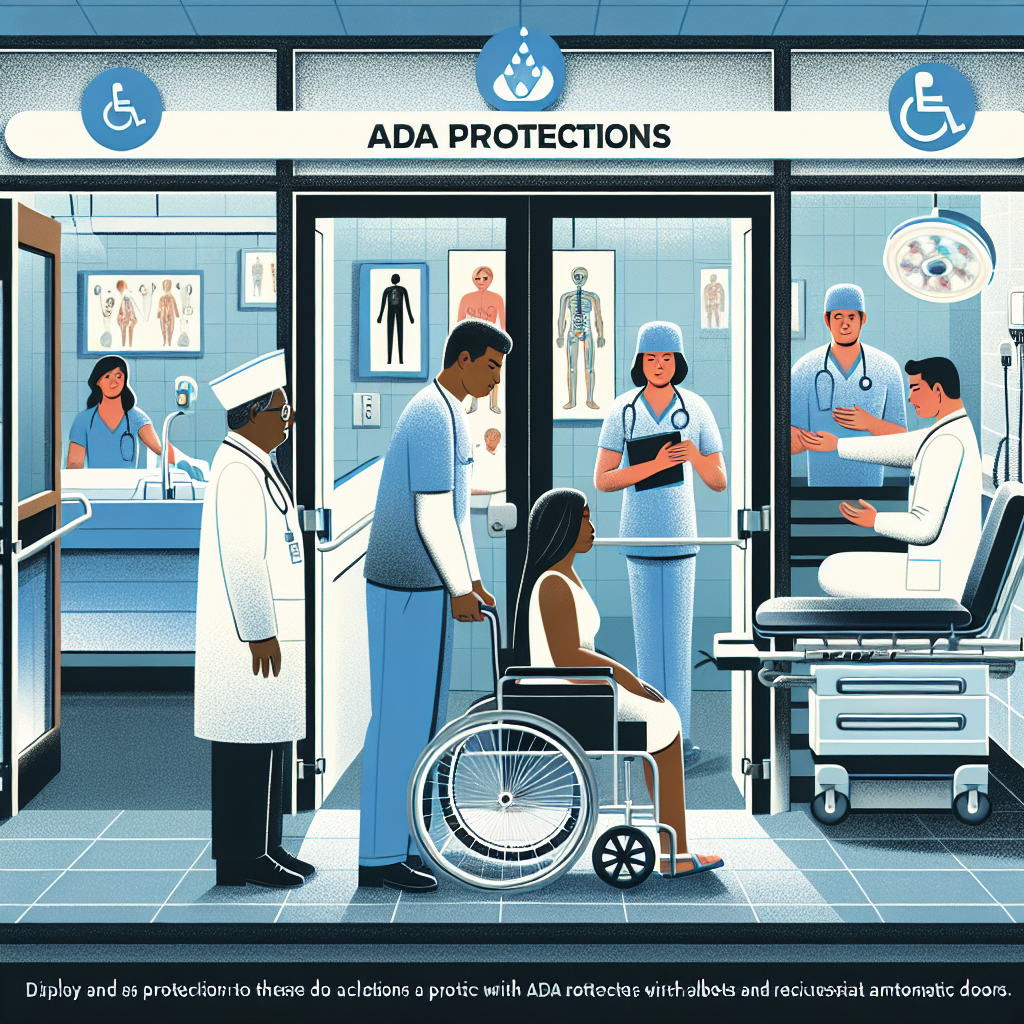
For Tanya, a community activist with mobility impairments, seeking healthcare was a constant battle with structural barriers. The inaccessibility of local clinics was a persistent problem—from narrow doorways to non-compliant restrooms. Each visit felt like an uphill struggle, and these barriers often discouraged her from seeking care when needed. Driven to change her reality, Tanya took an advocacy role, galvanizing community members to join her campaign for accessible healthcare facilities.
Tanya’s advocacy led to collaborating with local government offices and influential community healthcare leaders, emphasizing how inaccessibility violates ADA standards. The swift and positive responses from the authorities marked the beginning of a structural revolution. Renovations commenced in earnest; ramps were constructed, wider doorways installed, and accessible bathrooms ensured. This revitalization project not only transformed clinic facilities but also raised awareness about ADA compliance within the community.
The revitalized clinics, now abuzz with activity, reaffirm the power of advocacy grounded in the principles of the ADA. Tanya’s story serves as a testament to how community-led initiatives can effectuate monumental changes in improving healthcare accessibility. It underscores how the ADA extends beyond legal language, catalyzing movements rooted in ensuring dignity and equality for all citizens with disabilities.
Technological Breakthroughs: David’s Push for Inclusive Telehealth
Modern-day healthcare has embraced technology, with telehealth emerging as a vital service—especially highlighted during the global pandemic. However, as David, a deaf advocate and user of cochlear implants, discovered, not all telehealth platforms were designed with inclusivity in mind. Glitches with closed captioning and lack of sign language interpreter options were obstacles he faced when attempting to access medical consultations online.
Unwilling to accept this digital oversight, David engaged with a network of tech-savvy advocates and ADA compliance experts to address and rectify these shortcomings. Working closely with healthcare providers, this think-tank pushed for the incorporation of ADA standards in telehealth systems. This translated to incorporating features like real-time captioning and seamless integration of sign language interpreters into virtual consultations.
David’s efforts spurred innovative solutions, showcasing how the ADA plays a crucial role even in cyberspace. His dedication demonstrates that accessibility considerations must evolve alongside technological advancements. The success of this initiative has ensured that countless individuals with hearing impairments can now access healthcare with the assurance that their interactions will be understood and respected. David’s story is a reminder that as technology paves new paths in healthcare delivery, it must do so cognizant of and compliant with ADA stipulations.
Training Healthcare Professionals: Laura’s Educational Initiative
Laura, an occupational therapist with a passion for diversity and inclusion, witnessed firsthand how a lack of understanding among healthcare professionals could lead to suboptimal care for patients with disabilities. She observed unintentional biases stemming from a lack of ADA knowledge, impacting quality and accessibility of care. Her experiences motivated her to take action, leading to the creation of an educational initiative aimed at healthcare practitioners.
Recognizing an educational gap, Laura developed a comprehensive training program centered around ADA compliance, sensitivity towards disabilities, and the importance of patient-centered care. This program proved invaluable in shaping more empathetic, informed healthcare professionals adept at offering inclusive services. The training sessions were met with enthusiasm and success, as they helped demystify ADA requirements and fostered an inclusive ethos within participating healthcare institutions.
Laura’s educational endeavor underscores a crucial aspect of ADA’s real-world application—ensuring that healthcare environments not only meet regulatory standards but also embrace a culture of understanding and respect. Empowering healthcare providers through education aligns with the ADA’s overarching mission to protect and empower individuals with disabilities. Her initiative exemplifies how advocacy turned into education can be a powerful tool in transforming healthcare frameworks, ensuring they adequately meet the needs of all patients.
Conclusion
The stories of Maria, Brian, Tanya, David, and Laura are not just narratives of individual triumphs; they are powerful testaments to the impact of the ADA in transforming the landscape of healthcare accessibility. Each story highlights a unique aspect of ADA’s influence—from self-advocacy and effective communication to community activism, technological advancement, and educational initiatives. These varied approaches reveal a common theme: the power and potential of the ADA to enact change, ensuring all individuals have access to meaningful healthcare experiences.
In a society where inclusion and equality should be the norm, the ADA continues to play a pivotal role in bridging accessibility gaps, providing individuals with the tools they need to advocate for their rights and the resources to improve institutions. The legislation serves not only as a protective shield but also as a catalyst for ongoing improvement and adaptation in various sectors, including healthcare. Through these real-world applications, we can measure progress and identify areas for further growth, always striving for a more inclusive healthcare system.
These stories remind us that the ADA is more than legislation; it is the foundation of a movement toward equality and empowerment for people with disabilities. By ensuring that healthcare providers and systems honor the ADA not just in letter but in spirit, we create a healthcare environment where every patient, regardless of ability, can receive the care and respect they deserve. It is through these actions, both big and small, that we continue to advance towards a future where healthcare is truly accessible to all.
Frequently Asked Questions
1. What exactly are ADA protections in healthcare?
ADA protections in healthcare refer to the requirements and measures that healthcare providers must follow to ensure that individuals with disabilities have equal access to medical services and facilities. The Americans with Disabilities Act (ADA) mandates that healthcare facilities are accessible to individuals with physical, sensory, and cognitive disabilities. This means making structural accommodations like ramps and widened doorways, providing sign language interpreters or alternative forms of communication for those who are deaf or hard of hearing, and offering materials in Braille or large print for the visually impaired. These mandates aim to remove barriers that prevent equal access to quality healthcare, ensuring that all individuals, regardless of their disabilities, receive the same standard of treatment.
2. How has ADA positively impacted accessibility in healthcare settings?
The ADA has transformed healthcare settings over the years by compelling institutions to address and rectify barriers that people with disabilities face. Hospitals, clinics, and doctors’ offices have been redesigned to be more accessible. One inspiring story involves a large urban hospital that, inspired by an ADA-related lawsuit, overhauled its layout to better serve wheelchair users and those with mobility impairments. Another story tells of a rural health center that implemented training programs for staff on how to assist patients with disabilities better, leading to improved patient satisfaction and health outcomes. These stories highlight how the ADA’s implementation not only enhances accessibility but encourages healthcare providers to be more inclusive, empathetic, and patient-focused.
3. Can you share examples of how technology is utilized to comply with ADA in healthcare?
Technology plays a significant role in helping healthcare providers comply with ADA requirements. For example, telemedicine platforms have been adapted to be accessible, incorporating features such as captioning for video calls and compatible interfaces with screen readers for blind patients. There are also software systems that help patients schedule appointments or access their medical records in an accessible format, like screen reader-friendly web pages or smartphone apps with voice commands. A particularly inspiring story comes from a hospital that developed an app for deaf patients allowing them to request an interpreter directly, ensuring real-time communication with healthcare providers. These innovations not only comply with ADA regulations but also empower patients with disabilities, providing more autonomy over their healthcare decisions.
4. What are common challenges healthcare providers face in implementing ADA requirements, and how are they overcoming them?
Healthcare providers often face several challenges in implementing ADA requirements, with cost and resource allocation being at the forefront. Renovating facilities and investing in accessibility technology can be expensive, and some smaller or independently operated practices may not have the necessary funds. Another common challenge is a lack of staff training in disability awareness and accommodations. Nevertheless, many healthcare providers are finding creative solutions to these problems. For example, some institutions have partnered with disability advocacy groups to conduct staff training programs, greatly enhancing staff competency in dealing with accessibility issues. Others are securing grants or forming consortia with other healthcare facilities to share costs and resources in making necessary ADA-compliant upgrades. These collaborative efforts showcase the healthcare community’s dedication to making access a reality for all patients.
5. How do stories of ADA compliance and non-compliance serve as lessons or inspiration in the healthcare community?
Stories of ADA compliance and non-compliance offer powerful lessons and inspiration for the healthcare community. For instance, success stories demonstrate the concrete benefits of ADA compliance, including improved patient outcomes, higher satisfaction rates, and enhanced facility reputation. One inspiring account involved a healthcare facility that achieved ADA compliance amid financial hardship, ultimately seeing a significant increase in patient visits and community support as a result. On the other hand, tales of non-compliance often serve as cautionary tales, illustrating the legal and reputational risks of ignoring ADA responsibilities. These narratives highlight the importance of proactive compliance and serve to motivate other healthcare providers to prioritize accessibility, knowing that it leads to a stronger, more inclusive healthcare system overall.