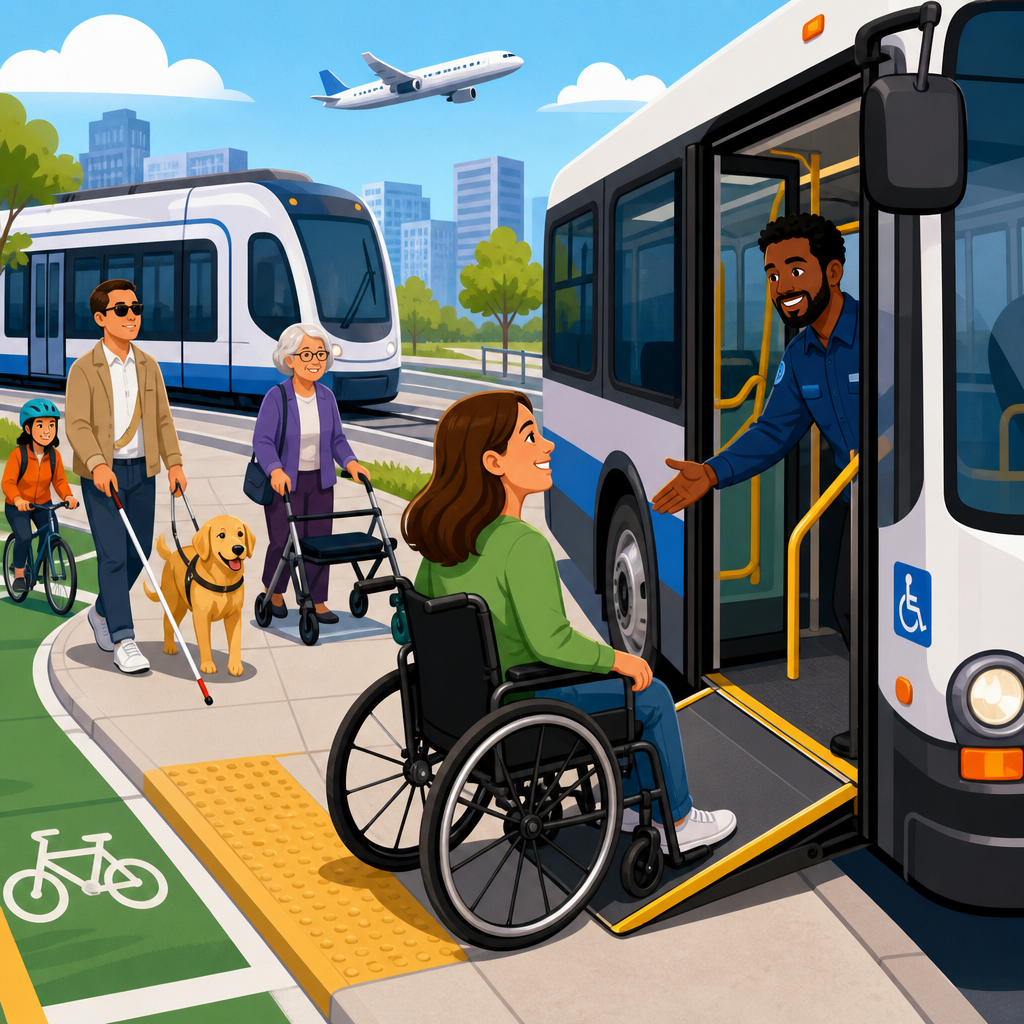
ADA compliance in transportation changed materially in 2025, and the most important lesson is simple: accessibility is no longer treated as a parallel program but as an operating standard that agencies, airports, rail systems, and private mobility providers must build into planning, procurement, customer service, and digital delivery. In this context, ADA compliance means meeting the requirements of the Americans with Disabilities Act across physical access, communications access, policy design, and equitable service delivery. Transportation policy developments matter because they shape how people with disabilities actually move through daily life: booking a trip, entering a station, boarding a vehicle, receiving alerts, resolving disruptions, and traveling with dignity when systems fail. I have worked with transportation teams translating legal duties into frontline procedures, and the pattern is clear. The organizations that perform best are not the ones reacting to complaints; they are the ones treating accessibility as infrastructure, measurable service quality, and risk management at the same time.
For readers tracking recent ADA updates and developments, 2025 stands out for three reasons. First, regulators and operators are connecting accessibility more closely to capital investment, resilience planning, and technology modernization. Second, enforcement expectations are moving beyond minimum design features toward end-to-end usability, including websites, apps, kiosks, wayfinding, paratransit scheduling, and disruption response. Third, accessibility conversations now include a wider transportation ecosystem: public transit, passenger rail, aviation, curb management, micromobility, and transportation network companies. The result is a more practical, less siloed view of compliance. This hub article explains the major lessons emerging from 2025 transportation policy developments, why they matter for transit agencies and related providers, and what decision-makers should prioritize next. It also serves as a foundation for deeper coverage of recent ADA updates and developments across specific modes, rule changes, and implementation strategies.
Why 2025 became a turning point for transportation accessibility
Transportation accessibility did not suddenly become important in 2025, but several policy threads converged. Federal agencies continued aligning disability access expectations with modernization programs, local governments tied accessibility upgrades to broader mobility goals, and riders increasingly expected equal access across both physical and digital touchpoints. In practice, that meant ADA compliance reviews expanded from ramps, lifts, and platform gaps into procurement language, app design, real-time information systems, emergency communications, contractor oversight, and maintenance records. I saw more agencies ask not just “Is this feature compliant?” but “Can a disabled rider complete the trip independently under normal and disrupted conditions?” That shift matters because many barriers are created by process failures rather than missing hardware.
A useful way to read 2025 developments is as a movement from component compliance to journey compliance. A station may have an elevator, but if outage alerts are inaccessible, substitute transportation is inconsistent, and staff are not trained to assist DeafBlind passengers or riders with cognitive disabilities, the trip is still unequal. Similarly, a paratransit service may meet formal eligibility rules, yet create barriers through long hold times, inaccessible web forms, poorly calibrated pickup windows, or inflexible no-show policies. Recent ADA updates and developments keep reinforcing the same operational principle: accessibility must be reliable, documented, and observable in real service conditions.
Physical infrastructure lessons: maintenance, redundancy, and usable paths of travel
One major lesson from 2025 transportation policy developments is that agencies can no longer treat accessibility as a one-time construction deliverable. Elevators, lifts, tactile warnings, boarding bridges, curb ramps, platform interfaces, and accessible restrooms only create compliance value when they remain usable. Maintenance has become a compliance issue, not merely a facilities issue. This is especially visible in rail stations and airports, where an out-of-service elevator can erase access to an entire route segment. Leading operators now track mean time to repair, public outage communication speed, and availability of equivalent service during outages. Those are practical indicators of whether an accessible path of travel truly exists.
Redundancy also emerged as a central theme. Where one elevator serves a critical path, one failure can create immediate exclusion. Agencies planning capital upgrades increasingly evaluate redundant vertical circulation, accessible detour routes during construction, and temporary wayfinding plans for riders with low vision. Another lesson is that “accessible” must mean usable by diverse riders, including wheelchair users, ambulatory disabled riders, people with sensory disabilities, and travelers with service animals. A path blocked by temporary signage, snow, construction fencing, or poorly placed street furniture is still a barrier. The most effective agencies in 2025 paired engineering standards with field audits, rider testing, and corrective action logs.
Digital accessibility is now core transportation compliance
If there is one area where recent ADA updates and developments accelerated organizational learning, it is digital accessibility. Riders do not experience transportation through concrete alone. They plan trips online, buy fares in apps, reload cards at kiosks, sign up for alerts, request paratransit trips, file complaints, and seek service recovery through digital channels. When those tools are inaccessible, equal access fails before the rider even reaches a vehicle. In 2025, transportation providers increasingly aligned their digital programs with WCAG 2.1 AA and with structured testing that includes keyboard navigation, screen reader compatibility, color contrast, focus order, captions, and accessible forms. Smart agencies also tested in real rider scenarios, not just automated scans.
This shift is practical rather than symbolic. Consider a bus network that publishes detours only as unlabeled map images on social media, or a commuter rail app that times out during ticket purchase without screen reader cues. Those defects become travel barriers with legal and operational consequences. Digital accessibility also intersects with procurement. Vendors supplying fare systems, trip planners, kiosks, and customer support platforms must be contractually required to meet accessibility standards, provide VPAT documentation, support remediation timelines, and cooperate with user testing. Transportation organizations that still treat digital tools as separate from ADA compliance are behind the curve.
Service design and paratransit policy moved from paperwork to performance
Paratransit remains one of the clearest tests of whether an agency understands ADA obligations in human terms. In 2025, policy attention increasingly focused on actual service outcomes: reservation friction, on-time performance, travel time comparability, call center accessibility, reasonable modification procedures, and complaint resolution. Agencies learned that technical compliance on paper can be undermined by avoidable operational burdens. I have reviewed systems where eligibility packets were legally defensible but practically inaccessible because of confusing language, poor translations, inaccessible PDFs, and limited support for applicants with cognitive disabilities. That is the kind of gap policymakers and advocates are less willing to overlook.
Another lesson is that fixed-route accessibility and paratransit quality are inseparable. When elevators fail, bus stops are inaccessible, or stop announcements are inconsistent, demand shifts to paratransit. That can increase costs and reduce rider independence. Stronger 2025 policy discussions therefore treated accessible fixed-route service as a demand management strategy for paratransit as well as a civil rights duty. Agencies also paid more attention to reasonable modifications, including flexibility around pickup locations, portable oxygen, communication preferences, and support during unusual conditions. The best programs backed policy language with training, audit calls, and rider-data review.
| 2025 policy lesson | Common failure point | Better compliance response |
|---|---|---|
| Accessibility is an end-to-end journey | Station is technically accessible, but outage routing is unclear | Publish accessible detours, train staff, offer equivalent service fast |
| Digital tools are part of transportation access | Trip planner or fare app fails screen reader testing | Adopt WCAG-based procurement, manual testing, and remediation deadlines |
| Paratransit quality is measured in outcomes | Long hold times and rigid scheduling create hidden barriers | Track call abandonment, on-time windows, and reasonable modification use |
| Maintenance is a compliance function | Elevator outages linger without public notice | Measure repair times and communicate alternatives in accessible formats |
Aviation, rail, and emerging mobility providers face similar expectations
Although legal frameworks differ by mode, 2025 transportation policy developments showed increasing convergence in accessibility expectations. In aviation, disability-related scrutiny continued around wheelchair handling, onboard assistance, complaint processes, and accessible information during disruptions. In passenger rail and urban transit, platform access, boarding methods, announcements, and station navigation remained central. For ferries and intercity buses, boarding infrastructure and staff assistance were recurring pressure points. What connects these sectors is the growing expectation that accessibility be embedded into standard operating procedures rather than offered inconsistently through individual employee discretion.
Emerging mobility providers are part of this conversation too. Micromobility, curbside pickup systems, demand-responsive pilots, and transportation network services can improve convenience for many riders while introducing new barriers for disabled travelers. Poorly parked scooters can block curb ramps and sidewalks. App-only booking can exclude riders without accessible smartphones or with limited digital fluency. Dynamic curb management may reduce confusion for some users while making pickup locations harder to identify for riders with low vision. The compliance lesson is straightforward: innovation does not waive accessibility duties. New transportation models must be evaluated for disability impact before rollout, not after complaints accumulate.
Training, documentation, and complaint systems became decisive
Another important theme in recent ADA updates and developments is the role of administrative discipline. Policies do not implement themselves. Agencies with strong accessibility performance in 2025 usually had three habits: recurring staff training tied to real scenarios, documentation that shows how decisions are made, and complaint systems that produce trend data rather than isolated responses. Training matters because transportation is full of edge cases: a broken bridge plate, a rider using a communication board, a service animal issue, a missed stop, or a weather emergency affecting accessible boarding. Staff need scripts, escalation paths, and confidence, not vague reminders to be courteous.
Documentation matters because regulators, courts, advocates, boards, and insurers all look for evidence. Can the agency show inspection frequencies for lifts and elevators? Can it prove that inaccessible bus stops were prioritized using objective criteria? Can it demonstrate how digital defects were logged and remediated? Can it explain why a requested modification was denied? Complaint systems are equally important. A single accessibility complaint may reflect a systemic issue in signage, maintenance, scheduling, or contractor behavior. Agencies that code complaints by barrier type, location, and mode can identify patterns early and target capital or operational fixes before exposure grows.
What transportation leaders should prioritize next
The strongest response to 2025 transportation policy developments is a practical accessibility governance model. Start with an enterprise inventory covering facilities, vehicles, websites, apps, kiosks, call centers, procurement templates, emergency communications, and contractor responsibilities. Then assign owners, standards, inspection intervals, and remediation deadlines. I recommend a short list of executive metrics: elevator and lift uptime, accessible stop coverage, digital defect closure rate, paratransit on-time performance, complaint recurrence, and staff training completion. These measures connect compliance to operations and budget decisions.
Leaders should also involve disabled riders earlier. Advisory committees are useful, but structured usability testing, ride-alongs, mystery-shopper programs, and post-incident reviews often reveal barriers traditional audits miss. Budget strategy matters too. Accessibility projects should be built into asset management and modernization cycles rather than carved out as optional extras. Finally, transportation organizations should connect this hub on recent ADA updates and developments to deeper internal guidance on digital accessibility, facility transition planning, paratransit administration, and disruption response. The core lesson from 2025 is not abstract. Accessibility works when it is designed, funded, maintained, measured, and improved like every other critical transportation function. Review your policies, test your rider journey, and fix the gaps before riders are forced to find them for you.
Frequently Asked Questions
What is the biggest ADA compliance lesson from 2025 transportation policy developments?
The clearest lesson from 2025 is that ADA compliance can no longer be treated as a separate accessibility initiative managed on the side of core operations. Transportation agencies, airports, rail operators, paratransit providers, and private mobility companies are increasingly expected to build accessibility into everyday decision-making from the start. That includes capital planning, procurement standards, vehicle and facility design, digital platforms, customer communications, staffing models, service policies, and complaint resolution procedures. In practical terms, accessibility is now viewed as an operating standard rather than a specialty program.
This shift matters because transportation systems are judged not only by whether they offer some accessible features, but by whether the entire customer journey is usable for riders with disabilities. A compliant experience involves more than ramps or elevators. It also includes accessible websites and apps, clear wayfinding, usable booking tools, effective communication for deaf or blind passengers, trained frontline staff, reasonable policy design, and reliable service continuity when disruptions occur. The 2025 policy environment reinforced that fragmented accessibility creates legal risk and service failure, while integrated accessibility improves both compliance and rider trust.
For organizations, the takeaway is straightforward: ADA responsibilities should be embedded into governance and operations. Leadership teams should define accessibility expectations across departments, require disability-inclusive standards in contracts and technology purchases, monitor performance with measurable indicators, and treat accessibility failures as operational issues rather than isolated exceptions. That mindset is the most important compliance lesson to carry forward.
How did 2025 transportation policy developments change expectations for digital accessibility under the ADA?
One of the most important developments in 2025 was the stronger expectation that digital access is inseparable from transportation access. Riders now depend on websites, mobile apps, kiosks, alerts, fare systems, customer portals, and real-time service information to use transportation independently. As a result, agencies and private providers are under greater pressure to ensure that digital tools are accessible to people who use screen readers, keyboard navigation, voice input, captioning, text resizing, high-contrast settings, and other assistive technologies.
From an ADA compliance perspective, that means digital accessibility should be addressed throughout the technology lifecycle, not after launch. Organizations should write accessibility requirements into procurement documents, require vendors to demonstrate conformance, test platforms with assistive technology, and fix barriers before systems are widely deployed. Common risk areas include inaccessible trip planners, unlabeled buttons in apps, fare payment tools that cannot be completed without vision or precise dexterity, videos without captions, PDFs that are unreadable to screen readers, and service alerts that are available visually but not in accessible text formats.
The broader lesson from 2025 is that digital barriers can deny transportation access just as effectively as physical barriers. If a rider cannot book a trip, reload fare media, request assistance, receive delay notifications, or understand station information because a system is inaccessible, then the transportation service itself is not meaningfully accessible. Organizations should therefore establish routine auditing, user testing with people with disabilities, remediation timelines, and accountability for both internal teams and outside vendors. This is no longer optional best practice; it is part of modern ADA risk management.
What operational areas should transportation providers review first to improve ADA compliance after the 2025 policy shifts?
After the 2025 shifts, transportation providers should start by reviewing the full rider experience from trip planning through arrival, transfer, and problem resolution. The highest-priority review areas usually include physical access, communications access, policy design, and day-to-day operational reliability. Physical access covers stations, terminals, bus stops, platforms, parking, pickup zones, restrooms, counters, boarding equipment, elevators, and vehicle configurations. Communications access includes audible and visual announcements, captioned content, accessible signage, alternative format materials, effective communication procedures, and customer service practices for riders with hearing, vision, speech, cognitive, or mobility disabilities.
Policy design is another critical area because many compliance problems are created by rules rather than infrastructure. Providers should evaluate eligibility standards, booking windows, missed-trip policies, luggage policies, service animal procedures, evacuation protocols, priority seating enforcement, and disruption management. A policy can appear neutral on paper but still create unequal access in practice. For example, rigid same-day change procedures, inaccessible complaint channels, or poorly designed assistance request systems may disproportionately burden riders with disabilities.
Operational reliability is especially important because accessibility breaks down when accessible features are unavailable or inconsistent. That includes out-of-service elevators, inaccessible shuttle substitutions, broken boarding devices, untrained staff, or ride-hailing pickup designs that are unusable for wheelchair users. A strong compliance review should therefore examine maintenance practices, backup procedures, contractor performance, incident reporting, and staff training. The best first step is a cross-functional audit that identifies where accessibility fails in real operations, not just in written policy.
How should agencies, airports, rail systems, and private mobility providers handle procurement and vendor management to support ADA compliance?
Procurement became a central compliance lesson in 2025 because many accessibility failures originate with purchased technology, outsourced services, vehicles, facility upgrades, or third-party customer platforms. If accessibility is not built into contracts and vendor evaluation, organizations often inherit barriers that are expensive, disruptive, and legally risky to fix later. The smarter approach is to make ADA-related requirements explicit at the earliest stage of acquisition and treat them as mandatory performance standards.
In practice, that means solicitations should include clear accessibility specifications for physical infrastructure, software, mobile applications, kiosks, payment systems, communication tools, and service delivery models. Vendors should be required to explain how their products and services support accessibility, provide relevant documentation, and participate in accessibility testing. Contracts should also address remediation duties, timelines for fixing defects, responsibility for updates, training obligations, and consequences for nonperformance. For transportation providers using contractors for shuttle operations, call centers, security, maintenance, or on-demand mobility, the contract should state exactly how ADA-related service obligations will be met and monitored.
Vendor management does not end at award. Organizations should conduct acceptance testing, monitor complaints and incidents tied to third-party services, verify ongoing accessibility during updates or system changes, and require corrective action when barriers emerge. The larger policy lesson is that an organization cannot outsource accountability even when it outsources operations. Regulators, courts, and riders typically focus on whether the service is accessible in reality, not on which company caused the barrier. Strong procurement and contract oversight are therefore essential parts of an ADA compliance strategy.
What practical steps can transportation organizations take now to stay ahead of ADA compliance risk?
The most effective approach is to move from reactive compliance to structured accessibility governance. First, organizations should identify an internal owner or leadership team responsible for enterprise-wide accessibility strategy. That group should coordinate legal, operations, IT, procurement, facilities, communications, customer service, and training so that ADA obligations are managed consistently rather than in silos. A written accessibility framework should define standards, escalation procedures, documentation practices, and expectations for continuous improvement.
Second, organizations should conduct a current-state assessment covering facilities, vehicles, digital assets, policies, frontline practices, and contractor performance. The goal is to understand where barriers exist, how often they occur, and how seriously they affect riders. Complaint data, service disruption logs, mystery shopping, user testing, and direct feedback from disability communities can all reveal issues that formal checklists may miss. Once risks are identified, the organization should prioritize them based on legal exposure, rider impact, safety, and feasibility of correction.
Third, staff training should be practical and recurring. Employees need more than general awareness of disability rights. They should know how to provide effective communication, operate accessibility equipment, respond to service interruptions, handle assistance requests, interact respectfully with riders with disabilities, and escalate problems quickly. Finally, organizations should build accessibility into planning and measurement by setting goals, tracking performance indicators, auditing vendors, and reviewing lessons from incidents. The transportation policy developments of 2025 made one point unmistakable: the organizations best positioned for compliance are the ones that treat accessibility as part of service quality, operational resilience, and public trust every day.


