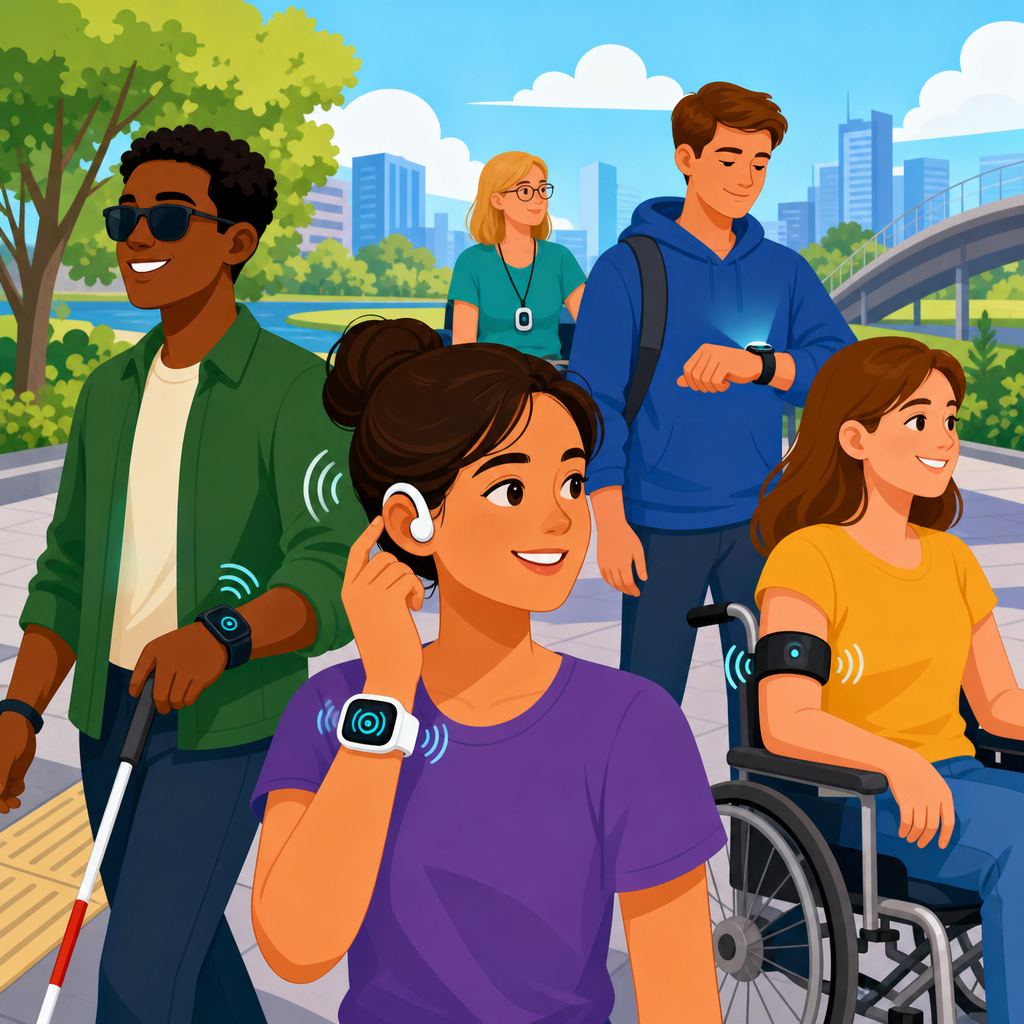
Wearable technologies for enhancing accessibility are reshaping how people navigate work, education, transportation, healthcare, and daily life. In this context, wearable technology means electronic devices designed to be worn on the body, such as smartwatches, hearing devices, smart glasses, haptic bands, sensor-equipped clothing, and assistive exoskeletons. Accessibility means designing products, services, and environments so people with disabilities can use them effectively, safely, and independently. When these two fields meet, the result is not a niche gadget category; it is a practical system for reducing barriers that have long limited participation.
I have worked on accessibility-focused digital projects where the biggest lesson was simple: the right tool is the one that removes friction in real situations, not the one with the most features. A smartwatch that delivers discreet vibration alerts can matter more than a complex dashboard. Smart glasses that convert text into speech in a grocery aisle can be more valuable than a general-purpose app that requires several taps. Wearables succeed when they are immediate, context-aware, and usable under real-world conditions, including noise, movement, glare, fatigue, and time pressure.
This matters because disability is common, diverse, and often situational. The World Health Organization estimates that more than 1.3 billion people globally live with significant disability. Accessibility also benefits older adults, temporary injury recovery, neurodivergent users, and anyone operating in constrained environments. Wearables are becoming a central part of the future of technology and accessibility because they stay close to the body, collect environmental and biometric data continuously, and deliver feedback through multiple channels including audio, touch, and visual overlays. As a hub topic, wearable accessibility includes mobility support, communication access, sensory augmentation, safety monitoring, and personalized adaptation.
The future of technology and accessibility will not be defined by a single device class. It will be shaped by connected ecosystems built around interoperability, universal design, inclusive research, and measurable outcomes. Standards such as the Web Content Accessibility Guidelines influence companion apps and control platforms, while Bluetooth Low Energy, computer vision, on-device AI, and edge processing expand what wearables can do without adding friction. Understanding wearable technologies for enhancing accessibility means understanding both today’s assistive devices and the broader direction of accessible innovation across industries.
How Wearable Accessibility Technology Works in Practice
Wearables enhance accessibility by sensing, interpreting, and responding in real time. Sensors detect movement, location, sound, heart rate, muscle signals, or visual information. Software then translates those inputs into usable outputs: haptic alerts for incoming speech, audio cues for navigation, captions on smart glasses, tremor stabilization in assistive utensils, or fall detection messages sent to caregivers. The most effective systems are multimodal. They do not rely on one output channel, because accessibility needs vary by user, context, and disability type.
For people who are blind or have low vision, wearable technologies often combine computer vision, inertial measurement units, GPS, and object recognition. Devices like Envision Glasses and OrCam can read printed text aloud, identify products, and recognize faces, though performance depends on lighting, camera angle, and network availability. Bone-conduction headphones can support navigation while preserving environmental awareness, which is safer than fully isolating earbuds in busy streets. Smart canes and haptic belts add directional feedback, reducing cognitive load during route changes and obstacle detection.
For d/Deaf and hard-of-hearing users, wearables increasingly convert sound into actionable information rather than simply amplifying it. Modern hearing aids already use directional microphones, feedback suppression, and smartphone tuning, but newer systems add AI-based scene analysis, speech enhancement, and direct Bluetooth streaming. Smartwatches can mirror doorbell alerts, alarms, and live transcription notifications. Haptic wearables can represent sound patterns through vibration intensity and location, helping users notice urgent environmental events when visual attention is elsewhere.
Mobility and dexterity support is another major category. Exoskeletons, powered orthoses, smart prosthetics, and sensor-rich insoles help with gait training, balance, upper-limb control, and fatigue reduction. In rehabilitation settings, I have seen clinicians favor devices that provide repeatable data over flashy interfaces. Pressure mapping, step symmetry, cadence, and joint angle trends make therapy more precise. A wearable that tracks whether a patient actually performs home exercises can improve outcomes more than a device that only demonstrates capability in a lab.
Major Categories of Wearables Improving Accessibility
The market is broad, but most wearable accessibility solutions fall into a few practical categories. Each addresses different barriers and often overlaps with others through companion apps, cloud services, and smart home integrations.
| Category | Primary Users | Main Function | Example Use Case |
|---|---|---|---|
| Smart hearing devices | d/Deaf and hard-of-hearing users | Amplification, speech focus, streaming, alerts | Filtering restaurant noise while streaming a phone call |
| Smart glasses and vision wearables | Blind or low-vision users | Text reading, object recognition, navigation cues | Reading medication labels at home |
| Haptic wearables | Users with sensory or communication needs | Directional cues, notifications, sound substitution | Receiving vibration alerts for alarms or turns |
| Mobility wearables | Users with gait, balance, or limb impairments | Support, rehabilitation data, movement assistance | Monitoring walking symmetry after stroke therapy |
| Health and safety wearables | Older adults, chronic condition patients | Fall detection, seizure alerts, vitals tracking | Sending an emergency alert after a detected fall |
| Communication wearables | Speech-disabled or neurodivergent users | Prompting, expression support, routine guidance | Delivering step-by-step prompts during travel |
These categories matter because accessibility rarely exists in isolation. A blind user may also need medication reminders. A person with Parkinson’s may need both tremor-related support and captioned communication. A neurodivergent employee may benefit from wearables that reduce sensory overload while also supporting schedule transitions. The future of technology and accessibility depends on systems that recognize overlapping needs instead of forcing users into rigid product labels.
Real-World Benefits Across Vision, Hearing, Mobility, and Cognition
The clearest benefit of wearable technologies for enhancing accessibility is independence. That independence can be modest but meaningful, such as checking a bus number without asking for help, or major, such as walking more safely after a spinal cord injury. For low-vision users, OCR-enabled wearables reduce dependence on static environmental design. If signage is poor, a wearable can still read text. If packaging is inconsistent, image recognition can identify common products. This does not replace accessible physical design, but it closes everyday gaps.
For hearing access, wearables reduce missed information. Live captioning on a phone is useful, but a watch tap that signals someone has spoken your name is faster. Directional audio processing in hearing devices improves intelligibility in noisy environments, though it is never perfect. Success depends on microphone placement, reverberation, and distance from the speaker. The practical win is not “hearing normally”; it is reducing listening effort so users can participate longer without fatigue.
Mobility wearables improve both function and confidence. Fall detection devices are often marketed to older adults, but they also help people with epilepsy, balance disorders, multiple sclerosis, and post-surgical recovery. Smart insoles can detect pressure imbalances that precede foot ulcers in people with diabetes. Exoskeletons used in industrial or clinical contexts can support posture and reduce musculoskeletal strain, but they must be fitted carefully to avoid compensatory injuries. Good accessibility technology supports the body without creating new burdens.
Cognitive accessibility is increasingly important. Wearables can provide routine prompts, geofenced reminders, stress indicators, and step-by-step task guidance for people with ADHD, autism, traumatic brain injury, or memory-related conditions. In workplace pilots, simple wrist-based prompts often outperform complex dashboards because they intervene at the right moment. A discreet vibration before a meeting transition or medication time can prevent missed tasks without drawing attention. That privacy matters. Accessibility tools are more likely to be adopted when they support agency rather than signaling difference.
Design Principles That Make Wearables Truly Accessible
Accessible wearables are not defined only by their stated purpose. They are defined by fit, comfort, setup complexity, battery life, error tolerance, and compatibility with other assistive technology. A device can claim to support accessibility and still fail because the clasp is hard to fasten, the app ignores screen reader navigation, or the alerts cannot be customized. In testing, small usability defects become major barriers because wearables are used repeatedly, often under pressure.
Three design principles matter most. First, multimodal interaction is essential. Every critical function should be available through at least two channels, such as haptic plus audio, or visual plus voice. Second, personalization must be deep but understandable. Users need to adjust vibration strength, contrast, font size, audio profiles, gesture sensitivity, and notification logic without navigating confusing menus. Third, reliability must beat novelty. False alarms reduce trust quickly, especially for fall detection, seizure alerts, and navigation prompts.
Companion software deserves as much attention as hardware. If the mobile app cannot be used with VoiceOver, TalkBack, switch control, keyboard navigation, or captions, the wearable is effectively inaccessible. Clear labeling, predictable focus order, plain language instructions, and accessible onboarding are baseline requirements. Interoperability also matters. Devices that sync with Apple Health, Google Health Connect, Microsoft accessibility settings, or recognized hearing aid protocols are easier to integrate into daily routines and clinical workflows.
Privacy and consent are equally important. Many accessibility wearables capture location, audio, video, or health data. Users need plain-language explanations of what is collected, what is processed on device, what is stored in the cloud, and who can access it. In my experience, adoption rises when organizations explain data handling upfront and let users choose granular settings. Trust is part of usability, not a separate legal issue.
Challenges, Tradeoffs, and What the Next Decade Will Bring
Despite rapid progress, wearable accessibility technology still faces real constraints. Battery life remains a constant problem, particularly in devices using continuous sensing, computer vision, or always-on connectivity. Comfort is another barrier. If a smart ring irritates the skin, if smart glasses are too heavy, or if an exoskeleton takes too long to put on, users abandon it. Cost is also significant. Advanced hearing aids, AI glasses, and powered mobility wearables can be expensive, and insurance coverage is inconsistent across regions and use cases.
Accuracy varies with context. Computer vision can struggle in poor lighting. Speech recognition can fail with accents, overlapping speakers, or specialized vocabulary. Fall detection algorithms may confuse vigorous activity with an emergency. Haptic guidance can be missed through thick clothing or reduced sensation. These limitations do not make the technology unhelpful, but they do mean that claims should be tested against real environments, not demo conditions. Procurement teams, schools, clinics, and families should run trials with actual users before scaling adoption.
Over the next decade, the future of technology and accessibility will move toward lighter devices, more on-device AI, and better cross-platform integration. On-device processing will reduce latency and improve privacy for tasks like scene description, speech enhancement, and contextual prompting. Energy-efficient chips from companies such as Qualcomm, Apple, and Google will support longer battery life in smaller form factors. We will also see better fusion of wearables with smart environments, including beacons, accessible transit systems, connected home controls, and digital public infrastructure.
The biggest opportunity is personalization at scale. Wearables will increasingly learn user preferences, routines, gait patterns, hearing profiles, and environmental triggers, then adapt automatically. That could mean a hearing device shifting settings based on venue acoustics, a cognitive support wearable recognizing stress precursors and prompting a break, or smart glasses prioritizing text, faces, or obstacles based on task. The essential principle will remain unchanged: technology should adapt to people, not force people to adapt to technology.
For organizations building accessible products or content, wearable technologies for enhancing accessibility should be treated as a strategic hub, not a fringe topic. They connect digital accessibility, healthcare innovation, inclusive design, consumer electronics, and public policy. The most useful way to approach this space is to evaluate devices by outcome: what barrier is removed, for whom, in what context, with what tradeoffs. That lens keeps decision-making grounded in real access rather than marketing claims.
The key takeaway is clear. Wearables are becoming one of the most important layers in the future of technology and accessibility because they deliver assistance at the point of need. They can read text, clarify sound, guide movement, monitor safety, support memory, and reduce friction in ways static tools cannot. Their value grows when they are interoperable, privacy-conscious, customizable, and tested with disabled users from the start. Whether you are researching solutions for yourself, planning an inclusive workplace, or mapping content for a broader accessibility strategy, this hub topic offers a practical foundation for the next generation of accessible technology. Use it to identify the barriers that matter most, then explore the wearable solutions that address them directly.
Frequently Asked Questions
What are wearable technologies for accessibility, and how do they help people in everyday life?
Wearable technologies for accessibility are body-worn electronic devices designed to reduce barriers and make daily activities safer, easier, and more independent for people with disabilities. These devices include smartwatches with health and communication features, hearing devices that improve sound clarity, smart glasses that provide visual or audio assistance, haptic bands that use vibration cues, sensor-equipped clothing that tracks movement or health data, and assistive exoskeletons that support mobility. Their purpose is not simply to add convenience, but to help users interact more effectively with workplaces, schools, public transportation, healthcare systems, and home environments.
In practical terms, wearable accessibility tools can support communication, navigation, mobility, sensory awareness, and personal safety. For example, a smartwatch may deliver silent reminders, medication alerts, emergency contact options, and voice control for users with mobility or cognitive challenges. Smart glasses can help interpret surroundings, read text aloud, or provide real-time captions. Hearing wearables can make speech easier to understand in noisy spaces. Haptic devices can guide someone through a building or alert them to hazards without relying on sound. Sensor-based clothing and wearables can also monitor fatigue, posture, heart rate, falls, or gait changes, which can be especially useful in healthcare and independent living.
What makes these technologies especially important is their ability to integrate accessibility into daily routines rather than isolating it as a separate system. A well-designed wearable can help a person participate more fully in professional, educational, and social settings while preserving privacy and autonomy. As these devices continue to improve, they are becoming more personalized, discreet, and adaptable, which increases their value for users with a wide range of accessibility needs.
Which types of disabilities or accessibility needs can wearable devices support?
Wearable technologies can support a broad spectrum of accessibility needs, including visual, hearing, mobility, speech, cognitive, neurological, and sensory disabilities. Their effectiveness comes from matching the function of the device to the user’s specific challenges and goals. For people with visual disabilities, wearable tools may provide object detection, text-to-speech, navigation assistance, scene description, or obstacle alerts. For people who are deaf or hard of hearing, wearables can offer amplified sound, directional listening, real-time captioning, vibration-based alerts, and speech enhancement in complex listening environments.
For individuals with mobility disabilities, wearable accessibility technologies may include exoskeletons, posture-support devices, fall detection systems, motion sensors, and smartwatches that reduce the need for physical interaction through voice commands or automation. These tools can support walking, balance, endurance, or remote control of connected environments. People with speech-related disabilities may benefit from wearables that connect to augmentative and alternative communication systems, enabling easier expression in classrooms, workplaces, or public settings. Cognitive accessibility can also be improved through wearables that provide structured reminders, task prompts, emotional regulation support, location awareness, or guided routines for users with memory, attention, or executive function challenges.
It is also important to recognize that accessibility needs often overlap. A person may have combined sensory and mobility needs, or a neurological condition that affects communication and movement at the same time. Many modern wearables are increasingly designed to address multiple needs at once through customizable settings, app integration, and adaptive feedback methods such as audio, visual, and haptic signals. This flexibility is a major reason wearable technology is becoming a valuable part of inclusive design across many aspects of life.
How are wearable technologies improving accessibility in work, education, transportation, and healthcare?
In workplaces, wearable technologies can help employees perform tasks more safely, communicate more efficiently, and access information in formats that match their needs. Smart glasses may display instructions hands-free, which can be useful for workers who need visual overlays or remote assistance. Hearing devices and caption-enabled wearables can improve participation in meetings. Smartwatches can support scheduling, silent notifications, emergency communication, and quick access to accessibility tools without disrupting workflow. For employees with physical disabilities, exoskeletons or posture-support wearables may reduce strain and increase endurance in certain job settings.
In education, wearables can make learning environments more inclusive by helping students access content, stay organized, and engage with classroom activities. A student who is blind or has low vision may use a wearable device to receive spoken descriptions or read printed text aloud. A student who is deaf or hard of hearing may benefit from hearing support devices or wearables linked to live captioning systems. Students with attention, memory, or executive functioning challenges may use smartwatches for timed prompts, schedule reminders, and focus support. These tools can promote greater independence while helping students participate alongside peers in mainstream settings.
Transportation is another area where accessibility wearables are making a real impact. Navigation-focused devices can guide users through streets, stations, or buildings using vibration, voice, or visual signals. Wearables can alert users to route changes, traffic conditions, approaching stops, or obstacles. For people who need support in unfamiliar environments, this can reduce stress and improve confidence while traveling independently. In healthcare, wearable devices are used for remote monitoring, rehabilitation, medication adherence, fall detection, and symptom tracking. They can provide clinicians with more consistent data and help patients manage conditions from home. When thoughtfully designed, these technologies improve both access and continuity of care, especially for users who face transportation, communication, or physical barriers in traditional healthcare settings.
What features should users look for when choosing accessible wearable technology?
When choosing an accessible wearable, the most important consideration is whether the device fits the user’s actual daily needs rather than offering features that sound impressive but are difficult to use in practice. A strong accessibility wearable should provide multiple ways to receive and send information, such as audio prompts, visual displays, haptic feedback, voice control, large-text settings, and compatibility with assistive apps or screen readers. Customization is essential because accessibility is not one-size-fits-all. Users should be able to adjust alert intensity, display contrast, font size, input methods, language settings, and notification preferences to suit their abilities and environment.
Comfort and wearability matter just as much as software features. If a device is too heavy, difficult to fasten, irritating on the skin, or impractical for long-term use, it may not be adopted consistently. Battery life is another major factor, especially for users who depend on the wearable throughout the day for communication, navigation, or health monitoring. Durability, water resistance, and ease of charging can significantly affect usability. For people with limited dexterity, the device should have simple controls, responsive voice features, and an interface that minimizes complicated gestures or tiny touch targets.
Users should also pay close attention to compatibility, privacy, and support. The best wearable often works smoothly with smartphones, accessibility apps, hearing systems, mobility aids, or healthcare platforms already in use. Privacy and security are especially important for devices that collect location, health, or biometric data. Buyers should review how data is stored, shared, and protected. Finally, ongoing software updates, customer support, training materials, and return policies can make a major difference, particularly for users trying a wearable for the first time. A truly accessible wearable is one that combines functionality, reliability, and user control in a way that supports independence over the long term.
What are the biggest challenges and future trends in wearable technologies for accessibility?
One of the biggest challenges is that not all wearable technologies are designed with disabled users involved from the beginning. When accessibility is added late in the design process, devices may include gaps in usability, poor interface choices, limited customization, or features that work well in theory but fail in real-world environments. Cost is another major issue. Advanced smart glasses, hearing devices, and exoskeletons can be expensive, and insurance or reimbursement support is often inconsistent. This creates unequal access, especially for users who could benefit most from these tools but cannot afford them.
There are also important concerns related to privacy, reliability, and interoperability. Wearables often collect sensitive personal data, including health information, movement patterns, and location history. If that data is not handled carefully, users may face real risks. Reliability matters too: a wearable that misses alerts, drains quickly, or performs inconsistently in crowded, noisy, or changing environments can become frustrating or even unsafe. In addition, some devices do not integrate well with other assistive technologies, limiting their usefulness. Stigma and design aesthetics can also influence adoption, as users may prefer solutions that are discreet, stylish, and socially comfortable to wear in public or professional spaces.
Looking ahead, the future of wearable accessibility technology is promising. Artificial intelligence is enabling smarter real-time assistance, such as live captioning, scene interpretation, predictive health alerts, and more responsive navigation support. Improved sensors are making wearables more accurate, lightweight, and energy efficient. Multimodal interfaces that combine voice, touch, gesture, and haptics are helping devices serve a broader range of users. There is also growing momentum around universal design, co-creation with disabled communities, and better integration across consumer tech, healthcare, education, and transportation systems. As these trends continue, wearable technologies are likely to become more personalized, affordable, and effective, helping accessibility move from accommodation toward seamless inclusion.