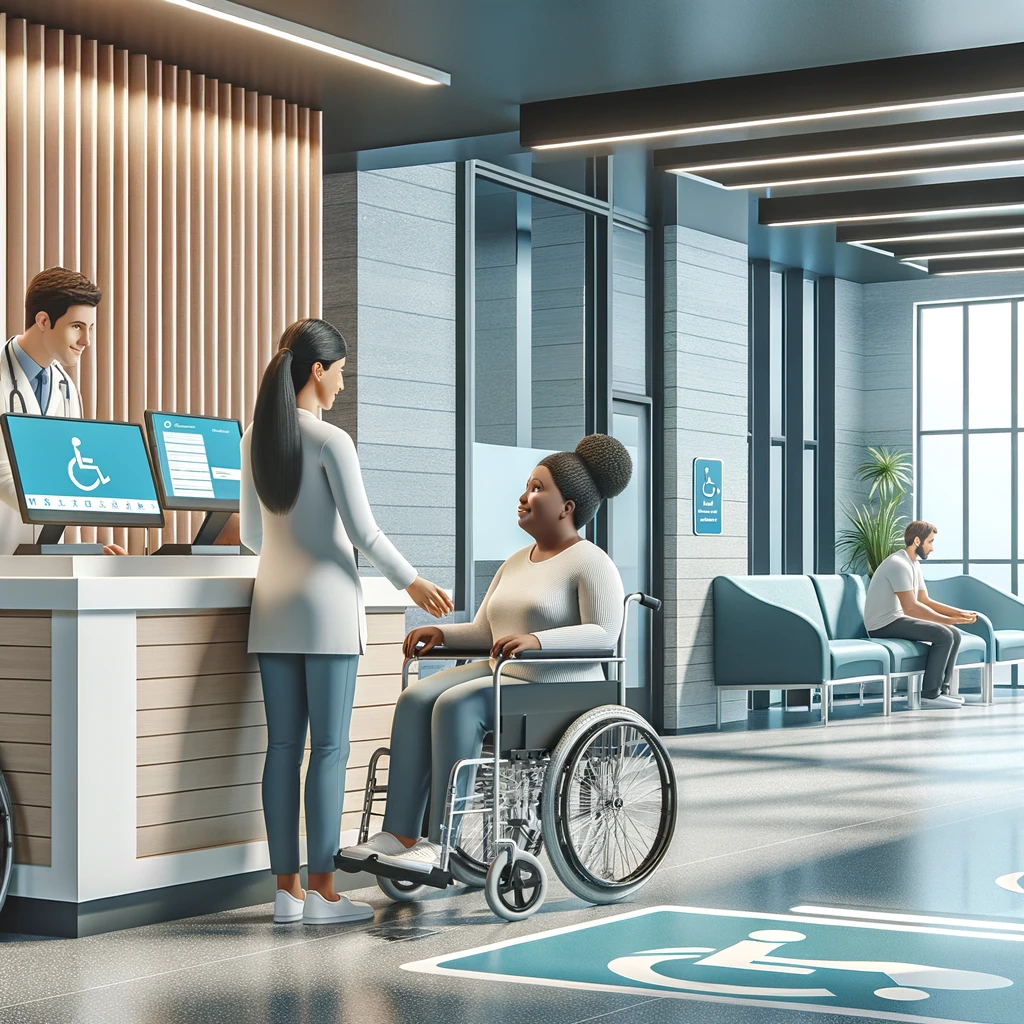
The Americans with Disabilities Act shapes daily operations in specialized medical settings more directly than many administrators, clinicians, and patients realize. In hospitals, fertility clinics, oncology centers, psychiatric facilities, rehabilitation hospitals, ambulatory surgery centers, dental practices, and telehealth programs, ADA rights and protections determine who gets access, how services are delivered, what modifications are required, and where legal boundaries exist. I have worked with healthcare teams revising intake forms, interpreter workflows, mobility access plans, and digital patient portals, and the same lesson appears every time: compliance is not a side issue. It is a core patient safety, quality, and civil rights obligation.
In this context, specialized medical settings are healthcare environments that provide focused services rather than broad primary care. They often involve complex equipment, referral-based workflows, time-sensitive treatment, and heightened privacy concerns. ADA rights refer to the legal protections that prohibit discrimination on the basis of disability and require equal access to goods, services, programs, and activities. For medical providers, that usually means accessible facilities, effective communication, reasonable modifications to policies and procedures, and nondiscriminatory eligibility criteria. It also means understanding where the ADA overlaps with Section 504 of the Rehabilitation Act, the Affordable Care Act Section 1557, state disability laws, Medicare Conditions of Participation, and accreditation expectations from organizations such as The Joint Commission.
This topic matters because specialized care is where barriers can become most damaging. A missed oncology consult because a patient portal does not work with screen readers can delay treatment. A deaf patient without a qualified interpreter during informed consent may not understand surgical risks. A patient with an intellectual disability turned away from a pain clinic because staff assume communication will be difficult faces both discrimination and clinical harm. These are not abstract compliance failures. They affect diagnosis, consent, treatment adherence, patient trust, and outcomes. This hub explains the rights framework, the most important access duties, the recurring problem areas, and the practical standards every specialized medical practice should understand.
Core ADA rules in specialized medical settings
The ADA applies differently depending on the healthcare entity. Private specialty practices, surgery centers, imaging centers, and many dental offices are generally public accommodations under Title III. State and local government hospitals, academic medical centers operated by public entities, and county behavioral health clinics are generally covered by Title II. Employment issues inside these organizations fall under Title I. The central patient-facing rule is straightforward: providers cannot exclude, segregate, or offer unequal care to a person because of disability, and they must make appropriate changes unless doing so would fundamentally alter the service or create an undue burden.
In practice, four obligations drive most disputes. First, physical access: entrances, parking, exam rooms, restrooms, and medical equipment must be accessible to the extent required by the 2010 ADA Standards for Accessible Design and related guidance. Second, effective communication: practices must provide auxiliary aids and services when needed, including qualified sign language interpreters, real-time captioning, accessible electronic documents, and communication supports for patients with speech, vision, or cognitive disabilities. Third, reasonable modification: policies such as no-companion rules, rigid scheduling requirements, or curbside-only check-in methods may need adjustment. Fourth, equal opportunity: specialty eligibility rules must be clinically relevant, not based on stereotypes about disability.
Medical judgment matters, but it must be individualized and grounded in evidence. A clinic can deny a requested accommodation only for defensible reasons, not assumptions. For example, refusing to treat a patient who uses a ventilator because staff feel uncomfortable is not lawful decision-making. By contrast, a provider may refer when a procedure truly requires equipment or staffing the practice does not have, as long as the decision is based on objective capability and the patient is not simply being shuffled away because accommodation feels inconvenient.
Access barriers patients face most often
Across specialty settings, the same barriers recur. Architectural barriers remain common, especially in older practices located in medical office buildings with narrow doorways, heavy doors, inaccessible scales, and fixed-height exam tables. The Department of Justice has repeatedly emphasized that accessible routes and basic entry are not enough if the patient cannot actually receive the service. In women’s health, dermatology, orthopedics, and wound care, inaccessible transfer surfaces can make the encounter incomplete or medically inferior. The problem is not solved by examining a wheelchair user while seated if the clinical standard requires table access.
Communication barriers are equally serious. I have seen specialty clinics rely on family members to interpret because scheduling a qualified interpreter felt cumbersome. That shortcut creates legal and clinical risk. The ADA generally requires qualified interpreters when necessary for accurate, timely, and impartial communication, particularly during consent, diagnosis, treatment discussions, and discharge instructions. Video remote interpreting can work, but only when image quality, bandwidth, and staff setup support effective communication. In psychiatric care, low-quality remote interpreting can undermine rapport and clinical accuracy. In oncology, misunderstanding treatment options can change life-altering decisions.
Digital barriers now affect nearly every specialty practice. If online intake forms, appointment reminders, test result portals, or telehealth platforms are inaccessible, patients are blocked before clinical care even begins. The most reliable benchmark is WCAG conformance, typically WCAG 2.1 AA or higher, although organizations should track evolving federal rules and settlement patterns. Specialty providers often overlook PDFs, e-signature systems, and patient education videos. A retinal clinic may have low-vision patients unable to navigate image-heavy instructions. A sleep medicine practice may offer device setup videos without captions, excluding deaf users and many others who benefit from multimodal information.
| Barrier | Common setting | Patient impact | Practical response |
|---|---|---|---|
| Fixed-height exam table | Gynecology, dermatology, pain management | Incomplete exam or deferred care | Install accessible table and train transfer protocols |
| No qualified interpreter | Surgery, oncology, psychiatry | Invalid consent and misunderstanding | Interpreter scheduling workflow with urgent backup options |
| Inaccessible portal | Telehealth, specialty referrals, imaging | Missed scheduling and inaccessible records | Audit to WCAG standards and remediate vendor tools |
| Rigid no-support-person policy | Infusion, emergency specialty care, diagnostics | Communication failure and unsafe care | Modify policy when support is necessary for equal access |
Reasonable modifications, auxiliary aids, and equipment
A reasonable modification is a change to a rule, practice, or procedure that gives a patient with a disability an equal chance to access care. In specialty settings, these modifications are often operational rather than dramatic. A fertility clinic may need longer appointment slots for a patient with a mobility disability who uses paratransit. A neurology office may need to permit a support person where standard policy restricts companions. A bariatric practice may need alternative weighing procedures or accessible seating instead of treating body size and disability as inconveniences. The key question is whether the change is necessary and reasonable, not whether it disrupts routine preference.
Auxiliary aids and services cover the communication side. For deaf and hard-of-hearing patients, options can include on-site interpreters, video remote interpreting, CART captioning, amplified devices, captioned media, or written exchange for limited interactions. For blind and low-vision patients, accessible electronic documents, screen-reader-compatible portals, large print, and verbal orientation may be required. For patients with intellectual, developmental, speech, or cognitive disabilities, plain-language explanations, communication boards, extra processing time, or caregiver-supported communication may be necessary. The provider must give primary consideration to the patient’s requested aid in public entity settings and should treat patient preference as highly persuasive in private settings.
Equipment access is where many specialty providers lag. The U.S. Access Board has issued standards for medical diagnostic equipment, and while implementation obligations vary, the direction of best practice is clear: accessible exam tables, weight scales, imaging supports, transfer lifts, and positioning equipment reduce unequal care and staff injury at the same time. In rehabilitation medicine and orthopedics, teams usually understand transfer safety. In smaller specialty offices, staff often improvise. That is risky. Training should cover transfers, patient handling, emergency evacuation, and dignity-centered assistance. Equipment without workflow training is not a real accommodation program.
High-risk specialty areas and recurring legal issues
Certain settings generate repeated ADA disputes because the clinical stakes are high and workflows are rigid. Behavioral health is one. Psychiatric hospitals and outpatient mental health programs must avoid excluding patients with co-occurring developmental or physical disabilities simply because staff are not prepared. Effective communication in behavioral health may require interpreters who understand mental health terminology, modified sensory environments, or adjusted de-escalation practices. Blanket bans on service animals, support persons, or communication devices can create unlawful barriers unless a specific safety rationale exists.
Reproductive health and obstetrics present another high-risk area. Accessible mammography, gynecologic exams, fertility treatment consultations, and labor-and-delivery communication supports are still inconsistent. Some practices quietly avoid treating patients who require lift-assisted transfers or communication accommodations because scheduling feels more complex. That exposes the organization to significant legal and reputational risk. The National Council on Disability has documented persistent healthcare access gaps for women with disabilities, especially around preventive and reproductive care.
Dental and oral surgery practices also deserve close attention. Providers sometimes assume they may refuse patients with developmental disabilities if behavior management may be difficult. That is too broad. The analysis must focus on whether reasonable modifications, sedation options within scope, referral pathways, and staff preparation can enable treatment. A practice is not required to perform services beyond its competence, but it cannot use disability itself as the basis for refusal. Similar principles apply in oncology, dialysis, pain management, and transplant evaluation, where eligibility criteria must rest on individualized medical assessment rather than generalized assumptions about quality of life, adherence, or prognosis.
Telehealth, digital access, and integrated compliance
Telehealth expanded access for many patients with disabilities, but it also created new exclusion points. Platforms must support captioning, keyboard navigation, screen-reader compatibility, color contrast, and clear error recovery. Specialty telehealth often depends on pre-visit questionnaires, image uploads, identity verification, and consent screens. If any of those steps fail, the visit is not meaningfully accessible. I have seen organizations focus on the video connection while ignoring inaccessible intake workflows that prevent patients from reaching the clinician at all.
Integrated compliance means accessibility is embedded in procurement, contracting, training, risk management, and quality review. Vendor contracts for portals, kiosks, remote monitoring tools, and telehealth systems should include accessibility requirements, testing rights, remediation timelines, and indemnity language where appropriate. Grievance processes should route disability access complaints quickly to decision-makers who can solve problems in real time. Data helps. Track interpreter response times, transfer-equipment use, portal accessibility defects, accommodation denials, and patient complaints by service line. Patterns usually reveal whether the issue is isolated or systemic.
Specialized medical settings should also align disability access with informed consent, patient safety, and clinical ethics. An accommodation is not separate from care quality. If a patient cannot communicate symptoms accurately, understand options, transfer safely, navigate follow-up instructions, or access test results, the quality system is already failing. The strongest programs use disability access rounds, mock patient journeys, annual policy review, and direct input from patients with disabilities. That approach reduces legal exposure, improves experience scores, and strengthens clinical reliability.
How this hub supports focused explorations of ADA rights
This hub is designed to anchor a broader set of focused explorations of ADA rights within specialized medical settings. Each subtopic deserves a dedicated deep dive because the legal rule may be consistent while the operational details vary sharply. A page on effective communication can examine interpreter standards, VRI failure points, companion rules, and documentation protocols. A page on accessible medical equipment can map transfer workflows, procurement standards, and specialty-specific equipment needs. Other related pages should cover telehealth accessibility, service animals in clinical areas, mental health settings, reproductive care, dental practices, emergency specialty services, website and portal access, and accommodation request procedures.
For internal navigation, the most useful structure is issue-based rather than statute-based. Patients search for answers like “Can a surgery center require me to bring my own interpreter?” or “Does a fertility clinic need an accessible exam table?” Administrators search for “reasonable modification examples in dialysis clinics” or “telehealth ADA checklist for specialty practices.” Organizing related articles around these questions makes the hub practical. It also helps legal teams, compliance officers, and patient advocates find precise guidance without wading through generic summaries.
The central benefit of this hub is clarity. ADA in specialized medical settings is not only about ramps and reserved parking. It covers communication, policy changes, diagnostic equipment, digital access, referral practices, support persons, and individualized medical decision-making. When providers understand that full scope, patients receive safer and more respectful care, and organizations build defensible compliance programs instead of relying on improvised exceptions.
The key takeaway is simple: disability rights follow the patient through every stage of specialized care, from scheduling and intake to diagnosis, treatment, billing, and follow-up. Healthcare leaders should use this hub as the starting point for reviewing their highest-risk service lines, updating policies, and connecting each operational problem to a concrete ADA duty. Begin with the patient journey, identify barriers, fix the most harmful gaps first, and then expand into the focused articles that support each issue area.
Frequently Asked Questions
How does the ADA apply differently in specialized medical settings compared with general healthcare environments?
The ADA applies broadly across healthcare, but its impact can be especially significant in specialized medical settings because these environments often involve highly structured workflows, advanced equipment, strict eligibility criteria, and time-sensitive care decisions. In a general practice office, access issues may center on ramps, communication aids, or scheduling flexibility. In a fertility clinic, oncology center, psychiatric facility, rehabilitation hospital, ambulatory surgery center, or telehealth program, ADA compliance may also affect intake procedures, treatment participation rules, support person access, equipment transfer policies, communication methods, and discharge planning. The law does not simply require a facility to avoid obvious discrimination; it requires covered providers to make reasonable modifications to policies, practices, and procedures when needed to give a person with a disability an equal opportunity to benefit from services.
That means specialized providers must look beyond physical accessibility alone. For example, a cancer center may need to adjust appointment protocols for a patient with a cognitive disability who needs extra explanation time. A psychiatric facility may need to ensure effective communication for a patient who is deaf, even in a crisis setting. A dental practice may need to modify its transfer procedures or permit additional support during treatment for a patient with mobility-related disabilities. A telehealth provider may need to ensure its platform works with screen readers, captioning tools, or alternative input devices. In each case, the legal question is not whether the setting is specialized, but whether the patient is being denied meaningful access because of disability-related barriers that could reasonably be addressed.
Specialized settings also raise more frequent questions about safety, clinical judgment, and program integrity. The ADA does not force providers to lower legitimate medical standards or offer treatment that is medically inappropriate. However, providers must base decisions on individualized assessment and objective evidence, not assumptions about what a disabled patient can or cannot do. In practice, this is where many disputes arise. A provider may believe a policy is neutral, but if it screens out patients with disabilities unnecessarily, it can still violate the ADA. In specialized medicine, compliance depends on careful case-by-case analysis, staff training, and documentation that shows decisions were grounded in actual medical facts rather than stereotypes, convenience, or administrative habit.
What kinds of accommodations or modifications might patients be entitled to in places like fertility clinics, oncology centers, psychiatric facilities, or ambulatory surgery centers?
Patients may be entitled to a wide range of reasonable modifications and auxiliary aids, depending on the setting and the nature of their disability. In specialized medical facilities, accommodations often involve more than a simple scheduling adjustment. They may include sign language interpreters, real-time captioning, materials in accessible formats, permission for a support person to accompany the patient, extra time during consultations, modified check-in procedures, flexible communication methods, accessible examination equipment, assistance with transfers where appropriate, quieter spaces for patients with sensory disabilities, or adjusted policies regarding intake, consent, and discharge. The ADA requires providers to take steps necessary to ensure equal access unless doing so would fundamentally alter the nature of the service or create an undue burden.
In a fertility clinic, a patient with a mobility disability may need accessible exam rooms and transfer support, while a patient with an intellectual disability may need consent information presented in plain language and additional time to ask questions. In an oncology center, a patient undergoing treatment who also has a hearing or vision disability may need communication aids throughout chemotherapy education, treatment planning, and symptom reporting. In a psychiatric setting, accommodations can include effective communication tools, modified interviewing techniques, or adjustments to standard rules when those rules create avoidable barriers. In an ambulatory surgery center, a patient may need accessible pre-op instructions, communication support during perioperative care, and post-op discharge planning that reflects disability-related needs rather than one-size-fits-all assumptions.
The key point is that accommodations are individualized. Patients are not automatically entitled to every modification they request, but they are entitled to a genuine, interactive consideration of what is needed for equal access. Facilities should not reject requests reflexively or rely on blanket policies. Instead, they should evaluate the specific disability-related barrier, the requested change, the clinical context, and whether another equally effective accommodation is available. A well-run specialized practice treats accommodation as part of patient care operations, not as an afterthought. That approach reduces legal risk and, just as importantly, improves patient safety, trust, and treatment outcomes.
Can a specialized medical provider ever refuse treatment or limit services to a patient with a disability?
Yes, but only in limited circumstances, and the reasoning matters. The ADA does not require a provider to offer treatment that falls outside its professional competence, provide care that is medically contraindicated, or ignore legitimate safety concerns. A specialized medical provider may also decline a request if the requested modification would fundamentally alter the nature of the service or impose an undue burden. However, the law does not permit refusal based on fear, discomfort, generalized assumptions, staffing inconvenience, or speculation about risk. Any decision to limit services must be based on an individualized assessment using current medical knowledge or the best available objective evidence.
For example, a provider cannot simply assume that a patient with a psychiatric disability cannot comply with treatment, that a patient with a developmental disability cannot provide informed consent with appropriate support, or that a patient who uses a wheelchair is too difficult to treat because staff would need to adapt standard procedures. Likewise, a fertility clinic cannot exclude a person because of disability-based assumptions about parenting ability, and a surgical facility cannot deny care merely because accommodating transfers or communication needs would require planning. If there is a true clinical limitation, the provider should be able to explain it clearly, tie it to the specific patient and procedure, and show that alternatives were considered.
This is one of the most important ADA principles in specialized care: medical judgment is respected, but it must be real medical judgment. Providers should document why a limitation exists, what facts support it, whether modifications were explored, and whether the patient can be referred appropriately if a service truly cannot be provided. Patients, in turn, should know that “we do not treat people like that here” is not a lawful answer. In many cases, the issue is not whether treatment can occur, but whether the provider is willing to make the reasonable adjustments necessary for equal participation. That distinction is often what determines whether a policy is defensible or discriminatory.
How does the ADA affect communication access, especially for patients using interpreters, assistive technology, or telehealth platforms?
Communication access is a core ADA obligation in healthcare, and it is especially critical in specialized medical settings where patients are making complex, high-stakes decisions. The law generally requires providers to furnish appropriate auxiliary aids and services when necessary to ensure effective communication with patients, and in many cases with companions who are integral to care discussions. Depending on the situation, that can mean qualified sign language interpreters, video remote interpreting, captioning, assistive listening devices, written materials in alternative formats, plain-language explanations, screen-reader-compatible patient portals, or staff practices that support patients with speech, cognitive, hearing, or vision disabilities. The standard is not mere contact; it is effective communication that allows the patient to understand, participate, and make informed decisions.
In specialized settings, communication needs are often more intensive than administrators expect. Oncology consultations, reproductive medicine decision-making, psychiatric evaluations, rehabilitation planning, surgical informed consent, and discharge instructions all involve nuanced medical information. Using a family member as an interpreter, relying only on handwritten notes, or expecting a patient to navigate an inaccessible portal may be inadequate and, in some cases, unlawful. Providers must assess the context, complexity, and urgency of the communication. A brief administrative interaction may require one level of support, while treatment planning or consent discussions may require a much more robust accommodation.
Telehealth adds another layer. If a telehealth platform is not accessible to patients who use captions, screen readers, keyboard navigation, or other assistive technology, the provider may be creating a disability-based barrier to care. The ADA increasingly intersects with digital accessibility, meaning that online scheduling systems, intake forms, patient education tools, and virtual visit platforms should all be evaluated for usability by people with disabilities. A provider cannot simply say telehealth is available to everyone if, in practice, some patients cannot independently use it. Effective compliance means building accessibility into the communication system from the start, training staff to respond to accommodation requests quickly, and recognizing that communication failures in healthcare are not minor technical issues—they can directly affect diagnosis, consent, treatment adherence, and patient safety.
What should administrators and clinicians do to reduce ADA risk and better protect patient rights in specialized medical programs?
The most effective approach is to treat ADA compliance as an operational and clinical priority rather than a reactive legal task. Specialized medical programs should start by reviewing how patients move through the entire care process: marketing, intake, scheduling, registration, communication, examination, treatment, discharge, billing, and follow-up. At each stage, leaders should ask whether disability-related barriers exist and whether policies unintentionally exclude people with disabilities. Many violations arise not from intentional discrimination, but from routine systems that were never designed with accessibility in mind. A strong program identifies those friction points early and creates practical procedures for addressing them consistently.
Training is essential. Front-desk staff, nurses, physicians, technicians, counselors, and administrators should understand the basics of reasonable modifications, effective communication, accessible equipment, service animal rules, support person issues, and when to escalate an accommodation request. Staff should also be trained