ADA rights in the hospitality industry shape whether travelers, diners, and event guests can participate with dignity, safety, and equal access. In practice, these rights affect hotel reservations, restaurant seating, service animal access, digital booking tools, transportation links, conference spaces, and the policies staff use every day. The Americans with Disabilities Act, or ADA, is the primary federal civil rights law that prohibits disability-based discrimination in places of public accommodation, and hospitality businesses are among its most visible covered entities. Hotels, restaurants, bars, cafes, resorts, stadium clubs, banquet halls, and many entertainment-adjacent venues must provide access unless doing so would fundamentally alter the service or create an undue burden under the law.
For operators, compliance is not just a construction checklist. It includes communication access, policy design, staff training, maintenance, and the ability to respond appropriately when a guest requests a reasonable modification. For guests, understanding ADA rights can mean the difference between an inclusive stay and an exhausting conflict at the front desk. I have worked with lodging and food-service teams on accessibility audits, reservation flows, and complaint prevention, and the most common failures are rarely dramatic. They are missed details: inaccessible online booking paths, blocked routes, poorly trained hosts, inaccessible breakfast buffets, and assumptions about what a disabled guest can or cannot do.
This hub article covers focused explorations of ADA rights across hospitality settings, explains the rules in plain terms, and highlights where businesses most often get it wrong. It matters because the hospitality industry sells welcome. If access breaks down, the core service breaks down too. Guests need accurate information, equal opportunity, and reliable accommodations. Businesses need practical guidance that aligns operations with the ADA Standards for Accessible Design, Department of Justice enforcement positions, and hospitality-specific realities. Understanding these rights is the foundation for better guest experiences, lower legal risk, and stronger brand trust.
Hotels and lodging: reservations, rooms, and on-site access
Hotels sit at the center of ADA compliance in hospitality because the guest journey starts before arrival. A compliant experience begins with reservation systems. Under DOJ rules, hotels must identify and describe accessible features in enough detail for a guest to assess independently whether a room meets their needs. In real terms, saying “ADA room available” is not enough. A meaningful description includes features such as roll-in showers versus transfer tubs, bed height where relevant, visual alarms, door width, grab bar placement, and accessible routes from parking or transit to the lobby and guest room. If the property returns accessible inventory to general inventory too early, or if booking staff cannot explain room features accurately, the hotel creates a barrier before check-in.
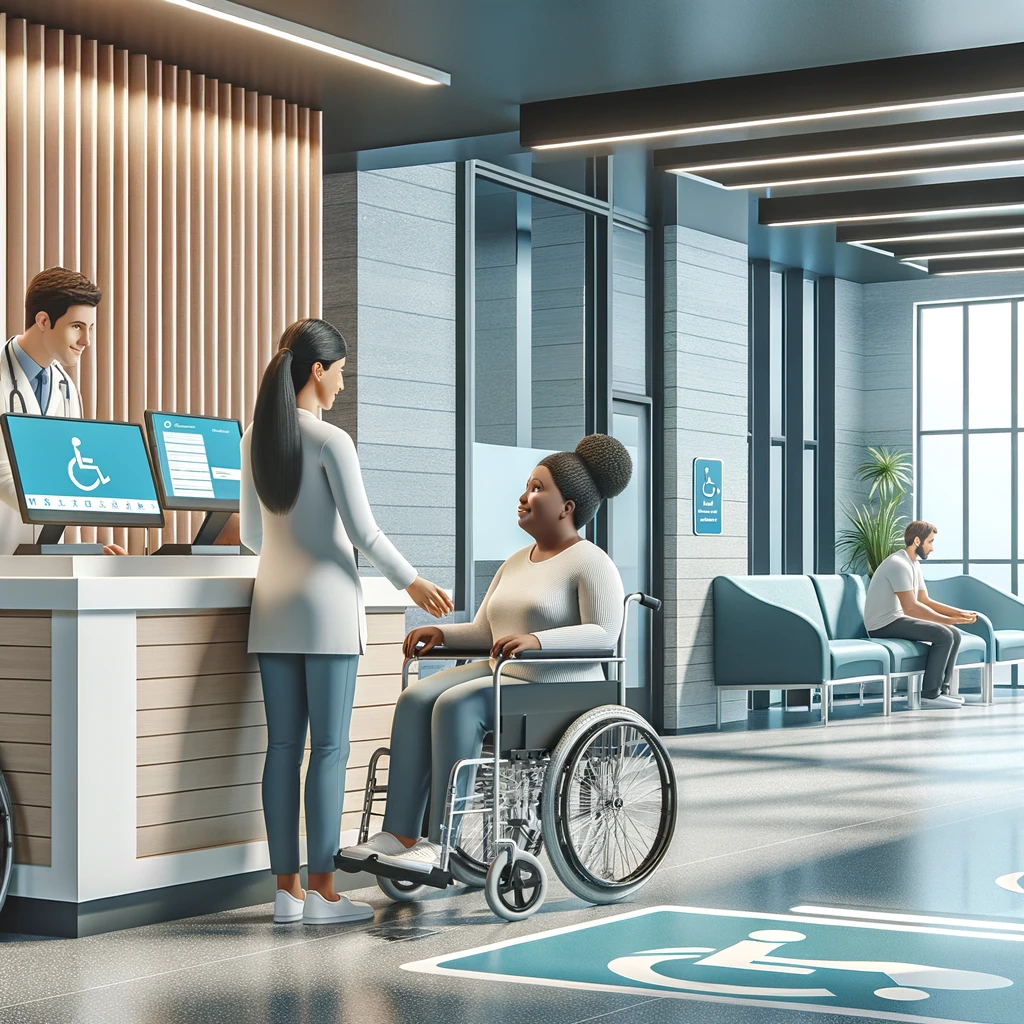
On site, rights extend beyond the guest room. An accessible room is not useful if the route from parking to registration has steps, if the front desk has no lowered service position, or if the breakfast area is arranged so tightly that wheelchair users cannot circulate. Pools, fitness centers, business centers, meeting rooms, spas, and guest laundries can all trigger accessibility obligations. The ADA Standards require accessible routes, maneuvering clearance, compliant door hardware, and in many settings specific technical requirements such as pool lifts or sloped entries. Maintenance matters as much as design. A lift stored without batteries, a blocked ramp, or a broken automatic door can become the basis of a valid access complaint.
Service animal rules are another recurring pressure point. Hotels must generally allow service animals in areas where guests may go, even if the property has a no-pets policy. Staff are limited to two questions when the disability and the animal’s function are not obvious: whether the dog is required because of a disability, and what work or task the dog has been trained to perform. Staff cannot demand documentation, charge pet fees for the service animal itself, or isolate the guest. However, a hotel may charge for actual damage if it charges other guests for comparable damage. The line between lawful inquiry and illegal gatekeeping is thin, which is why training front-desk and housekeeping teams is essential.
Restaurants, bars, and food service access
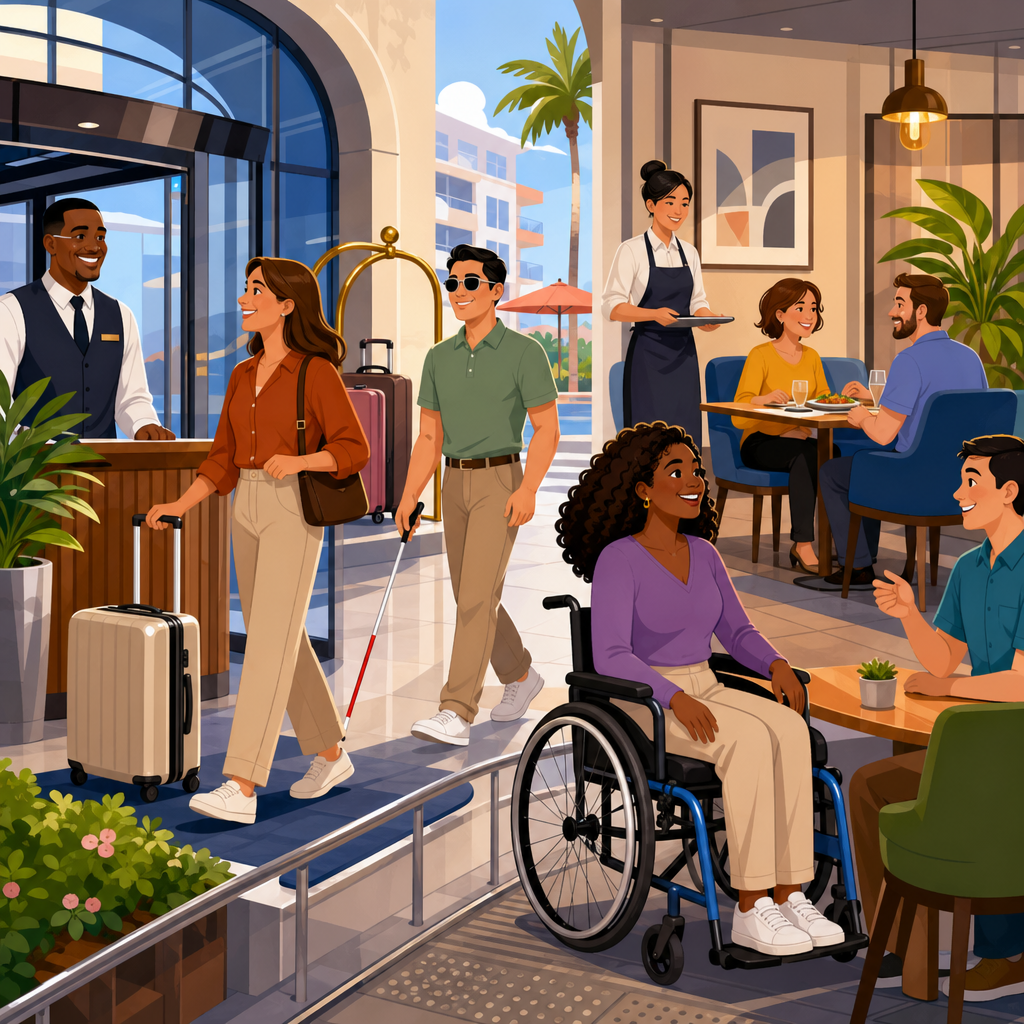
Restaurants present a different ADA profile because access is immediate and public. A guest may encounter barriers at the entrance, host stand, dining area, restroom, payment counter, buffet, patio, or website before they ever place an order. The basic rule is equal enjoyment of the goods and services offered. That means wheelchair users need accessible routes and seating options integrated into the dining room, not only a single isolated table near the door. People with low vision need menus in accessible formats when necessary, and deaf or hard-of-hearing guests may need effective communication depending on the setting, from written exchanges for simple interactions to more robust auxiliary aids for private dining events or cooking classes.
Policy errors are often more common than structural errors. I routinely see restaurants tell guests with service animals they must sit outside, claim local health codes prohibit service dogs, or refuse entry because staff confuse service animals with pets or emotional support animals. Under the ADA, a trained service dog must usually be admitted even where food is served. Another recurring issue is inflexible seating practices. If a person needs a particular seat to transfer safely or to keep a service animal out of a narrow aisle, the restaurant should modify normal seating procedures unless doing so fundamentally alters operations. The same principle applies to ordering methods, condiment stations, and queue systems.
Food allergies are more complex because the ADA does not turn every dietary preference into a disability accommodation. But severe allergies and some gastrointestinal conditions can qualify as disabilities, which means restaurants should evaluate requests thoughtfully rather than dismiss them automatically. Staff should know the difference between guaranteeing an allergen-free environment, which may not be possible, and providing available ingredient information, adjusting preparation where feasible, or allowing a reasonable modification in service. Clear communication is a legal and operational tool. A restaurant that trains staff to escalate accommodation questions to a manager avoids many preventable conflicts.
Digital accessibility, communication, and booking systems
Hospitality access increasingly depends on digital systems. Guests reserve rooms on mobile devices, review menus online, request airport shuttles through apps, and check event details on web pages. If these tools are inaccessible, the barrier appears long before a guest reaches the property. The ADA does not contain a single explicit technical standard for every website, but enforcement and settlements have consistently treated inaccessible digital experiences as a serious access issue. In practical terms, hospitality operators should align websites and apps with WCAG 2.1 AA or newer versions because that is the benchmark most often used by accessibility professionals, plaintiffs, and regulators.
Common failures are easy to recognize. A hotel booking engine may not let screen-reader users identify accessible room types. A restaurant may post a menu only as an unlabeled image. An event venue may require timed online checkout that cannot be completed with keyboard navigation. Video tours without captions exclude deaf users, while promotional images without meaningful alternative text leave blind users without core information. These are not minor technical defects. They affect whether a person can compare options, understand accessibility features, and complete a transaction independently.
Effective communication also extends beyond websites. Hotels and restaurants may need to provide auxiliary aids and services where necessary for effective communication, considering the nature, length, and complexity of the interaction. For a routine check-in, exchanging written notes may work. For a wedding planning meeting, a contract negotiation, or a long conference presentation, a qualified sign language interpreter, real-time captioning, or assistive listening system may be necessary. The correct question is not “What is cheapest?” but “What enables communication that is as effective as communication with others?” That standard drives lawful decision-making.
Events, transportation links, and common problem areas
Hospitality businesses rarely operate in isolation. A hotel may host conferences, a restaurant may cater banquets, and a resort may coordinate shuttles, excursions, and ticketed entertainment. Each layer creates additional ADA considerations. Event spaces need accessible seating dispersion, stages or speaking areas that can be reached when speakers or honorees have mobility disabilities, and registration systems that collect accommodation needs early enough to respond. If a venue advertises valet service, banquet seating, or shuttle transport as part of the package, those features must be examined for accessibility rather than treated as someone else’s problem.
Transportation is a frequent blind spot. The ADA applies differently depending on whether the service is provided by a private entity primarily engaged in transporting people, a fixed-route system, or an on-demand arrangement, but hospitality operators cannot ignore accessibility when transportation is part of the guest experience. A resort that offers an airport shuttle should know whether wheelchair users can use it, how they reserve it, and what alternatives exist if a lift-equipped vehicle is unavailable. The same practical analysis applies to marina services, golf-cart circulation, tram systems, and third-party excursion providers promoted through the concierge desk.
| Area | Common barrier | Practical ADA-focused response |
|---|---|---|
| Hotel booking | Accessible rooms listed without details | Describe features precisely and hold accessible inventory correctly |
| Restaurant seating | Wheelchair users offered only patio or aisle-end tables | Provide integrated seating choices and modify seating policies when reasonable |
| Communication | Staff rely on lipreading or family members | Assess auxiliary aids based on interaction complexity |
| Service animals | Staff demand ID cards or pet fees | Use the two permitted questions and waive pet restrictions for service dogs |
| Amenities | Pool lifts, ramps, or automatic doors not maintained | Inspect regularly and repair access features promptly |
| Events | Accommodation requests handled too late | Collect needs during registration and confirm logistics in advance |
Older buildings create another area of confusion. Many hospitality properties operate in historic structures or facilities built long before current standards. The ADA does not excuse inaccessibility simply because a building is old. Existing facilities must remove architectural barriers where removal is readily achievable, meaning easily accomplishable without much difficulty or expense. That is a case-by-case standard. Installing lever hardware, re-striping parking, lowering paper towel dispensers, or rearranging furniture may be readily achievable even when a full elevator retrofit is not. New construction and alterations face stricter requirements, so renovation planning must account for current accessibility standards from the start.
Compliance strategy, staff training, and guest advocacy
The most effective hospitality accessibility programs combine design review, policy review, digital testing, and frontline training. In my experience, operators get better results when they map the full guest journey: discovery, booking, arrival, navigation, service delivery, amenities, emergency procedures, and complaint resolution. That approach reveals where accessibility can fail between departments. Engineering may maintain ramps, but reservations controls room descriptions, marketing controls web content, food and beverage controls seating procedures, and security controls evacuation planning. ADA compliance is operational, not siloed.
Training should be specific. Staff need to know how to speak directly to the guest rather than a companion, how to handle service animal interactions, how to document accommodation requests, and when to escalate to a manager. They also need to avoid overpromising. If a room has a transfer shower, saying it has a roll-in shower can create both safety and legal problems. Many properties now use annual accessibility refreshers, mystery-shopping, and audits with disabled users because compliance on paper often diverges from real-world usability. Named tools such as the ADA Checklist for Existing Facilities, WCAG testing protocols, and preventive maintenance logs help turn broad obligations into repeatable routines.
Guests also benefit from a practical strategy. Before booking, ask for specific measurements or feature descriptions instead of broad labels. Save screenshots of website claims about accessibility. Confirm transportation and amenity access in writing when those features matter. If a problem occurs, raise it calmly with a manager and explain the modification or feature needed. If the issue is not resolved, guests can document the barrier, seek legal advice, file a complaint with the U.S. Department of Justice, or in some cases pursue state or local remedies that may provide additional protections beyond federal law. Good records matter because many disputes turn on what was promised, what existed on site, and whether the business had notice of the barrier.
ADA rights in the hospitality industry are ultimately about equal participation in travel, dining, and public life. Hotels must make reservation systems accurate and rooms meaningfully accessible. Restaurants must provide integrated seating, lawful service animal access, and effective communication. Event venues, shuttles, and digital platforms must be evaluated as part of the same guest experience, not as separate afterthoughts. Businesses that treat accessibility as continuous operations work reduce complaints and serve more people well. Guests who understand their rights can ask better questions, identify violations faster, and push for practical fixes. Use this hub as your starting point for deeper exploration of hotel access, restaurant policies, digital accessibility, service animals, communication aids, and barrier removal across the hospitality industry.
Frequently Asked Questions
What ADA rights do guests and customers have in hotels, restaurants, and other hospitality businesses?
Under the Americans with Disabilities Act, people with disabilities generally have the right to access hotels, restaurants, bars, conference venues, entertainment spaces, and other hospitality businesses on an equal basis with other members of the public. In practical terms, that means a business cannot deny service because of a disability, apply different rules that unfairly exclude disabled guests, or fail to make reasonable modifications to normal policies, practices, and procedures when those changes are necessary to provide equal access. These rights can affect nearly every part of the customer experience, including making reservations, entering the property, using parking and restrooms, dining in common areas, attending events, navigating digital booking platforms, and communicating with staff.
The ADA also requires many hospitality businesses to remove architectural barriers where doing so is readily achievable and to ensure that newly built or altered spaces comply with accessibility standards. For guests, this may include accessible entrances, routes, guest rooms, counters, restrooms, seating areas, and service areas. In restaurants and event spaces, equal access can involve wheelchair-accessible seating options, accessible paths through dining areas, and policies that allow someone to enjoy the same services offered to others. The law focuses on meaningful access, dignity, and independence, so businesses are expected to serve disabled guests in integrated settings whenever possible rather than separating them unnecessarily.
Just as importantly, the ADA protects against less visible forms of exclusion. A hospitality business may need to communicate effectively with guests who are deaf, hard of hearing, blind, have low vision, or have speech-related disabilities. Depending on the situation, that could mean providing written information in accessible formats, exchanging notes, reading menu items aloud, making websites and booking tools usable with assistive technology, or offering other auxiliary aids and services when required. While the exact obligation can vary based on the type of business and the specific circumstances, the basic principle is consistent: disabled guests should be able to participate with dignity, safety, and as much independence as possible.
Are hotels required to offer accessible rooms and provide accurate information during the reservation process?
Yes. Hotels and similar lodging providers have important ADA obligations related to accessible guest rooms and the reservation process. One of the most significant requirements is that guests with disabilities must be able to identify and reserve accessible rooms during the same hours and in the same manner as other guests. That means accessibility information cannot be vague, hidden, or unavailable until after booking. A hotel should provide enough detail for a guest to determine whether a particular room or feature meets their needs, such as the availability of roll-in showers, grab bars, communication features for deaf or hard-of-hearing guests, accessible routes, and other relevant room characteristics.
Hotels are also expected to hold accessible rooms for use by people who need those features until all other guest rooms of that type have been reserved, subject to the reservation system used. This helps prevent a situation where accessible rooms are casually assigned to guests who do not need them, leaving disabled travelers without meaningful options. Once a guest reserves an accessible room, the hotel must generally honor that reservation and provide the specific accessible features that were promised, rather than switching the guest into a non-accessible room at check-in because of convenience or overbooking.
Beyond the room itself, ADA compliance in lodging extends to the guest’s full experience. Accessible parking, routes from parking or drop-off areas, lobby counters, breakfast areas, pools where required, meeting rooms, and emergency communication systems may all be relevant. If a hotel’s website or online booking engine is difficult to use with a screen reader, keyboard navigation, or other assistive technology, that can create a serious access problem even before the guest arrives. In short, ADA rights in hotels are not limited to having a room labeled “accessible.” They include the right to reliable information, equal booking access, and usable accommodations throughout the stay.
Can a restaurant, hotel, or event venue refuse entry to a service animal?
In most cases, no. Under the ADA, businesses that serve the public generally must allow a service animal to accompany a person with a disability into areas where customers are normally allowed to go. In hospitality settings, that includes places like hotel lobbies, guest check-in areas, restaurants, banquet spaces, and many other public-facing parts of a property. A service animal is not treated as a pet under the ADA, so “no pets” policies do not justify excluding it. This is one of the most widely misunderstood areas of disability access law in the hospitality industry.
Staff may ask only limited questions when the need for the service animal is not obvious: whether the animal is required because of a disability and what work or task the animal has been trained to perform. Employees generally should not demand documentation, require proof of certification, ask about the person’s diagnosis, or insist that the animal demonstrate its task. The focus is on access, not gatekeeping. Businesses also cannot isolate the guest, charge pet fees, or otherwise treat the person less favorably because they use a service animal, though they may charge for actual damage if they normally charge other customers for similar damage.
There are narrow situations in which a service animal may be excluded, such as when the animal is out of control and the handler does not take effective action to control it, or when the animal is not housebroken. Even then, the business should still offer the person the opportunity to obtain goods or services without the animal present when possible. Hospitality operators must train staff carefully on these rules, because unlawful denials often happen at the front desk, host stand, or event entrance based on confusion, stereotypes, or internal policies that conflict with federal law. For guests, the ADA provides a strong right to be accompanied by a qualifying service animal in public accommodations.
How does the ADA apply to websites, online reservations, digital menus, and other hospitality technology?
The ADA’s promise of equal access increasingly extends to digital tools that hospitality businesses rely on every day. For many customers, a hotel website, online reservation platform, mobile check-in system, restaurant QR code menu, or event registration portal is the main gateway to the business. If those tools are inaccessible, disabled users may be blocked from comparing rooms, reviewing amenities, making reservations, ordering food, checking event logistics, or communicating basic access needs. In practice, that can amount to the same kind of exclusion the ADA was designed to prevent in physical spaces.
Accessible digital design often includes features such as keyboard navigation, compatibility with screen readers, meaningful alternative text for images, properly labeled forms, sufficient color contrast, captions for video content, and reservation flows that do not rely solely on a mouse, visual cues, or time-sensitive actions that some users cannot complete. For restaurants, inaccessible PDF menus or QR-only ordering systems can create barriers for blind users, people with low vision, and some users with mobility impairments. For hotels, online booking tools must allow users to identify accessible room options and understand the accessibility features provided. For conference and event venues, inaccessible registration systems can prevent disabled attendees from participating at all.
Although digital accessibility can involve evolving legal standards and technical guidance, the core ADA principle is straightforward: hospitality businesses should provide people with disabilities an equal opportunity to access information and services. That may require accessible website development, alternative ways to complete a booking or order, prompt human assistance, and ongoing testing to identify barriers. Importantly, offering a phone number alone is not always enough if digital access is otherwise unequal or if the alternative is less convenient, less available, or less effective. In a hospitality environment where convenience and self-service technology are central to the customer experience, digital accessibility is no longer a side issue; it is a key part of ADA compliance and guest inclusion.
What should a guest do if they believe a hotel, restaurant, or other hospitality business violated their ADA rights?
If a guest believes their ADA rights were violated, the first step is often to document what happened as clearly as possible. That can include noting the date, time, location, names of employees involved, what was said, what barrier or denial occurred, and how it affected access. Photos, screenshots of websites or reservation systems, copies of emails, receipts, and written policies can also be useful. Detailed records matter because ADA issues in hospitality settings often turn on specifics, such as whether an accessible room was promised and not provided, whether a service animal was wrongly excluded, whether a website blocked access to booking, or whether staff refused a reasonable modification to a policy.
In some situations, it can help to raise the issue directly with a manager, owner, corporate customer service department, or accessibility contact. Some problems result from poor staff training rather than deliberate discrimination, and they may be resolved quickly if the business corrects the issue, changes a policy, or provides the requested access. That said, guests are not required to tolerate discrimination simply because the business claims confusion or inconvenience. If the barrier is ongoing or serious, a person may choose to file a complaint with the U.S. Department of Justice or consult an attorney experienced in disability rights law. State or local civil rights agencies may also have overlapping protections, and in some places those laws provide additional remedies beyond federal law.
It is important to act promptly, especially when the issue involves evidence that may disappear or legal deadlines that may apply. An attorney or advocacy organization can help assess whether the business qualifies as a public accommodation, what ADA provisions are implicated, whether state accessibility laws also apply, and