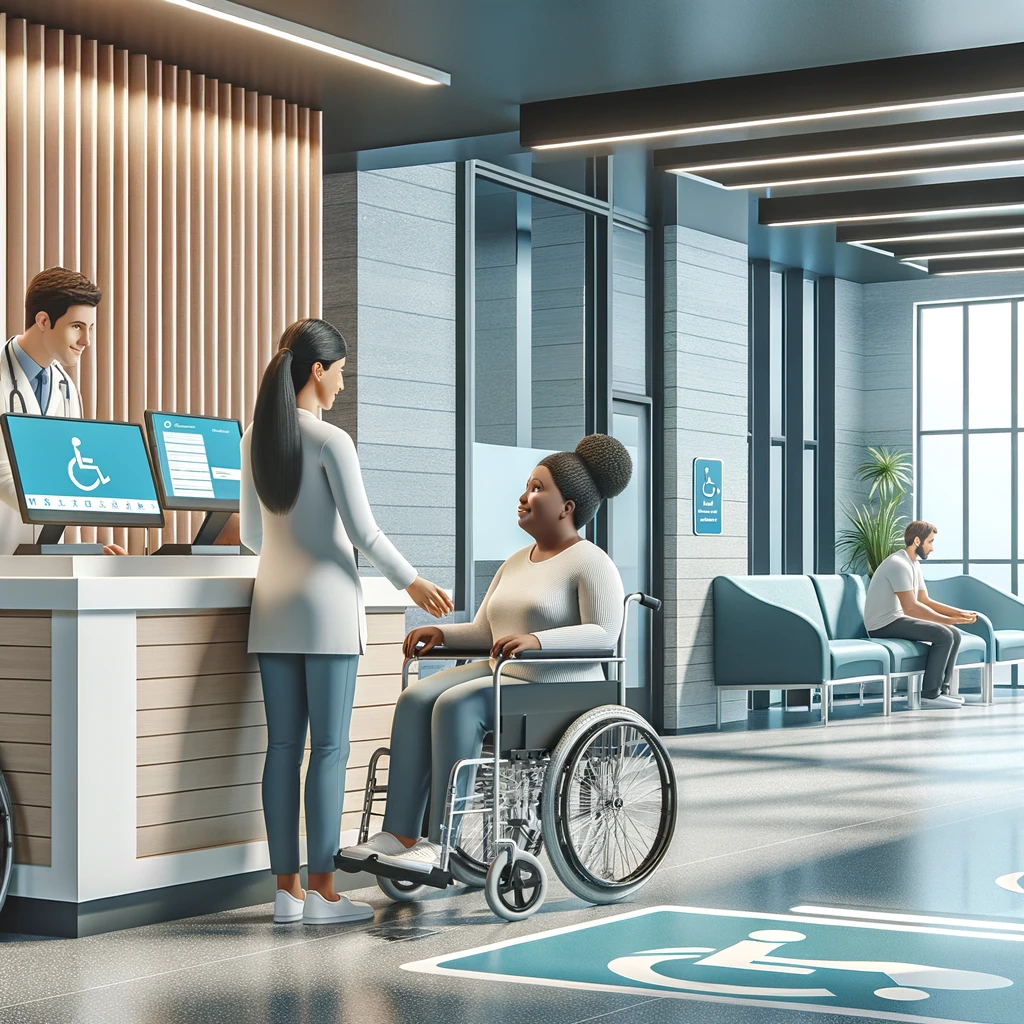
Advanced rights in public accommodations shape how sports arenas and large venues must serve disabled guests, and understanding those protections is essential for fans, families, venue operators, and advocates. In this context, public accommodations are privately operated places open to the public, including stadiums, concert halls, convention centers, racetracks, fairgrounds, and multipurpose arenas. Advanced rights go beyond the basic idea of getting through the door. They cover ticketing parity, companion seating, accessible routes, effective communication, service animal access, concessions, restrooms, emergency planning, digital purchasing systems, and policies that can unintentionally screen people out. I have worked with venue managers, accessibility coordinators, and disabled attendees reviewing seating maps, wayfinding failures, and event-day complaints, and the same pattern appears repeatedly: compliance on paper does not guarantee equal use in practice. This topic matters because large venues concentrate nearly every public accommodation issue in one place. They combine crowds, timed entry, security screening, mobile ticketing, steep seating bowls, amplified sound, changing lighting, and high-demand sales. When accessibility breaks down in that environment, the harm is immediate. People miss games, face humiliation, lose money, or are separated from their group. A strong understanding of focused explorations of ADA rights helps readers identify what the law requires, what best practice looks like, and where related protections deserve deeper study across the broader rights and protections landscape.
The legal baseline comes primarily from the Americans with Disabilities Act, especially Title III for private venues and Title II when the operator is a state or local government entity. The Rehabilitation Act may apply where federal funding is involved. Building access is shaped by the 2010 ADA Standards for Accessible Design, while operational duties come from regulations and guidance issued by the U.S. Department of Justice. For sports facilities, accessible seating distribution and lines of sight have been influenced by landmark enforcement history, including the principles reinforced after Paralyzed Veterans of America v. Ellerbe Becket regarding sightlines over standing spectators. The practical takeaway is direct: equal enjoyment means more than an accessible entrance. Disabled patrons must be able to buy tickets in an equivalent way, reach amenities on a usable route, receive communication in accessible formats, and remain integrated with the general public rather than pushed to inferior locations. As a hub article, this guide maps the major rights issues inside sports arenas and large venues so readers can navigate the specialized articles that sit beneath it.
Accessible seating rights, companion seats, and sightlines
Accessible seating is the issue most people recognize first, but it is also one of the most misunderstood. The requirement is not simply to provide a handful of wheelchair spaces somewhere in the building. Seats must be dispersed in a way that offers a range of ticket prices and viewing angles comparable to those offered to other patrons. In arenas I have assessed, the most common failure is clustering all wheelchair locations on a concourse behind one basket, while non-disabled fans can choose center court, lower bowl, club level, or upper deck options. That is not equivalent choice. Companion seating matters too. A disabled guest generally has the right to purchase companion seats alongside the accessible location, and venues should make reasonable efforts to seat larger groups nearby when available. Sightlines are equally critical. A wheelchair user should not lose the event whenever the crowd stands during a key play or a headline song. Modern venue design and operations must account for viewing over standing spectators, not just over seated patrons.
Ticket transfer rules also affect accessible seating rights. Venues may release unsold accessible seats under certain conditions, especially close to event time, but they cannot use that flexibility to deny disabled buyers real access during the normal sales window. If a disabled attendee buys an accessible seat and later no longer needs it, venues may have policies for exchanges, but those policies must be evenhanded and should not deter disabled patrons from purchasing. Secondary marketplaces complicate this area because inaccessible resale systems can strand people who need specific seat types. Best practice includes clearly labeled seating maps, filters for wheelchair and aisle transfer seating, plain-language descriptions of companion seat limits, and customer support trained to solve problems before event day. For readers exploring this subtopic further, seating rights connect directly with enforcement, ticketing policy, and venue renovation obligations.
Ticketing systems, digital barriers, and equal purchasing access
Today, many access disputes begin online before a patron reaches the parking lot. Equal access to ticketing means disabled buyers must be able to search, select, purchase, and manage tickets through substantially equivalent channels. If the general public can buy at 10:00 a.m. through a mobile app in minutes, disabled users should not be forced into a slower phone-only process with limited inventory. I have seen venues outsource ticket sales to platforms with poor screen-reader labels, inaccessible seat maps, time-out errors, and CAPTCHA barriers that block blind users. Those are not minor usability issues; they can function as exclusionary barriers in high-demand sales. Accessible ticketing should include keyboard operability, compatible form fields, alt text or text equivalents for seating information, and customer service that understands disability-related requests without requiring unnecessary disclosures. WCAG 2.1 AA remains the practical benchmark most organizations use for web accessibility, and venues ignore it at their own risk.
Pricing parity is another core rule. Venues cannot charge more for accessible seats than for comparable standard seats simply because they are accessible. They also cannot steer disabled patrons to premium locations they did not ask for and require them to pay a higher price. Fraud prevention is legitimate, but invasive verification practices often go too far. Generally, if someone requests accessible seating, staff should not demand medical proof. Policies should instead focus on clear terms, respectful exchanges, and accurate inventory controls. Mobile-only ticketing has created fresh challenges for patrons with dexterity limitations, low vision, cognitive disabilities, or unreliable smartphone access. A venue should be prepared to offer alternative delivery formats, such as printed tickets, accessible PDFs, or will-call pickup, when needed for equal use. This area links naturally to broader rights involving website accessibility, third-party vendors, and fair customer service training.
Routes, restrooms, concessions, and event-day usability
Physical access in a large venue is a chain, and the chain fails at its weakest link. An accessible parking space is not enough if the route to security includes steep grades, temporary barricades, or heavy doors with no assistance. An elevator is not enough if staff lock it, overload it with carts, or fail to post directional signage. Restrooms are not enough if every accessible stall becomes a storage area during events. In real operations, usability matters more than checklist thinking. Patrons need continuous accessible routes from arrival to seating, concessions, merchandise, restrooms, lounges, and exits. They also need counters they can reach, turnstiles or alternate entry lanes they can use, and service points where they are not forced to wait apart from everyone else. Temporary setups often create problems: portable bars blocking circulation space, camera platforms reducing maneuvering room, and post-event crowd control routes that bypass accessible paths.
| Venue area | Common barrier | Practical compliant approach |
|---|---|---|
| Entry screening | Narrow lanes and rushed bag checks | Provide accessible screening lanes with trained staff and clear signage |
| Concessions | High counters and blocked queue space | Maintain reachable service points and accessible lines |
| Restrooms | Inoperative fixtures or storage in clear floor space | Inspect before every event and keep accessible elements usable |
| Vertical access | Elevators reserved for staff or premium guests | Keep elevators available for disability access with backup procedures |
| Seating bowl | Loose chairs or temporary rails narrowing routes | Protect required clearances and monitor setup changes |
Maintenance is part of accessibility, not an optional extra. The ADA expects accessible features to remain operable. That means broken lifts, empty soap dispensers at accessible sinks, dead automatic door openers, and obstructed wheelchair spaces all matter. Staff training is where many venues either succeed or fail. Ushers should know the nearest accessible restroom, the route to guest services, how to handle a seat relocation request, and when not to separate a disabled patron from companions. This subtopic also connects to policies on wheelchair storage, access to team stores, lounge entry, and the treatment of disabled guests in premium areas.
Communication access, service animals, and policy-based discrimination
Equal enjoyment in a loud, fast-moving arena depends heavily on communication access. Deaf and hard of hearing patrons may need captioning, assistive listening systems, induction loops, or sign language interpreters, depending on the event and context. Blind and low-vision patrons may need accessible wayfinding, audio description for certain programs, readable digital content, or staff able to provide effective verbal guidance. Venues cannot rely on one-size-fits-all assumptions. Effective communication is a case-specific duty, judged by what actually works. For example, a scoreboard with partial captions may help with scripted announcements but not with emergency instructions delivered only over a public address system. Likewise, a QR-code-only menu at a club lounge can exclude patrons if the digital menu is not screen-reader accessible.
Service animal rules are another recurring flashpoint. In most cases, a trained service dog accompanying a disabled handler must be allowed wherever the public may go, including concourses, seating areas, and concession lines, unless the animal is out of control or not housebroken. Staff may ask limited questions when the disability and task are not obvious, but they cannot demand certification, require a special vest, or isolate the handler in a separate section. Confusion often arises because many venues have no-pet policies, pyrotechnics, or crowd concerns. Those operational issues do not erase access rights, though they may require practical planning such as relief areas and re-entry procedures. Policy-based discrimination extends beyond animals. Blanket bans on outside food can require modification for diabetes or celiac disease. Strict bag rules may need exceptions for medical equipment and supplies. Fragrance-heavy premium lounges, strobe effects, and aggressive security practices can also raise disability-related concerns that deserve closer analysis in linked articles.
Emergency procedures, staff response, and complaint pathways
Advanced rights become most visible when something goes wrong. Emergency egress, shelter-in-place instructions, crowd surges, severe weather delays, and medical incidents all test whether a venue has integrated disabled patrons into its planning. A compliant venue does not treat disabled guests as an afterthought during evacuation. It develops procedures for communicating alerts in multiple formats, assisting people who use wheelchairs without confiscating autonomy, and coordinating refuge areas, elevators, or evacuation devices where required by design and code. I have reviewed incident reports where disabled fans were left on concourses during alarms because no one knew the protocol. That is not simply bad service; it can be evidence of systemic failure. Staff must be drilled on who responds, what equipment is available, and how to communicate clearly under pressure.
Complaint handling is part of the rights framework as well. Guests need a visible, usable way to report barriers before, during, and after an event. The best venues centralize this through accessibility pages, guest services desks, text hotlines, and post-event follow-up by an ADA coordinator or similarly empowered manager. Documentation matters. If a patron reports an obstructed wheelchair space, recurring caption failures, or denial of an accommodation, the venue should log the complaint, investigate promptly, and confirm the resolution. Patterns reveal risk. Five isolated reports about elevator outages may actually indicate a maintenance program failure. For readers using this page as a hub, emergency planning links to operational readiness, while complaint pathways connect to enforcement, negotiation, and when to escalate concerns to the Department of Justice, state civil rights agencies, or private counsel.
Sports arenas and large venues bring accessibility law into sharp focus because they combine architecture, technology, policy, and customer service under time pressure. The core lesson is simple: equal access means equal participation, not symbolic inclusion. Disabled patrons must be able to buy tickets through accessible systems, choose from comparable seating options, sit with companions, see the event over standing crowds where required, reach amenities on usable routes, communicate effectively, bring service animals, request reasonable policy modifications, and rely on emergency procedures that account for their safety and dignity. When any link fails, the experience stops being equal.
As the hub for focused explorations of ADA rights within the broader rights and protections topic, this page should guide readers to deeper analysis on seating design, ticketing practices, website accessibility, service animal disputes, effective communication, policy modifications, renovation standards, and complaint enforcement strategies. Venue operators can use it as a checklist for audits and staff training. Disabled fans and advocates can use it to identify barriers, document facts, and frame requests clearly. The practical benefit is confidence: knowing what to expect, what to ask for, and what standards apply before the next game, concert, or major event. Review your venue policies, inspect the event-day experience, and follow the linked subtopic articles to close the gap between technical compliance and genuine access.
Frequently Asked Questions
What do “advanced rights” in public accommodations mean for sports arenas and large venues?
In sports arenas and large venues, “advanced rights” refers to the full set of protections that help disabled guests use the venue in a way that is meaningful, equal, and integrated, not merely technically possible. These rights apply to privately operated places open to the public, such as stadiums, concert halls, convention centers, fairgrounds, racetracks, and multipurpose arenas. The core idea is that accessibility does not end at the front gate. A venue must consider the entire customer experience, including parking and drop-off areas, entry routes, ticket purchasing, seating choices, lines and queueing systems, restrooms, concessions, merchandise counters, premium spaces, communication access, wayfinding, and emergency procedures.
That means a disabled fan should generally be able to plan, buy, enter, watch, and leave with dignity and reasonable independence. For example, accessible seating should not be treated as an afterthought or isolated in poor locations. Guests may also need companion seating, accessible routes to their seats, and equal access to amenities offered to other ticket holders. For people with hearing, vision, mobility, sensory, speech, or cognitive disabilities, the venue may need to provide effective communication, auxiliary aids, policy modifications, or other access measures unless doing so would fundamentally alter the service or create an undue burden under the law.
In practice, advanced rights often come up when a venue’s policies sound neutral but create unequal results. A rule about bag size, early entry, standing-room sections, mobile-only ticketing, or premium club access may need to be adjusted if it blocks equal participation by disabled patrons. The legal and operational question is not simply whether the venue opened its doors, but whether disabled guests had a genuinely comparable opportunity to enjoy the event, services, and benefits available to the public.
What are the rules around accessible ticketing and seating at stadiums, arenas, and other major venues?
Accessible ticketing is one of the most important and most misunderstood areas of public accommodation law. Large venues generally must sell accessible seating during the same stages of ticket sales, through the same methods, and under substantially similar terms and conditions as other seats. In plain language, disabled guests should not be forced to call a separate line, wait longer, accept fewer choices, or lose access to popular events simply because they need an accessible seat. If the general public can buy online, by phone, through presales, season packages, or promotions, accessible seating should ordinarily be available through comparable channels.
Accessible seating must also be distributed across different price ranges and viewing angles to the extent the venue offers those options to the public. The point is equal choice. A venue should not cluster all wheelchair-accessible seats in only one part of the building or make disabled fans choose between access and a decent view. Companion seating is also part of the analysis. Many guests do not attend alone, so venues typically must make companion seats available next to accessible seating locations, subject to inventory and lawful ticketing practices. If a patron needs more than one companion seat, the venue may need to accommodate that request when possible, especially if adjacent seats are available.
Venues must also avoid policies that improperly remove accessible seats from circulation or make them harder to obtain. They may release unsold accessible seats under certain conditions, but they must preserve enough inventory to meet likely demand and follow lawful ticketing procedures. Transfers, resales, and exchanges should likewise be handled in a way that does not disadvantage disabled ticket holders. If a venue changes seating layouts for playoffs, concerts, or special events, accessibility obligations do not disappear. Temporary stages, camera platforms, barricades, and VIP installations cannot be used as an excuse to erase accessible seating or block accessible routes without providing lawful, equivalent alternatives.
Are sports arenas and large venues required to provide communication access and reasonable modifications for disabled guests?
Yes. Large venues generally have a duty to provide effective communication and make reasonable modifications to policies, practices, and procedures when necessary to give disabled guests equal access. Effective communication can include captioning, assistive listening systems, sign language interpreters for certain events or interactions, accessible electronic information, screen-reader-compatible digital content, large-print materials, clear visual announcements, and staff assistance with navigation or services. The correct aid or service depends on the situation, the nature of the communication, and the person’s disability. A one-size-fits-all approach is usually not enough.
Reasonable modifications may involve adjusting standard rules that unintentionally exclude disabled patrons. Common examples include permitting medically necessary items despite bag restrictions, allowing flexible entry procedures, modifying no-reentry policies in some cases, accommodating service animals where permitted by law, or helping a guest access an otherwise difficult queueing or concessions process. Venues are not required to fundamentally alter the nature of the event or provide every requested accommodation exactly as requested, but they do need to engage seriously with access needs and look for effective alternatives.
Communication access is especially important in high-volume, fast-moving environments like arenas and stadiums, where critical information is often delivered through loudspeaker announcements, scoreboards, flashing signs, or mobile apps. Guests may need access to emergency instructions, seat relocation notices, weather delays, concession ordering systems, and rules of entry. If those systems are not usable by disabled guests, the venue may be denying equal participation. Training matters here as much as infrastructure. Even where technology exists, staff must know how to activate assistive listening devices, respond to interpreter requests, explain accessible routes, and handle disability-related issues consistently and respectfully.
What accessibility features should disabled guests expect beyond the entrance and seating area?
Disabled guests should expect accessibility throughout the full venue experience, not just at the gate or in a designated seating section. That includes accessible parking or passenger drop-off points, curb cuts, exterior paths of travel, security screening procedures, elevators or lifts where needed, accessible restrooms, counters and payment stations that can be reached and used, concession and merchandise access, family or companion accommodations where appropriate, and clear routes to suites, clubs, lounges, press areas, and other spaces open to the ticketed public. If a venue offers premium experiences, disabled patrons are entitled to meaningful access to those offerings as well.
Visibility and usability are both important. A route may technically exist but still be unusable if it is too steep, blocked by temporary equipment, poorly marked, or available only through confusing staff intervention. Similarly, restroom access is not adequate if lines, placement, or maintenance conditions make use substantially harder for disabled guests than for others. Venues should also consider sensory access, wayfinding, and crowd management. Large, noisy environments can present barriers for people with autism, PTSD, anxiety disorders, traumatic brain injuries, low vision, or hearing disabilities. Features like quiet spaces, clear signage, visual information displays, sensory-inclusive policies, and trained staff can make a major difference.
Emergency planning is another advanced access issue. Disabled guests should not be left without a safe, workable evacuation or sheltering plan. Staff should know how to assist people who use wheelchairs, walkers, hearing devices, service animals, or other supports. When weather, crowd surges, or security incidents occur, accessibility needs become even more urgent. In short, a compliant and well-run venue looks at accessibility as an operational system touching every guest service function, not as a narrow construction checklist.
What should a disabled guest do if a sports arena or large venue denies access or fails to provide required accommodations?
If a venue denies access or fails to provide a needed accommodation, the first step is usually to document what happened as clearly as possible. Save tickets, screenshots, confirmation emails, chat transcripts, accessibility request forms, photographs of barriers, names of staff members, and notes about the date, time, location, and impact of the problem. If the issue happens during the event, ask to speak with a supervisor, guest services manager, accessibility coordinator, or ADA contact if one is available. Many problems can be corrected on site if the right decision-maker is involved quickly.
After the event, it is often helpful to submit a written complaint directly to the venue or operator. A strong complaint explains the barrier, identifies the accommodation requested, states how the issue affected equal access, and asks for specific corrective action. Depending on the circumstances, corrective action may include a ticket exchange, refund, policy revision, staff retraining, future accommodation procedures, or structural and communication improvements. Keep the tone factual and organized. The goal is to create a record and give the venue a fair chance to respond.
If the problem is serious, repeated, or unresolved, the guest may also consider consulting an attorney, disability rights organization, or government enforcement agency. Legal options depend on the facts, the governing law, and whether the issue involves architectural barriers, discriminatory policies, ineffective communication, inaccessible digital systems, or denial of service. In many cases, these disputes are not just about one bad experience; they reveal broader compliance failures affecting many people. Prompt action can help preserve evidence, protect legal rights, and encourage venues to adopt better practices for future events.