Public museums and galleries are places of education, culture, and civic participation, so access is not a courtesy; it is a legal and operational obligation. When people discuss rights and accommodations in public museums and galleries, they are usually referring to the protections created by the Americans with Disabilities Act, Section 504 of the Rehabilitation Act, related state laws, and institutional policies that govern equal access. In practice, these rules affect building entry, ticketing, exhibit design, communication access, service animals, program modifications, and complaint procedures. I have worked with cultural institutions on accessibility reviews, and the biggest lesson is simple: barriers rarely come from one dramatic failure. They come from dozens of small decisions, such as placing labels too high, refusing touch alternatives, using videos without captions, or training front-line staff poorly.
Advanced topics in ADA rights matter because museums and galleries are complex environments. They combine public entrances, historic architecture, rotating exhibitions, school programs, online ticketing, donor events, retail spaces, guided tours, and emergency procedures. A visitor may need wheelchair access to a sculpture hall, CART for an artist talk, a sensory-support plan for a crowded opening, or advance information about fragrance, lighting, and seating. Rights and protections in these settings therefore go beyond the basic question of whether a ramp exists. They involve effective communication, reasonable modifications of policies, equivalent participation in programs, and consistent implementation across physical and digital spaces. This hub explains the main legal standards, the most common accommodation categories, and the harder edge cases that visitors, advocates, and institutions often face.
What laws govern accessibility in public museums and galleries?
The governing rules depend on the museum’s ownership, funding, and operations. A city museum, state gallery, or university museum is generally covered by Title II of the ADA because it is part of a public entity. A privately run museum open to the public is usually covered by Title III as a place of public accommodation. If the institution receives federal funding, Section 504 also applies, and that often matters in grants, educational programming, and complaint pathways. State disability laws may provide broader protections, including stronger damages remedies or more explicit coverage for temporary disabilities, attendants, or digital services.
These laws require equal opportunity, not identical treatment. The central obligations include program accessibility, removal of barriers where required, reasonable modifications to policies and practices, effective communication for people with hearing, vision, or speech disabilities, and access to goods and services in integrated settings. The legal analysis often turns on specific standards: whether an architectural change is readily achievable, whether a modification would fundamentally alter the nature of a program, whether an auxiliary aid would create an undue burden, and whether a historic feature qualifies for alternative methods of access. Those terms are technical, but they are not loopholes. Institutions must make individualized, evidence-based decisions, not assumptions.
How physical access works in real museum environments
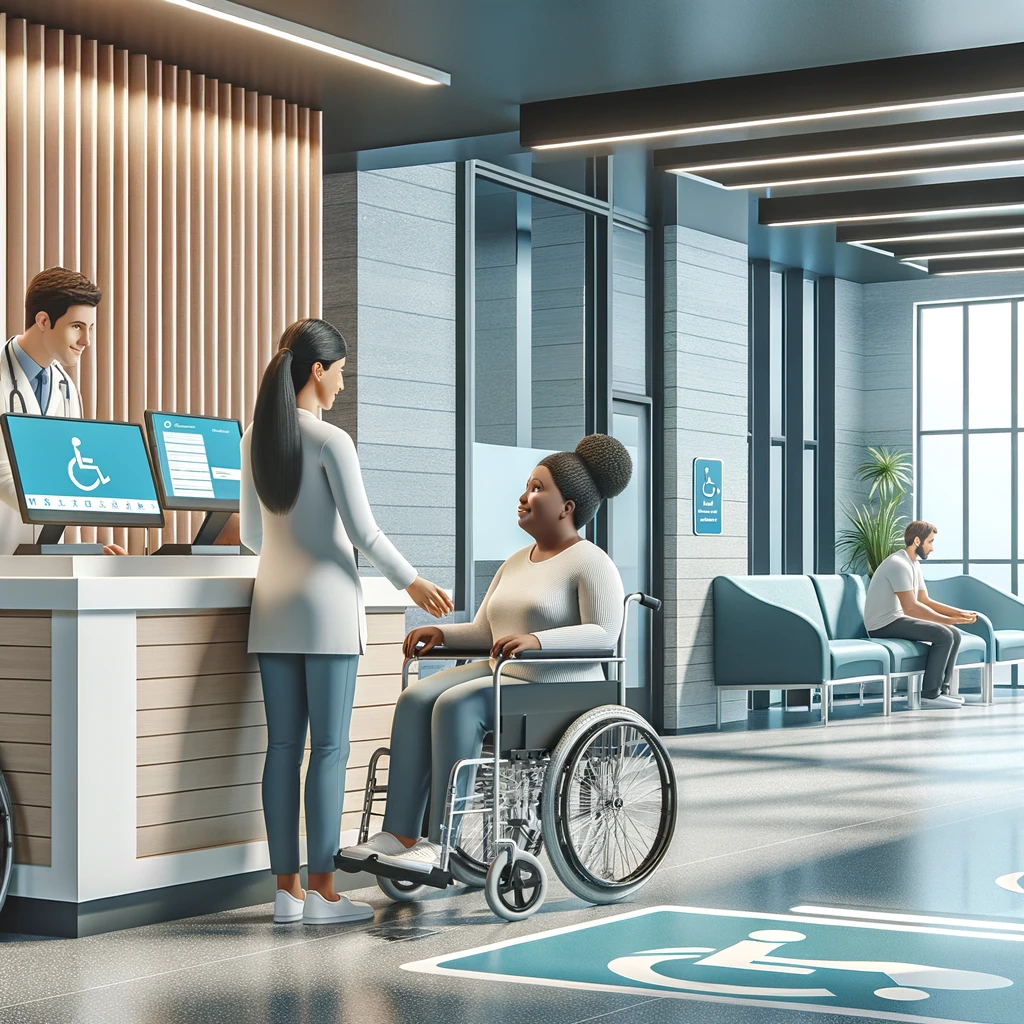
Physical access starts before a visitor reaches the front door. Accessible parking, curb cuts, drop-off zones, route surfaces, entrance hardware, and wayfinding all shape whether the experience is actually usable. Inside the building, access includes circulation width, elevator availability, door pressure, restroom usability, seating, counters, exhibit case height, and emergency egress planning. The 2010 ADA Standards for Accessible Design are the baseline reference, but applying them in museums requires attention to how exhibits change and how crowds alter routes. A compliant hallway can become inaccessible if merchandise racks, stanchions, or portable display plinths narrow the path.
Historic properties create a common advanced issue. Many museums operate in landmarked buildings with stairs, narrow thresholds, and preservation restrictions. Historic status does not erase accessibility duties. Instead, institutions must pursue methods that maximize access without threatening significant historic features. That may mean using a side entrance only if it offers substantially equivalent dignity and convenience, adding platform lifts where feasible, relocating programs to accessible floors, providing high-quality virtual interpretation tied to inaccessible rooms, or redesigning tour routes. In my experience, the strongest institutions document each decision with drawings, preservation input, and alternative access plans rather than relying on “the building is old” as a blanket excuse.
Communication access is often the deciding factor
Many disputes in museums are not about ramps at all; they are about communication. The ADA requires effective communication, which means providing auxiliary aids and services when needed so a visitor can understand, engage with, and participate in programs as effectively as others. In museums and galleries, that can include live captioning for lectures, qualified sign language interpreters for tours, Braille and large-print materials, tactile models, audio description, screen-reader-friendly digital guides, assistive listening systems, and trained staff who know how to deploy them. The correct aid depends on the context and the person’s usual method of communication.
For example, a major exhibition opening may need open captions on all videos, an induction loop or FM assistive listening system at the auditorium, reserved seating with clear sightlines to interpreters, and accessible slides distributed in advance. A small docent tour may require a tactile map, verbal description protocols, and quiet pauses so visitors using interpreters can follow transitions between objects. Museums sometimes make the mistake of offering a printed transcript instead of real-time access during a live event. That is not equivalent participation. Timing matters. Accuracy matters. And the duty extends to websites, ticketing platforms, membership portals, and event-registration forms, where inaccessible PDFs or unlabeled buttons can exclude visitors before they ever arrive.
Policy modifications, sensory access, and service animals
Reasonable modifications are changes to standard rules when necessary to allow equal access, unless the change would fundamentally alter the service or create a direct threat that cannot be mitigated. In museums, this principle appears everywhere: touch restrictions, food policies for diabetic visitors, bag rules affecting medical supplies, early entry for visitors who cannot tolerate crowded lobbies, or permission to sit near artworks when standing for long periods is not possible. Advanced ADA rights questions often involve balancing collections protection and disability access, but the answer is rarely an automatic no. Institutions are expected to explore practical alternatives first.
Sensory access has become especially important. Visitors with autism, PTSD, traumatic brain injury, migraines, anxiety disorders, and sensory processing disabilities may need reduced-noise hours, preview materials, flexible re-entry, low-scent practices, or clear information about flashing lights and immersive sound. These are not merely customer-service upgrades. When implemented as modifications that permit equal participation, they are part of accessibility compliance. Service animals raise another frequent issue. Staff may ask only whether the dog is required because of a disability and what work or task it has been trained to perform. They may not demand documentation, inquire about the nature of the disability, or impose pet-style restrictions. If an animal is out of control or not housebroken, exclusion may be permitted, but access for the handler must still be offered without the animal where possible.
Typical accommodations and where they apply
The most effective museum accessibility programs map accommodations to specific touchpoints. That prevents the common failure in which one department promises access that another department cannot deliver. The table below reflects the categories I see most often during access planning and complaint resolution.
| Visitor need | Common accommodation | Where it applies | Key compliance point |
|---|---|---|---|
| Mobility access | Step-free route, lift, seating, accessible restroom | Entrances, galleries, auditoriums | Access must reach the program, not just the building |
| Hearing access | Qualified interpreter, CART, captions, hearing loop | Tours, lectures, films, ticket desk | Choose aids based on context and visitor need |
| Vision access | Audio description, large print, Braille, tactile models | Exhibits, labels, wayfinding, websites | Information must be perceivable in equivalent form |
| Sensory access | Quiet hours, stimulus warnings, decompression space | Special events, immersive shows, family programs | Policies should reduce avoidable barriers in advance |
| Medical access | Food, water, medication, refrigeration, seating flexibility | Tours, timed entry, security screening | Standard restrictions may need modification |
| Service animal access | Admission with handler, relief-area information | All public areas unless lawful exclusion applies | No documentation demand or pet-fee logic |
Ticketing, digital access, and integrated participation
Accessibility obligations continue through the full visitor journey, including discovery, booking, arrival, and post-visit engagement. If a museum’s website uses inaccessible calendars, image-only seating charts, or payment forms that fail keyboard navigation, the problem is not minor. It can block access to the program itself. While the ADA does not contain a single technical web rule written into the statute, the clearest operational benchmark is conformance work aligned with WCAG 2.1 AA, because that addresses screen-reader compatibility, contrast, captions, focus order, alt text, and error identification. Museums also need accessible event confirmations, maps, and pre-visit instructions.
Integrated participation is another advanced issue. Institutions sometimes segregate disabled visitors unintentionally by routing them to staff entrances, requiring phone-only reservations for accommodations, or offering separate tours instead of making mainstream tours accessible. Separate services can be useful if they add options, such as a dedicated tactile tour, but they cannot become the only realistic path to participation. Timed ticketing illustrates the point. If a gallery offers scarce popular tickets online but tells visitors needing accommodations to email a general inbox for manual processing, equal access may be lost. Best practice is to build accommodation requests into the standard registration workflow, hold a limited release of companion and wheelchair spaces where needed, and empower box-office staff to resolve issues immediately.
How to request accommodations and document barriers effectively
Visitors usually get the best results by making requests as specifically as possible while focusing on functional need rather than disclosing unnecessary medical detail. A strong request identifies the event or exhibit, the date and time, the barrier, and the accommodation that would provide effective access. For example: “I am registered for the curator talk on May 12 and need CART because I cannot reliably access spoken content in a large auditorium.” That is better than a generic statement asking for “help.” Written requests create a record, especially if the institution later fails to respond or offers a substitute that does not work.
Documentation also matters when barriers occur on site. Save screenshots of inaccessible ticketing pages, photograph blocked routes when appropriate, note staff names and exact statements, and record whether you were offered an alternative. Then escalate in order: front-line supervisor, accessibility coordinator, visitor services manager, ADA or Section 504 coordinator if applicable, and formal complaint channels. Public entities often have grievance procedures that must be published. Federal funding may open a complaint path with the relevant agency, and Department of Justice complaints remain available in serious cases. Litigation is sometimes necessary, but many museum disputes resolve faster when the complaint is concrete, tied to legal duties, and paired with a practical solution request. For a Rights and Protections hub, this is the core lesson: know the standard, describe the barrier precisely, and ask for equal participation, not special treatment.
Building a durable accessibility culture inside institutions
The museums that handle advanced ADA rights well do not rely on one annual training or one accessibility statement on a website. They build repeatable systems. That means procurement standards for captions and accessible interactives, design review checklists for temporary exhibitions, contracts requiring interpreters and CART vendors when needed, maintenance logs for lifts and door operators, and emergency plans that include disabled visitors, volunteers, and staff. It also means measuring what happens in practice. Track response times for accommodation requests, the failure rate of assistive listening devices, elevator downtime, caption coverage on videos, and the number of programs with advance accessibility information published online.
Training should be role-specific. Security teams need to understand service animal rules and medication exceptions. Educators need methods for verbal description and flexible participation. Curators and designers need to know sightline ranges, label readability, tactile engagement options, and glare control. Senior leadership must understand that accessibility is a risk-management, audience-development, and mission issue at the same time. The benefit is measurable: better attendance, stronger school partnerships, fewer complaints, and broader community trust. Navigating rights and accommodations in public museums and galleries ultimately means translating civil-rights principles into daily operations. If you are a visitor, advocate, or museum leader, start with one step today: review the next program, identify one likely barrier, and fix it before someone is excluded.
Frequently Asked Questions
What legal rights do visitors with disabilities have in public museums and galleries?
Visitors with disabilities generally have the right to access public museums and galleries on an equal basis with others. In the United States, that right often comes from the Americans with Disabilities Act, Section 504 of the Rehabilitation Act when federal funding is involved, applicable state and local civil rights laws, and the institution’s own access policies. Together, these rules usually require museums and galleries to remove barriers where legally required, provide reasonable modifications to policies and practices, and offer effective communication so that visitors with disabilities can participate in exhibitions, programs, tours, lectures, and other public-facing services.
In practical terms, equal access can cover far more than whether a building has a ramp. It may include accessible entrances, elevators, restrooms, seating options, ticket counters, website and online ticketing access, captioning or assistive listening for audiovisual content, alternative formats for printed materials, and staff procedures for accommodating service animals or mobility devices. A museum or gallery usually cannot deny participation simply because providing access requires planning or adjustment. The legal standard is not perfection in every circumstance, but institutions are expected to take accessibility seriously as a core operational responsibility rather than treat it as an optional courtesy.
That said, rights and obligations can vary depending on the institution’s size, funding, building age, historic status, and governing law. A historic property, for example, may not be required to make changes that would fundamentally alter significant architectural features, but it still must look for other effective ways to provide access. If a visitor encounters barriers, the museum should ideally have a process for requesting accommodations, raising concerns, and obtaining help from trained staff. Clear notice, responsive communication, and consistent implementation are all part of meaningful compliance.
What kinds of accommodations can someone request when visiting a public museum or gallery?
The answer depends on the visitor’s needs and the nature of the museum’s programs, but many accommodations are common and well-established. A visitor may request step-free entry, wheelchair access routes, elevator access to upper floors, accessible seating during lectures or performances, advance entrance for easier navigation, permission to use a mobility device, or assistance locating quieter areas. Visitors who are Deaf or hard of hearing may request captioning, assistive listening devices, sign language interpretation for a scheduled tour or event, or transcripts for media content. Visitors who are blind or have low vision may need large-print materials, audio description, tactile elements where available, wayfinding assistance, or verbal orientation from staff.
Accommodations can also involve policy changes rather than physical features. For example, a museum may need to modify a no-food or no-bag policy to accommodate disability-related medical needs, permit entry with a service animal, or adjust tour procedures to allow extra time or alternate pacing. Some visitors may request sensory-friendly hours, reduced lighting transitions, lower-noise viewing opportunities, or a designated quiet room. Others may need communication supports such as plain-language explanations, written instructions, or staff assistance during check-in and security screening.
It is often best to request accommodations as early as possible, especially for scheduled programs that may require staffing or equipment. However, institutions should also be prepared to respond to day-of needs when reasonable. A good museum will explain what it can provide, ask only for information necessary to understand the request, and work collaboratively to identify an effective solution. The process should feel respectful and practical, not adversarial. If a requested accommodation cannot be provided exactly as asked, the institution should explore alternatives that still allow meaningful access.
Are public museums and galleries required to make historic buildings and exhibitions accessible?
Yes, but the way accessibility is achieved can be more nuanced in historic settings. Many museums and galleries operate in architecturally significant or older buildings, and those institutions still have legal duties to provide access. Historic designation does not create a blanket exemption from disability law. Instead, the law typically recognizes that some structural changes may be limited if they would threaten or destroy the historic significance of a property. Even then, the institution must usually pursue other feasible methods of providing access to the maximum extent possible.
That can mean using an accessible side or alternate entrance if the main entrance cannot be modified without damaging historic features, installing portable or less intrusive access solutions where permitted, relocating certain services or programs to accessible areas, providing virtual or recorded components, or offering staff-guided alternatives that allow visitors to experience the content in a meaningful way. The key point is that the museum cannot simply point to the building’s age and stop there. It must evaluate what can be done and document a thoughtful effort to reduce barriers.
Exhibition accessibility raises similar issues. Even when display cases, room layouts, lighting, or conservation concerns create limits, museums should still work toward inclusive design. Labels should be readable, audiovisual materials should be accessible, pathways should allow navigation, and staff should be prepared to assist. If a tactile experience cannot be offered for preservation reasons, an institution may be able to provide replicas, audio description, detailed verbal interpretation, or digital access tools. Accessibility in historic cultural spaces is often about combining preservation and inclusion rather than choosing one over the other.
Can a museum or gallery deny a service animal, mobility device, or other disability-related aid?
In most cases, public museums and galleries must allow disability-related aids and supports that enable equal access. Service animals are generally permitted under applicable law when they accompany a person with a disability and are individually trained to perform tasks or work related to that disability. Staff are usually limited in what they may ask and cannot demand documentation simply because a visitor arrives with a service animal. They may typically ask whether the animal is required because of a disability and what work or task it has been trained to perform, if the need is not obvious. The institution also cannot isolate the visitor or impose extra fees because of the animal.
Mobility devices are also broadly protected, though institutions may adopt legitimate safety rules. Wheelchairs and manually powered mobility aids are generally allowed. Other power-driven mobility devices may also need to be permitted unless the museum can show that a specific device cannot be operated safely in that setting based on actual risk factors such as space constraints, terrain, or crowd conditions. Blanket assumptions are risky. A museum should assess real conditions, not stereotypes about disability or equipment.
As for other aids, such as oxygen equipment, communication devices, medications, or sensory supports, museums should usually allow them unless there is a truly compelling reason not to. Even then, they should consider whether a policy modification can resolve the concern. A visitor may be asked to control a service animal that is out of control or remove an animal that is not housebroken, but the institution must still try to offer the person access without the animal when possible. The overall rule is that disability-related aids should not be excluded casually; any restriction should be grounded in law, safety, and a genuine effort to preserve equal participation.
What should someone do if a public museum or gallery refuses an accommodation or creates access barriers?
The first step is often to raise the issue clearly and calmly with staff, ideally a supervisor, accessibility coordinator, visitor services manager, or another person authorized to resolve concerns. Many problems are caused by inconsistent training rather than intentional discrimination, and they can sometimes be fixed quickly on site. It helps to describe the barrier in concrete terms, explain the accommodation needed, and, if relevant, reference the institution’s published accessibility information. Taking notes about who was contacted, when the problem occurred, and how staff responded can be useful if the issue continues.
If the barrier is not resolved, the visitor can usually follow the museum’s internal complaint or grievance process. Institutions covered by federal law, especially those receiving federal funds, may have formal procedures for disability-related complaints. A written complaint should explain what happened, why the response was inadequate, and what remedy is being requested. Depending on the circumstances, the person may also contact a governing agency, civil rights office, state human rights body, or legal counsel for guidance. For federally funded entities, Section 504 complaint channels may be relevant, and Title II or Title III ADA enforcement options may apply depending on the museum’s structure and ownership.
It is also important to think beyond the individual incident. Repeated failures with ticketing, wayfinding, communication access, or exhibit design can signal a broader compliance problem. Advocating for change may involve requesting policy updates, staff retraining, website corrections, or better accommodation procedures for future visitors. Many institutions will respond positively when concerns are documented and framed around equal participation. When they do not, formal complaint mechanisms exist for a reason. Public museums and galleries serve the community, and accessibility is part of that public mission, not an optional extra.