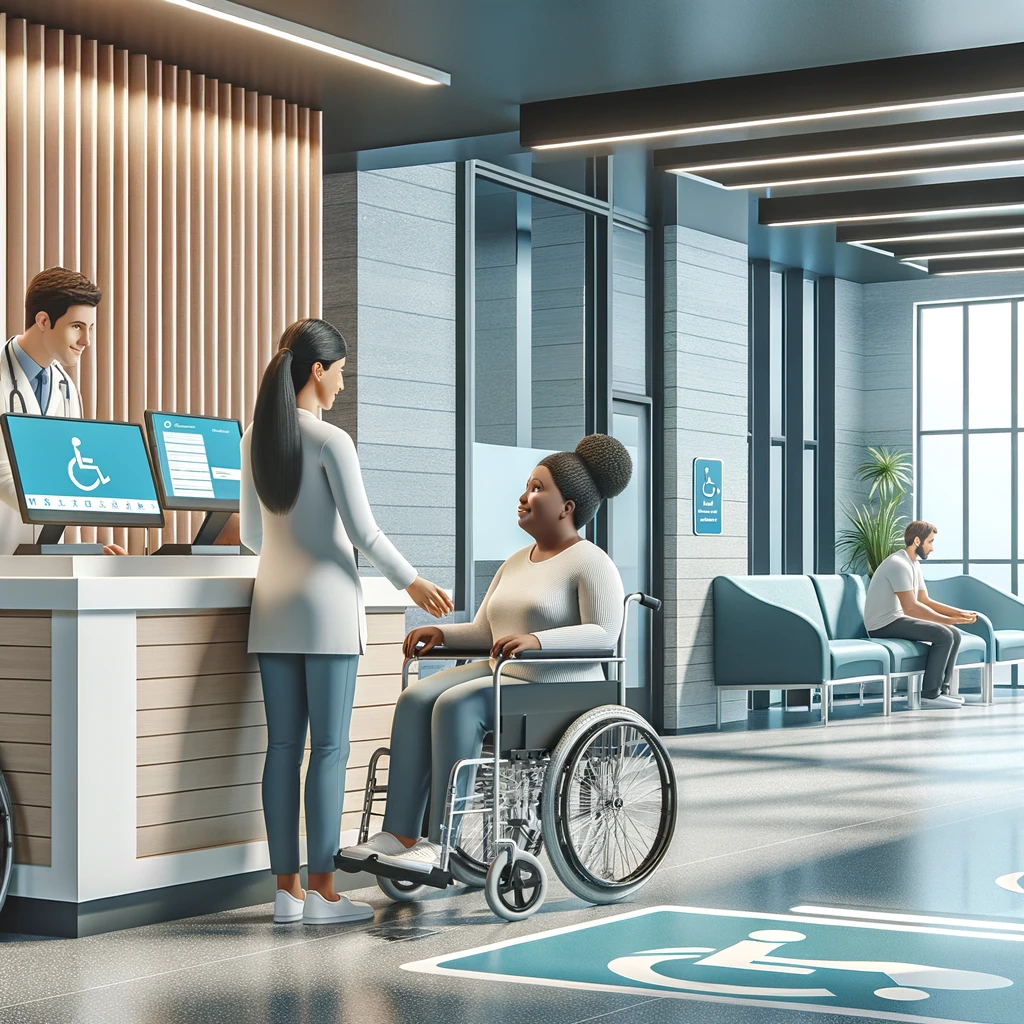
Legal rights for mobility impairments in various settings shape whether people can work, learn, travel, receive care, and participate in daily life with safety and dignity. Mobility impairment is a broad term covering conditions that substantially limit walking, standing, climbing stairs, balancing, lifting, or using arms and hands for movement, whether the cause is spinal cord injury, cerebral palsy, multiple sclerosis, arthritis, limb loss, muscular dystrophy, stroke, chronic pain, or another physical condition. In practice, these rights often turn on one central question: does a policy, building feature, transportation rule, or service method exclude a person who uses a wheelchair, scooter, walker, cane, prosthetic device, brace, or other mobility aid when equal access is legally required?
The answer is usually governed by a network of disability laws, building standards, agency rules, and court decisions, with the Americans with Disabilities Act at the center in the United States. I have worked with accessibility audits, accommodation requests, and complaint documentation, and the most common misconception I see is that access means only ramps and parking. In reality, advanced ADA rights include program access, effective policy modification, accessible digital interfaces linked to physical services, maintenance of accessible features, emergency procedures, and protection against retaliation when someone asks for equal treatment.
This hub article explains those advanced topics across employment, public services, businesses open to the public, housing-related intersections, transportation, education, health care, and civic life. It also clarifies key terms that matter in disputes: reasonable accommodation, reasonable modification, undue hardship, direct threat, fundamental alteration, accessible route, service counter access, and auxiliary aids that interact with mobility access. The subject matters because mobility barriers are often built into ordinary systems. A heavy manual door, an exam table that does not lower, a stage reachable only by stairs, or a policy banning devices can block opportunity as completely as a locked gate. Understanding rights across settings helps people identify violations early, request fixes effectively, and connect this hub to more specialized guidance on complaints, documentation, and enforcement.
Employment Rights and Workplace Accommodations
In employment, the ADA generally requires covered employers to provide reasonable accommodations to qualified employees and applicants with disabilities unless doing so would create undue hardship. For mobility impairments, that duty reaches far beyond wheelchair access. It may include reserved accessible parking close to an entrance, relocation of a workstation to an accessible floor, automatic door openers, height-adjustable desks, voice-controlled software when hand use is limited, modified schedules to reduce fatigue, remote work when essential functions can still be performed, accessible restrooms, ergonomic seating, or reassignment to a vacant position when no other accommodation works.
The legal analysis starts with essential functions, not job traditions. If a manager says standing all day is required for a retail role, that claim should be tested against the actual tasks. Could the employee use a stool at a register? Could stocking duties be redistributed if they are marginal rather than essential? The Equal Employment Opportunity Commission has repeatedly emphasized individualized assessment. Blanket assumptions about safety, speed, or customer preference do not satisfy the law. I have seen employers solve access problems quickly when they map tasks one by one instead of relying on outdated job descriptions.
Application and hiring stages also matter. Employers must make the process accessible, from online applications linked to keyboard navigation to interview locations reachable by elevator. They cannot ask disability-related questions before a conditional offer except in narrow circumstances, and they cannot reject an applicant because a mobility aid makes others uncomfortable. If a preemployment test requires physical movement unrelated to the job, that screening tool may be unlawfully exclusionary.
State and Local Government Programs, Courts, and Civic Services
Title II of the ADA covers state and local government services, programs, and activities. This means access is measured not only at a building entrance but across the entire program. A city may operate some older facilities that are not fully barrier free, yet it still must ensure program access when viewed in its entirety. In plain terms, if a parks department offers permit applications only at an upstairs counter with no elevator, the city cannot defend that system by pointing to unrelated accessible offices elsewhere. The service itself must be meaningfully accessible.
Courts are a critical advanced topic. People with mobility impairments have the right to attend hearings, serve as jurors when otherwise qualified, meet counsel, and use clerk services without avoidable barriers. Accessible witness stands, jury boxes, holding areas, podiums, and routes are part of equal participation. Emergency evacuation planning in public buildings is also a legal and operational issue. A courthouse that installs a ramp but has no evacuation chair policy for upper floors has not fully addressed access risk.
Voting is another area where rights become practical. Accessible parking, curb cuts, route width, door pressure, booth placement, and seated voting options all matter. The ADA and related election standards do not guarantee perfection at every temporary polling site, but they do require jurisdictions to remove barriers where readily achievable and to provide alternative methods when a site cannot be made accessible. Government websites that direct residents to permit systems, transit notices, or public meetings must also work with accessibility features, because a physically accessible office is not enough when the gateway service is digital.
Businesses Open to the Public and the Duty to Remove Barriers
Hotels, restaurants, stores, theaters, banks, gyms, professional offices, stadiums, museums, and many online-connected service providers are generally covered as public accommodations. Their obligations include removing architectural barriers in existing facilities when removal is readily achievable, following ADA Standards for new construction and alterations, and making reasonable modifications to policies and practices. For mobility impairments, common violations include inaccessible entrances, aisles narrowed by merchandise, dining tables fixed too closely together, service counters too high for seated customers, inaccessible fitting rooms, and restroom grab bars installed incorrectly.
Readily achievable barrier removal depends on difficulty and expense in light of the business’s resources. A national chain may be expected to do more than a small single-location shop. Still, many high-impact changes are modest: adding offset hinges to widen a doorway, lowering a paper towel dispenser, re-striping parking, installing lever hardware, or rearranging furniture to preserve an accessible route. Maintenance is part of compliance. An accessible entrance blocked by deliveries, a broken lift left unrepaired, or snow piled into curb ramps can create an ADA problem even if the original design was compliant.
Policy modification disputes are often misunderstood. A business may need to allow a person to keep a mobility scooter nearby, retrieve goods from high shelves when reach is limited, or permit use of a side entrance if the main route has stairs. It does not have to make changes that fundamentally alter the service or pose a genuine safety threat, but those defenses require evidence, not speculation.
Transportation, Ride Services, and Travel Access
Mobility rights in transportation involve ADA rules, Department of Transportation regulations, Air Carrier Access Act requirements for air travel, and operator-specific procedures. Public transit agencies must provide accessible buses with lifts or ramps, stop announcements, securement areas, and complementary paratransit for riders who cannot use fixed routes because of disability. Eligibility assessments for paratransit must be individualized. Agencies cannot lawfully use narrow stereotypes such as “can use a wheelchair, therefore can use the bus” without considering terrain, distance to stops, weather exposure, transfer complexity, and destination barriers.
Rail and intercity bus systems present additional issues, including platform gaps, boarding assistance, accessible restrooms, and station circulation routes. Air travel is governed differently from the ADA, but it is essential in any advanced mobility rights hub because travelers regularly face wheelchair damage, unsafe transfers, and inadequate aisle chair assistance. Airlines must provide prompt enplaning and deplaning assistance, accessible seating-related accommodations within regulatory limits, and careful handling of wheelchairs and scooters. A damaged customized wheelchair is not a minor inconvenience; it can be the loss of a person’s legs, posture support, and independence for weeks.
| Setting | Typical Mobility Right | Common Violation | Practical Documentation |
|---|---|---|---|
| Workplace | Reasonable accommodation | Refusal to modify workstation | Email requests, doctor note if needed, job duty list |
| City services | Program access | Only accessible route closed | Photos, dates, office contacts, denial records |
| Retail or restaurant | Barrier removal and policy modification | Aisles blocked or inaccessible seating | Measurements, receipts, witness names, images |
| Transit | Lift access and paratransit eligibility | Repeated pass-bys or improper denial | Trip logs, vehicle numbers, recordings where lawful |
| Health care | Accessible medical equipment and transfers | Exam only from wheelchair without transfer option | Visit summary, provider names, equipment photos |
Ride-share and taxi access remains uneven. Some cities require wheelchair-accessible taxi service levels, while app-based providers have faced litigation over inaccessible options and wait times. The legal landscape varies, but the practical principle is clear: if a transportation network becomes a primary gateway to jobs, medical care, and public life, inaccessible service can produce broad exclusion.
Education, Health Care, and Housing Intersections
Schools, colleges, clinics, hospitals, and housing providers create some of the most consequential mobility access disputes because barriers here affect long-term stability. In education, ADA rights often overlap with Section 504 and, for younger students, the Individuals with Disabilities Education Act. A student with a mobility impairment may need accessible classrooms and labs, elevator access, field trip transportation, dorm modifications, evacuation planning, adaptive physical education, and attendance flexibility during flare-ups or treatment. Colleges cannot simply move one class and ignore inaccessible advising offices, libraries, or student events.
Health care settings remain a major compliance gap. The Department of Justice has emphasized that accessible care includes more than an accessible entrance. Patients may need height-adjustable exam tables, wheelchair-accessible weight scales, transfer supports, mammography positioning adjustments, and staff trained in safe transfers. Examining a patient in their wheelchair instead of on a proper table can compromise diagnostic quality and privacy. In my experience, providers often focus on goodwill and miss the operational piece: equipment purchasing, staff training, scheduling protocols, and maintenance logs determine whether access actually exists on the day of care.
Housing rights are primarily addressed through the Fair Housing Act and Section 504 in federally assisted housing, but they intersect constantly with ADA-covered settings such as leasing offices, amenity spaces, and local housing authority programs. Tenants may be entitled to reasonable accommodations in rules, such as assigned accessible parking or flexibility on payment methods linked to disability needs, and reasonable modifications in the unit at the tenant’s expense in many private settings. The advanced point is that people often move through multiple legal frameworks at once. A wheelchair user dealing with an inaccessible apartment complex may have one set of rights for the rental office, another for the unit, and another for the city inspection process.
Enforcement, Documentation, and Strategic Next Steps
Knowing the rule is only the first step; enforcement determines outcomes. Mobility access claims may be pursued through internal grievance procedures, HR accommodation channels, state human rights agencies, the Equal Employment Opportunity Commission, the Department of Justice, the Department of Transportation, the Department of Housing and Urban Development, state licensing boards, or private lawsuits. Deadlines vary, and some claims require administrative filing before suit. Because of that, documentation should begin immediately. Save emails, photograph barriers with date stamps, note measurements when relevant, keep receipts, record names and titles, and write a short timeline while details are fresh.
Requests should be clear and solution oriented. Instead of saying “this place is inaccessible,” say “I use a power wheelchair and cannot pass through the 28-inch interior doorway to reach the exam room; I am requesting relocation to an accessible room and an accessible route at future visits.” Specific requests help decision makers evaluate options and help investigators see the precise barrier. When a business or agency offers an alternative, assess whether it provides equal access, not merely some access. Being told to enter through a loading dock, wait for staff at the back alley, or receive services in a separate location may raise dignity and equality concerns even if it technically gets a person inside.
Retaliation is illegal. An employer cannot punish a worker for requesting accommodation, a city cannot target a resident for complaining about an inaccessible hearing room, and a business cannot lawfully intimidate a customer for asserting access rights. That protection matters because many people hesitate to speak up until barriers become severe.
The strongest approach is informed persistence. Learn which law applies in the setting, anchor requests in concrete facts, escalate through the correct channel, and connect this hub article to deeper resources on employment accommodations, public access complaints, transit rights, health care accessibility, housing modifications, and litigation strategy. Legal rights for mobility impairments are not abstract promises. They are enforceable tools for entering buildings, using services, doing jobs, obtaining treatment, and participating fully in community life. If you are facing a barrier, start documenting today, make a specific written request, and use the next linked guide in this rights and protections hub to choose the most effective path forward.
Frequently Asked Questions
What legal rights do people with mobility impairments generally have in everyday settings?
People with mobility impairments generally have the right to access public life on equal terms, free from discrimination and unnecessary barriers. In practice, that often means businesses, schools, employers, health care providers, transportation systems, housing providers, and government agencies must avoid policies or physical conditions that unfairly exclude someone because of difficulty walking, standing, balancing, climbing stairs, transferring, or using arms and hands for movement. Depending on the setting and the law that applies, those rights may include accessible entrances and routes, usable restrooms, parking and drop-off access, effective emergency procedures, reasonable policy modifications, and accommodations that allow a person to participate safely and independently.
These rights usually do not depend on a single diagnosis. Mobility impairment is a broad category that can include spinal cord injuries, cerebral palsy, arthritis, multiple sclerosis, limb loss, muscular dystrophy, stroke-related limitations, chronic pain conditions, and many others. The legal focus is often on how a condition substantially limits major life activities rather than on a label alone. That matters because two people with very different medical histories may still have similar rights if they face comparable barriers in work, education, transit, housing, or public accommodations.
It is also important to understand that equal access is not limited to wheelchair ramps. Legal protections may address narrow aisles, inaccessible seating, exam tables that cannot be transferred onto, inflexible attendance or break policies, transportation boarding procedures, inaccessible housing common areas, or rules that ignore a person’s need for adaptive equipment. In many systems, organizations are expected to make reasonable changes unless doing so would create an undue hardship, fundamentally alter the nature of a program or service, or pose a legitimate safety issue that cannot be reduced through accommodation. Those exceptions exist, but they are usually narrower than many people assume.
How do legal rights for mobility impairments apply at work?
In the workplace, the core legal principle is that qualified employees and job applicants with mobility impairments should have a fair opportunity to perform essential job functions and enjoy equal employment opportunities. Employers are often prohibited from discriminating in hiring, firing, pay, promotion, training, job assignments, and other terms of employment because of disability. They may also be required to provide reasonable accommodations when an employee or applicant needs one due to a mobility-related limitation.
Reasonable accommodations at work can take many forms. Examples include accessible workstations, adjustable desks, modified schedules, extra time to move between work areas, telework where appropriate, reassignment of marginal tasks, reserved accessible parking, relocation of meetings to accessible rooms, accessible bathrooms and break areas, leave for treatment or recovery, and equipment that supports safe movement or hand use. The exact accommodation depends on the person’s limitations and the actual demands of the job. Employers are typically allowed to ask for limited documentation when a disability or need for accommodation is not obvious, but they generally should not demand excessive medical detail unrelated to the request.
A key concept is the interactive process. That means the employer and employee should communicate in good faith to identify effective accommodations. An employer does not always have to provide the employee’s first choice, but it usually must consider workable options that meaningfully address the limitation. If an employer denies an accommodation, the reason should connect to a real legal standard, such as undue hardship or inability to perform essential job functions even with accommodation, not to assumptions, stereotypes, or inconvenience alone. If barriers continue, employees often benefit from making requests in writing, saving job descriptions, documenting denied access or comments, and reviewing internal complaint procedures and external enforcement options.
What protections exist for students and others with mobility impairments in schools, colleges, and training programs?
In educational settings, students with mobility impairments generally have the right to access academic programs, school facilities, extracurricular activities, and support services without discrimination. These protections can apply in K-12 schools, colleges, universities, vocational programs, and other training settings, although the legal framework and procedures may differ by age and institution. Broadly, schools may need to provide accommodations, remove avoidable physical barriers, and ensure that students are not excluded from participation because buildings, transportation, policies, or classroom practices fail to account for mobility-related needs.
Examples of educational accommodations include accessible classrooms and laboratories, elevator access, adjustable seating, accessible transportation, extended passing time between classes, relocation of classes from inaccessible rooms, modified physical education requirements when appropriate, accessible field trip planning, and emergency evacuation procedures that do not leave students behind. In higher education, students often request accommodations through a disability services office, while in elementary and secondary education, supports may be delivered through formal plans depending on the student’s needs and the governing law. The names of the plans and procedural rights may vary, but the central issue is whether the student can access the educational program in a meaningful way.
Schools should not treat accessibility as an afterthought. A student should not have to repeatedly prove their worthiness to attend class, join clubs, use campus housing, or participate in ceremonies because a route is blocked, a program is scheduled in an inaccessible building, or staff assume physical limitations mean reduced academic ability. If a student encounters barriers, it helps to document inaccessible locations, keep copies of accommodation requests and responses, note deadlines or missed opportunities caused by inaccessibility, and escalate concerns through disability services, school administration, grievance procedures, or outside enforcement channels when necessary. The law generally expects institutions to address access proactively and individually, not by relying on blanket rules.
What are the legal rights of people with mobility impairments in public places, transportation, housing, and health care?
Across public places and essential services, legal rights usually focus on accessibility, non-discrimination, and equal participation. In businesses and public accommodations, that can include accessible entrances, interior routes, seating, service counters, fitting rooms, restrooms, and policies that do not exclude people who use wheelchairs, walkers, canes, scooters, braces, or other mobility devices. Staff should not impose separate or lesser service simply because assisting someone may take more time. A person with a mobility impairment generally has the right to receive the same goods and services available to others in an accessible manner.
Transportation rights often include accessible vehicles or boarding options, priority seating, stop announcements, lift or ramp functionality, securement areas, and procedures that allow riders with mobility impairments to use the system safely and with dignity. Paratransit or equivalent services may also be required in some systems when fixed-route transit is not usable by a rider because of disability. Problems can arise when drivers skip stops, fail to deploy equipment, refuse mobility devices, or do not follow safety protocols. Those issues are not merely customer service concerns; they may raise serious legal access questions.
In housing, tenants and applicants with mobility impairments may have rights relating to non-discrimination, reasonable accommodations in rules or policies, and in many cases reasonable modifications to make a home usable. Common examples include reserved accessible parking, permission for a ramp or grab bars, relocation to a more accessible unit when available, accessible common areas, and flexibility in procedures that otherwise create unnecessary barriers. In health care, access may include physical accessibility of clinics and hospitals, accessible exam rooms and equipment, safe transfer assistance policies, and equal access to treatment decisions. A provider should not deny or reduce care because a patient needs more time, transfer support, or accessible equipment. In all of these settings, details matter, and documentation of barriers, dates, names, and the impact on access can be very helpful if a complaint becomes necessary.
What should someone do if they believe their legal rights related to a mobility impairment have been violated?
If someone believes their rights have been violated, the first step is often to document exactly what happened. That includes saving emails, letters, text messages, photographs of inaccessible features, medical or accommodation paperwork, witness names, and a timeline of events. It is useful to record what barrier existed, when it happened, who was notified, how it affected participation or safety, and whether any alternative was offered. Clear records can strengthen an informal resolution effort and become critical if the issue later moves into a formal complaint, administrative investigation, or lawsuit.
Next, the person can usually raise the issue directly with the organization involved. That might mean contacting human resources at work, a disability services or compliance office at school, a patient relations department in health care, a transit authority complaint unit, a housing provider or property manager, or a business manager. A written request or complaint is often best because it creates a paper trail. The message should explain the mobility-related barrier, the legal concern in plain language, the accommodation or fix being requested, and any urgency, such as missed work, inability to attend class, unsafe transfers, or blocked access to essential services.
If the problem is not resolved, there may be internal grievance systems, government agencies, advocacy organizations, ombuds offices, fair housing agencies, labor or civil rights enforcement bodies, or private attorneys who handle disability rights matters. Deadlines can be short, so waiting too long can limit options. When possible, people should preserve evidence, avoid signing agreements they do not fully understand, and seek legal advice tailored to the specific setting and jurisdiction. Most importantly, a person does not need to accept inaccessible treatment as normal. Legal protections for mobility impairments exist to promote equal access, independence, safety, and dignity, and they can often be enforced when organizations fail to meet their obligations