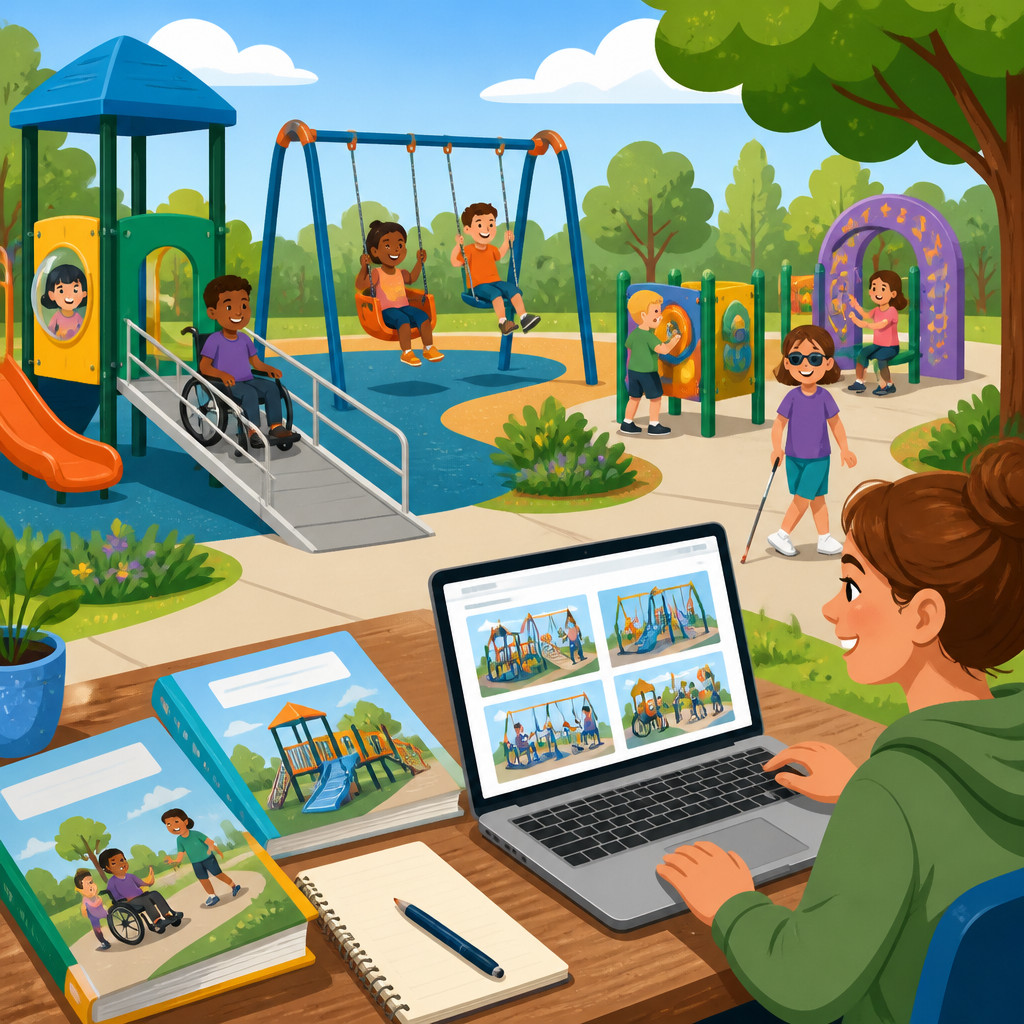
Accessible playground and recreation design guides help cities, schools, parks departments, landscape architects, and community groups create spaces that people with disabilities can use with dignity, independence, and safety. In practical terms, these guides translate broad civil rights requirements into decisions about routes, surfacing, transfer systems, elevated play components, sensory features, sports access, restrooms, picnic areas, and maintenance. I have worked with project teams that assumed accessibility ended with a ramp and a compliant parking stall; once we reviewed the relevant guidance, they quickly saw that an inclusive recreation environment depends on hundreds of linked choices. For anyone managing public space, understanding where to find accessible design guides for playgrounds and recreation is not optional. It directly affects legal compliance, capital planning, community trust, and whether children and adults can genuinely participate.
The most important starting point is to distinguish accessible design from inclusive design. Accessible design usually refers to meeting enforceable standards such as the 2010 ADA Standards for Accessible Design and the U.S. Access Board’s recreation guidance. Inclusive design goes further by considering a wider range of physical, sensory, cognitive, and social needs, including features that may not be strictly required by regulation. A playground can technically comply yet still exclude children who need quiet retreat spaces, predictable wayfinding, high-contrast information, supportive swing seats, or ground-level social play. Good guides explain both the minimum legal baseline and the better-practice strategies that make a site welcoming in everyday use.
This matters because recreation is a public health issue, an equity issue, and a risk-management issue. According to the Centers for Disease Control and Prevention, disability affects a substantial share of the U.S. population, and barriers in the built environment are a major reason people are prevented from participating fully in community life. When playgrounds, trails, splash pads, campsites, and sports facilities are designed well, they support exercise, social development, and family participation across generations. When they are designed poorly, agencies face complaints, retrofit costs, reputational damage, and sometimes litigation. The most reliable path is to use specialized ADA resources and support from recognized authorities, then connect those sources to project-specific planning, design, procurement, and maintenance decisions.
Start with the primary legal and technical sources
The first place to look for accessible playground and recreation design guides is the set of primary sources that define the baseline. In the United States, that means the ADA.gov website for regulatory information, the U.S. Department of Justice for enforcement context, and the U.S. Access Board for technical criteria and official guidance. For playgrounds specifically, the Access Board’s guide on play areas is foundational because it explains how requirements apply to ground-level and elevated components, accessible routes, transfer systems, and the number of components that must be accessible. For broader recreation, the Board also provides guidance related to boating facilities, fishing piers, golf, miniature golf, sports facilities, trails, and picnic or camping elements.
These documents matter because secondary articles often oversimplify. I regularly see summaries that confuse ASTM safety standards with ADA accessibility requirements, or that imply every playground must provide the same equipment mix regardless of site constraints. The primary guidance is more precise. It distinguishes between what is legally required, what is recommended, and what depends on the type and size of the play area. If you are writing specifications, reviewing shop drawings, evaluating existing conditions, or responding to a complaint, use the original source first and treat manufacturer brochures as supplementary.
Use standards organizations and safety bodies for interpretation
After reviewing the legal baseline, the next level is standards and safety interpretation. ASTM International publishes standards that affect playground surfacing, equipment performance, and impact attenuation, including ASTM F1292 for impact attenuation and ASTM F1951 for determining accessibility of surface systems under and around playground equipment. The Consumer Product Safety Commission publishes the Public Playground Safety Handbook, which is not an accessibility code but is essential because a design that creates access while introducing entrapment, fall, or supervision hazards is not successful. Accessibility and safety need to be coordinated, not treated as separate workstreams.
This is where many teams benefit from specialized support. For example, an accessible route to a play structure may appear compliant on paper, but if the chosen loose-fill surface does not perform consistently under ASTM F1951 in field conditions, wheelchair mobility can fail in real use. Likewise, poured-in-place rubber may offer strong access performance but can deteriorate if drainage, subgrade preparation, or maintenance funding are inadequate. Good design guides explain these tradeoffs and point readers toward lifecycle thinking, not just initial installation.
Look to federal land and public recreation agencies for applied guidance
Federal agencies provide some of the most practical accessible recreation design guides because they deal with real sites, uneven terrain, budget limitations, and varied user groups. The U.S. Forest Service has long-standing trail accessibility guidance and outdoor recreation resources that are useful even for local park planners. The National Park Service publishes accessibility resources for outdoor developed areas, visitor facilities, and interpretive settings. State parks systems, county park agencies, and departments of natural resources often publish design manuals, transition plans, and accessibility assessments that show how standards are applied in existing landscapes.
These sources are especially helpful for projects beyond the neighborhood playground. If you are planning accessible beaches, nature play spaces, campgrounds, fishing access, picnic shelters, trailheads, or viewing platforms, general building accessibility guides will not answer enough site-specific questions. Agency manuals often include details on running slopes, cross slopes, edge protection, resting intervals, outdoor surfaces, signing, and maintenance in weather-exposed environments. They also reveal operational realities, such as how accessible routes are kept passable after storms or how wayfinding is adjusted for visitors with low vision.
Use nonprofit and advocacy organizations to broaden beyond minimum compliance
Specialized ADA resources and support also come from disability advocacy organizations, inclusive play nonprofits, and technical assistance centers. The National Center on Accessibility, founded at Indiana University, has been one of the strongest long-term sources for recreation accessibility research, training, and archived technical information. Organizations such as PlayCore’s Center for Outreach, Research & Education, Shane’s Inspiration, and disability-led advocacy groups often publish planning tools, case studies, and checklists focused on inclusion, social play, and user experience. These are valuable because they translate standards into the lived reality of children, caregivers, veterans, and older adults.
In my experience, advocacy sources are where project teams first understand that accessibility is not only about entering a space but about participating meaningfully once there. A wheelchair-accessible merry-go-round, a communication board for non-speaking users, shaded seating near play zones, and an accessible family restroom can dramatically change whether a family stays for ten minutes or two hours. The strongest nonprofit guides include direct user perspectives, which can reveal blind spots that a code summary never will.
Evaluate manufacturer guides carefully and verify every claim
Manufacturers of playground equipment, surfacing systems, site furnishings, and recreation amenities publish many of the guides that appear in search results, and some are genuinely useful. Reputable companies often provide dimensional diagrams, maintenance recommendations, ASTM references, and examples of accessible layouts. They can also help explain how transfer platforms, ramps, inclusive swings, ground-level activities, and unitary surfacing work together. However, these materials should never be your sole authority because they are inherently sales-adjacent and may emphasize products over planning.
A disciplined approach is to use manufacturer guides for product-level details, then verify conformance against the ADA Standards, Access Board guidance, and applicable safety standards. Ask for test reports, installation tolerances, maintenance requirements, and field performance data. If a vendor says a surface is wheelchair accessible, request the relevant test basis and clarification on routine maintenance needed to preserve usability. If an equipment package is marketed as inclusive, ask how many meaningful play experiences are available at ground level, whether sensory users are supported, and whether circulation works for caregivers with mobility devices.
| Source type | Best use | Main strength | Key limitation |
|---|---|---|---|
| ADA.gov and DOJ | Legal baseline and enforcement context | Authoritative regulatory information | Less detailed on design implementation |
| U.S. Access Board | Technical criteria for play and recreation | Precise scoping and application guidance | Requires careful reading by non-specialists |
| ASTM and CPSC | Safety and surface performance | Strong technical standards | Accessibility still must be cross-checked separately |
| Federal and state park agencies | Outdoor recreation and site-specific application | Real-world examples in varied terrain | May reflect agency-specific practices |
| Nonprofits and advocacy groups | Inclusive design strategies and user perspective | Practical, human-centered insights | Not always enforceable guidance |
| Manufacturers | Product details and layout concepts | Specific equipment information | Potential commercial bias |
Find local support through ADA coordinators, state programs, and design professionals
If you need help interpreting accessible design guides for playgrounds and recreation, local support matters. Public entities covered by the ADA often have an ADA coordinator, facilities department, or risk manager who tracks transition plans and complaint procedures. State accessibility offices, university technical assistance centers, and regional disability councils can also point you toward useful references and reviewers. On capital projects, experienced landscape architects, architects, recreation planners, and certified playground safety inspectors provide a critical layer of application that generic articles cannot replace.
When I review project teams that get accessibility right early, they usually do three things. First, they involve disability stakeholders before concept design is fixed. Second, they assign one person to maintain a source hierarchy so the team knows which guidance controls. Third, they document decisions on routes, surfacing, equipment counts, and maintenance responsibilities before bidding. This reduces redesign and prevents the common problem where an accessible concept is quietly undermined during value engineering or installation substitutions.
How to judge whether a guide is credible and useful
Not every guide deserves equal trust. A credible accessible recreation guide will identify the issuing organization, date, scope, and the standards it interprets. It will distinguish clearly between legal requirements, recommended practices, and optional enhancements. It will use correct terminology, such as accessible route, transfer platform, clear ground space, operable part, and protruding object, instead of vague language like handicap friendly. It will also acknowledge tradeoffs. For example, it should explain that unitary surfacing may improve mobility but requires ongoing inspection for seam separation, shrinkage, and wear.
Look for evidence of field application. Strong guides include dimensioned examples, maintenance notes, outdoor constraints, or case studies that explain what worked and what failed. They cite recognized sources, including the U.S. Access Board, DOJ, ASTM, CPSC, or state accessibility programs. They avoid sweeping promises such as universally accessible for every disability. Most importantly, they answer the practical questions decision-makers actually have: Which features are required, how many are needed, what surfaces perform well, how should routes connect amenities, and who maintains access after opening day?
Build a resource library that supports the full project lifecycle
Because this page serves as a hub for specialized ADA resources and support, the smartest approach is to build a structured library rather than relying on one article or checklist. At minimum, keep current copies or links for the ADA Standards, Access Board recreation guidance, key ASTM and CPSC references, agency manuals for outdoor recreation, disability advocacy design resources, and vetted manufacturer technical sheets. Organize them by project stage: planning, design, procurement, construction, inspection, and operations. Include related topics your team will likely need next, such as accessible restrooms, parking, routes, sports fields, aquatics, signage, and maintenance protocols.
This hub approach has a direct benefit. It lets organizations connect broad policy to individual project decisions and future internal guidance. A parks department may start by searching where to find accessible design guides for playgrounds and recreation, then realize it also needs templates for public engagement, accessibility review checklists, surfacing maintenance logs, and procurement language that prevents noncompliant substitutions. Building that network of resources turns accessibility from a one-time compliance exercise into a repeatable operating standard.
Accessible design guides for playgrounds and recreation are easiest to find when you know the source hierarchy. Start with the legal and technical authorities, especially ADA.gov, the Department of Justice, and the U.S. Access Board. Add safety and performance references from ASTM and the Consumer Product Safety Commission. Expand into federal and state recreation agency manuals for outdoor applications, then use nonprofit and advocacy resources to strengthen inclusion beyond minimum compliance. Finally, rely on experienced local professionals and stakeholders to interpret those guides on real sites.
The central takeaway is simple: the best accessible recreation projects are built from multiple trustworthy sources, not a single checklist. Good teams verify product claims, balance safety with usability, plan for maintenance, and involve disabled users early enough to shape the outcome. If you are building out your Resources and Support library, use this hub as your starting map, then connect it to deeper guides on playground surfacing, inclusive equipment selection, outdoor routes, sports access, restrooms, and recreation program policies. Gather your core references now, review your next project against them, and make accessibility a standard part of every recreation decision.
Frequently Asked Questions
Where can I find reliable accessible design guides for playgrounds and recreation spaces?
The best place to start is with primary sources and established technical organizations. In the United States, the U.S. Access Board is one of the most important references because it publishes accessibility guidelines that inform how playgrounds and recreation facilities should be designed. Those resources are especially useful for understanding requirements related to accessible routes, play components, transfer systems, ramps, ground-level access, and recreation amenities. The Americans with Disabilities Act standards and supporting federal guidance are also essential because they provide the legal framework that public entities, schools, and many community organizations must consider when planning or renovating a site.
Beyond federal sources, strong accessible design guides can often be found through state parks departments, municipal accessibility offices, school facilities agencies, and professional associations tied to landscape architecture, parks and recreation, or inclusive design. Many of these groups publish handbooks, technical bulletins, and design checklists that translate regulations into practical site decisions. Manufacturers of playground and recreation equipment may also provide planning guides, though those should be used carefully and cross-checked against official standards. The most dependable approach is to combine legal requirements, technical accessibility guidance, and real-world design resources so your team is not relying on a single checklist or product brochure.
What should a good accessible playground or recreation design guide cover?
A high-quality guide should go far beyond a general statement about inclusion. It should explain how accessibility affects the entire user journey, beginning with arrival at the site and continuing through play, rest, supervision, and departure. That means it should address parking, passenger drop-off areas, entrances, gate hardware, accessible routes, slopes, cross slopes, surfacing, and transitions between different site materials. It should also cover whether a child or adult using a mobility device can actually move through the space independently rather than simply reach its edge.
Inside the play or recreation area, a useful guide should discuss ground-level and elevated play components, transfer systems, ramps, sensory-rich activities, quiet spaces, shade, seating, and circulation width. For broader recreation settings, it should also include sports fields, courts, trails, restrooms, picnic shelters, drinking fountains, spectator areas, and maintenance access. The strongest guides recognize that accessibility is not only about wheelchair access. They also address sensory processing, cognitive wayfinding, caregiver support, social participation, and dignified use by people with a wide range of disabilities. Finally, a practical guide should include diagrams, dimensions, examples, and maintenance considerations, because a well-designed space can quickly become inaccessible if surfacing degrades, routes settle, or equipment is poorly maintained.
Are ADA standards enough, or do I need additional accessible design guides?
ADA standards are essential, but they are not usually enough by themselves if your goal is to create a truly usable and welcoming playground or recreation environment. The ADA provides baseline civil rights and technical requirements, which means it tells you a great deal about minimum compliance. However, minimum compliance does not always produce the best user experience. A site can technically meet certain dimensional rules and still be frustrating, confusing, tiring, or socially isolating for people with disabilities.
That is why experienced project teams often use ADA requirements as the foundation and then consult additional guides focused on universal design, inclusive play, adaptive recreation, and best practices in site planning. Those resources can help answer questions that basic compliance standards do not fully resolve, such as how to create varied sensory experiences without overstimulation, how to organize equipment so children of different abilities can play together, how to provide accessible seating and supervision areas for caregivers, and how to choose surfacing that remains functional over time. In short, legal standards tell you what you must do; broader design guides help you understand what you should do if you want the space to work well for real people.
How do I evaluate whether an accessible design guide is current and trustworthy?
First, check who published it. The most trustworthy guides usually come from government agencies, recognized standards bodies, respected professional associations, universities, or organizations with deep expertise in disability access and inclusive recreation. Next, look for clear references to the legal or technical standards behind the recommendations. A credible guide should not offer vague advice alone; it should connect its guidance to recognized rules, research, or tested design practice. Publication date also matters because accessibility standards, product technology, and best practices evolve over time.
It is also important to look at whether the guide is practical. Strong resources usually include drawings, measurement criteria, examples of compliant and noncompliant conditions, and discussion of site realities such as drainage, surfacing wear, inspection, and maintenance. Another good sign is when the guide reflects input from people with disabilities, accessibility specialists, and practitioners who have built or reviewed actual projects. If a document seems overly promotional, lacks citations, or treats accessibility as a narrow equipment issue rather than a site-wide design responsibility, it should be supplemented with stronger sources. The most reliable workflow is to compare several reputable guides, confirm they align with current standards, and involve an accessibility consultant or knowledgeable reviewer before final decisions are made.
Who should use accessible design guides when planning a playground or recreation project?
Accessible design guides are valuable for far more than just architects. Cities, school districts, parks departments, landscape architects, engineers, planners, recreation administrators, nonprofit organizations, and community groups all benefit from using them early in a project. They help decision-makers understand how accessibility influences budgeting, layout, grading, equipment selection, restroom planning, spectator accommodations, surfacing choices, and long-term maintenance. When these guides are introduced only after design is mostly complete, teams often discover expensive conflicts that could have been avoided.
They are also important tools for advisory committees, disability advocates, parent groups, and funders because they create a shared reference point for discussing what meaningful access looks like. A strong guide helps everyone move beyond general intentions and into specific design decisions that affect day-to-day use. For example, it can shape whether a child can reach a play feature without assistance, whether a parent using a wheelchair can supervise comfortably, whether a trail connection is truly navigable, or whether a picnic area works for multigenerational gatherings. In practice, the most successful accessible recreation projects happen when the entire team uses these guides collaboratively, along with direct input from people who will actually use the space.


