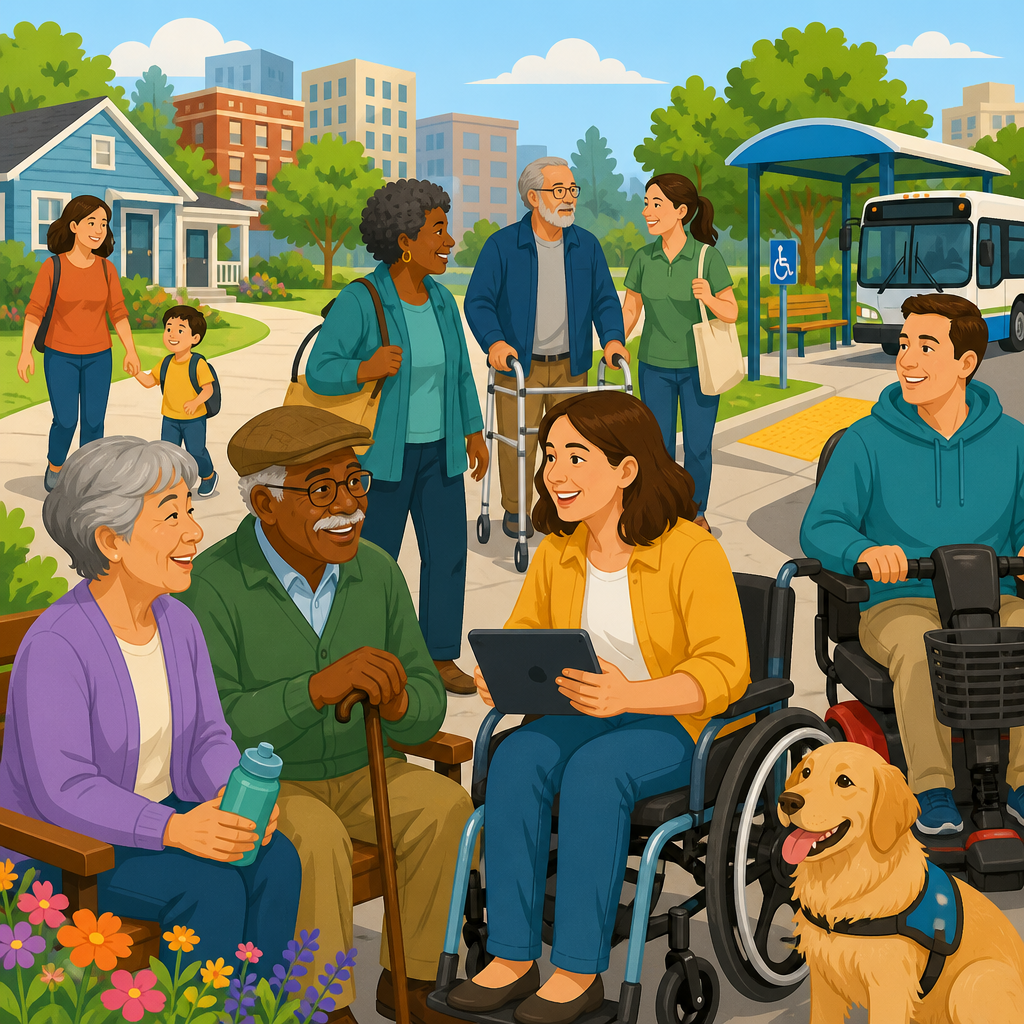
Resources on aging, disability, and community access help people find the services, laws, technologies, and local programs that make daily life safer, more independent, and more connected. In this context, aging refers to the changing physical, cognitive, social, and financial needs that often emerge over time, while disability includes mobility, sensory, intellectual, developmental, and mental health conditions that may be temporary, episodic, or lifelong. Community access means the practical ability to use transportation, housing, healthcare, public spaces, digital services, work opportunities, and civic life without avoidable barriers. I have worked with families navigating benefits appeals, accessible housing searches, paratransit applications, and accommodation requests, and the pattern is consistent: people usually do not lack determination; they lack a clear map. That is why a hub on specialized ADA resources and support matters. The Americans with Disabilities Act, along with Section 504 of the Rehabilitation Act, the Fair Housing Act, the Air Carrier Access Act, and state accessibility rules, shapes how access should work in real life. Yet legal rights alone do not solve missed medical rides, unreadable websites, inaccessible polling places, or confusion about service coordination. A strong resource hub closes that gap by translating policy into usable next steps, identifying the agencies and advocacy groups that can intervene, and helping individuals, caregivers, service providers, and community organizations understand which support fits which problem. For older adults and disabled people, that can mean the difference between isolation and participation.
Specialized ADA resources and support include much more than complaint forms or legal guidance. They also include independent living centers, Area Agencies on Aging, protection and advocacy systems, assistive technology programs, state vocational rehabilitation agencies, Medicaid waiver navigation, accessible transportation brokers, ombudsman services, and disability-specific nonprofits. The best resources are practical, current, and connected to the places where barriers actually show up: clinics, sidewalks, apartment buildings, schools, workplaces, websites, and customer service systems. This hub is designed to organize those supports in a way that reflects how people search for help. Someone may need to know how to request a reasonable accommodation at work, how to report an inaccessible municipal building, how to find communication access in a hospital, or how an older adult with declining vision can stay engaged in community life. Those questions overlap. Accessibility is rarely a single-issue matter, especially when aging and disability intersect with income, language, geography, and caregiving responsibilities. A useful hub therefore needs breadth, but it also needs structure. The sections below explain the major categories of specialized ADA resources, what each resource can and cannot do, and how to use them efficiently when time, health, and energy are limited.
Understanding Specialized ADA Resources and Support
Specialized ADA resources and support are the targeted services, agencies, technical assistance centers, and advocacy channels that help people apply disability rights in specific settings. The ADA itself is divided into titles that address employment, state and local government services, public accommodations, telecommunications, and related protections. In practice, that means a person facing a barrier must first identify the setting. An inaccessible job application kiosk is different from a broken curb ramp, and both are different from a doctor refusing to provide a sign language interpreter. Knowing the category points you toward the right resource faster.
The most recognized federal technical assistance source is the ADA National Network, which operates regional centers providing guidance on accommodations, accessible design, digital access, and compliance questions. The U.S. Department of Justice handles many public accommodation and government access issues, while the Equal Employment Opportunity Commission addresses employment discrimination under Title I. The Department of Transportation oversees many transit-related rules, and the Department of Housing and Urban Development enforces housing protections tied to disability. For aging-related questions, the Administration for Community Living funds networks that often intersect with disability access, including independent living and elder support systems.
These resources are specialized because no single agency resolves every access issue. In my experience, families lose valuable time when they begin with the wrong office. A transportation denial may require a paratransit appeal, not a general city complaint. A website barrier may be best addressed through a structured accessibility request that references WCAG conformance and effective communication obligations. Specialized support reduces that confusion by matching problem type to enforcement route, technical guidance, or direct service.
Core Resource Categories People Use Most Often
Most requests for aging, disability, and community access support fall into a small number of categories. Understanding these categories helps users move from a broad concern to an actionable plan. The table below summarizes the major resource types, what they typically address, and where people often start.
| Resource type | Primary purpose | Common examples | Typical first contact |
|---|---|---|---|
| Legal and rights enforcement | Resolve discrimination and access violations | EEOC, DOJ Civil Rights Division, HUD, state human rights agencies | Formal complaint, intake interview, or mediation request |
| Independent living and advocacy | Peer support, systems navigation, self-advocacy | Centers for Independent Living, Protection and Advocacy agencies | Call for intake and barrier review |
| Aging services | Support older adults with benefits, meals, caregiving, case management | Area Agencies on Aging, long-term care ombudsman programs | Eldercare Locator or local AAA referral |
| Assistive technology | Access devices, evaluations, training, funding guidance | State AT programs, lending libraries, vision and hearing nonprofits | Demonstration or assessment request |
| Transportation and mobility | Accessible travel to work, healthcare, and community activities | Paratransit offices, mobility managers, transit ADA coordinators | Eligibility application or service complaint |
| Housing and built environment | Remove barriers in homes and public spaces | Fair housing agencies, code offices, home modification programs | Accommodation request or inspection inquiry |
| Healthcare communication access | Ensure effective communication and equal service | Hospital patient advocates, civil rights coordinators, interpreters | Accessibility request before appointment |
| Employment and education support | Accommodations, training, retention, return to work | Vocational rehabilitation, Job Accommodation Network, disability services | Accommodation discussion or referral intake |
Each category involves different timelines and evidence. Employment matters may hinge on documented functional limitations and the essential functions of a job. Housing cases often depend on whether a requested modification is reasonable and who bears the cost. Transit issues may require trip records, eligibility assessments, or details about denials and no-shows. Good support organizations help people gather the right documentation before deadlines are missed.
Where Aging and Disability Services Intersect
Older adults do not always identify as disabled, even when they are experiencing mobility loss, hearing changes, low vision, cognitive decline, or chronic illness. That matters because many access protections and programs are triggered by functional need, not identity label. At the same time, younger disabled adults may rely on aging-system supports when they enter long-term services, caregiving arrangements, or Medicare. The overlap is larger than many people assume.
Area Agencies on Aging are often the first stop for caregivers because they coordinate meal programs, transportation referrals, benefits counseling, respite options, and home-and-community-based service information. Centers for Independent Living approach similar issues from a disability rights and peer support perspective, emphasizing consumer control and community integration. Both can be essential. I often advise families to contact both systems when needs are complex. For example, an older adult with arthritis and early dementia may need fall-prevention changes at home, accessible transportation to dialysis, caregiver respite, and help filing for accommodations in a senior housing setting. No single office usually handles all of that well.
Long-term care ombudsman programs are another underused resource. They advocate for residents of nursing homes and assisted living settings, addressing problems such as discharge disputes, neglect of accessibility needs, and communication barriers. Protection and Advocacy agencies can become crucial when abuse, denial of services, or institutional access violations are involved. When aging and disability needs intersect, the strongest plans combine rights-based advocacy with service coordination.
Accessibility in Transportation, Housing, and Public Space
Community access becomes real or unreal in transportation, housing, and the built environment. Accessible transit is not limited to buses with lifts. It includes reliable stop announcements, usable paratransit eligibility systems, safe pedestrian routes, reasonable pickup windows, and staff trained to assist riders without paternalism. Under the ADA, complementary paratransit is required for eligible riders where fixed-route transit operates, but service quality varies. People should document late pickups, missed trips, overly burdensome eligibility conditions, and patterns that effectively deny access.
Housing access involves both the home itself and the path to obtaining and keeping it. Reasonable accommodations may include reserved accessible parking, policy exceptions for live-in aides, transfer to a more accessible unit, or acceptance of alternative communication formats. Reasonable modifications may include grab bars, ramps, widened doorways, roll-in showers, or visual alert systems. The Fair Housing Act and Section 504 often matter here alongside the ADA. For homeowners and renters with limited income, state assistive technology programs, Medicaid waivers, community development funds, or nonprofit rebuilding programs may help finance changes.
Public spaces remain a frequent source of avoidable barriers. I still see inaccessible parking routes, crosswalk buttons placed out of reach, websites for parks that cannot be navigated by keyboard, and public meetings without captioning. Effective action usually starts with a specific request: identify the barrier, explain its impact, cite the program or service affected, and ask for a remedy with a deadline. General frustration rarely moves systems; precise documentation does.
Digital Access, Communication Support, and Everyday Inclusion
Specialized ADA resources increasingly focus on digital accessibility because community access now depends on websites, apps, kiosks, telehealth portals, online job systems, and electronic documents. A city may technically offer a service, but if the registration form is unreadable by screen readers or the video instructions lack captions, access is not equal. The most reliable standard for digital review is the Web Content Accessibility Guidelines, usually referred to by version and conformance level. While legal requirements vary by context, organizations that ignore accessible design create preventable barriers and legal risk.
Communication access is broader than digital design. Deaf and hard of hearing people may need qualified interpreters, CART captioning, amplified listening systems, or clear mask alternatives in some settings. Blind and low-vision users may need Braille, large print, structured digital documents, tactile signage, or verbal wayfinding support. People with intellectual and developmental disabilities may benefit from plain-language materials, supported decision-making tools, and visual instructions. Effective communication under disability law means choosing aids and services that actually work for the individual and context.
In healthcare, failures in communication access have serious consequences. A patient who cannot understand discharge instructions is at risk of medication errors and readmission. A telehealth platform without keyboard navigation excludes some users entirely. Hospitals and clinics should have civil rights coordinators, interpreter workflows, and documented accessibility procedures, but many still rely on ad hoc fixes. Asking in advance, documenting unmet needs, and escalating quickly when communication fails are practical steps that prevent harm.
How to Choose the Right Support and Take Action
The best resource is the one aligned to your barrier, evidence, and goal. Start by defining the problem in one sentence: what service, place, or process is inaccessible, and what change would fix it? Then gather records. Save emails, screenshots, denial letters, photographs, trip logs, names of staff, dates, and any policy language provided. If the issue is employment, note the essential job duty involved and the accommodation requested. If the issue is housing, keep lease terms, medical verification where appropriate, and a written timeline.
Next, decide whether you need direct service, technical assistance, advocacy, or formal enforcement. Direct service helps when the need is practical, such as securing meals, a device demonstration, or a home safety assessment. Technical assistance is useful when you need to understand obligations or draft a request. Advocacy helps when power is uneven and systems are unresponsive. Formal complaints are appropriate when rights have been denied and local resolution has failed or would be unsafe.
Finally, use hub pages like this one as a navigation point. A strong specialized ADA resources and support hub should connect readers to deeper articles on transportation rights, accessible housing, digital accessibility, employment accommodations, healthcare communication access, caregiver support, assistive technology funding, and complaint procedures. That structure saves time and reduces crisis-driven searching. If you are building your own plan, begin with one barrier, one request, and one accountable contact today. Clear action, supported by the right resource, is how community access becomes real.
Resources on aging, disability, and community access are most useful when they are organized around real barriers, not abstract programs. The central lesson is simple: specialized ADA resources and support work best when people know which system governs the problem, which agency or organization can help, and what evidence strengthens the request. Legal protections matter, but practical navigation matters just as much. Transportation, housing, healthcare, public services, and digital platforms all shape whether someone can participate in community life with dignity and consistency.
This hub serves as the starting point for that navigation. Use it to identify the right category of help, understand where aging and disability services overlap, and move from confusion to action with documented, specific requests. Whether you are an older adult, a disabled person, a caregiver, or a community professional, the goal is the same: fewer barriers and more reliable access. Explore the related articles in this subtopic, choose the resource that fits your situation, and take the next step now.
Frequently Asked Questions
What kinds of resources are available for aging, disability, and community access?
Resources in this area are broad and often overlap, which is helpful because people rarely need support in just one category. Common resources include government benefit programs, legal protections, transportation services, housing assistance, assistive technology, caregiving support, health and rehabilitation services, meal delivery, financial counseling, employment supports, and community-based social programs. For older adults, resources may address fall prevention, memory support, long-term care planning, and help with daily activities. For people with disabilities, resources may include mobility aids, communication tools, home modifications, personal care services, vocational rehabilitation, and accessibility accommodations in education, work, and public life.
Community access resources focus on making everyday participation possible. That can mean paratransit, accessible public transportation, ride programs, interpreter services, digital accessibility tools, inclusive recreation, and programs that help people navigate local services. Libraries, senior centers, centers for independent living, disability advocacy organizations, Area Agencies on Aging, public health departments, and nonprofit service providers are often key starting points. The most useful resource network usually combines formal services with practical local supports, such as faith communities, peer groups, neighborhood organizations, and family caregivers. Because needs can change over time, the best approach is to look for resources that support safety, independence, dignity, and social connection together rather than treating them as separate issues.
How can someone find local services for older adults or people with disabilities?
Finding local services usually starts with identifying the person’s most immediate needs, such as transportation, food access, home safety, medical support, caregiver relief, or benefits assistance. Once those priorities are clear, local aging and disability organizations can help narrow the search. In many communities, Area Agencies on Aging connect older adults and caregivers with in-home services, nutrition programs, case management, caregiver support, and benefits counseling. Centers for Independent Living often help people with disabilities locate accessible housing, peer support, assistive technology, advocacy services, and independent living skills training. State and county human services offices may also provide referrals for Medicaid-related supports, home and community-based services, and financial assistance programs.
It is also smart to ask very specific questions when contacting agencies. Instead of asking only whether a service exists, ask about eligibility rules, costs, waitlists, language access, service areas, accessibility features, and whether help is available for applications or appeals. Hospitals, rehabilitation providers, social workers, public libraries, school transition programs, and disability rights groups can also be strong referral sources. If one organization cannot help directly, ask who they recommend next. The process often works best when people keep a simple list of contacts, deadlines, and required documents. Persistence matters because services may be spread across multiple systems, but the right local network can make a major difference in maintaining independence and participation in the community.
What laws and protections support community access for older adults and people with disabilities?
Several legal protections help support access, inclusion, and equal treatment, although the exact rules depend on location and setting. In the United States, disability rights are strongly shaped by laws such as the Americans with Disabilities Act, Section 504 of the Rehabilitation Act, and the Fair Housing Act. These laws address accessibility and nondiscrimination in public services, transportation, employment, education, programs receiving federal funding, and housing. They may support rights such as reasonable accommodations at work, accessible entrances and restrooms in public facilities, effective communication for people with hearing or vision disabilities, and housing modifications or policy exceptions when needed for equal use and enjoyment of a home.
Older adults may also be protected through laws related to elder justice, long-term care rights, guardianship oversight, and protections against abuse, neglect, exploitation, and discrimination. In addition, Medicaid rules, Medicare rights, state protective services systems, and local tenant protections can affect whether people can remain safely in their homes and communities. Community access is not only about legal language on paper; it is about whether people can actually use transportation, enter buildings, receive understandable information, and participate in civic and social life. When rights are denied, advocacy organizations, legal aid offices, ombudsman programs, and disability rights agencies can help people understand options for complaints, appeals, mediation, or formal enforcement. Knowing these protections can help individuals and families move from uncertainty to action.
How do assistive technology and home modifications improve independence and safety?
Assistive technology and home modifications can make a dramatic difference in everyday life by reducing barriers that would otherwise limit mobility, communication, memory, self-care, and participation. Assistive technology may include wheelchairs, walkers, hearing devices, screen readers, speech-generating devices, medication reminders, magnifiers, adaptive keyboards, smart home controls, and wearable emergency alert systems. For some people, these tools support basic functioning, while for others they improve speed, confidence, and convenience. The value of technology is not just in the device itself, but in how well it matches the person’s goals, environment, and changing abilities.
Home modifications address the physical setup of a living space. Common examples include ramps, grab bars, roll-in showers, improved lighting, stair lifts, widened doorways, lever-style handles, non-slip flooring, lower countertops, and visual or audible alert systems. These changes can reduce fall risk, make transfers safer, support wheelchair access, and help people continue daily routines with less dependence on others. A good assessment from an occupational therapist, rehabilitation specialist, or accessibility professional can help prioritize which changes will provide the greatest benefit. Funding may come from public programs, veterans benefits, nonprofit grants, insurance in limited cases, or private payment. When chosen carefully, assistive technology and home modifications often prevent injuries, reduce caregiver strain, and make it more realistic for people to remain active in their homes and communities.
Why is community access so important for quality of life, and what barriers do people commonly face?
Community access is essential because it affects far more than transportation or building entry. It influences whether people can attend medical appointments, buy groceries, work, volunteer, see friends, practice their faith, enjoy recreation, continue education, and stay involved in civic life. For older adults and people with disabilities, access to the community is closely tied to health, emotional well-being, independence, and a sense of belonging. When people can participate in ordinary routines and meaningful activities, they are more likely to maintain social connections, avoid isolation, and feel in control of their lives. Community inclusion is not a luxury; it is a basic part of living with dignity.
At the same time, barriers are often layered and persistent. Physical barriers may include stairs, broken sidewalks, poor signage, inaccessible restrooms, or inadequate transportation. Communication barriers can involve websites that do not work with screen readers, lack of captioning or interpreters, confusing paperwork, or information that is not available in plain language. Financial barriers may include high out-of-pocket costs for equipment, caregiving, home changes, or transit. Social barriers can include stigma, low expectations, and systems that require people to navigate multiple agencies without coordination. Rural areas may face additional challenges because services are farther away and less available. Addressing community access means improving environments, services, and attitudes at the same time. The strongest solutions are person-centered, practical, and inclusive, making it easier for people to live safely, participate fully, and stay connected to the people and places that matter most.


