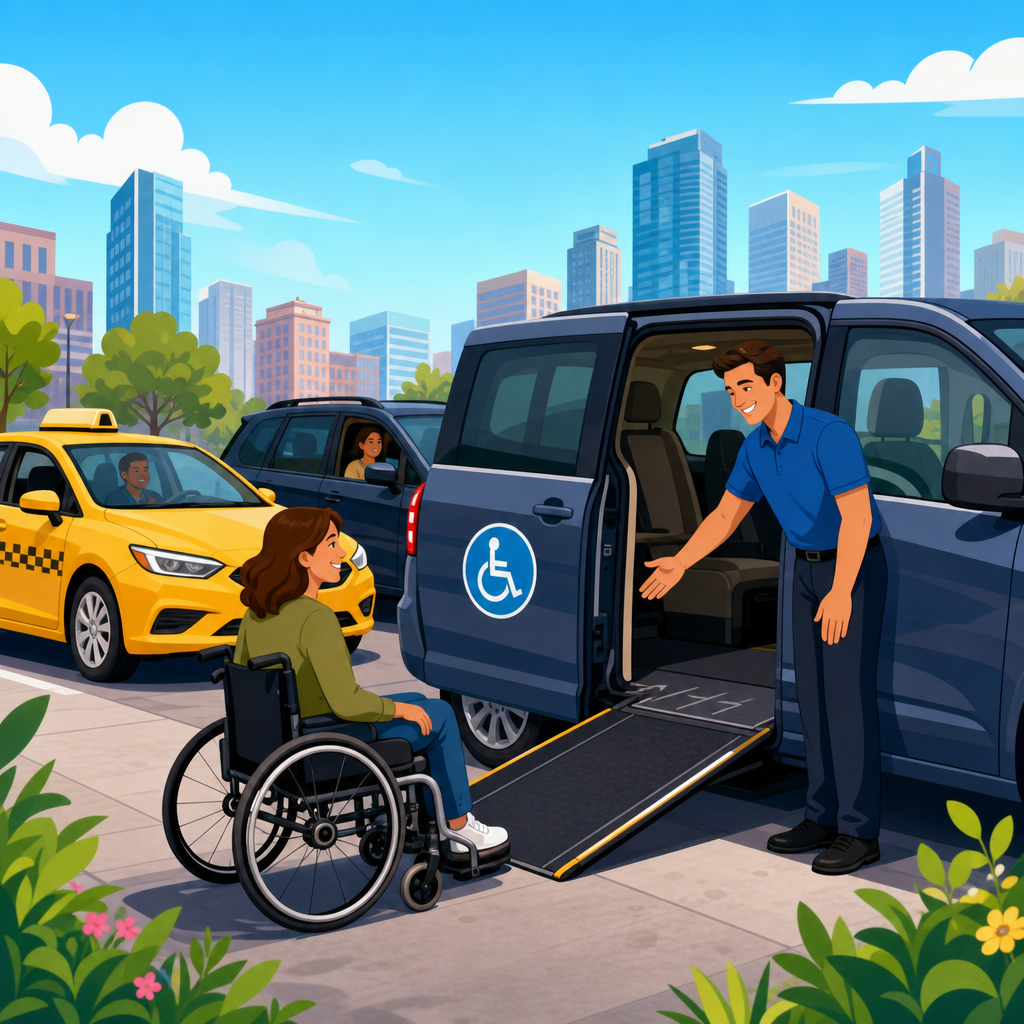
Wheelchair accessible vehicles in TNC, taxi, and fleet operations sit at the center of modern transportation access because they determine whether riders with mobility needs can reliably reach work, healthcare, airports, schools, and social activities. In this context, a wheelchair accessible vehicle, often shortened to WAV, is a vehicle engineered or modified to transport a passenger who remains seated in a wheelchair, using equipment such as ramps or lifts, securement systems, occupant restraints, and sufficient interior space for maneuvering and safe positioning. TNC refers to transportation network companies such as Uber and Lyft, taxi operators include medallion and independent cab fleets, and fleet operations covers paratransit contractors, non-emergency medical transportation providers, municipal shuttles, corporate mobility programs, and mixed-use commercial fleets. I have worked with operators evaluating WAV procurement, driver training, preventive maintenance, and service design, and the lesson is consistent: accessibility is not a niche feature layered onto transportation after the fact; it is a core operating capability with direct legal, financial, safety, and reputational consequences.
Transportation leaders need a hub view of this topic because the decision to add or improve wheelchair accessible vehicles affects every part of the operation. Vehicle selection influences route efficiency, insurance, fuel or charging strategy, and garage layout. Dispatch policy determines trip acceptance rates, on-time performance, and whether riders experience equitable wait times compared with ambulatory passengers. Driver procedures shape boarding safety, dignity, and complaint risk. Compliance requirements vary across jurisdictions, but common reference points include the Americans with Disabilities Act, Department of Transportation rules, manufacturer upfit guidance, and the securement and occupant restraint practices described in RESNA standards and National Highway Traffic Safety Administration safety communications. Accessibility also intersects with labor availability, procurement lead times, grant funding, and digital booking design. A transportation business that understands these connections can build reliable accessible service instead of reacting to complaints, litigation, or missed contracts.
This transportation hub explains how wheelchair accessible vehicles fit into TNC, taxi, and fleet operations from strategy through execution. It covers vehicle classes, procurement models, dispatch design, safety systems, maintenance routines, economics, and program measurement in plain terms, while pointing to the operational questions each subtopic raises. Whether you manage an urban taxi fleet replacing aging minivans, a TNC marketplace piloting on-demand WAV service, or a hospital shuttle program balancing high trip volume with stringent safety expectations, the fundamentals are the same: choose the right platform, standardize loading and securement, train drivers repeatedly, maintain equipment on a strict schedule, and measure service quality with accessibility-specific metrics. Done well, wheelchair accessible transportation expands the rider base, strengthens public trust, and creates a service network that works for more people without compromising operational discipline or commercial performance.
Vehicle types and platform selection
The first practical question is what kind of wheelchair accessible vehicle the operation actually needs. In taxi and TNC environments, the most common choices are side-entry or rear-entry accessible minivans, while larger fleets may use full-size vans, cutaways, low-floor buses, or purpose-built shuttle vehicles. Side-entry minivans often work well in dense urban settings because they can load at curbs with relatively predictable passenger flow, though they require enough lateral space to deploy the ramp safely. Rear-entry minivans can be easier to position on narrow streets and in residential driveways, but they may create challenges at busy curbs or in traffic. Full-size vans and cutaways allow multiple mobility devices or additional seated passengers, making them common in non-emergency medical transportation and airport shuttle work, but they introduce higher acquisition costs, different licensing and training requirements, and more demanding maintenance profiles.
Platform selection should start with real trip data rather than assumptions. Review pickup environments, average trip length, wheelchair dimensions, passenger plus attendant counts, and whether riders use manual chairs, power chairs, or scooters. A compact accessible minivan may be excellent for solo urban trips but inadequate for bariatric use or oversized power chairs. In contrast, a cutaway with a lift may provide broad compatibility but underperform on cost per trip if your demand pattern consists mainly of short local rides. Operators I have advised often discover that a blended fleet is the most practical answer: minivans for high-frequency city trips, larger units reserved for complex medical or group transport. That blend reduces unnecessary capital expense while improving service reliability because dispatchers can match vehicle capability to rider need instead of forcing every trip into a one-size-fits-all asset.
Accessibility equipment, safety systems, and daily operating procedures
A wheelchair accessible vehicle is only as effective as its equipment and the crew’s ability to use it correctly. The core systems are the ramp or lift, the wheelchair securement station, tie-downs or docking hardware if approved, passenger restraint systems, grab handles, non-slip flooring, interior lighting, and communication aids. For many minivan conversions, the lowered floor and fold-out ramp are central to usability. For larger vehicles, a hydraulic or electro-hydraulic lift may be more appropriate, especially when serving heavier powered mobility devices. The securement area must support proper forward-facing positioning unless a specific alternative arrangement is permitted under applicable guidance, and restraint geometry must protect the occupied wheelchair rider during normal driving and sudden maneuvers.
In practice, safe operation depends on repeatable procedures. Drivers should approach the curb to minimize slope, set the parking brake, communicate clearly before deploying the ramp or lift, verify weight limits, and inspect the mobility device for any visible issue that could affect securement. Once aboard, the rider should be positioned in the designated station, brakes on the wheelchair applied when relevant, and all securement points attached according to the equipment manufacturer’s instructions. Shoulder and lap restraints must be used correctly; routing them around the rider rather than around the chair is not optional. I have seen service complaints trace back not to equipment failure but to rushed boarding, poor explanation, or inconsistent securement technique. Standard operating procedures, backed by recurrent drills and spot audits, reduce those risks dramatically.
| Operational area | Best practice | Why it matters |
|---|---|---|
| Vehicle matching | Dispatch based on chair type, passenger count, and pickup environment | Prevents denials, delays, and unsafe fitments |
| Boarding | Use a scripted loading sequence and curbside positioning check | Reduces falls, roll-offs, and rider anxiety |
| Securement | Require four-point tie-down or approved docking plus occupant restraints | Improves crash protection and compliance consistency |
| Maintenance | Inspect ramps, lifts, belts, and interlocks daily and document defects | Limits road calls and equipment-related service failures |
| Training | Recertify drivers on boarding, securement, and sensitivity protocols | Maintains safe, respectful service as turnover occurs |
| Measurement | Track wait times, trip completion, complaints, and downtime for WAVs separately | Shows whether accessible service is truly equitable |
Regulatory obligations and service design for TNC, taxi, and fleets
Compliance is not identical across transportation segments, but no operator should treat accessibility as optional. Taxi systems in many major cities are subject to local wheelchair accessibility quotas, dispatch rules, or medallion conditions. TNCs often face requirements related to equivalent service, trip fulfillment, complaint handling, and in some areas direct WAV availability rather than simple referral arrangements. Fleet operators serving public agencies, healthcare systems, or schools typically have contract specifications that go beyond minimum law, including response windows, vehicle age caps, inspection records, drug and alcohol testing, and driver credential standards. The ADA remains the foundational framework in the United States, yet the practical obligations are often shaped by state public utility commissions, city transportation departments, airport authorities, and procurement offices.
Good service design goes beyond baseline compliance. For example, equivalent service is not achieved if WAV riders consistently wait twice as long as other passengers or cannot book in the same channels. Accessible transportation should be available through phone, app, web, and contracted scheduling workflows, with clear fields for mobility device type, service animal presence, extra passenger needs, and boarding assistance requests. Cancellation policies should account for the longer dwell times inherent in some accessible trips without penalizing the rider unfairly. Dispatch algorithms also need attention. A system optimized only for nearest-car assignment may inadvertently create chronic WAV shortages, whereas a model that reserves capacity, predicts demand by hour and geography, and balances live trips with prebookings can improve completion rates significantly. Accessibility is operationally measurable, and the strongest programs treat it as a quality standard embedded in service planning.
Economics, procurement, and funding strategy
The economics of wheelchair accessible vehicles are more complex than comparing sticker prices. Capital costs include the base chassis, conversion or upfit, securement hardware, graphics, telematics, camera systems, and in some cases backup mobility equipment. Operating costs include driver training time, slower boarding cycles, specialized maintenance, additional insurance considerations, and downtime risk if parts are unavailable. Yet the revenue and strategic value side is substantial. Accessible vehicles allow operators to serve healthcare contracts, municipal programs, airport concessions, school or university mobility routes, and corporate inclusion initiatives that standard fleets cannot support. They also open service to families traveling with strollers, older adults with walkers, and passengers who need extra step height reduction, so the utility of a WAV often extends beyond wheelchair trips alone.
Procurement strategy should evaluate total cost of ownership over the actual service life, not just acquisition cost in year one. Operators commonly compare buying new factory-supported conversions, purchasing lightly used WAVs, leasing through specialty finance providers, or subcontracting accessible demand while building internal capability. Each route has tradeoffs. New vehicles offer warranty protection and lower early maintenance burden but may involve long lead times. Used vehicles can reduce upfront cost but require careful inspection of ramp cycles, floor integrity, corrosion, tie-down anchor condition, and service history. Funding opportunities may include Federal Transit Administration programs for eligible public or nonprofit entities, state mobility grants, emissions incentives if electrified platforms are involved, Medicaid transportation contract structures, vocational rehabilitation partnerships, and local airport or municipal accessibility funds. The right funding mix can shorten payback periods, but only if the operation has enough trip volume and disciplined asset utilization to support the investment.
Maintenance, driver training, and performance management
Reliable wheelchair accessible transportation is built in the shop and reinforced in training. Preventive maintenance for WAVs should include all normal fleet items plus accessibility-specific checks on ramp hinges, lift platforms, hydraulic lines, interlocks, kneeling functions, securement belts, buckles, anchor points, lighting, door clearance, and corrosion around modified floor structures. A vehicle can pass a standard fleet inspection and still be unfit for accessible service if the ramp angle is excessive, a tie-down retracts poorly, or the lift threshold sensor is misbehaving. Daily pre-trip inspections must be documented, and defects affecting accessibility should remove the vehicle from WAV assignment until resolved. Telematics and driver vehicle inspection report systems help, but they do not replace hands-on checks by trained technicians familiar with conversion components.
Driver training deserves the same rigor. Initial onboarding should cover disability etiquette, boarding communication, securement methods, emergency evacuation, lift or ramp troubleshooting, service animal rules, and incident reporting. Refresher training should use real scenarios: a power chair that barely fits a station, a rider who transfers to a seat while the chair is stowed, a battery failure on a lift, or an airport pickup where curb space is constrained. Performance management should separate WAV metrics from general fleet averages. Track average wait time, trip acceptance, no-show disputes, securement-related complaints, preventable incidents during boarding, equipment downtime, and trips lost due to vehicle outage. When operators measure these indicators consistently, patterns become actionable. You can identify a problematic conversion model, a training gap on one shift, or a dispatch bottleneck in one service zone before those issues escalate into systemic accessibility failures.
Building a transportation accessibility program that scales
For this transportation hub, the main operational truth is simple: wheelchair accessible vehicles succeed when they are treated as a fully managed service line, not a symbolic compliance checkbox. Scalable programs start with a realistic demand forecast, align the right vehicle mix to that demand, and standardize every rider touchpoint from booking through drop-off. They maintain equipment aggressively, train drivers beyond minimum requirements, and report accessibility performance with the same seriousness given to safety and financial metrics. They also communicate clearly with riders, advocacy groups, contracting agencies, and insurers so expectations are defined before problems appear. In my experience, the operators that build trust fastest are the ones that remove uncertainty: riders know how to request service, dispatch knows which vehicle fits, and drivers know exactly how to load, secure, and support the trip.
As the hub for transportation within industry-specific guides, this article should help frame your next steps. If you are expanding a TNC WAV pilot, replacing taxi assets, or building a fleet accessibility program from scratch, begin with an audit of vehicle capability, demand patterns, training records, and maintenance controls. Then set measurable targets for fulfillment, safety, and rider experience. Wheelchair accessible vehicles are not merely specialized units parked at the edge of the fleet; they are essential infrastructure for equitable mobility and resilient transportation operations. Review your current program, identify the weakest link, and improve it deliberately.
Frequently Asked Questions
What is a wheelchair accessible vehicle (WAV), and how is it used in TNC, taxi, and fleet operations?
A wheelchair accessible vehicle, or WAV, is a vehicle specifically designed or professionally modified so a passenger can enter, ride, and exit while remaining seated in a wheelchair. In practical terms, that usually means the vehicle includes a ramp or lift, a doorway and interior space that can accommodate mobility devices, and a complete securement system with tiedowns and occupant restraints. In TNC, taxi, and fleet operations, WAVs are essential because they allow transportation providers to serve riders whose mobility needs cannot be met by a standard sedan or SUV. This makes WAVs a core part of accessible transportation, not a niche add-on.
In day-to-day operations, a WAV may be dispatched for airport trips, medical appointments, school transportation, work commutes, community paratransit support, and on-demand ride services. For a TNC or taxi operator, adding WAV service improves network coverage and helps close serious service gaps for riders who use manual wheelchairs, power chairs, or scooters. For larger fleets, including municipal, healthcare, hotel, shuttle, or non-emergency medical transportation programs, WAVs support consistent service delivery across a wide range of trip types.
The key point is that a WAV is more than a van with extra space. It is part of a complete accessibility system. Safe entry and exit, proper wheelchair positioning, effective restraint use, and trained drivers all work together to create a ride that is safe, dignified, and reliable. In modern transportation operations, WAVs often sit at the center of compliance, customer service, and equitable access goals because they directly affect whether riders with mobility needs can participate fully in everyday life.
What features should operators look for when choosing wheelchair accessible vehicles for a transportation fleet?
When selecting a WAV for TNC, taxi, or fleet use, operators should start with core accessibility and safety features. These include a reliable ramp or lift, adequate door opening height, sufficient interior maneuvering room, properly installed wheelchair securement stations, and occupant restraint systems that meet applicable safety standards. The vehicle should also be compatible with the range of wheelchairs and scooters most likely to be transported. A fleet that mainly serves urban commuters may prioritize quick boarding and efficient interiors, while a healthcare or paratransit-oriented fleet may need higher-capacity vehicles with more flexibility for larger mobility devices.
Durability and serviceability matter just as much as accessibility. High-use commercial operations put significant wear on ramps, lifts, flooring, tiedowns, kneeling systems, and suspension components. Operators should evaluate how the vehicle performs under repeated daily use, how easy it is to clean and inspect, and whether replacement parts and qualified service technicians are readily available. Downtime can quickly undermine accessible service, so support from the manufacturer or mobility equipment provider is a major consideration.
Operators should also consider passenger comfort, driver usability, and operational efficiency. Features such as low ramp angles, intuitive restraint systems, climate control for rear cabin passengers, anti-slip flooring, and clear interior lighting improve the rider experience and reduce boarding delays. From the driver’s perspective, easy-to-use equipment and thoughtful cabin layout can make the difference between a smooth trip and a time-consuming one. Finally, total cost of ownership should be assessed carefully, including acquisition cost, upfit expense, maintenance, fuel or energy use, training, insurance, and expected lifecycle. The best WAV for a fleet is the one that balances accessibility, safety, uptime, rider satisfaction, and long-term operating value.
Why are driver training and securement procedures so important in wheelchair accessible transportation?
Driver training is one of the most important elements of successful WAV operations because the safest vehicle in the world can still be used incorrectly. Drivers need to know how to operate ramps or lifts, position the wheelchair correctly, apply the securement system at the proper angles, fasten occupant restraints appropriately, and verify that everything is locked and stable before the vehicle moves. They should also know how to communicate with riders respectfully, ask before providing assistance, and adapt to different mobility devices without making assumptions.
Securement procedures are critical because wheelchair movement during braking, turning, or sudden stops can create serious safety risks. Proper securement helps protect the passenger, the driver, and everyone else in the vehicle. It also supports a smoother, more comfortable ride. A well-trained driver understands that accessibility is not only about getting someone into the vehicle. It is also about maintaining stability and dignity throughout the trip. Consistency is important, so fleets should use standardized procedures, refresher training, equipment inspection checklists, and documented incident-response protocols.
Strong training also improves operational performance and customer trust. Riders remember whether a driver appeared confident, respectful, and prepared. Inaccessible or inconsistent service can discourage future bookings and damage a provider’s reputation. For TNC networks, taxi companies, and institutional fleets alike, training helps reduce errors, shorten boarding times, improve safety outcomes, and strengthen confidence among riders who depend on reliable accessible transportation. In many operations, training is the factor that turns compliance into genuinely high-quality service.
What are the main operational challenges of running WAV service in TNC, taxi, and fleet environments?
One of the biggest challenges is balancing availability with demand. Accessible trips often require more time for dispatch, pickup, boarding, securement, and drop-off than standard passenger trips. If a provider has too few WAVs in service, riders may experience long wait times or limited coverage areas. If the provider overcommits resources without strong trip volume or efficient routing, the operation can become financially strained. This makes scheduling, dispatch logic, geographic placement, and fleet utilization especially important.
Vehicle acquisition and maintenance are also major considerations. WAVs typically cost more than standard vehicles because of specialized equipment and conversion work. Maintenance can be more complex as well, especially for ramps, lifts, electrical components, flooring, and tiedown systems. Fleets must plan for preventive maintenance and regular inspection cycles to keep vehicles safe and available. A single equipment failure can remove a critical accessible unit from service, which may affect multiple riders and create service gaps quickly.
Another challenge is maintaining a consistently high rider experience across all trips. Riders need timely pickups, safe boarding, clear communication, and trained drivers every time, not just occasionally. That can be difficult in large or decentralized operations, particularly in TNC models where driver participation and vehicle assignment may vary by market. Operators must also think about demand forecasting, data tracking, driver retention, cleaning standards, customer support, and service recovery when problems occur. The most successful WAV programs treat accessibility as a core operational discipline, supported by planning, investment, accountability, and continuous improvement.
How do wheelchair accessible vehicles improve transportation access and service quality for riders and organizations?
WAVs improve transportation access by making trips possible for people who might otherwise face delays, missed appointments, or complete exclusion from standard ride options. For many riders with mobility needs, accessible transportation is the link to employment, dialysis, physical therapy, specialist care, education, family visits, airport travel, and everyday errands. When WAV service is dependable, it supports independence and participation in daily life. That makes these vehicles deeply important not only from a transportation standpoint, but also from a social and economic one.
For organizations, WAVs can strengthen service quality, expand market reach, and support accessibility commitments. Taxi companies and TNC partners can serve a broader customer base and improve response for underserved trip requests. Healthcare systems, senior living communities, schools, and hospitality fleets can use WAVs to improve continuity of care, reduce missed appointments, and offer more inclusive transportation programs. In public-facing operations, accessible vehicles can also enhance brand reputation by demonstrating that accessibility is built into the service model rather than treated as an afterthought.
There is also a long-term operational benefit. Reliable accessible transportation often leads to better rider retention, stronger community trust, and improved planning through recurring trip patterns and usage data. When organizations invest in properly equipped WAVs, driver training, maintenance, and responsive scheduling, they create a transportation network that is more resilient and more equitable. In that sense, wheelchair accessible vehicles do more than transport passengers. They help define whether a mobility system is truly usable for everyone who depends on it.