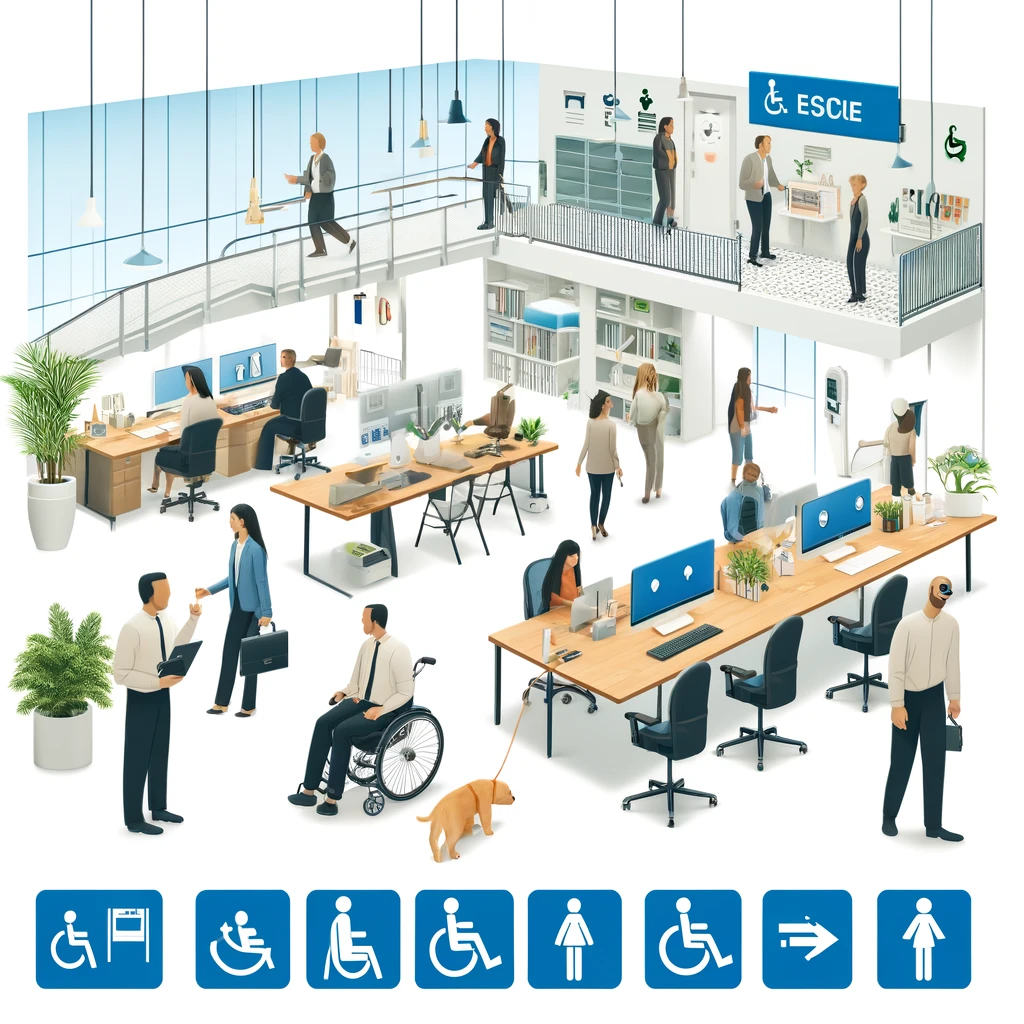
The Americans with Disabilities Act (ADA) represents a landmark piece of legislation aimed at ensuring equality for individuals with disabilities. Since its enactment in 1990, the ADA has undergone various updates to adapt to the evolving landscape of societal needs. In today’s digital age, technology plays an increasingly significant role in ensuring and streamlining ADA compliance. The incorporation of technology not only simplifies adherence to these crucial regulations but also enhances accessibility for those with disabilities, expanding their opportunities for participation in all aspects of public life. Nevertheless, navigating the complexities of ADA compliance can be daunting for organizations, particularly when attempting to keep up with the pace of technological change. This article delves into how technology serves as a valuable tool in achieving streamlined ADA compliance, examining its implications, benefits, and the potential challenges it presents. By exploring this nuanced relationship, we aim to provide comprehensive insights into technology’s pivotal role in advocating for disability rights and promoting inclusivity across various domains such as workplaces, websites, and public facilities.
In the contemporary world, where digital interactions have become paramount, ensuring that digital interfaces and environments are accessible to everyone is an essential aspect of business and organizational operations. This has invariably led to a growing reliance on technological solutions designed to meet ADA guidelines effectively. As such, understanding how these technologies function and can be integrated into existing systems is essential for fostering inclusivity and compliance alike.
This exploration will shed light on the transformative impact of technology, focusing on the ways it facilitates compliance, overcomes traditional barriers, and introduces innovative strategies for maintaining an accessible environment. By examining both the theoretical underpinnings and practical applications, we aim to equip readers with a holistic understanding of how technology is reshaping the landscape of ADA compliance and accessibility. Through examples and analysis, we will underscore the importance of technology as an ally in promoting equality and equity for individuals living with disabilities.
The Evolution of Technology in ADA Compliance
The ADA, while comprehensive, initially posed substantial challenges for implementation, especially regarding retrofitting existing infrastructures to accommodate individuals with disabilities. However, advancements in technology have drastically changed the playing field, creating opportunities for more timely and efficient compliance. The growing innovation in assistive technologies, for instance, represents a crucial way in which ADA compliance can be met more effectively. Today, technologies like screen readers, voice recognition software, and real-time text communication have become invaluable tools for facilitating access to information and enabling independent interaction with digital content for those with visual or auditory impairments.
Moreover, artificial intelligence and machine learning are emerging as transformative forces in enhancing accessibility solutions. These technologies empower organizations by automating compliance checks, identifying and rectifying accessibility barriers within software systems, and adapting interfaces to meet diverse user needs. For example, AI-powered assessment tools can scan websites and applications to detect non-compliance issues, suggesting corrections and ensuring adherence to ADA guidelines. This level of automation not only reduces the manual labor involved but also increases the accuracy and speed of compliance processes, allowing organizations to maintain up-to-date standards concurrently with technological advancements.
Virtual and augmented reality are also pushing the boundaries of accessibility further. These technologies create immersive environments that can simulate real-world scenarios, offering training and educational resources tailored for individuals with specific disabilities. For example, virtual reality can be adapted to assist individuals with autism in social skills training by creating controlled environments where they can practice interactions without real-world pressures.
Streamlining ADA Compliance through Digital Platforms
The proliferation of digital platforms has significantly impacted the realm of ADA compliance, offering versatile solutions for both businesses and public institutions. Websites, mobile applications, and online services must be designed to accommodate users with a range of disabilities to ensure inclusivity. This requires incorporating accessibility standards such as the Web Content Accessibility Guidelines (WCAG), which provide a framework for making web content more accessible.
Technology facilitates compliance with these standards through various means. For instance, content management systems (CMS) now often include accessibility features and plugins that help website developers optimize their content for accessibility. These tools offer functionalities like alternative text generation for images, auditory descriptions, customizable text sizes, color contrast adjustments, keyboard navigability, and closed captioning options for video content. These features ensure that individuals with different needs can experience the web without obstructions, thus conforming to ADA requirements while improving user experience.
Furthermore, cloud-based solutions have revolutionized the way ADA compliance data is stored and managed. Organizations can leverage the cloud to centralize their compliance data, facilitating easier updates and audits. This not only streamlines the process of integrating accessibility solutions but also enhances an organization’s ability to adapt quickly to new regulatory changes or updates to accessibility standards.
Innovations in Communication Technology
Advancements in communication technology have also made significant contributions toward achieving ADA compliance. Video relay services (VRS), real-time text (RTT), and text-to-speech (TTS) solutions have improved communication accessibility for individuals with hearing and speech impairments. VRS, for instance, allows individuals to communicate over video telephony with the assistance of a sign language interpreter, making it possible for them to engage in telephone conversations in a manner comparable to voice calls.
Real-time text, a next-gen communication method, enables typed conversations to be transmitted instantaneously as they are being typed. This is particularly beneficial for persons who are deaf or hard of hearing, allowing them to have fluid and dynamic communication that closely mimics spoken interactions. Text-to-speech and speech-to-text applications convert dialogue to text and vice versa, broadening the scope of accessible communication tools and making devices more versatile for users with different needs. These tools not only comply with ADA communications requirements but also greatly enhance the quality of interaction in both personal and professional settings.
The recent integration of AI-based virtual assistants and chatbots serves as another area where technology influences ADA compliance. These intelligent systems are designed to understand and execute spoken commands, provide real-time responses, and offer service information through voice interface platforms. By offering such seamless spoken-word interaction, these assistants help users with mobility or vision impairments navigate devices and applications with greater ease and minimal assistance.
Challenges in Implementing Technology for ADA Compliance
Despite the benefits, implementing technology for ADA compliance is not without challenges. Ensuring that automated systems and software accurately reflect the nuances of accessibility standards and guidelines remains a pressing concern. While technology can highlight potential accessibility issues, it often requires human oversight to ensure the proposed solutions are practical and effective for the diverse population of individuals with disabilities.
Moreover, cost considerations pose additional constraints for smaller businesses and organizations. The financial investment required to adopt comprehensive technology solutions can be significant, serving as a barrier to entry for some entities. This emphasizes the need for strategic planning and phased integration to effectively manage costs while ensuring compliance.
Another critical challenge involves keeping up with the rapid pace of technological advancement. As new technologies emerge, organizations must continually adapt and update their accessibility measures, potentially overwhelming existing resources and creating pressure to stay ahead of the curve. This dynamic environment demands proactive engagement in training, skill development, and awareness to ensure that both technology and workforce are adequately equipped to drive continued ADA compliance.
Conclusion
In conclusion, technology serves as an influential ally in streamlining ADA compliance, offering numerous tools and innovations aimed at enhancing accessibility for individuals with disabilities. From the evolution of assistive devices to groundbreaking digital platforms and futuristic communication technologies, the spectrum of solutions available today enables organizations to meet, and often exceed, compliance requirements while fostering an environment of inclusivity. Through the judicious application of these technologies, ADA compliance becomes more efficient, accurate, and sustainable, promoting greater equity and participation.
However, as beneficial as these technologies are, challenges remain in their effective implementation. Organizations must balance the adoption of new systems with practical considerations such as cost, continuous updates, and human oversight to maintain robust compliance frameworks. As the landscape of technology and regulation continues to evolve, ongoing education and commitment to inclusivity will be paramount in harnessing technology’s full potential for ADA compliance.
By leveraging technological advancements, businesses and public entities can not only comply with ADA standards but also champion disability rights, embodying a commitment to a more inclusive future. As technology continues to redefine accessibility, its role in advocating for and achieving comprehensive ADA compliance will undoubtedly grow, paving the way for increasingly equitable societal structures.