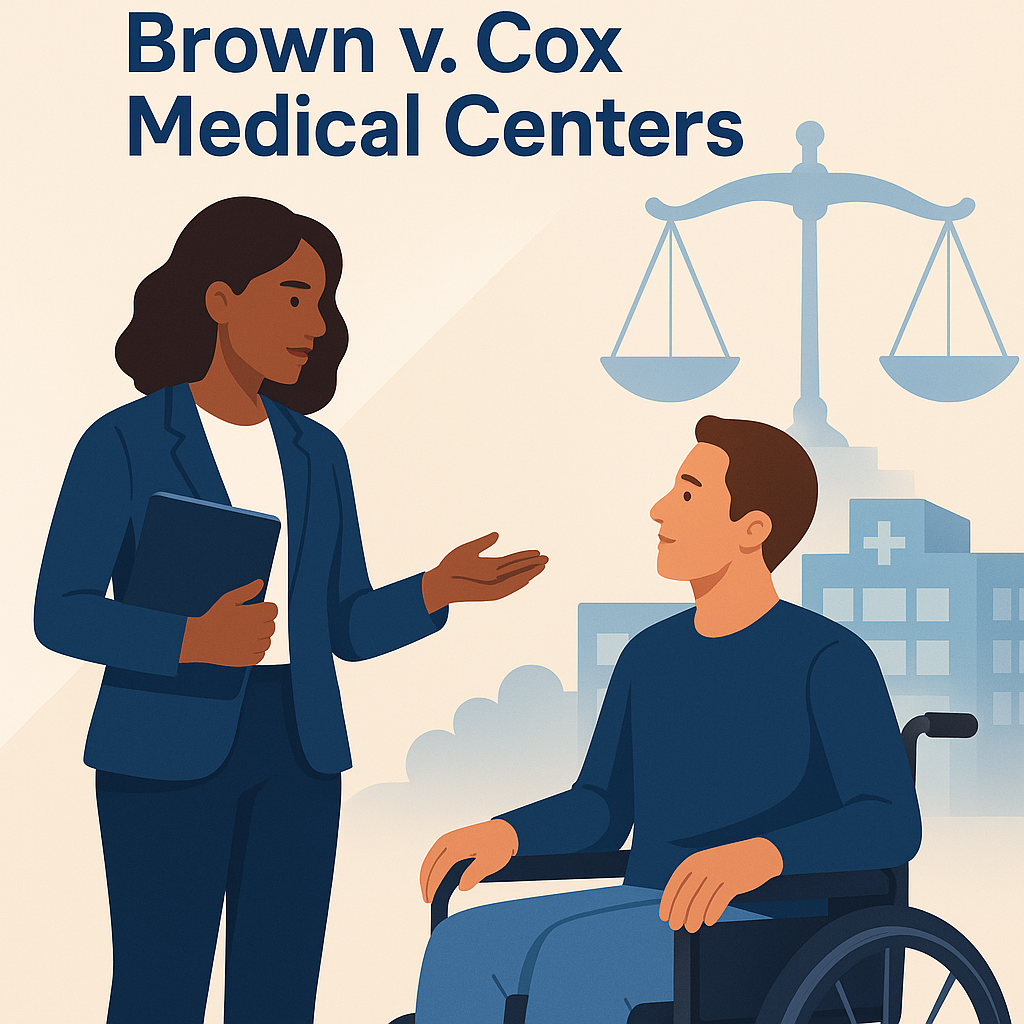
The Americans with Disabilities Act (ADA) is a pivotal piece of legislation in the United States that ensures equal opportunities for individuals with disabilities. Enacted in 1990, it seeks to eliminate discrimination and provide accommodations in various spheres, including employment, public accommodations, and healthcare. The ADA’s impact is far-reaching, crucially addressing societal inequalities and fostering inclusivity. Its relevance becomes particularly evident when examining legal cases, such as Brown v. Cox Medical Centers.
Brown v. Cox Medical Centers is a landmark case that underscores the practical applications and challenges of the ADA within the healthcare sector. It highlights how the ADA’s provisions are implemented and enforced, particularly within medical settings, where accessibility can be a matter of life and death. This case illuminates the critical importance of compliance and the role healthcare providers play in upholding the rights of individuals with disabilities.
The significance of this case lies in its demonstration of the complexities involved in adhering to ADA standards. It serves as a reminder of the fundamental necessity for healthcare institutions to incorporate and maintain accommodations that promote accessibility. As society evolves, this case continues to be an essential reference point for understanding the dynamic relationship between legal mandates and practical execution within the realm of healthcare.
The ADA Framework and Healthcare Implications
The ADA’s framework is built upon several key titles, each focusing on different aspects of life affected by disabilities. Title III is particularly pertinent to healthcare, as it mandates that public accommodations, including medical centers, must be accessible to individuals with disabilities. This includes ensuring that facilities are navigable and that staff are trained to provide appropriate care to patients with diverse needs.
In Brown v. Cox Medical Centers, the plaintiff, a patient with a mobility impairment, filed a complaint alleging that Cox Medical Centers failed to provide reasonable accommodations during medical treatment. This case illustrates the practical application of Title III, as the court examined whether Cox Medical Centers had violated ADA provisions by not adequately accommodating the patient’s needs.
To facilitate a better understanding of how the ADA applies in healthcare settings, consider the following table, which outlines key ADA requirements for medical facilities:
| Requirement | Description |
|---|---|
| Physical Accessibility | Facilities must be equipped with ramps, elevators, and accessible restrooms to accommodate patients with physical impairments. |
| Effective Communication | Providers must offer communication aids, such as sign language interpreters, to ensure clear communication with patients who have hearing impairments. |
| Policy Modifications | Healthcare providers may need to modify policies or procedures to grant equal access to services for individuals with disabilities. |
This table clearly outlines the expectations healthcare providers must meet under the ADA to ensure that their services are accessible to all. Real-world examples like Brown’s case serve to highlight instances where these standards are put to the test.
Analyzing the Case: Brown vs. Cox Medical Centers
In Brown v. Cox Medical Centers, the underlying issue was whether the hospital’s actions effectively denied the plaintiff equal access to healthcare services due to a disability. This case is emblematic of broader challenges faced by individuals with disabilities seeking care in medical settings.
The plaintiff claimed that the medical center’s facilities were not adequately equipped for individuals with mobility impairments. Specific complaints included difficult navigation of hallways and examination rooms that were not designed to accommodate wheelchairs. Additionally, the staff lacked the necessary training to assist patients with disabilities appropriately, further complicating the provision of care.
Through this case, the courts were compelled to determine whether the actions, or inactions, of Cox Medical Centers amounted to a breach of the ADA. The court’s findings emphasized the importance of institutions not only meeting ADA standards but exceeding them whenever possible to guarantee comprehensive access and equity in healthcare.
Practical Implications and Compliance Strategies
The verdict in Brown v. Cox Medical Centers offers valuable insights into compliance strategies for healthcare providers. Institutions must undertake proactive measures to ensure their facilities and services align with ADA standards. This compliance is not merely about avoiding legal repercussions but is integral to ethical medical practice.
- Accessibility Audits: Healthcare centers should conduct regular audits to assess and improve physical and communicative accessibility. This proactive approach helps identify barriers before they impact patient care.
- Staff Training: Continuous education programs for staff are essential to improve their interaction with patients with disabilities, ensuring they are treated with dignity and respect.
- Cultural Competence: Encouraging an inclusive healthcare environment goes beyond physical alterations. Fostering a culture of inclusivity and understanding helps ensure effective care delivery.
These practical strategies underline the necessary steps healthcare facilities must take to fulfill their legal and ethical obligations under the ADA. Such measures demonstrate a commitment to inclusive healthcare, ultimately benefiting both patients and providers by fostering a more equitable healthcare system.
Overcoming Challenges and Moving Forward
The ADA’s implementation in healthcare settings is not without challenges. Cases like Brown v. Cox Medical Centers highlight areas where institutions often fall short, bringing attention to the practical difficulties of full compliance. These challenges range from cost barriers in retrofitting older facilities to the complexities involved in training large healthcare workforces to adequately cater to patients’ varied needs.
Yet, these challenges also pose opportunities for growth and improvement. By leveraging technological advancements, such as telehealth services and assistive devices, healthcare facilities can expand their reach and enhance accessibility. Additionally, partnerships with disability advocacy organizations can provide valuable insights and resources, helping healthcare institutions develop more effective policies and practices.
Ultimately, the goal is to create a healthcare environment where individuals with disabilities experience no barriers to receiving high-quality care. Emphasizing the importance of ongoing dialogue and collaboration between healthcare providers, patients, and advocacy groups will pave the way for continued progress and innovation within the sector.
Conclusion: The Importance of the ADA in Healthcare
Brown v. Cox Medical Centers serves as a testament to the importance of the ADA within healthcare environments. By protecting the rights of individuals with disabilities and mandating inclusivity, the ADA strives to mitigate disparities and foster equitable healthcare access.
The key takeaway from this case is that rigorous enforcement and proactive compliance with ADA standards are essential components of ethical medical practice. Healthcare providers stand to benefit significantly from adhering to ADA requirements—not only by avoiding legal challenges but by promoting a culture of inclusivity that enhances patient care and equity.
For healthcare professionals and institutions, the next step is clear: assess current practices, identify areas for improvement, and implement strategies to ensure full ADA compliance. By doing so, they not only uphold their legal obligations but contribute to a more inclusive society where all individuals, regardless of ability, can receive the care they need and deserve.
Frequently Asked Questions
1. What is the ADA and how is it relevant to Brown v. Cox Medical Centers?
The Americans with Disabilities Act (ADA) is landmark legislation enacted in 1990 to prohibit discrimination against individuals with disabilities in various sectors, including employment, public services, public accommodations, telecommunications, and transportation. Its main goal is to ensure that people with disabilities have the same rights and opportunities as everyone else. Now, in the case of Brown v. Cox Medical Centers, the ADA’s relevance is profound. The case likely revolves around allegations that Cox Medical Centers failed to provide appropriate accommodations or somehow discriminated against a person with a disability—potentially violating ADA principles. By examining this case through the lens of ADA, we understand how the Act actively shapes policies to promote inclusivity within healthcare institutions, ensuring they accommodate patients with disabilities appropriately.
2. Can you explain the importance of ADA compliance for healthcare providers like Cox Medical Centers?
Absolutely. ADA compliance is crucial for healthcare providers such as Cox Medical Centers because it reflects their commitment to offering equitable care to all patients, regardless of any disabilities. Compliance involves a wide array of accommodations which might include providing sign language interpreters for deaf patients, offering written materials in Braille or large print for those with visual impairments, or ensuring that facilities are physically accessible to individuals with mobility challenges. Adhering to ADA guidelines not only helps healthcare providers avoid potential legal ramifications but more importantly, it ensures that all patients receive the care and respect they deserve. It elevates the standard of care and promotes an inclusive environment where every individual feels valued and respected. In essence, ADA compliance isn’t just about legal obligations—it’s fundamentally tied to the ethical responsibility of providing quality healthcare to everyone.
3. How might ADA violations be identified in a case against a medical center?
Identifying ADA violations in a case against a medical center involves several steps. Typically, the complainant would need to demonstrate that they have a recognized disability and that the healthcare provider in question failed to reasonably accommodate their needs or discriminated against them due to their disability. This could involve showing, for example, that materials were not provided in accessible formats, that there was a lack of sign language interpreters, or that physical spaces were inaccessible despite reasonable modification requests. In legal proceedings, evidence such as testimonies, expert opinions, and prior incidences or complaints can be pivotal in establishing non-compliance. Often, ADA violations in healthcare settings boil down to an essential issue: Did the organization make a committed and genuine effort to ensure equal access and freedom from discrimination for patients with disabilities? Courts will closely examine policies, procedures, and practices in place at the medical center during the alleged timeframe to determine if there was a failure to accommodate as mandated by the ADA.
4. What potential outcomes could result from a healthcare center being found in violation of the ADA?
When a healthcare center is found to have violated the ADA, several potential outcomes can ensue. First and foremost, the medical center might be required to implement changes and accommodations to rectify the ADA infractions, ensuring their facilities and services are accessible moving forward. This could range from physical alterations to buildings to revising policies and practices to be more inclusive. Furthermore, they could face financial penalties in the form of damages awarded to the plaintiff for any harm suffered or costs incurred due to the violation. In some cases, the healthcare center may enter into settlement agreements or consent decrees, which legally bind them to enact specific changes within a defined timeframe. Additionally, being found in violation of the ADA can impact the center’s reputation, affecting patient trust and public relations, as compliance with disability laws is a metric of the organization’s inclusivity and care ethics. Overall, the aim of such outcomes is to prevent future occurrences and foster a healthcare environment where all individuals are treated with equity and respect.
5. How has the ADA legislation impacted the general accessibility of healthcare facilities?
The impact of the ADA on healthcare facilities’ accessibility has been monumental. Since its enactment, healthcare providers have made significant strides in accommodating patients with various disabilities. Many facilities have become physically accessible through the installation of ramps, elevators, and automatic doors. Signage has been updated to include Braille, and efforts have been made to provide communication aids such as text telephones (TTYs) or video relay services for deaf individuals. The ADA has also encouraged the development of policies aimed at training staff on how to interact effectively and sensitively with patients with disabilities, recognizing their unique needs. These changes have not only helped break down physical barriers but also those that are attitudinal, creating a more inclusive culture within the healthcare industry. Through ADA’s influence, there’s been a significant shift towards recognizing the importance of individualized treatment plans and personalized accommodations, placing the onus on healthcare professionals and institutions to actively pursue strategies that promote equal access to high-quality medical care for all patients. This ongoing impact underscores ADA’s vital role in reshaping the environment to one that truly embraces diversity and inclusiveness in healthcare services.


