The Americans with Disabilities Act (ADA) was enacted in 1990, marking a significant step towards ensuring that individuals with disabilities have equal access to services, opportunities, and participation in daily life. Over the past three decades, advancements in technology have transformed the landscape of accessibility, particularly in public services. Looking ahead, the integration of emerging technologies offers exciting possibilities for enhancing accessibility even further. This article will delve into the current state of accessible technology in public services and explore the future innovations poised to make a substantial impact.
A Historical Perspective
When the ADA was first implemented, the primary focus was on physical accessibility—ramps, elevators, and other accommodations that allowed people with disabilities to access public spaces. However, as digital technology became more prevalent, the need for accessible digital services grew. Initially, the adoption of such technologies was slow, with many public services struggling to keep pace. But over time, legislative amendments and increasing awareness have driven significant improvements. Today, we see widespread use of screen readers, voice recognition software, and other assistive technologies designed to make digital interfaces more user-friendly for individuals with disabilities.
Current Technologies in Public Services
Currently, many public services have adopted a range of accessible technologies. Websites and online portals are now becoming more compliant with Web Content Accessibility Guidelines (WCAG), ensuring that information is easily navigable for individuals with visual impairments. Mobile applications incorporate features such as text-to-speech and alternate text for images to cater to users with diverse needs. Moreover, public spaces like libraries, museums, and government buildings are integrating technologies like induction loops for people with hearing aids and kiosks with tactile feedback for those with visual impairments. These advances are not just about compliance but about creating an inclusive environment where everyone can participate fully.
The Role of Artificial Intelligence
Artificial Intelligence (AI) is making waves in the realm of accessibility. AI-powered applications can provide real-time assistance, such as offering descriptive audio for live events or translating sign language into text. Virtual Assistants like Siri, Alexa, and Google Assistant are becoming more sophisticated, offering voice-activated controls and personalized recommendations that cater to the specific needs of users with disabilities. Additionally, AI algorithms are used to enhance predictive text options, making typing easier and faster for individuals with motor impairments. As AI continues to evolve, its role in promoting accessibility is only expected to grow.
Internet of Things (IoT) and Smart Cities
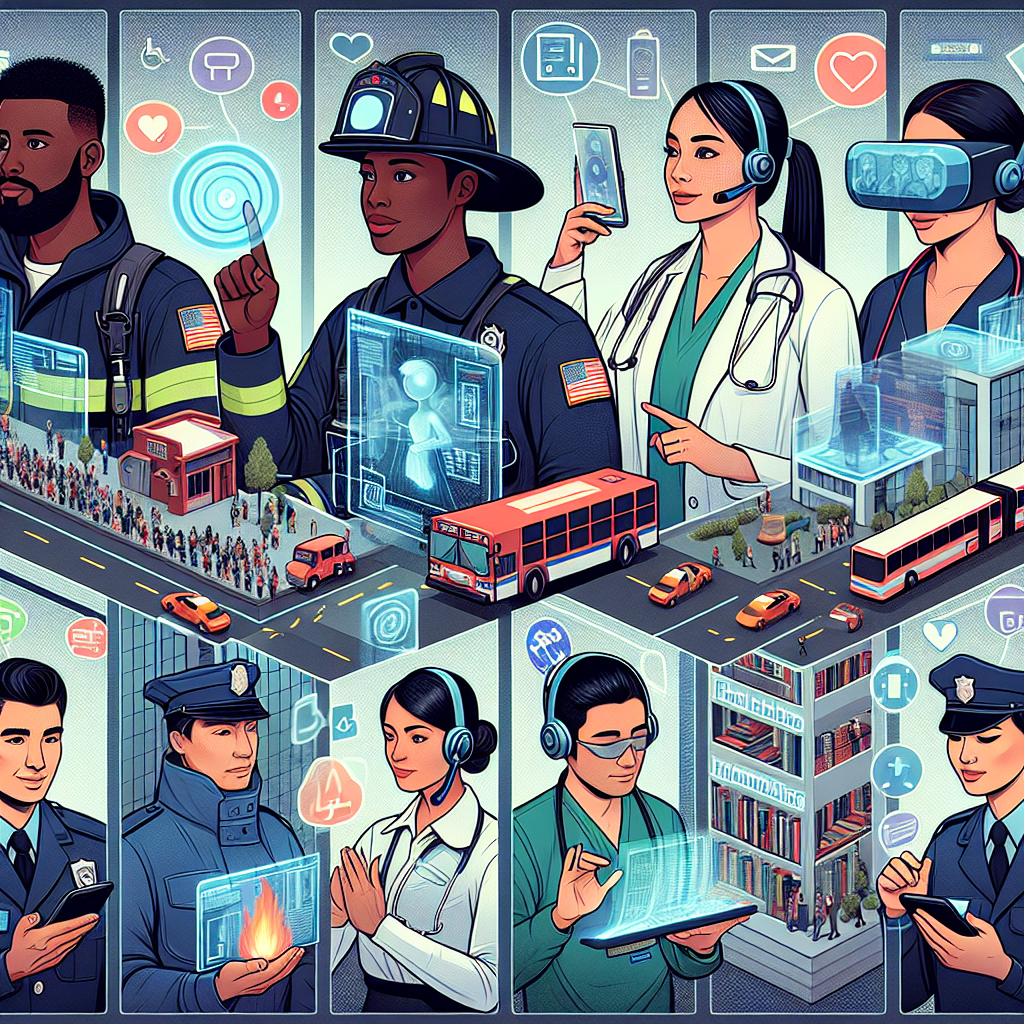
The Internet of Things (IoT) is another technological frontier that holds great promise for accessibility. In smart cities, interconnected devices can provide real-time information about public transportation, accessible routes, and services tailored to individuals with disabilities. For instance, smart traffic signals can communicate directly with wheelchair users to ensure safe crossing times. Home automation systems, another aspect of IoT, offer significant benefits as well by allowing individuals to control various aspects of their living environment through voice or mobile apps, thus fostering greater independence.
Virtual Reality and Augmented Reality
Virtual Reality (VR) and Augmented Reality (AR) are emerging technologies that offer unique solutions for accessibility. VR can create immersive environments that simulate real-world experiences, providing training for individuals with disabilities in a safe and controlled setting. For example, VR can assist individuals who have difficulty navigating crowded spaces by providing virtual practice sessions. AR, on the other hand, can overlay helpful information onto real-world environments via smartphones or wearable devices, such as providing audio cues or visual markers to assist with navigation and task completion. These technologies have the potential to remove significant barriers, making public services more accessible than ever before.
Challenges and Considerations
While the advancements are promising, several challenges remain. First, ensuring that new technologies are accessible from the outset requires intentional design and development practices, often referred to as “inclusive design.” Second, there is a need for ongoing training to help both service providers and users understand and effectively utilize accessible technologies. Third, issues of cost and scalability can pose significant barriers to widespread adoption. Finally, it’s crucial to consider the privacy and security implications of emerging technologies, especially as they increasingly rely on personal data.
Conclusion
The future of accessible technology in public services is brimming with potential. With ongoing innovation and a commitment to inclusivity, there is an opportunity to create a world where barriers to access are continually dismantled. The ADA remains a vital piece of legislation, but it is the ongoing advancements in technology, powered by principles of universal design, that will truly shape the future. It is essential for public services, technologists, and policymakers to collaborate, ensuring that new developments are guided by the needs and experiences of individuals with disabilities. In doing so, we pave the way for an inclusive society where everyone can fully participate and thrive.
Frequently Asked Questions
1. What role does technology play in improving accessibility in public services?
Technology has become a linchpin in advancing accessibility for public services, making them more inclusive and user-friendly for everyone, including individuals with disabilities. From the advent of screen readers and closed captioning to advanced voice recognition systems, technology helps tear down barriers that often isolate people with disabilities. Wearable tech, smart devices, and other IoT applications provide real-time assistance and open up avenues for independence like never before. As we move towards a future rich in technological innovation, one can only expect these tools to become more sophisticated, creating a more equitable landscape for accessing public services.
2. How has the Americans with Disabilities Act (ADA) influenced technological advancements in this regard?
The Americans with Disabilities Act (ADA), established in 1990, laid a critical foundation for accessibility by mandating that public spaces must be accessible to individuals with disabilities. This landmark legislation has been a catalyst for technological advancements in public services, pushing organizations to integrate accessible technologies to comply with ADA standards. Since its enactment, we’ve seen an explosion of innovations designed to enhance access—ranging from the provision of assistive listening systems in public venues to the development of accessible websites and online platforms. The ADA acts as a guideline for developers and public service providers, ensuring their solutions are not only helpful but also legally compliant.
3. What are some emerging technologies that could impact future accessibility in public services?
In the sphere of public services, some emerging technologies hold enormous potential for improving accessibility. Augmented Reality (AR) and Virtual Reality (VR) offer transformative ways to enhance navigability and understanding of physical spaces for individuals with visual impairments. Meanwhile, AI-driven tools like sentiment analysis and natural language processing are being refined to improve communication aids, benefiting those with speech or cognitive disabilities. Blockchain technology, with its transparency and security features, can streamline the accessibility of public records and voting systems. As these technologies continue to mature, they promise unprecedented access to public services, making them more efficient and inclusive than ever.
4. How can public organizations ensure the integration of accessible technologies?
To successfully integrate accessible technologies, public organizations can start by conducting a comprehensive assessment of their current services, identifying areas where accessibility is lacking. Collaboration with technology developers specializing in accessible solutions ensures that new tech implementations are designed with universal access in mind. Investing in regular training programs for staff about accessibility and the latest technological tools is also crucial. Furthermore, engaging with the community that will use these services provides invaluable feedback, creating user-centered solutions that effectively bridge any accessibility gaps. Consistent monitoring and evaluation will keep the public services adaptive and responsive to evolving accessibility needs, securing a future where technology serves everyone equitably.
5. What challenges might arise in integrating new technology for enhanced accessibility in public services?
While the integration of new technology is exciting, it often comes with challenges that must be addressed. Financial constraints are a primary concern; implementing cutting-edge accessible technology may require significant investment, which can be a hurdle for budget-constrained public service providers. Additionally, rapidly evolving technology means that what is state-of-the-art today may quickly become obsolete, necessitating continuous updates and training. There’s also the challenge of ensuring that these technologies are user-friendly for all, not just those who are tech-savvy. Organizations must prioritize inclusivity in their design and implementation stages and remain compliant with ever-evolving legal and ethical standards in accessibility. By anticipating these challenges and meeting them head-on, public services can remain committed to a future where accessibility is seamlessly woven into the fabric of society.