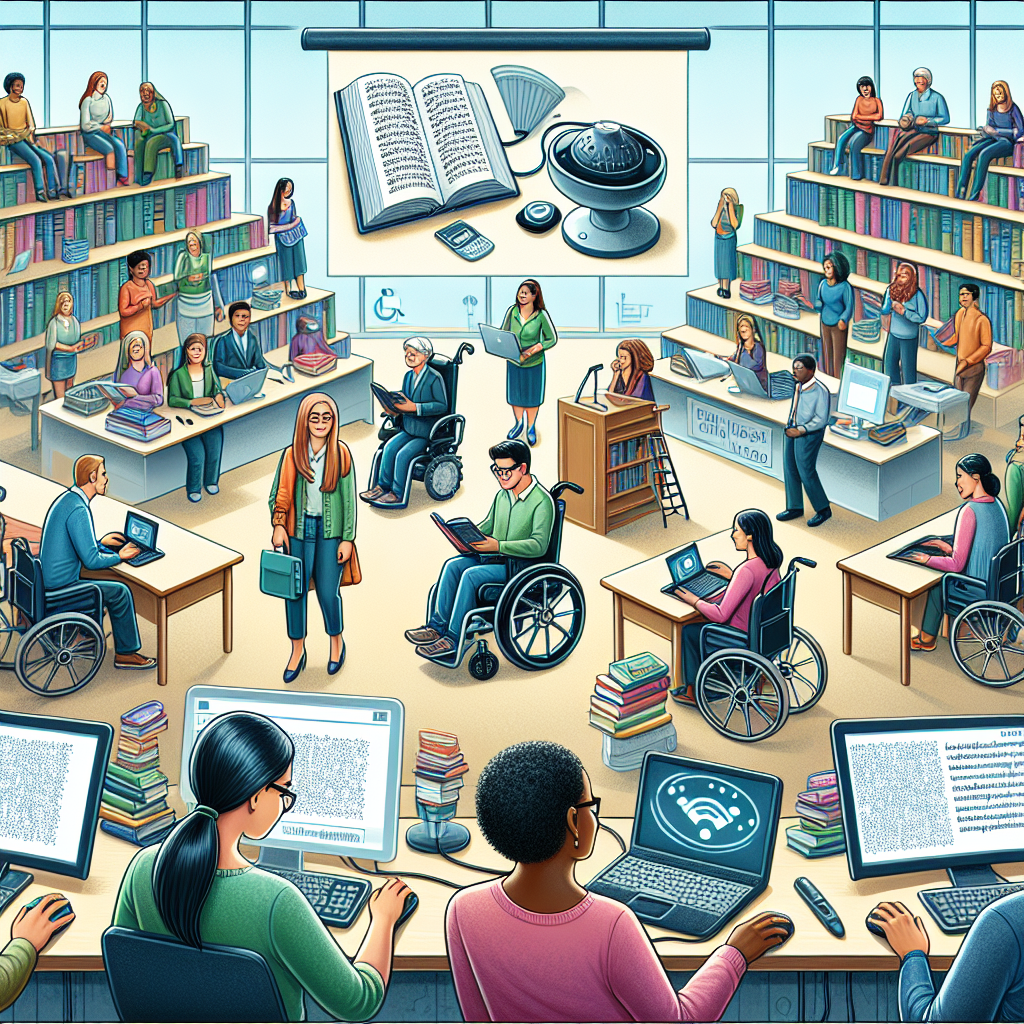
The Americans with Disabilities Act (ADA) has been a cornerstone in the fight for the rights of individuals with disabilities since it was signed into law in 1990. With the rise of digital technology, ensuring accessibility has become even more pertinent, especially in higher education. However, achieving technological accessibility is a complex, ever-evolving challenge that requires the ongoing commitment and concerted efforts of educational institutions. In this article, we will explore a multitude of strategies for promoting accessible technology within colleges and universities to foster an inclusive learning environment.
Understanding the Importance of Accessible Technology
Accessible technology is not just about compliance with laws like the ADA; it’s about creating an inclusive environment where all students, including those with disabilities, can effectively engage with educational resources. Technology acts as an enabler that allows students to overcome physical barriers and participate fully in academic and social activities. When technology is accessible, it can mitigate any disadvantage a student with a disability might face. In addition, an inclusive approach to education can foster diverse thinking and problem-solving skills among all students, which are invaluable qualities in both academic and professional settings.
Conducting Accessibility Audits
One of the first steps in promoting accessible technology in higher education is to conduct comprehensive accessibility audits. These audits should evaluate the current state of your campus’s technological resources to identify barriers that may inadvertently exclude students with disabilities. Key areas to assess include the website’s usability, software applications, and online learning platforms. Regular audits can help institutions stay ahead of potential issues and make proactive changes before they become significant barriers. Additionally, involving students with disabilities in these audits can provide valuable insights that might be overlooked by able-bodied individuals.
Incorporating Universal Design for Learning (UDL)
Universal Design for Learning (UDL) is an educational framework that focuses on designing courses that accommodate the widest range of learners. By integrating UDL principles, institutions can develop curricula that provide multiple means of representation, engagement, and expression. This approach is beneficial because it reduces the need for special accommodations by ensuring that the main learning materials are accessible to everyone from the outset. UDL can be applied to online content, instructional materials, and assessment tools, ensuring that all students, regardless of their abilities, have equal opportunities to succeed.
Providing Training and Resources
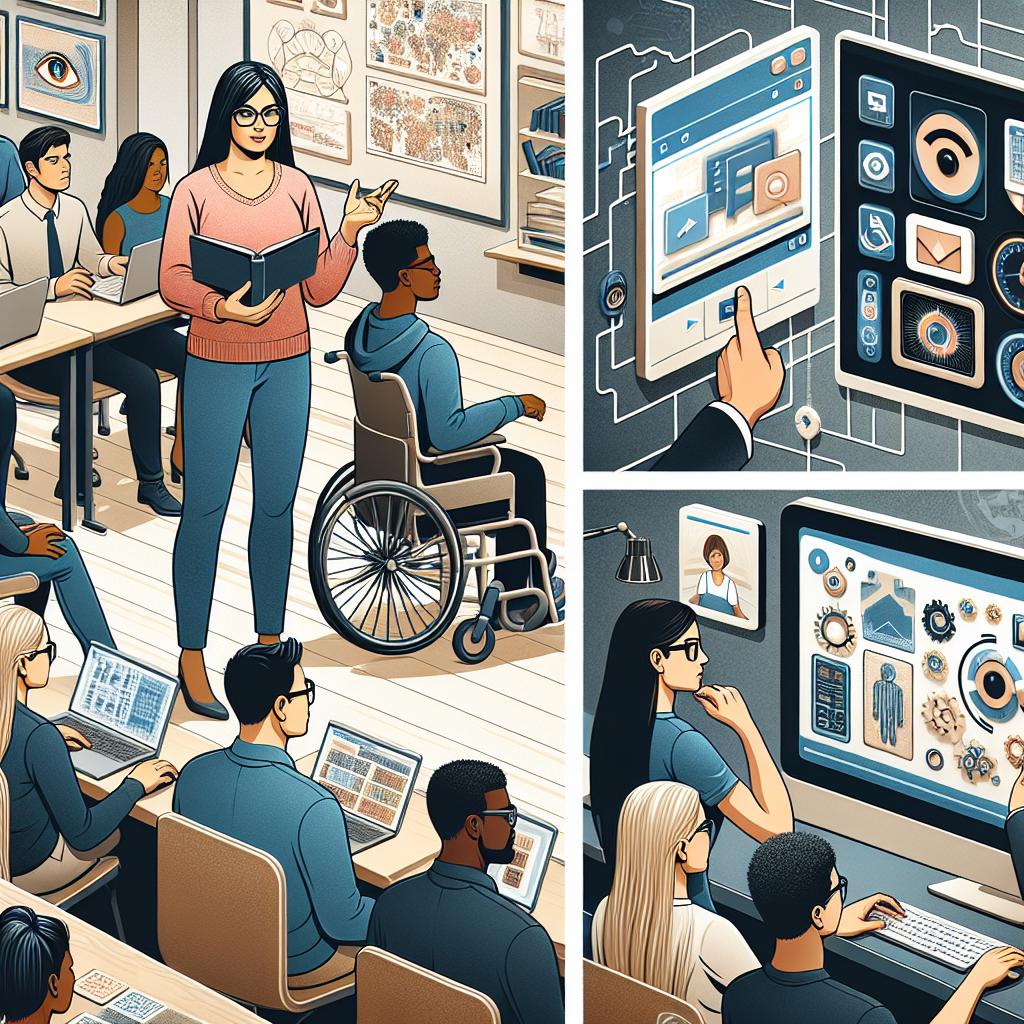
Even the most well-designed, accessible technologies can go underutilized if faculty and staff are not properly trained to use them. Therefore, it is critical to provide ongoing professional development opportunities focused on accessible technology. Workshops, webinars, and hands-on training sessions can equip educators with the knowledge and tools they need to create and deliver inclusive learning experiences. Additionally, making resources readily available—such as guides, best practices, and access to assistive technologies—can further empower faculty and staff to support all students effectively.
Enhancing Online Learning Platforms
Online learning platforms are a staple of modern higher education, and their accessibility is paramount. To ensure these platforms are usable for all students, institutions should prioritize partnering with vendors who are committed to accessibility. Features like screen reader compatibility, alt text for images, and customizable color contrast settings should be standard. Institutions can also develop their own guidelines and checklists for creating accessible course content. By fostering a culture of accessibility, higher education institutions can ensure that their online learning platforms provide equitable learning experiences for all students.
Fostering a Culture of Inclusivity
Beyond implementing specific tools and practices, fostering an overall culture of inclusivity is crucial. Leaders at all levels should advocate for accessibility and model inclusive behaviors. Institutions can establish committees or task forces dedicated to accessibility to ensure ongoing attention and improvement in this area. Additionally, celebrating successes and sharing stories of how accessible technology has positively impacted students can inspire and motivate further efforts. Building an inclusive academic community requires continuous dialogue, feedback, and commitment to improvement.
Conclusion
In sum, promoting accessible technology in higher education involves more than just meeting legal requirements; it requires a holistic, proactive approach. By conducting accessibility audits, incorporating Universal Design for Learning, providing training and resources, enhancing online learning platforms, and fostering a culture of inclusivity, institutions can create a truly accessible learning environment. These strategies not only ensure compliance with the ADA but also underline a commitment to equity and inclusion, ultimately enriching the educational experience for all students.
Frequently Asked Questions
1. What is the importance of promoting accessible technology in higher education?
Promoting accessible technology in higher education is crucial because it ensures that all students, including those with disabilities, have equal access to educational resources and opportunities. The Americans with Disabilities Act (ADA) mandates that institutions accommodate individuals with disabilities, guaranteeing their rights to access education without barriers. In the digital age, this means creating and implementing technology that’s usable by everyone. Consider a learning management system or an online course platform: if it’s not designed with accessibility in mind, students who rely on screen readers, for instance, might find themselves at a severe disadvantage. This can lead to lower academic performance and diminished opportunities for success. Therefore, accessible technology isn’t just a legal requirement; it’s an ethical one that aligns with education’s fundamental goals of inclusivity and equity.
2. How can educational institutions effectively implement accessible technology?
Implementing accessible technology in educational institutions requires strategic planning and continuous effort. Firstly, institutions should conduct a thorough audit of their existing technologies to identify accessibility gaps. This means evaluating websites, digital course materials, and classroom technologies to ensure they meet accessibility standards. Collaboration is also a key component; institutions should work with accessibility experts, technology developers, and staff to integrate solutions that are not only compliant but also innovative. Training faculty and staff is another critical step, as they need to be aware of accessibility best practices to support students appropriately. Lastly, institutions should foster a culture of inclusion, encouraging feedback from students with disabilities to guide ongoing improvements. It’s not a one-time fix but rather an iterative process that adapts as technology evolves.
3. What are some common challenges faced in promoting accessible technology in higher education?
One of the primary challenges is the lack of awareness and understanding of what constitutes accessible technology. Many educators and administrators may not fully grasp the barriers that students with disabilities face, leading to inadequately designed digital resources. Financial constraints can also pose a significant obstacle, as developing or acquiring accessible technologies often requires additional funding and resources. Integration with existing systems can be complicated; new technologies must work seamlessly with current infrastructures. Moreover, staying up-to-date with rapidly changing technology and accessibility standards requires continuous learning and adaptation. Lastly, there may be resistance to change within the institution, where stakeholders are accustomed to traditional methods and are hesitant to adopt new, accessible technologies.
4. What role do faculty and staff play in fostering an accessible learning environment?
Faculty and staff are pivotal in fostering an accessible learning environment, as they interact directly with students and use the technology that supports learning. By prioritizing accessibility in lesson planning, they ensure all materials are usable for every student. This can involve creating lecture slides with proper alt-text for images, using captioned videos, and selecting accessible online tools. Faculty should also be proactive in receiving training and staying informed about accessibility best practices and technologies. Moreover, building a rapport with students to understand their individual needs and challenges can greatly enhance the learning experience. Faculty and staff serve as advocates for accessibility, promoting an inclusive culture and pushing for necessary resources or policy changes. Their active participation can significantly impact the effectiveness of accessibility initiatives on campus.
5. What future trends in technology can help advance accessibility in higher education?
Several technological trends hold the potential to enhance accessibility in higher education. Artificial intelligence (AI) is increasingly being used to develop more sophisticated assistive technologies, such as AI-powered speech-to-text applications and advanced screen reading software. These can offer greater accuracy and customization, thus better meeting individual student needs. Virtual reality (VR) and augmented reality (AR) present new opportunities for immersive learning experiences that are accessible to all students, providing alternative ways to engage with content. Additionally, cloud-based services offer platforms to integrate various accessibility tools seamlessly, making them more scalable and easier to maintain. Open educational resources (OER) also play a significant role by supporting the development of universally designed materials. As these technologies evolve, they can help dismantle barriers, offering richer and more personalized educational experiences for all students.