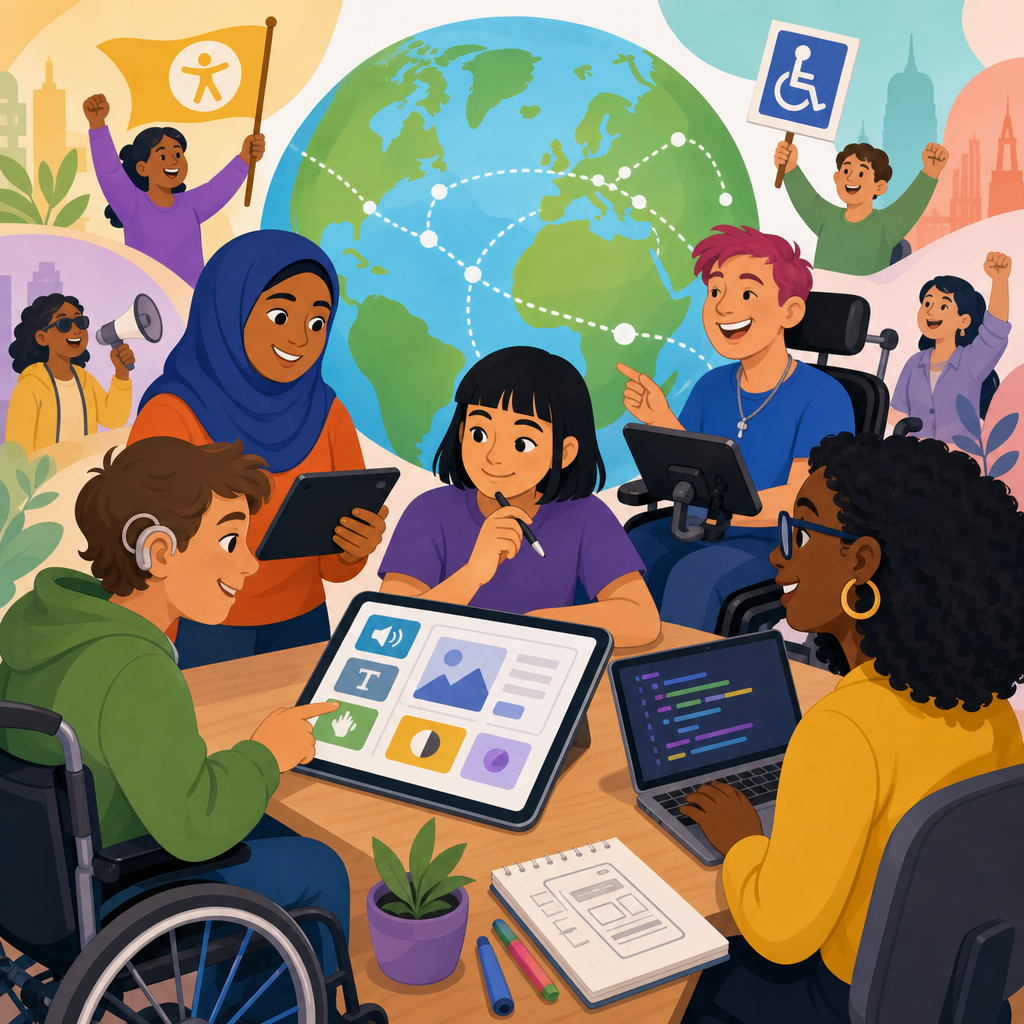
Global disability rights movements are reshaping technology design by turning accessibility from a compliance afterthought into a core product requirement, a market expectation, and a human rights obligation. In practical terms, that means software, devices, websites, and digital services are increasingly built with disabled people involved from the start, not retrofitted after launch. Disability rights refers to the legal, social, and political movement asserting that disabled people deserve equal access, autonomy, participation, and protection from discrimination. Tech design includes everything from interface layout and captioning to procurement standards, artificial intelligence training data, hardware ergonomics, and platform governance. When these two forces meet, the result is not a niche design trend. It is a structural shift affecting how products are conceived, tested, regulated, and evaluated across markets.
I have seen this change firsthand in accessibility reviews that once focused narrowly on color contrast and alt text, but now include disability-led research, localization, procurement risk, and legal exposure across several jurisdictions. Teams that used to ask, “Can we make this accessible later?” now ask, “Which users are excluded by this concept?” That reframing matters because more than 1.3 billion people worldwide live with significant disability, according to the World Health Organization. Add temporary, situational, and age-related impairments, and accessible design becomes a mainstream business and civic issue. It also intersects with education, employment, public services, finance, transportation, and communication, making technology one of the most powerful arenas for disability inclusion.
This hub explores the future of global accessibility and disability rights by connecting legal frameworks, design methods, assistive technology, inclusive research, artificial intelligence, and international market pressure. The central idea is straightforward: disability rights movements are not only influencing technology policy; they are defining what good technology looks like. The strongest products now treat accessibility as usability, resilience, and product quality. They account for screen reader compatibility, keyboard navigation, captions, clear language, cognitive load, haptic feedback, adaptable interfaces, and interoperability with assistive tools. They also recognize that standards differ by region, enforcement is uneven, and lived experience must guide implementation. Understanding these forces helps organizations build better products and helps readers see where the next wave of global tech design is heading.
From civil rights advocacy to design requirements
The modern shift began when disability rights movements pushed governments and institutions to frame access as a right rather than a charitable accommodation. Landmark laws such as the Americans with Disabilities Act, the UK Equality Act 2010, the European Accessibility Act, and disability legislation in countries including Canada, Australia, India, and Brazil created enforceable expectations that digital systems should not exclude users. At the international level, the United Nations Convention on the Rights of Persons with Disabilities established a powerful baseline by linking accessibility, independent living, education, political participation, and information access. Once digital services became essential for daily life, these rights naturally extended into product design, procurement, and platform operation.
That legal pressure changed internal technology processes. Accessibility moved from specialist remediation to a requirement in design systems, product roadmaps, and enterprise risk management. Many organizations now align digital work with the Web Content Accessibility Guidelines, currently the most widely referenced technical benchmark for web and app accessibility. WCAG does not solve every problem, but it provides a shared language for perceivable, operable, understandable, and robust content. In practice, disability rights advocacy gave standards their urgency. Without activist pressure, many companies would still treat accessibility as optional because the excluded users are too often invisible in analytics dashboards and product meetings.
Why global movements are changing product strategy
Global disability rights movements matter because technology now crosses borders faster than regulation does. A mobile app launched in one country can be used in dozens more within days, which means inaccessible design can scale internationally just as quickly as good design. Multinational companies therefore face a convergence problem: they must meet different legal expectations, language needs, cultural norms, and assistive technology ecosystems while maintaining product consistency. In response, the most effective teams build to a high baseline and adapt locally. That strategy is not only safer. It also improves speed, because accessibility is easier to integrate into shared components than to patch market by market.
Disability advocates have also changed what executives view as strategic risk and opportunity. Public pressure, litigation, investor scrutiny, procurement requirements, and reputational consequences now influence accessibility budgets. At the same time, accessible products perform better for broader groups: captions help multilingual users and people in noisy settings, keyboard shortcuts improve power use, clear layout reduces errors, and voice control supports hands-free interaction. This is why the future of global accessibility and disability rights is tied to mainstream product strategy. Accessibility is no longer confined to compliance teams. It shapes customer acquisition, retention, support costs, public trust, and international expansion.
How disabled users are influencing design methods
The most important change in tech design is methodological: disabled people are increasingly participating as researchers, testers, consultants, employees, and founders. “Nothing about us without us” is not a slogan for communications materials; it is a design operating principle. In workshops I have run, the biggest breakthroughs usually come when teams observe a blind user navigating dynamic forms, a Deaf participant using captions and interpreters across platforms, or a neurodivergent user encountering dense workflows with unclear status messages. These sessions expose issues no automated scanner can catch, including timing problems, confusing mental models, sensory overload, and interaction traps caused by animation or focus mismanagement.
This has pushed teams toward inclusive design, participatory design, and co-creation. Inclusive design aims to serve the widest practical range of users. Participatory design brings affected users directly into decision-making. Co-creation treats users as collaborators rather than subjects. The result is better product definition. Instead of asking whether a button passes contrast ratios, teams ask whether the task itself is unnecessarily complex. Instead of shipping one rigid interface, they build adjustable text size, reduced motion, transcript access, straightforward error recovery, and multiple input methods. Disability rights movements have made these questions unavoidable, and that is improving products well beyond accessibility checklists.
The standards, laws, and frameworks shaping the next decade
The future of global accessibility and disability rights will be shaped by a mix of binding law, technical standards, and procurement rules. The European Accessibility Act is especially significant because it extends accessibility obligations across products and services in the EU market, affecting e-commerce, banking, communications, transport information, and consumer devices. In the United States, ADA-related digital accessibility litigation continues to influence website and app practices even without a single comprehensive federal technical statute for every context. Canada’s Accessible Canada Act, the Accessibility for Ontarians with Disabilities Act, and similar provincial regimes add another layer of requirements. Public sector procurement rules often go further, making accessibility documentation mandatory before purchase.
Teams navigating this landscape need operational clarity. The table below outlines the major forces now shaping design decisions.
| Driver | What it requires | Design impact | Example |
|---|---|---|---|
| UN disability rights framework | Equal access to information and participation | Accessibility treated as rights-based, not optional | Government portals adding screen reader support and plain language |
| WCAG technical guidance | Testable criteria for digital accessibility | Built-in rules for contrast, focus, structure, and alternatives | Design systems enforcing accessible components |
| Regional legislation | Market-specific legal compliance | Accessibility reviews embedded in release cycles | EU consumer service updates before enforcement dates |
| Procurement standards | Vendor accessibility conformance evidence | Accessibility becomes a sales prerequisite | VPAT documentation for enterprise software deals |
| Disability-led activism | Accountability through public pressure and lived experience | User research expands beyond automated audits | Platforms revising caption policies after creator advocacy |
One important nuance is that standards can create a false sense of completeness if used mechanically. Passing automated checks is not the same as being usable. A compliant checkout flow can still fail if timeout warnings are unclear, labels are contextless, or screen reader announcements are confusing. The next decade will reward organizations that combine legal interpretation, technical standards, assistive technology testing, and disability-led evaluation into one governance model.
AI, emerging interfaces, and the new accessibility frontier
Artificial intelligence is expanding both the promise and the risk of accessible technology. On the positive side, AI can improve speech recognition, live captioning, image description, predictive text, translation, noise suppression, and personalized interface adaptation. Microsoft, Google, Apple, and other major firms already embed some of these capabilities into mainstream products. Automatic captions on video platforms have transformed access for many Deaf and hard-of-hearing users, even though quality still varies by accent, domain vocabulary, and language support. Computer vision tools can help describe scenes to blind users, and generative systems may eventually support more flexible content summaries, reading simplification, and multimodal interaction.
But disability rights advocates are equally focused on AI harms. Biased training data can misread atypical speech, fail to recognize assistive devices, or misclassify disabled behavior in hiring, education, insurance, and security systems. Voice interfaces often struggle with speech impairments. Gesture systems may assume fine motor control. Emotion recognition tools are especially problematic because they infer mental states from facial or vocal cues that vary widely across disabled populations. This is why the future of global accessibility and disability rights cannot be separated from AI governance. Accessible AI requires representative data, transparency, human oversight, fallback options, and testing with disabled users across languages and contexts.
What inclusive global tech design looks like in practice
In practice, inclusive global tech design starts with procurement and planning, not final QA. Teams define accessibility requirements in product briefs, map relevant jurisdictions, budget for user research, and select components that support semantic structure and assistive technology compatibility. During design, they account for language expansion, reading level, text resizing, focus order, target size, error prevention, and motion preferences. During development, they use native controls where possible, preserve keyboard support, label interactive elements correctly, and test with screen readers such as NVDA, JAWS, VoiceOver, and TalkBack. During release, they publish accessibility statements, document limitations honestly, and create a remediation path.
Real-world examples show why this matters. A banking app that relies only on facial verification may exclude users with facial differences, camera access limitations, or low-vision setup barriers. A government site that posts scanned PDFs instead of structured content blocks benefit applications for screen reader users and people reading on phones. A video-first education platform without accurate captions excludes learners immediately and harms searchability as well. Conversely, when companies add transcripts, robust heading structure, clear error messaging, tactile hardware cues, and multilingual support, they often see fewer support tickets and better completion rates. Accessibility improves the product because it reduces friction at the exact points where users abandon tasks.
Where the movement is heading next
The next phase of global accessibility will be defined by deeper integration, stronger enforcement, and broader conceptions of disability. Integration means accessibility becomes part of cybersecurity reviews, procurement, design ops, content strategy, and AI governance rather than a standalone specialty. Stronger enforcement means more markets will clarify digital obligations and tie them to consumer protection, public procurement, and platform accountability. Broader conceptions of disability mean more attention to cognitive accessibility, mental health impacts, chronic illness, fatigue, environmental sensitivities, and the interaction between disability, language, poverty, and infrastructure. These issues are especially important in international contexts where bandwidth, device quality, and support services vary sharply.
The most forward-looking organizations are already acting on this reality. They measure accessibility defects like other product defects. They train designers, engineers, writers, and procurement teams. They maintain accessible component libraries, captioning workflows, and documented test plans. They hire disabled talent and compensate community expertise. Most importantly, they stop treating accessibility as a separate audience problem and recognize it as a universal design condition in a diverse world. That is the lasting influence of disability rights movements on technology design. They have changed the standard from “works for most people” to “does not exclude people by default.” If you are building, buying, or evaluating digital products, use this hub as your starting point and make accessibility a requirement from day one.
Frequently Asked Questions
How are global disability rights movements changing the way technology is designed?
Global disability rights movements are fundamentally changing technology design by shifting accessibility from a late-stage fix to an essential design principle. For many years, companies often treated accessibility as a compliance checklist or a niche feature added only when required by law. Disability advocates, activists, and organizations around the world have challenged that approach by arguing that access to digital tools, communication platforms, education technology, financial services, and consumer devices is part of full participation in society. As a result, technology companies are increasingly expected to consider disabled users from the beginning of product development rather than after launch.
This shift has practical effects across the entire product lifecycle. Teams now pay more attention to inclusive research, accessible user interfaces, captioning, screen reader compatibility, keyboard navigation, adaptable controls, color contrast, cognitive accessibility, and assistive technology support. Just as importantly, disability rights movements have pushed companies to involve disabled people directly in testing, strategy, and leadership. That changes not only the technical output, but also the values behind the product. In this way, global disability rights advocacy is influencing tech design as both a human rights issue and a business standard, making accessibility a core expectation rather than an optional enhancement.
Why is accessibility now seen as a core product requirement instead of just a legal obligation?
Accessibility is increasingly viewed as a core product requirement because technology is now woven into daily life. People use digital tools to work, learn, bank, shop, communicate, travel, and access healthcare. When those tools are inaccessible, disabled people can be excluded from essential parts of modern society. Disability rights movements have made that reality much harder for governments, businesses, and designers to ignore. They have successfully reframed accessibility as a matter of equal participation, dignity, and civil rights, not simply a technical rule to satisfy regulators.
There is also a strong practical and commercial reason for this change. Accessible design often leads to better products for everyone. Captions help not only deaf and hard-of-hearing users, but also people in noisy environments. Voice control can support users with mobility impairments while also improving convenience for multitasking users. Clear layouts, readable text, and predictable navigation benefit people with cognitive disabilities while also making interfaces easier for the broader public. Companies are recognizing that inclusive design expands their audience, reduces usability barriers, improves customer satisfaction, and strengthens brand trust. In that environment, accessibility is no longer just about avoiding legal risk; it is about building better, more competitive, and more socially responsible products from the ground up.
What does it mean to involve disabled people in technology design from the start?
Involving disabled people in technology design from the start means moving beyond assumptions and designing with direct input from the communities most affected by accessibility decisions. Instead of waiting until a product is nearly finished and then asking whether it works with a screen reader or offers captions, inclusive teams bring disabled people into discovery, planning, prototyping, testing, and ongoing improvement. That can include hiring disabled designers, researchers, engineers, consultants, and quality assurance specialists, as well as running user research sessions with people who have diverse physical, sensory, cognitive, and neurodivergent experiences.
This approach matters because disability is not a single category, and accessibility cannot be solved with one universal feature. A person who is blind may navigate a product very differently from a person with limited dexterity, chronic pain, dyslexia, autism, or low vision. Early collaboration helps teams identify real barriers before they become embedded in architecture and interface decisions. It also reduces the need for expensive retrofits later. Most importantly, it recognizes disabled people as experts in their own experience. Global disability rights movements have emphasized the principle of “nothing about us without us,” and that idea is now increasingly shaping how responsible technology teams develop products that are actually usable, equitable, and inclusive.
How do disability rights movements influence tech policy, standards, and corporate decision-making around the world?
Disability rights movements influence technology at multiple levels, from public policy to internal corporate governance. Advocacy groups, legal campaigns, academic researchers, and grassroots organizers have all played a role in pushing governments to adopt stronger accessibility laws, procurement rules, anti-discrimination protections, and digital inclusion frameworks. These efforts affect how technology is bought, built, and deployed. When public institutions require accessible websites, software, and digital services, vendors must respond. When courts and regulators reinforce digital accessibility as part of equal access, companies take notice.
Beyond formal law, disability rights movements also shape the standards and expectations that guide product teams. International frameworks, accessibility guidelines, and best practices often gain wider adoption because advocates continue to push for accountability and visibility. At the corporate level, this pressure can lead to dedicated accessibility teams, executive oversight, inclusive design systems, mandatory training, and accessibility requirements built into procurement and development workflows. Investors, customers, employees, and public audiences increasingly expect companies to demonstrate genuine commitment rather than symbolic statements. In this sense, disability rights advocacy does more than inspire better intentions; it creates measurable pressure that influences budgets, timelines, feature prioritization, risk management, and long-term product strategy across the global tech industry.
What are some real-world examples of how disability rights advocacy leads to better technology for everyone?
There are many examples of disability rights advocacy improving mainstream technology in ways that benefit a broad range of users. Captions and transcripts are a strong example. They were championed through accessibility and disability inclusion efforts, yet today they are widely used by people watching videos in quiet offices, crowded public spaces, or multilingual settings. Screen reader compatibility has improved digital structure and semantic clarity on many websites and apps, which often makes navigation cleaner and more consistent overall. Keyboard accessibility has helped create more efficient user flows for power users as well as people who cannot rely on a mouse or touchscreen.
Other examples include voice assistants, customizable text size, dark mode, vibration alerts, predictive text, and flexible input methods. Many of these features either emerged from accessibility needs or were significantly improved because of pressure to serve disabled users more effectively. Disability rights movements have also encouraged broader thinking about inclusive design in areas such as gaming, wearable devices, public kiosks, smart home products, and remote work platforms. The larger lesson is that designing for disability often reveals weaknesses in a product that affect many people, including older adults, temporary injury users, and people in challenging environments. By insisting on equal access, disability advocates are not narrowing technology design; they are helping make it more resilient, adaptable, and useful for society as a whole.