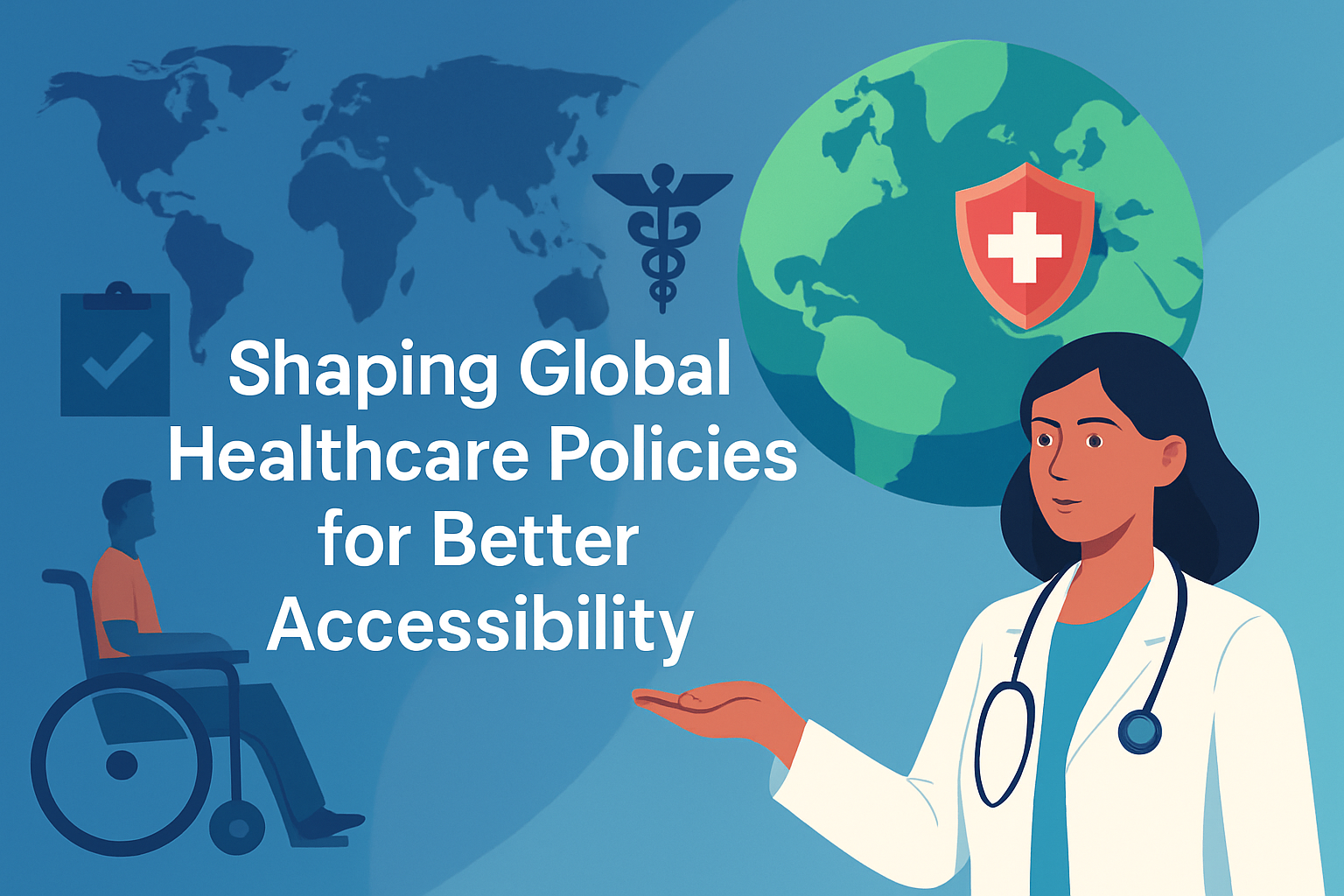
The landscape of healthcare is a critical domain that has a direct impact on the quality of life for every individual, irrespective of geographical boundaries. In an era where technological advancements and medical breakthroughs are making headlines, the disparity in healthcare accessibility remains a pressing concern. “Shaping Global Healthcare Policies for Better Accessibility” seeks to understand how we can create inclusive policies that bridge healthcare gaps. Healthcare policy refers to the plans and decisions that are made to achieve specific healthcare goals. When we discuss accessibility, we focus on how easily individuals can obtain needed medical services without financial or logistical barriers. This matters deeply because, despite abundant resources, a significant portion of the global population still struggles to access basic healthcare services. As health is an intrinsic part of human rights, shaping global policies to ensure equitable access is crucial for societal advancement and individual well-being. If healthcare doesn’t reach every corner of the globe, the risk of diseases spreading uncontrollably and an increase in mortality rates looms large, making this an issue of paramount importance.
Understanding Barriers to Healthcare Accessibility
There are multifarious barriers that impede healthcare accessibility. These barriers could be economic, geographical, or socio-cultural in nature, and they vary significantly across regions. For instance, in rural areas of developing nations, geographical obstacles often prevent people from accessing healthcare institutions. Consider the case of rural India, where the lack of transportation and poor infrastructure hinder villagers from reaching healthcare facilities. The scarcity of healthcare professionals in such regions exacerbates the problem. Economically, high medical costs prevent lower-income groups from seeking necessary treatment. Even in developed nations like the United States, significant populations remain uninsured, showcasing how financial barriers can exist regardless of a country’s overall prosperity. Addressing these barriers requires a multi-pronged approach that considers local dynamics and involves collaborative international efforts.
The Role of Technology in Bridging Gaps
Technology stands as a beacon of hope in overcoming some of the most formidable barriers to healthcare accessibility. Telemedicine, for instance, has transformed how medical consultations occur, enabling patients in remote areas to consult with specialists without traveling long distances. A poignant example is the use of telemedicine in sub-Saharan Africa, where limited access to healthcare facilities poses a significant challenge. Telemedicine applications are enabling real-time consultations between patients and doctors, providing diagnosis and treatment plans without the need for physical presence. Moreover, mobile health (mHealth) applications are making healthcare information more accessible and personalized. These technological interventions not only expand access but also improve the quality of care, offering preventive measures that reduce the need for expensive treatments down the line.
Policy Framework Supporting Universal Healthcare
A robust policy framework is indispensable for achieving universal healthcare accessibility. Policies must be devised so they are adaptable to the diverse dynamics of different regions. For example, Brazil’s Unified Health System (Sistema Único de Saúde, SUS) is a comprehensive healthcare system aimed at offering complete, universal, and free-of-cost healthcare services to its citizens. This system is premised on principles such as health as a right, equity, and comprehensive care. By focusing on such principles, policies can drive significant improvements in healthcare accessibility. Furthermore, international collaborations, such as the World Health Organization’s emphasis on universal health coverage, help in aligning countries towards common goals. Policies that support the training of healthcare professionals, fight healthcare fraud, and promote affordable healthcare are equally pertinent in reinforcing the overall framework.
Collaborative Efforts and International Partnerships
Global healthcare challenges necessitate collaboration beyond national borders. International partnerships play a pivotal role in addressing shared challenges and fostering innovation. The Global Fund to Fight AIDS, Tuberculosis and Malaria is an excellent example of how collaborative efforts can lead to substantial global health improvements. By pooling resources from various countries, the Global Fund supports programs that are tailored to the unique needs of developing regions, saving millions of lives. In addition to joint funding, sharing of knowledge, expertise, and technological advancements forms the cornerstone of effective international partnerships. These collaborations empower nations with limited resources, enabling them to build resilient healthcare systems.
| Region | Major Barrier | Solution Implemented |
|---|---|---|
| Rural India | Geographical isolation | Telemedicine and mobile health units |
| Sub-Saharan Africa | Lack of healthcare professionals | Telehealth services and mobile clinics |
| United States | High costs for the uninsured | Expansion of Medicaid and health subsidies |
The Importance of Health Education and Awareness
Health education and awareness campaigns play an instrumental role in improving healthcare access. By educating communities about preventive measures and the importance of healthcare, individuals are more likely to seek medical help in early stages, leading to better health outcomes. For example, the “Let’s Move” campaign in the United States spearheaded by former First Lady Michelle Obama sought to combat childhood obesity by promoting healthy eating and physical activities. Such initiatives demonstrate how raising awareness can lead to health-conscious behaviors and reduce the burden on healthcare systems. Moreover, culturally relevant health education ensures that communities understand and trust the healthcare information provided, thereby encouraging greater acceptance and engagement.
Addressing Financial Barriers through Innovative Approaches
High costs are perhaps the most significant barrier to healthcare access. Innovative financial models are vital for addressing these barriers. One such approach is micro-health insurance, which offers affordable coverage to low-income populations. Micro-insurance schemes in countries like Bangladesh have shown promising results, providing healthcare access to millions who were previously without coverage. Another innovative model is community-based health insurance, where members of a community pool their resources to cover healthcare needs, effectively spreading risk among the payer group. Additionally, expanding public health initiatives financed through cross-subsidization, where wealthier sections contribute to healthcare costs for poorer sections, can lead to broader coverage and reduced financial strain on underserved populations.
Case Studies of Successful Healthcare Accessibility Initiatives
Successful case studies offer valuable insights into practical strategies for enhancing healthcare accessibility. Cuba’s healthcare system, despite the country’s economic constraints, is recognized for its high accessibility levels. The government’s investment in primary healthcare, robust preventive measures, and a focus on community health workers contribute significantly to health outcomes. Similarly, Rwanda’s community health worker program has played a crucial role in bridging healthcare gaps through the deployment of trained locals to provide basic healthcare services in remote areas. These examples underscore the importance of government commitment, community involvement, and sustainable funding in creating accessible healthcare systems.
Challenges and the Path Forward
While progress has been made in improving global healthcare accessibility, significant challenges remain. Political instability, economic disparities, and cultural resistance are barriers that require nuanced approaches. Strengthening healthcare infrastructure, investing in technology, and fostering global partnerships are essential steps toward progress. International bodies and organizations need to prioritize healthcare in international development agendas. Furthermore, policy makers must ensure the sustainability of healthcare initiatives by aligning them with broader social and economic policies. By embracing innovation, leveraging global collaboration, and ensuring the equitable distribution of resources, it is possible to help narrow the healthcare divide on a global scale.
Conclusions and Call to Action
The journey to ensuring global healthcare accessibility is a marathon, not a sprint. Yet, the strides made thus far highlight the potential for transformative change. Addressing barriers through technology, policy frameworks, global collaborations, health education, and innovative financial models provides a robust pathway to enhanced accessibility. For readers, the call to action is clear: engage in advocacy and support policies that aim to break down barriers to healthcare access. Whether through raising awareness, participating in community health initiatives, or urging policymakers to prioritize healthcare, individual actions can collectively lead to significant improvements. It’s vital to remember that healthcare is not just a sector of social policy but a cornerstone of human dignity and progress. By working together, nations, communities, and individuals can shape a future where healthcare is accessible to all, fostering a healthier, more equitable world.
Frequently Asked Questions
1. What are some significant barriers to healthcare accessibility across the globe?
The barriers to healthcare accessibility are numerous and complex, heavily influenced by socioeconomic, political, and cultural factors. One primary hurdle is the economic disparity, where impoverished populations lack financial resources to afford even the most basic medical care. This issue is further compounded by the absence of health insurance in many countries, leaving millions without a safety net in case of medical emergencies. Geographical challenges also play a crucial role; remote areas often have limited access to healthcare facilities, and transportation costs can be prohibitive. Additionally, political instability in certain regions can lead to a breakdown of healthcare systems, making consistent and reliable care difficult to attain.
Cultural misconceptions and linguistic barriers can also pose significant obstacles. In some cultures, traditional medicine is preferred over modern healthcare, reducing engagement with healthcare systems. Language differences between patients and providers can lead to misunderstandings or misdiagnoses, worsening health outcomes. Furthermore, inadequate healthcare infrastructure, including a shortage of trained professionals and outdated medical facilities, limits the quality and reach of care available to patients. Addressing these diverse and interrelated barriers requires a multifaceted approach, utilizing both local insights and global expertise.
2. How can global healthcare policies be shaped to ensure better accessibility?
Shaping global healthcare policies to enhance accessibility involves a strategic blend of collaboration, innovation, and equity-focused solutions. A primary step is engaging international bodies, such as the World Health Organization (WHO), to develop comprehensive policy frameworks that prioritize equity in healthcare distribution. These frameworks need to be adaptable to address the unique challenges of diverse regions while setting high standards for quality and access.
Investing in healthcare infrastructure is critical. This includes financing the construction and maintenance of state-of-the-art medical facilities, equipping them with modern technologies, and ensuring their sustainable operation. Moreover, boosting the healthcare workforce is vital – training programs should be expanded to increase the number of medical professionals who are not only skilled in medical practices but also culturally competent to serve diverse populations effectively.
Another crucial area is technology integration; telemedicine and mobile health solutions can bridge gaps, especially in under-resourced areas. By leveraging digital platforms, healthcare can reach those previously marginalized due to physical location or lack of infrastructure. Policy-makers should also focus on promoting health finance reforms to make healthcare affordable. This includes subsidizing medical services for low-income individuals and families and implementing robust health insurance systems to provide financial protection for all.
3. Why is international cooperation essential in shaping healthcare policies for better accessibility?
International cooperation is pivotal in shaping healthcare policies because health challenges often transcend national borders, necessitating a united approach. Diseases can rapidly cross continents due to global travel and trade, and pandemics like COVID-19 have starkly highlighted the interconnectedness of world health. By working together, countries can share vital resources, knowledge, and strategies, creating a more resilient global healthcare system that can better anticipate and respond to health crises.
Furthermore, international cooperation allows for the pooling of resources, mitigating the financial burdens faced by individual nations, particularly those with developing economies. Collaborative efforts lead to shared research and innovation, speeding up the development and dissemination of new medical treatments and technologies. Such partnerships enable the creation of unified health standards, ensuring consistent quality of care across different regions.
Collaborative frameworks can also drive the creation of policies that support underserved populations worldwide, addressing both immediate healthcare needs and long-term health objectives. By aligning global priorities, nations can work towards eliminating health disparities, ensuring that all individuals, regardless of their geographical location, have access to the care they deserve.
4. What role does technology play in improving healthcare accessibility?
Technology is a transformative force in improving healthcare accessibility, particularly through innovations that overcome logistical and geographical barriers. Telemedicine, for instance, has revolutionized access to medical consultations, enabling patients in remote or underserved locations to connect with healthcare providers without needing to travel. This not only saves time and resources but also ensures that patients can receive timely advice and interventions, which is critical for managing chronic conditions or urgent health issues.
Moreover, mobile health applications empower individuals to track their health conditions, manage medications, and access educational resources, fostering proactive health management. These platforms often include features that allow users to schedule appointments, receive reminders for check-ups and screenings, and even obtain prescription refills, reducing the strain on healthcare facilities and minimizing wait times for patients.
Electronic health records (EHR) are another significant technological advancement, streamlining the collection and sharing of patient information across various healthcare providers. This integration facilitates continuity of care, reduces the risk of errors, and enhances overall patient outcomes. It’s also worth mentioning the role of artificial intelligence (AI) and machine learning in healthcare; these technologies are rapidly being deployed to analyze complex data sets, improving diagnostic accuracy and personalizing treatment plans.
For technology to effectively improve accessibility, policies should encourage its integration into healthcare systems while safeguarding patients’ privacy and data security. Initiatives to expand internet access and digital literacy, especially in rural or disadvantaged communities, will further ensure that technological benefits are equitably distributed.
5. How can local governments support global initiatives aiming for better healthcare accessibility?
Local governments are instrumental in translating global healthcare initiatives into tangible outcomes for their communities. They serve as the primary interface between international organizations and the populations they aim to assist. To support these global efforts, local governments can first adopt and adapt international policy recommendations to align with regional needs and cultural contexts, ensuring relevance and efficiency.
One of the key roles local governments can play is to foster partnerships with local stakeholders, including healthcare providers, community organizations, and educational institutions, to build a unified front for implementing health policies. By mobilizing these resources, local governments can extend the reach of global initiatives, tailoring interventions to be more culturally appropriate and effective.
Furthermore, local governments can act as facilitators by securing funding and resources, both domestically and from international aid, ensuring that healthcare facilities and programs are adequately supported. They can also champion campaigns to raise public awareness about health initiatives, educating the public on available healthcare services, preventive care, and how to make informed health decisions.
Another critical aspect is advocacy; local governments have the capacity to advocate for policy changes at national and international levels, representing their community’s needs and priorities. Through active participation in international forums and dialogues, they ensure that local perspectives are considered in the shaping of global healthcare policies, promoting inclusivity and fairness in the global health landscape.