Introduction to ADA Litigation
The Americans with Disabilities Act (ADA), enacted in 1990, is a landmark civil rights law aimed at eliminating discrimination against individuals with disabilities. This piece of legislation is pivotal in ensuring that those with disabilities enjoy the same rights and opportunities as everyone else. ADA litigation often arises when businesses or institutions fall short of meeting the standards set forth in the Act. One such recent case, Lopez v. Catalina Channel Express, exemplifies the challenges and complexities of ADA compliance, particularly in the context of maritime transportation.
The ADA mandates accessibility in various spheres, including public services, transportation, and public accommodations. A failure to adhere to these requirements can lead to significant legal repercussions. This matters greatly because it not only highlights the ongoing need for vigilance and improvement in accessibility standards but also underscores the importance of recognizing and upholding the rights of individuals with disabilities.
In this article, we will explore the Lopez v. Catalina Channel Express case to understand its implications for maritime transportation and the broader landscape of ADA litigation. By dissecting each component of the case, we aim to provide a comprehensive view of why these legal battles are crucial in promoting inclusivity and equality for people with disabilities.
Case Background: Lopez v. Catalina Channel Express
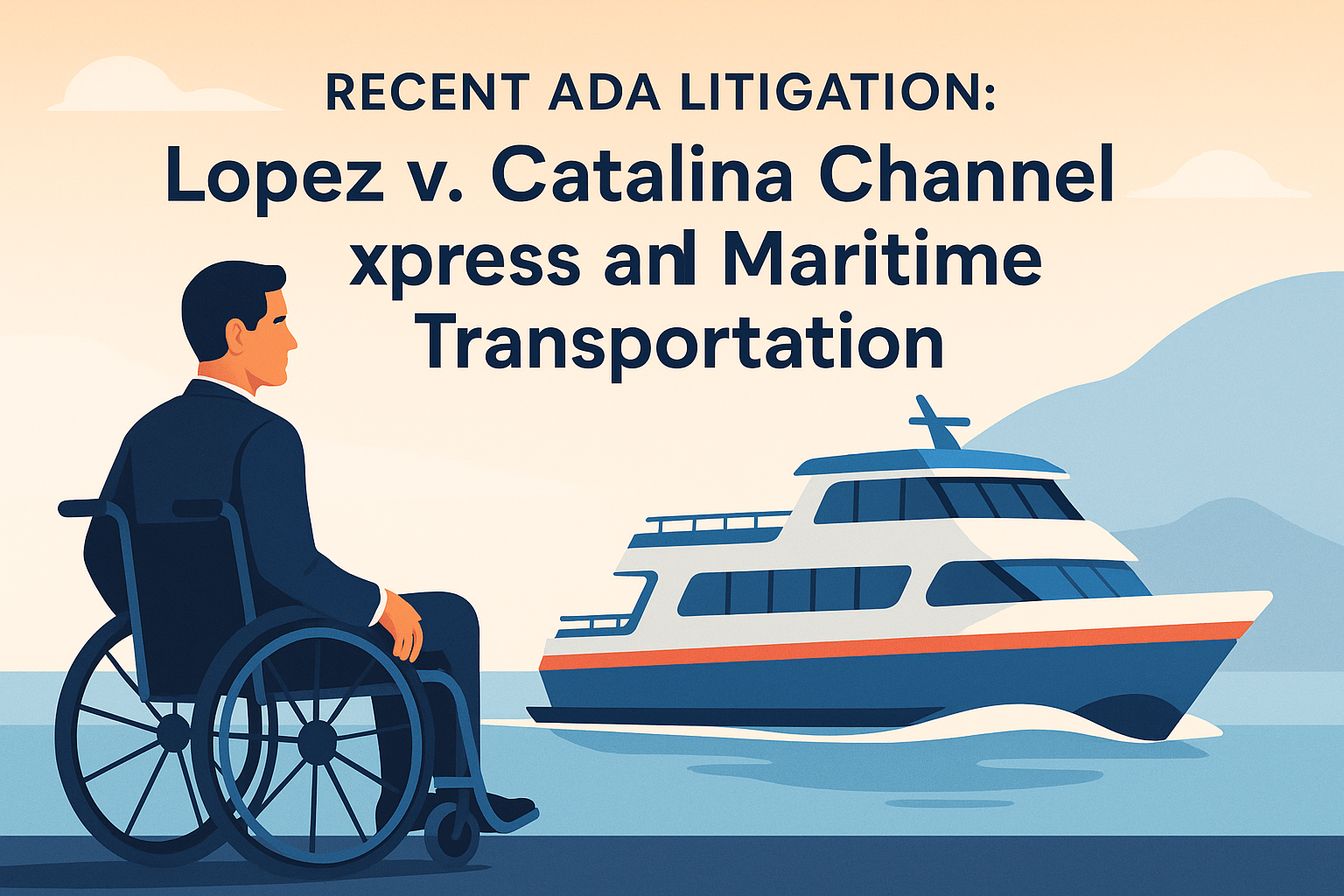
Lopez v. Catalina Channel Express stems from an incident involving Mr. Lopez, an individual with a mobility impairment, who encountered difficulties while attempting to travel on a passenger ferry operated by Catalina Channel Express. The plaintiff alleged that the maritime service provider failed to accommodate his disability, violating the ADA’s stipulations regarding accessible transportation.
Mr. Lopez’s experience shines a light on a critical issue: the challenges faced by individuals with disabilities when accessing public transportation, particularly in niche sectors like maritime travel. His case highlights how even well-established service providers can inadvertently overlook ADA requirements, thereby restricting access for persons with disabilities.
The lawsuit brought by Mr. Lopez argues that Catalina Channel Express did not provide adequate facilities or assistance, which is essential for ensuring equal access to transportation services for all individuals. This case thus becomes a critical reference point for examining compliance with ADA regulations within the maritime sector.
Understanding ADA Compliance in Maritime Transportation
The ADA’s impact on transportation infrastructure is profound, but applying these standards to maritime services presents unique challenges. Jesselopez v. Catalina Channel Express forces us to scrutinize how ADA compliance is implemented in the world of ferries and other marine conveyances.
Catalina Channel Express, like many maritime operators, must navigate the intersection of ADA requirements and operational realities unique to sea transportation. Ferries, for instance, might face constraints like limited gangway spaces or variable docking conditions, which can complicate the implementation of ADA-compliant designs and services.
Nevertheless, ADA guidelines are clear in requiring accessible service for all forms of transportation. In the case of ferries, this includes features such as accessible restrooms, seating areas, and embarkation processes that accommodate passengers with disabilities. Mr. Lopez’s experience candidly illustrates the struggles faced by maritime operators in marrying these requirements with practical and safety considerations.
Legal Proceedings and Key Arguments
The legal arguments in Lopez v. Catalina Channel Express focus on discrepancies between perceived ADA compliance versus the lived experience of passengers with disabilities. In bringing the case to court, Mr. Lopez cited specific incidents where the ferry service purportedly failed to provide necessary accommodations.
- Inadequate assistance embarking and disembarking from the ferry.
- Lack of accessible seating that meets ADA guidelines.
- Insufficient staff training to assist passengers with disabilities effectively.
The defense, in contrast, likely argued that all reasonable measures were taken to ensure ADA compliance within the constraints of maritime operations. This points to broader debates within ADA litigation, where subjective experiences of accessibility can clash with objective measures of compliance.
Understanding these arguments sheds light on the nuances of ADA cases in the maritime travel domain, emphasizing the ongoing need for precise guidelines that bridge legal requirements and practical application in varying transportation contexts.
Implications for Maritime Operators
The ramifications of the Lopez case extend beyond Catalina Channel Express, challenging the broader maritime industry to re-evaluate their ADA compliance efforts. While some ferry operators claim adherence to ADA standards, litigation such as this underscores potential gaps between theory and practice.
For maritime transportation providers, the implications are clear: ongoing investment in ADA-compliant facilities and employee training is crucial. Implementing user-friendly technology to assist passengers with disabilities, alongside regular audits to ensure compliance, can prevent legal challenges and enhance service quality for all passengers.
| ADA Compliance Measures | Implementation Example |
|---|---|
| Accessible Embarkation | Installing ramps or lifts |
| Staff Training | Regular workshops on assisting individuals with disabilities |
| Infrastructure Updates | Modifying restrooms for wheelchair access |
Ultimately, legal cases like Lopez v. Catalina Channel Express serve as vital reminders of the ADA’s enduring relevance. They highlight the essential role that transportation providers play in promoting accessibility and equality, calling on all operators to prioritize the needs of passengers with disabilities.
Case Outcomes and Precedent Setting
The resolution of Lopez v. Catalina Channel Express, whether through settlement or court ruling, holds potential precedent-setting power for ADA compliance in maritime settings. A favorable outcome for Mr. Lopez could prompt further scrutiny of maritime transportation services, while heightened awareness of ADA requirements could stimulate industry-wide change.
For Catalina Channel Express, the case might necessitate comprehensive reviews of their facilities and operational protocols. Proactive changes could include adding ADA-compliant features to older vessels, improving staff training, or reevaluating customer service policies to ensure inclusivity.
Such actions can have a ripple effect across the industry. Other maritime operators may be motivated to preemptively upgrade their services to circumvent similar litigation, leading to greater accessibility for all passengers and strengthened ADA compliance standards across the sector.
Conclusion: The Road to Greater Accessibility
In examining the Lopez v. Catalina Channel Express case, we are reminded of the critical importance of ADA compliance, particularly in niche areas like maritime transportation. The case lays bare the ongoing challenges faced by individuals with disabilities when accessing transportation services and underscores the necessity of vigilant adherence to ADA standards.
To foster greater inclusivity and equality, maritime operators must prioritize ADA compliance. This involves not only maintaining existing infrastructure and training programs but also innovating and adapting to new accessibility challenges as they arise. The benefit to transportation services is twofold: avoiding litigation and enhancing service quality for all passengers.
For readers, this case serves as a catalyst for advocacy. Whether you’re a policymaker, service provider, or consumer, you play a role in promoting ADA compliance. Stay informed, engage with accessibility discussions, and advocate for change where necessary. In doing so, you contribute to a more equitable and accessible future for all.
In conclusion, while challenges remain, cases like Lopez v. Catalina Channel Express highlight the potential for growth and improvement in accessibility standards. The maritime industry, and indeed all sectors, must continue to push forward in creating inclusive environments that respect and uphold the rights of individuals with disabilities.
Frequently Asked Questions
1. What is the Americans with Disabilities Act (ADA)?
The Americans with Disabilities Act (ADA) is a comprehensive civil rights law enacted in 1990 with the aim of eliminating discrimination against individuals with disabilities in various facets of public life. This law is a crucial step towards ensuring that individuals with disabilities have equal opportunities in employment, transportation, public accommodations, communications, and access to state and local government programs and services. Under the ADA, businesses and public entities are required to make reasonable accommodations for people with disabilities, ensuring accessibility and inclusion. This might include modifying physical spaces, offering auxiliary aids or services, and modifying policies to prevent discrimination.
2. What led to the case Lopez v. Catalina Channel Express?
The case of Lopez v. Catalina Channel Express arose from an alleged failure of Catalina Channel Express, a maritime transportation service, to comply with the ADA’s standards. The plaintiff, Mr. Lopez, claimed that the service did not adequately accommodate individuals with disabilities, specifically pointing out issues with boarding and accessibility on their vessels. As a maritime transportation provider, Catalina Channel Express is required under the ADA to ensure that their services are fully accessible to individuals with disabilities, facilitating reasonable accommodations that do not impede their rights. The litigation was initiated because Mr. Lopez believed that these accommodations were not being properly implemented, thus denying him and potentially others the rights guaranteed under the ADA.
3. What are the compliance requirements for maritime transportation under the ADA?
Maritime transportation providers, like Catalina Channel Express, must adhere to specific ADA regulations designed to ensure accessibility and non-discrimination. These requirements include ensuring that boarding and disembarking are accessible to individuals with mobility impairments, providing adequate seating and necessary modifications or auxiliary aids, and training staff to handle the needs of passengers with disabilities appropriately. Additionally, any features of the transportation service, such as restrooms or seating areas, must be accessible, ensuring individuals with disabilities can fully utilize all aspects of the service. Non-compliance with these standards can lead to litigation or regulatory action to enforce compliance.
4. How does ADA litigation impact businesses and institutions?
ADA litigation can have a significant impact on businesses and institutions by highlighting compliance failures and prompting changes to policies and practices. When legal action is taken, companies may face financial penalties, legal fees, and reputational damage, which can catalyze a shift towards better compliance with the ADA. Beyond the immediate legal implications, such cases often serve as a critical reminder of the importance of inclusion and accessibility, pushing organizations to re-evaluate their commitment to diversity. In the case of Lopez v. Catalina Channel Express, the litigation emphasized the gaps in accessibility within their services, potentially leading to improved accommodations not only for Mr. Lopez but for all individuals using their services.
5. What can individuals do if they feel their ADA rights have been violated?
If an individual believes their rights under the ADA have been violated, they can take several steps to address the issue. Initially, it may be beneficial to communicate directly with the business or institution to discuss the accessibility issue and seek a resolution. If this does not lead to a satisfactory outcome, individuals can file a formal complaint with the Department of Justice (DOJ) or an equivalent authority responsible for ADA enforcement. Legal action may also be considered, as was the case with Lopez v. Catalina Channel Express, to ensure compliance and advocate for necessary accommodations. It’s crucial for individuals with disabilities to know they have the right to demand the same access and opportunities as everyone else, and there are legal pathways to ensure this.


