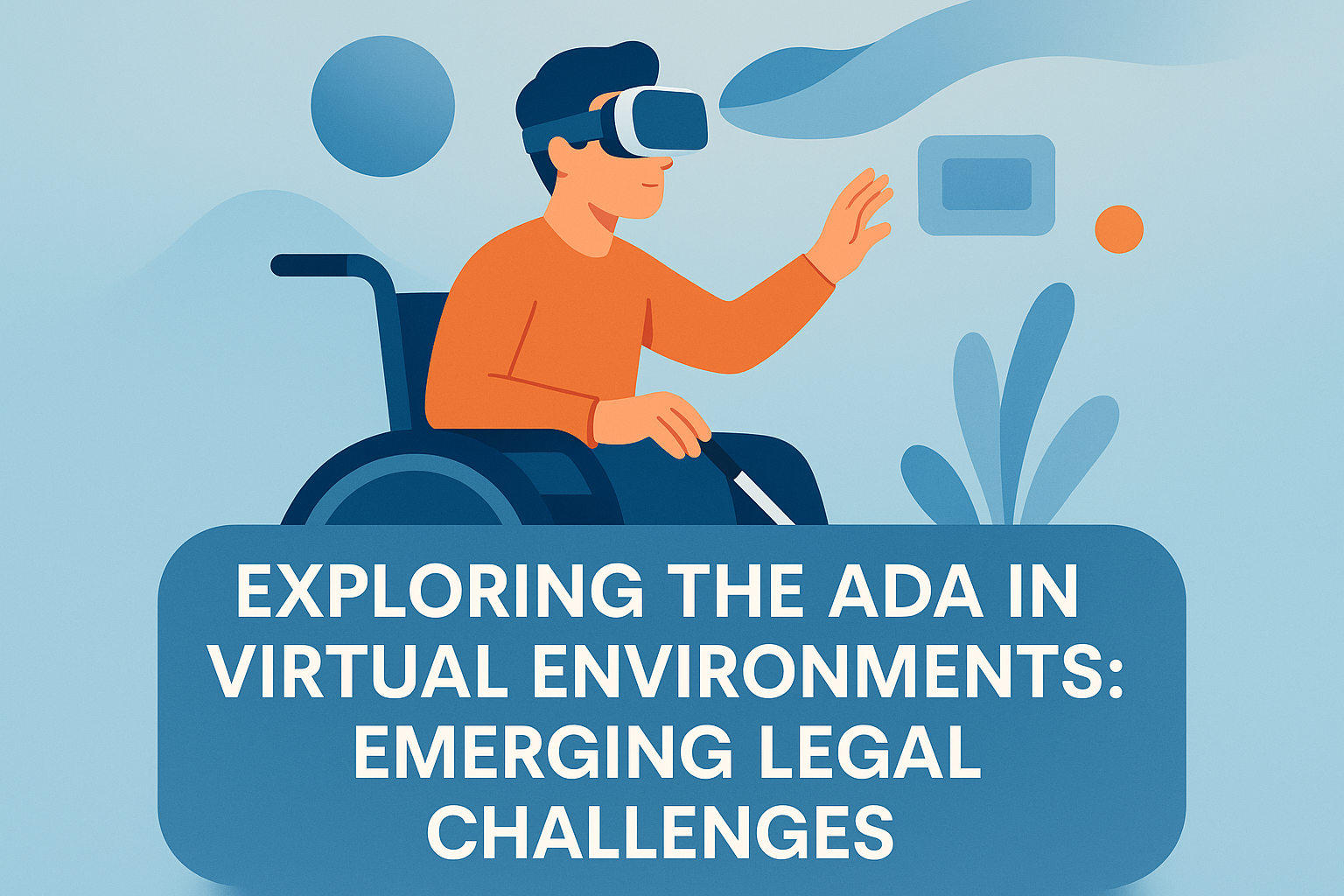
The Americans with Disabilities Act (ADA), enacted in 1990, is a pivotal civil rights law that prohibits discrimination against individuals with disabilities in all areas of public life, including jobs, schools, transportation, and all public and private places open to the general public. However, as society increasingly shifts towards digital and virtual realms, a new set of challenges and questions has emerged regarding how the ADA applies to these virtual environments. The significance of the ADA in digital spaces is profound as accessibility, once an architect’s blueprint-on-paper concern, now extends into the complex programming code of websites, applications, and online interfaces.
This article aims to unpack the importance of integrating ADA compliance into virtual environments by defining key terms, such as digital accessibility and virtual spaces, and analyzing why this topic is critical. As digital environments become integral in daily life, understanding ADA’s influence and requirements in these spaces is not only a legal obligation but also a moral one, where inclusive design ensures equal participation and access for millions of people. Exploring the intersection of ADA and virtual environments, we will highlight current legal challenges, implications for businesses and users, and recommend actions for fostering inclusivity online.
The Scope of ADA in Virtual Environments
Initially, ADA’s scope did not explicitly address the burgeoning digital world. However, its principles have been interpreted to extend into the online domain by law and by practice. The ambiguous nature of the law regarding virtual spaces can cause confusion about what constitutes compliance. In 2019, the U.S. Supreme Court refused to review the Ninth Circuit’s decision in the case of Robles v. Domino’s Pizza, LLC. This case underscored the necessity for websites and mobile applications tied to physical places to be accessible to individuals with disabilities, thus suggesting how the ADA may be applied to virtual environments.
This legal scenario highlighted PCI (Public Civic Infrastructure), which includes not just streets and buildings but also online environments providing essential services. Businesses and institutions must now assess their online platforms for accessibility in ways similar to their physical facilities, ensuring all potential barriers are addressed.
Building Digital Accessibility: Key Standards and Guidelines
To aid in the application of the ADA online, several standards and guidelines have been established. Chief among them is the Web Content Accessibility Guidelines (WCAG), developed by the World Wide Web Consortium (W3C). These guidelines offer criteria under which a website can be evaluated for accessibility. WCAG is categorized under three levels of conformance: A, AA, and AAA, with AA being the recommended level of compliance. Compliance requires several implementations, such as alternative text for images, subtitles for video content, and keyboard navigability.
For instance, Netflix faced a lawsuit over the absence of captions for its streaming videos and subsequently agreed to implement captions for all its content. This alignment with WCAG AA standards emphasizes the importance for digital properties to engage with these guidelines actively.
- WCAG Level A: Basic web accessibility features
- WCAG Level AA: Deals with the biggest and most common barriers for disabled users
- WCAG Level AAA: The highest and most complex level of web accessibility
Legal Ramifications for Non-Compliance
The consequences for businesses not adhering to ADA standards in digital environments can be financially and reputationally damaging. The surge in lawsuits illustrates the legal risks for organizations overlooking digital accessibility. In 2018 alone, more than 2,200 ADA website accessibility lawsuits were filed, representing a significant increase from the previous year. Retailers and service providers with inaccessible online platforms find themselves vulnerable to litigation, which can result in costly settlements and damages.
This growing trend was evident when the supermarket giant Winn-Dixie was sued by a blind plaintiff whose screen-reader was incompatible with their website. The court ruled in favor of the plaintiff, serving as a precedent and reminder for institutions that digital accessibility is not merely a technical choice, but a legal requirement reflective of equal rights.
Real-World Implications for Brands and Businesses
Beyond legal obligations, businesses embracing ADA-compliant digital platforms can significantly expand their reach. According to data, 1 in 4 adults in the United States has a disability, a substantial audience that businesses risk excluding if digital accessibility is not a part of their business strategy. Engaging this demographic can lead to increased market share and revenue potential.
A practical example can be drawn from the e-commerce world where companies like Apple have been pioneers by embedding accessible features such as screen reader compatibility and voice-activated services, catering to a wider audience while enhancing brand value and consumer goodwill.
Envisioning Inclusive Virtual Futures
Looking ahead, the promise of virtual reality and other immersive technologies offers new opportunities and challenges for digital accessibility under the ADA. Designers and developers are tasked with ensuring that these cutting-edge digital experiences are accessible from inception. Failing to do so not only risks compliance but could fundamentally exclude people with disabilities from participating in technological advancements.
This forward-thinking approach necessitates collaboration across industries and disciplines, promoting an integrated method where a spectrum of user needs informs the development process. By prioritizing accessibility as a core tenet of digital platform creation, stakeholders can contribute to a future where technology serves all, irrespective of physical or cognitive ability.
The Path Forward: Embracing Accessibility by Design
Implementing accessibility should be viewed not as a retroactive fix but a proactive strategy. This entails embedding accessibility perspectives from the very beginning stages of virtual environment creation. Institutions and companies can start by conducting comprehensive accessibility audits of their existing digital assets, followed by training for employees on accessibility best practices.
Moreover, fostering partnerships with accessibility experts and advocates can streamline the compliance process. Empowering users with disabilities to share feedback and involve them in testing phases will ensure inclusive design. By considering accessibility a fundamental aspect of customer experience, organizations not only comply with legal stipulations but also play a pivotal role in creating equitable digital ecosystems.
The road to fully accessible virtual environments is laden with challenges but offers immense benefits for both corporations and end-users. As digital landscapes evolve, adherence to ADA principles forms the bedrock of inclusive innovation and social responsibility, propelling progress towards digital equity.
Conclusion: Unifying Access and Innovation
The exploration of ADA in virtual environments underscores a crucial intersection of law, ethics, technology, and design. ADA compliance is not just a statutory obligation; it is a commitment to fair access and participation in an increasingly digital society. By integrating the principles of ADA into digital spaces, we can ensure that technology serves humanity’s diverse needs, enabling equitable opportunities and experiences for all.
As we navigate this dynamic landscape, the imperative for businesses and digital creators to prioritize inclusivity remains paramount. It is time for stakeholders to align with emerging standards, embrace user diversity, and innovate with accessibility by design. The call to action is clear: extend your digital presence beyond compliance to become a part of the movement towards accessible and inclusive technology.
By fostering an inclusive digital culture, we not only abide by legal requirements but also advance social equity, enriching the digital world as a space of possibility for everyone. Let us champion these efforts towards creating a future where access is in harmony with innovation.
Frequently Asked Questions
1. How does the ADA apply to virtual environments?
The ADA, originally designed to ensure accessibility and prohibit discrimination in physical spaces, now sees an ever-evolving relevance in the digital world. With society pivoting towards technology, understanding how ADA mandates translate to online platforms is crucial. In general, the ADA requires that digital spaces, much like their physical counterparts, be accessible to individuals with disabilities. For instance, websites, mobile applications, and virtual platforms should provide accommodations such as screen reader compatibility, captions for videos, and navigability for users who may not rely on traditional input devices. Courts and regulatory bodies are still navigating these waters, but the push towards accessible digital spaces signifies a trend where non-compliance could lead to legal challenges, as virtual environments become integral facets of daily life.
2. What are the emerging legal challenges regarding the ADA in virtual environments?
As we delve deeper into digital domains, the legal landscape around ADA compliance continues to unfold with new challenges. One primary issue is the lack of comprehensive guidelines that explicitly define digital accessibility standards under the ADA. This ambiguity often results in confusion and inconsistency in how businesses and individuals understand their legal obligations. Furthermore, the rapid advancement of technology means that the ADA must constantly evolve to keep pace with new innovations, such as virtual reality and augmented reality platforms, that introduce unique accessibility concerns. The burgeoning number of lawsuits addressing digital inaccessibility highlights the urgent need for clarity and concrete standards. Businesses and organizations are increasingly being held accountable for ensuring their virtual environments are as inclusive and accessible as any brick-and-mortar operation.
3. What steps can organizations take to ensure compliance with the ADA in their virtual environments?
To mitigate legal risks and promote inclusivity, organizations should proactively adopt best practices for digital accessibility. Begin by conducting a thorough audit of your digital presence—including websites, apps, and other virtual platforms—to identify potential accessibility barriers. Employ established standards like the Web Content Accessibility Guidelines (WCAG), which provide actionable directives on making digital content more accessible. Key measures include providing alternative text for images, enabling keyboard navigation, using descriptive link texts, and offering transcripts for audio content. Training staff on digital accessibility and fostering a culture that prioritizes inclusive design principles can further enhance compliance. Additionally, seeking feedback from users with disabilities and engaging with accessibility consultants can offer invaluable insights into effective implementation.
4. Are there specific technologies that pose unique accessibility challenges under the ADA?
Indeed, certain digital technologies present distinct challenges when it comes to ADA compliance. Virtual Reality (VR) and Augmented Reality (AR) platforms, for example, introduce a new dimension of obstacles for individuals with disabilities. These technologies often rely on immersive experiences that may not be easily adaptable for users with sensory or motor impairments. Ensuring compatibility with assistive devices, designing accessible user interfaces, and offering customizable options are vital in addressing these challenges. Similarly, AI-driven technologies can complicate accessibility when they fail to account for diverse user needs. The challenge lies not only in retrofitting these technologies with accessible features but also in embedding accessibility into the development process from the outset. As technology continues to advance, ongoing innovation to create inclusive experiences will be imperative for ADA adherence.
5. How are current legal interpretations of the ADA influencing the future of accessibility in virtual environments?
Current legal interpretations of the ADA are steering the future trajectory of digital accessibility standards. Lawsuits and court rulings are gradually shaping how the ADA is understood to apply to virtual environments, offering precedents that inform future compliance strategies. For instance, recent legal cases have underscored the importance of ensuring website and mobile accessibility, with courts asserting that virtual environments should not discriminate against individuals with disabilities. These interpretations are influencing lawmakers, prompting discussions about possible updates to the ADA to explicitly address digital accessibility. This momentum is driving organizations to not only comply with current standards but also anticipate future requirements, fostering a landscape where virtual environments are designed with inclusivity at the forefront. While the journey towards universally accessible digital spaces is ongoing, legal interpretations are undeniably a pivotal force propelling necessary progress.


