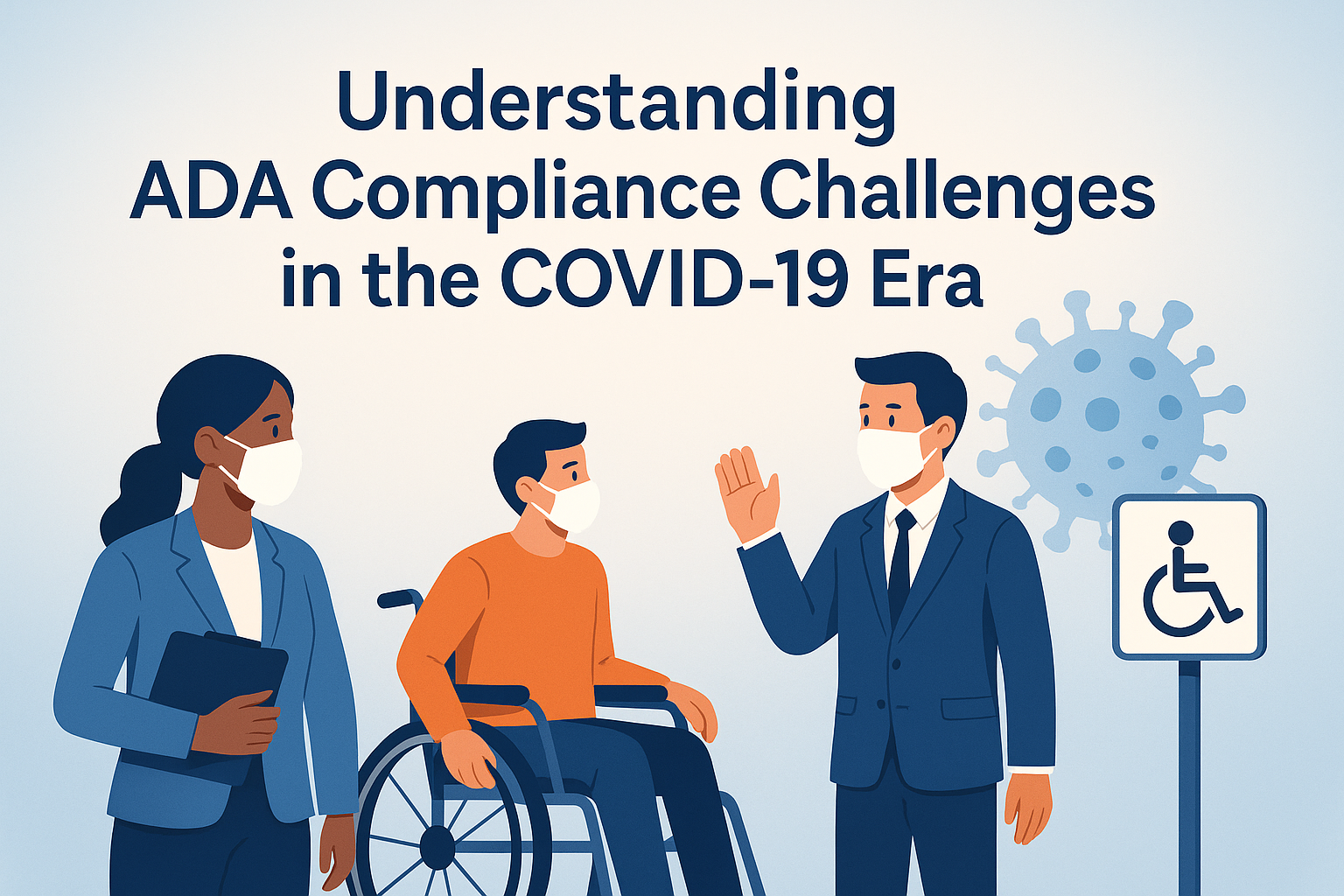
The COVID-19 pandemic has ushered in a myriad of challenges across industries, and compliance with the Americans with Disabilities Act (ADA) is no exception. ADA compliance ensures that individuals with disabilities have equal access to public spaces, goods, and services. In the pandemic era, as society rapidly shifted to virtual interactions and new modes of service delivery, compliance obstacles escalated, presenting new challenges for businesses and institutions alike. Understanding these challenges is crucial for maintaining inclusivity and equity in a world that has become increasingly reliant on digital solutions.
ADA compliance primarily focuses on the accessibility of physical and digital environments. Traditionally, brick-and-mortar establishments have been the focal point of ADA concerns, but the growing pivot towards online platforms has expanded the scope. Compliance is not merely a regulatory requirement; it embodies the commitment to ensuring that everyone, regardless of ability, can participate fully in societal functions. Failure to comply can result in legal repercussions and reputational damage, making it imperative for businesses and organizations to address the emerging compliance challenges in earnest.
Navigating Physical Space Modifications
The onset of the pandemic necessitated significant alterations to physical spaces to accommodate social distancing and hygiene measures. However, these modifications sometimes inadvertently compromised accessibility features that individuals with disabilities rely on. For example, plexiglass barriers intended for safety may obstruct the view for individuals who need to lip-read, affecting those with hearing impairments. Similarly, the rearrangement of furniture and pathways to ensure social distancing may create new obstacles for those with mobility issues.
A real-world example can be seen in retail stores where directional arrows and floor markers were introduced to guide foot traffic. While intended to control the flow of people and maintain safe distances, these markers could be challenging for visually impaired individuals who depend on tactile cues.
Businesses can address these concerns by involving accessibility experts in the planning stages of physical modifications. Regular audits and seeking feedback from the disability community can also help ensure that new setups remain accessible to all.
Online Accessibility in a Digitized World
The shift towards online platforms accelerated dramatically during the pandemic. Educational institutions, retailers, and service providers moved to remote interfaces almost overnight. However, the digital realm poses its own set of challenges for ADA compliance. Websites and digital content that are not designed with accessibility in mind can exclude people with disabilities, such as those reliant on screen readers or keyboard navigation.
The World Wide Web Consortium (W3C) provides guidelines for web content accessibility; however, many sites fall short of these standards. For instance, an e-commerce website might have non-descriptive alt text for images or poorly structured headings, which can hinder navigation by assistive technologies.
| Accessibility Issue | Description |
|---|---|
| Lack of Alt Text | Images without text descriptions make it difficult for screen readers to convey content. |
| Poor Contrast | Text and background colors that lack contrast can be unreadable for visually impaired users. |
| Inaccessible Navigation | Complex menus that are not keyboard-friendly hinder those who cannot use a mouse. |
Enhancing digital accessibility involves adopting best practices, such as using semantic HTML for structure, ensuring text is resizable, and providing alternatives for multimedia content. Regular accessibility testing and consulting resources like the Web Content Accessibility Guidelines (WCAG) are critical steps in this process.
Hybrid Work Environments and Employee Accessibility
As remote and hybrid work arrangements become more prevalent, ensuring that employees with disabilities can perform their tasks effectively is essential. Technologies and platforms used for communication and collaboration must be evaluated for accessibility. These include video conferencing tools, project management software, and cloud-based applications.
Consider a scenario where an employee with a hearing impairment struggles with video meetings due to a lack of captioning options. Without real-time text support, participation in discussions and comprehension of shared information becomes severely limited.
Companies can address these issues by prioritizing the procurement of accessible technology solutions. This may involve selecting software platforms that offer built-in accessibility features, such as voice recognition or text-to-speech capabilities. Additionally, providing training and resources on accessibility best practices can empower employees to adapt their usage of these tools accordingly.
Healthcare Access and ADA Compliance
The pandemic underscored the importance of accessible healthcare services. Yet, as telehealth became a primary mode of service delivery, gaps in ADA compliance emerged. Virtual doctor’s appointments, while convenient, may not be easily accessible for all individuals with disabilities. For example, patients with visual or cognitive impairments might find it challenging to navigate telehealth platforms without adequate support.
In one instance, a patient with cerebral palsy experienced difficulty joining a video consultation due to cumbersome login procedures and a lack of personalized assistance. Such barriers highlight the need for healthcare providers to ensure their digital interfaces are user-friendly and accessible.
Ensuring compliance in this sector involves integrating accessibility features such as simplified interfaces, clear instructions, and comprehensive patient support. Engaging with patients with disabilities to gather feedback and implementing inclusive practices can enhance the accessibility of telehealth services.
Public Policy and Legal Considerations
The ADA compliance landscape in the COVID-19 era is also shaped by evolving public policies and legal frameworks. Governments have implemented temporary mandates to address immediate health and safety concerns, yet these can sometimes conflict with accessibility needs. For instance, mask mandates, while essential for public health, pose communication challenges for individuals who rely on facial expressions and lip-reading.
Legal cases during the pandemic have highlighted these conflicts, prompting organizations to seek innovative solutions. Some businesses have adopted transparent masks, while others offer written communication alternatives to navigate such requirements.
Organizations must stay informed about legal developments concerning ADA compliance and adapt their policies accordingly. Engaging with legal experts and disability rights advocates can provide valuable insights into balancing public health requirements with accessibility needs.
Key Takeaways and Call to Action
The challenges of ADA compliance in the COVID-19 era are multi-faceted, impacting physical spaces, digital platforms, employee work environments, healthcare, and legal frameworks. Addressing these issues requires a proactive approach centered on inclusivity and empathy. Businesses and organizations must prioritize accessibility in their operations to ensure equitable participation for individuals with disabilities.
The main benefit of understanding these compliance challenges is the ability to foster accessibility and inclusivity, enhancing the user experience for all individuals. This commitment also helps organizations mitigate legal risks and build positive reputations as champions of diversity and inclusion.
As a next step, organizations are encouraged to conduct regular accessibility audits covering both physical and digital environments. Engaging with experts in disability rights, adopting comprehensive training programs, and remaining adaptable to legal and policy shifts will empower organizations to navigate ADA compliance successfully in this ever-evolving landscape.
By embracing these strategies, businesses can contribute to building an inclusive society where everyone, regardless of ability, can thrive.
Frequently Asked Questions
1. What are the main challenges of ADA compliance during the COVID-19 pandemic?
The COVID-19 pandemic has drastically changed how services are delivered and consumed, which has posed substantial challenges to ADA compliance. A primary challenge is the transition from in-person to virtual environments. Many businesses rapidly moved their services online, sometimes bypassing critical accessibility features. Websites and online platforms must be accessible to individuals with various disabilities, ensuring compatibility with screen readers, offering text captions for video content, and providing other adjustments as necessary. Moreover, with the widespread use of face masks, people with hearing impairments who rely on lip reading face additional communication barriers, requiring alternative communication tools or clear face masks to be available. Physical queueing and social distancing have also introduced challenges in ensuring spaces remain navigable for individuals with mobility issues. It’s crucial for businesses to continually evaluate and adapt their services to maintain compliance in these changing times.
2. How can businesses ensure that their virtual interfaces comply with ADA requirements?
Ensuring ADA compliance in virtual interfaces involves making digital content accessible to all users, including those with disabilities. Businesses can start by designing their websites and applications to be compatible with screen readers and other assistive technologies. This includes using proper HTML tags to define page structures, adding alt texts to images, providing keyboard navigation options, and ensuring sufficient color contrast. Video content should include both captions and transcripts to accommodate people with hearing impairments. Periodic audits by specialized professionals or using automated tools can help identify accessibility issues. Moreover, incorporating user feedback, especially from persons with disabilities, can provide insights into improving the accessibility of digital interactions. Commitment to accessibility training for development teams will further ensure ongoing compliance and inclusivity.
3. What are reasonable accommodations for employees with disabilities working remotely due to COVID-19?
Reasonable accommodations for remote employees with disabilities might include a range of adjustments depending on individual needs. Employers are expected to provide necessary assistive technologies, such as screen readers, specialized keyboards, or voice-to-text software to help employees effectively perform their duties from home. Providing flexible work hours could be another accommodation for those who might need it due to medical treatments or therapies. It’s important that employers engage in an open dialogue with their employees to understand and address specific needs. Additionally, meeting platforms should offer features like closed captioning for meetings, and alternatives to video calls should be available if videoconferencing is a barrier for some individuals. Employers should also ensure that all workplace documents are accessible and that the process of requesting accommodations is straightforward and well-communicated.
4. What impact has the COVID-19 pandemic had on public spaces and ADA compliance?
The pandemic has significantly impacted ADA compliance in public spaces as new health safety measures have been implemented. For example, many venues have installed physical barriers and revamped layouts to facilitate social distancing; however, these changes must continue to support accessibility for people with disabilities, such as maintaining wheelchair paths unobstructed and ensuring clear floor spaces. Additionally, signage related to COVID-19 measures must be accessible, which includes using visual aids, Braille, and auditory cues as needed. Moreover, service providers are expected to accommodate individuals who cannot comply with all health measures, such as wearing masks, dues to their disabilities by offering alternatives like face shields or curbside services. Ensuring these measures are adhered to without limiting access to facilities is crucial in maintaining ADA compliance during the pandemic era.
5. Are there legal repercussions for not adhering to ADA compliance during the COVID-19 pandemic?
Yes, failing to adhere to ADA compliance during the COVID-19 pandemic can lead to legal repercussions. The ADA is a federal law, and organizations that are found non-compliant may face lawsuits, which can result in financial penalties or legal orders to make their services accessible. The pandemic has not exempted businesses from these obligations; in fact, the ADA’s relevance has only been heightened as more individuals rely on digital services. As public awareness around accessibility issues has increased, so too has scrutiny from federal agencies and advocacy groups. Businesses should proactively address any compliance issues to avoid potential litigation and enhance inclusivity for all patrons and employees. It’s also important for organizations to document their efforts in maintaining compliance during the pandemic, which could serve as evidence of good faith efforts in addressing accessibility challenges.


