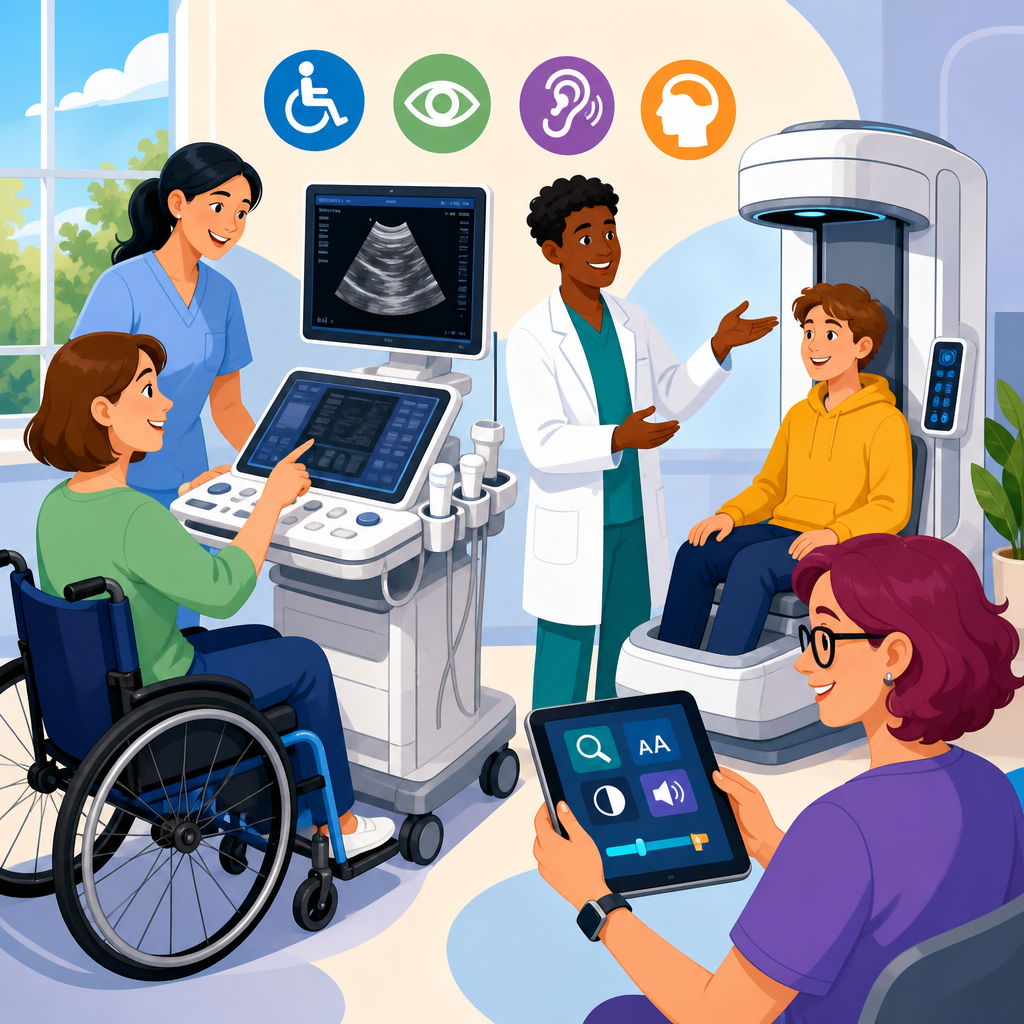
Accessible medical diagnostic equipment standards are changing quickly, and those changes matter because the exam table, weight scale, mammography unit, and imaging chair often determine whether a patient with a disability receives timely care or delays it. In healthcare compliance work, I have seen practices invest heavily in ramps and automatic doors while overlooking the diagnostic equipment that patients must actually use during an appointment. The result is a gap between entering the building and receiving equal care. New developments in accessible medical diagnostic equipment standards address that gap by defining how equipment should support transfers, positioning, communication, and independent use across a wide range of clinical settings.
Medical diagnostic equipment includes devices used by clinicians to perform exams, screenings, monitoring, and imaging. Common examples include examination tables, examination chairs, wheelchair-accessible weight scales, radiological equipment, dental chairs, and mammography machines. Accessibility in this context means more than general usability. It includes transfer surfaces at usable heights, supports such as grab bars and stirrups, adequate clear floor space, operable parts within reach ranges, and design features that accommodate patients who remain seated in mobility devices. For patients with sensory disabilities, accessibility may also include tactile controls, audible output, visual indicators, and compatibility with assistive communication methods.
The legal and policy backdrop is equally important. The Americans with Disabilities Act prohibits discrimination by healthcare providers, and Section 504 of the Rehabilitation Act applies to federally funded programs. The Affordable Care Act strengthened nondiscrimination requirements in healthcare, while the U.S. Access Board developed technical standards for medical diagnostic equipment to provide measurable design criteria. Although adoption and enforcement vary by program and jurisdiction, the direction is clear: regulators, accreditors, health systems, and courts increasingly expect providers to remove equipment-related barriers that interfere with equal access to medical services.
This hub article explains recent ADA updates and developments through the lens of accessible medical diagnostic equipment standards. It covers the main technical concepts, the latest enforcement direction, procurement implications, operational changes for providers, and what healthcare organizations should do next. It also serves as a foundation for related articles on accessible exam rooms, digital accessibility in patient intake, effective communication, and broader healthcare facility compliance. If your organization is planning purchases, renovations, or policy updates, understanding these developments now will reduce legal risk and improve patient care quality.
Why accessible medical diagnostic equipment standards are receiving renewed attention
Accessible equipment has become a priority because inaccessible diagnostic tools produce concrete clinical harms. A patient who cannot safely transfer to an exam table may receive a limited exam in a wheelchair, even when that position is clinically inferior. A patient who cannot use a standard scale may go without an accurate weight, affecting medication dosing, anesthesia planning, or chronic disease management. A patient who cannot be positioned correctly for imaging may miss preventive screening or require referral elsewhere, adding delay and cost. These are not edge cases. According to the Centers for Disease Control and Prevention, adults with disabilities represent a substantial share of the U.S. population and use healthcare services more frequently than adults without disabilities.
Recent ADA updates and developments have sharpened attention on these issues in three ways. First, federal agencies and advocacy groups have emphasized that equal access in healthcare includes diagnostic methods, not merely building entry. Second, healthcare consolidation has increased centralized procurement, creating opportunities to standardize accessible purchasing across large systems. Third, value-based care and health equity initiatives now measure outcomes that are directly affected by missed screenings, incomplete exams, and delayed diagnoses. In practice, this means accessibility is moving from a facilities topic to a patient safety, quality, and risk management topic.
The U.S. Access Board’s standards for medical diagnostic equipment remain the most important technical benchmark. They cover transfer height ranges, transfer supports, side surfaces, standing supports, lift compatibility, wheelchair spaces, and communication features. While these standards do not automatically apply in every context as binding regulations, they strongly influence settlement agreements, purchasing specifications, state requirements, and best-practice compliance programs. In my experience, providers that wait for a direct enforcement demand usually pay more later through rushed replacements, workflow disruption, and reputational damage.
Key technical standards shaping accessible diagnostic equipment
The most significant technical framework centers on equipment used by patients in supine, prone, side-lying, seated, and standing positions. Examination tables and chairs are a core focus because they are used in primary care, specialty clinics, and outpatient treatment settings. A height-adjustable exam table, for example, should lower enough to support safer lateral transfers from wheelchairs and then raise for clinician ergonomics. Transfer supports should be stable, usable, and positioned to assist movement without interfering with clinical care. If the supports are removable, staff must know when and how to deploy them.
Accessible weight scales are another priority. A wheelchair-accessible scale requires a platform that accommodates mobility devices, edge protection or equivalent safety features, and a route that does not force awkward turning movements. The display and controls must be usable by staff, but good practice also considers what patients can see or hear. Similar principles apply to imaging equipment. Mammography systems may need features that support seated positioning and allow breast imaging for patients with limited standing tolerance. Dental and ENT settings face distinct issues because chair positioning, transfer space, and support surfaces directly affect whether care can be performed in-office.
Clear floor space and operable parts are often underestimated. An exam table can meet a low height criterion yet still be inaccessible if there is no space for a wheelchair to align for transfer or if the controls cannot be used quickly by staff during assistance. Reach range standards also matter. Controls placed too high, too low, or behind obstructions can turn a technically advanced device into a practical barrier. Established references such as ADA design concepts, ICC A117.1 accessibility provisions, and human factors principles all reinforce the same lesson: accessibility depends on the entire use scenario, not a single product feature.
| Equipment type | Common barrier | Accessible design response | Clinical impact |
|---|---|---|---|
| Exam table | Fixed high transfer surface | Powered height adjustment and transfer supports | Safer full-body exams and reduced manual lifting |
| Weight scale | No wheelchair platform access | Low-profile accessible platform with adequate maneuvering space | Accurate weights for dosing and treatment planning |
| Mammography unit | Standing-only positioning | Seated positioning capability and adaptable supports | Improved screening access and earlier detection |
| Dental chair | Difficult lateral transfer | Better transfer space, arm support management, and staff protocols | More routine dental care in standard settings |
Recent ADA updates and developments affecting healthcare providers
The most important recent development is not a single nationwide equipment rule under the ADA, but a broader shift in enforcement expectations. The Department of Justice has repeatedly treated inaccessible medical equipment as part of the healthcare access problem, especially when barriers prevent equal participation in routine care. Settlement agreements involving hospitals, physician groups, and specialty practices have required accessible exam tables, accessible scales, revised policies, and staff training. These agreements matter because they show how regulators interpret nondiscrimination obligations in real operational settings.
Another significant development is the integration of disability access into health equity and civil rights oversight. Federal agencies increasingly analyze whether a provider’s systems create disparate barriers for patients with disabilities. When I review compliance programs now, accessibility is discussed alongside language access, digital access, and nondiscrimination notices rather than as a separate facilities checklist. That integrated approach aligns with how patients experience care. If a patient can schedule online but cannot transfer for the exam, access has still failed.
Procurement standards are also evolving. Large health systems are revising capital purchasing policies so accessibility is assessed before a device is approved. Vendors are being asked for detailed specifications on transfer heights, support features, wheelchair positioning, and compatibility with patient lifts. This is a major development because inaccessible equipment often enters a facility through routine replacement cycles, not new construction. Once purchased, the equipment can remain in use for years. Embedding accessibility into requests for proposals and value analysis committees is therefore one of the most effective changes a provider can make.
State-level action adds another layer. Some states have adopted healthcare accessibility requirements through building codes, licensing standards, Medicaid program expectations, or disability rights enforcement. Accreditation and risk management pressures also influence adoption, even where statutes are less explicit. The practical takeaway is that organizations should not rely on a narrow reading of federal text alone. They should monitor federal guidance, state rules, payer expectations, and settlement trends together.
How standards translate into procurement, facility planning, and operations
Buying one accessible exam table does not create an accessible care program. Standards become meaningful only when they are translated into room design, scheduling logic, staffing plans, maintenance protocols, and clinical training. For example, an adjustable table placed in a cramped room may be impossible to approach with a wheelchair or portable lift. An accessible scale stored in a distant hallway may be skipped during busy clinic sessions. A mammography unit with seated capability may still be underused if technologists have not been trained to position patients with balance limitations.
Effective implementation usually starts with an inventory. Providers should identify where diagnostic equipment is located, which devices are adjustable, what transfer supports are available, and whether each room provides enough clearance for real use. I recommend mapping equipment by service line, including primary care, orthopedics, OB-GYN, oncology, imaging, cardiology, and dental services. That reveals whether access is concentrated in one clinic while other high-volume departments lag behind. It also supports phased budgeting by linking purchases to patient volume and clinical risk.
Procurement teams should require vendors to provide measurable accessibility data rather than marketing claims. Ask for the lowest and highest transfer heights, the width and stability of transfer surfaces, support placement options, wheelchair clearance dimensions, and maintenance requirements for powered components. Then test the equipment in realistic scenarios with clinical staff, facilities personnel, and, ideally, disability community representatives. In projects I have supported, this hands-on review often exposes issues that brochures omit, such as inaccessible foot controls, awkward lift interference, or side rails that block lateral transfers.
Operational policies matter just as much. Staff need clear instructions for room assignment, use of lifts, placement of supports, emergency procedures, and respectful assistance. Documentation workflows should capture accommodation needs without forcing patients to repeat requests at every visit. Preventive maintenance is essential because a nonfunctioning powered table is effectively inaccessible. The strongest programs treat accessible diagnostic equipment as essential clinical infrastructure, not special equipment reserved for rare cases.
Real-world examples, common gaps, and practical next steps
Consider a multisite primary care group replacing thirty exam tables over three years. If the organization purchases low-height powered tables for every family medicine and internal medicine clinic, it reduces transfer barriers for routine preventive care, diabetes management, dermatology checks, and urgent visits. If it also installs accessible scales at each site, clinicians can document weights consistently for patients who use wheelchairs. That combination improves care quality immediately because weight, skin integrity, abdominal findings, and lower extremity exams become easier to assess properly. The compliance benefit is significant, but the patient experience benefit is larger.
Now compare that with a specialty clinic that keeps one accessible room but schedules it poorly. I have seen clinics advertise accessible care while routinely placing the accessible room into general rotation, leaving no predictable availability for patients who need it. The equipment exists, yet access remains inconsistent. The fix is simple: reserve capacity, train schedulers, flag needs discreetly in the record, and monitor utilization. Accessibility fails most often in workflow, not intention.
Common gaps include fixed-height tables in high-volume clinics, inaccessible scales, staff uncertainty about safe transfers, lack of lift storage near point of care, and renovation projects that focus on waiting areas while leaving exam rooms unchanged. Another recurring problem is assuming portable solutions are enough. Portable lifts and transfer aids are useful, but they do not replace the need for accessible diagnostic equipment. The safest and most efficient approach is a layered one: adjustable equipment, adequate space, trained staff, and documented accommodation processes.
Organizations that want to respond to recent ADA updates and developments should take four steps now. First, conduct an accessibility audit of diagnostic equipment and room layouts. Second, align purchasing criteria with recognized technical standards and require vendor documentation. Third, train clinical and scheduling staff on practical use, patient interaction, and escalation procedures. Fourth, create a multiyear capital plan that prioritizes the highest-impact service lines first. Those steps produce measurable gains in compliance, safety, and continuity of care.
Conclusion
New developments in accessible medical diagnostic equipment standards show that healthcare accessibility is no longer limited to parking, doors, and restrooms. Equal access depends on whether patients can be weighed, examined, positioned, screened, and treated using the same core diagnostic processes available to everyone else. Recent ADA updates and developments, combined with federal technical standards, enforcement trends, procurement changes, and health equity priorities, make that expectation unmistakable. Providers that act early can reduce legal exposure, improve clinical quality, and deliver more dignified care.
The core lesson is straightforward. Accessible diagnostic equipment works best when organizations treat it as part of a system: the right equipment, in the right room, supported by the right policies and training. Height-adjustable exam tables, accessible scales, adaptable imaging equipment, and thoughtful room layouts are not niche upgrades. They are practical tools that allow clinicians to perform complete exams and allow patients with disabilities to receive standard care without avoidable barriers.
Use this hub as your starting point for the broader topic of recent ADA updates and developments. Review your current equipment inventory, connect accessibility goals to capital planning, and build internal links to related policies on communication access, digital intake, and facility design. Then move from assessment to implementation. The organizations making the most progress are the ones that stop treating accessibility as an exception and start building it into every diagnostic encounter.
Frequently Asked Questions
What are the most important new developments in accessible medical diagnostic equipment standards?
The biggest development is the growing shift from general accessibility awareness to more specific, equipment-focused expectations. For years, many healthcare organizations concentrated on building access features such as parking, entrances, ramps, door widths, and reception counters. Those elements still matter, but newer standards discussions place much more attention on the actual diagnostic equipment patients must use once they are in the exam room. That includes exam tables, weight scales, mammography equipment, imaging chairs, stretchers, and other diagnostic devices that can either support equal access or create a serious barrier to care.
Another major change is the increasing emphasis on technical criteria rather than vague commitments to accessibility. Instead of simply asking whether a facility is “accessible,” newer standards and guidance increasingly focus on practical design features such as transfer height, transfer supports, clear floor space, lift compatibility, seated use options, and operable parts that can be used by patients with limited strength, reach, or balance. This is important because a patient may be able to enter a clinic independently yet still be unable to receive an exam safely if the equipment does not allow for stable transfers, seated positioning, or adequate support.
There is also stronger alignment between disability access expectations, patient safety goals, and healthcare risk management. Accessible equipment is no longer viewed only as a disability rights issue. It is also being recognized as a quality-of-care issue, a fall-prevention issue, and in many cases a liability issue. When patients are examined in wheelchairs because no accessible table is available, or when they are not weighed because a standard scale cannot accommodate them safely, the consequences can affect diagnosis, treatment planning, preventive care, and clinical outcomes.
Finally, enforcement awareness is increasing. Regulators, health systems, accrediting stakeholders, and legal counsel are paying closer attention to whether accessible diagnostic equipment is actually available in sufficient quantity and placed where patients need it. The current direction is clear: accessibility is moving deeper into the clinical environment, and organizations that treat diagnostic equipment as central to compliance are better positioned than those that focus only on the front door.
Why do accessible diagnostic equipment standards matter so much for patient care?
They matter because diagnostic equipment often determines whether a patient with a disability receives complete, timely, and clinically equivalent care. A patient may successfully schedule an appointment, travel to the practice, check in, and enter an exam room, yet still face a major barrier if they cannot safely transfer to the exam table, use the weight scale, position properly for imaging, or access a mammography unit. At that point, access has broken down at the exact moment when care is supposed to happen.
In practical terms, inaccessible equipment can lead to missed screenings, incomplete exams, delayed diagnoses, and altered treatment decisions. If a patient cannot be weighed accurately because the clinic only has a standing scale, medication dosing, fluid monitoring, and chronic disease management may be affected. If a patient cannot transfer onto an exam table, the provider may perform a limited assessment that omits important parts of the physical examination. If breast imaging equipment does not support appropriate positioning for patients with mobility limitations, preventive screening may be deferred or avoided altogether. These are not minor inconveniences. They can directly influence health outcomes.
Accessible equipment also protects patient dignity and safety. Patients should not be placed in situations where staff improvise unsafe lifting, ask family members to help with transfers, or skip standard procedures because the proper equipment is unavailable. Those workarounds create risk for both patients and staff. They can lead to falls, injuries, inconsistent care, and a perception that the practice is not prepared to treat people with disabilities as equal patients.
From an operational perspective, accessible diagnostic equipment supports better workflow and more consistent service delivery. Practices with appropriate equipment and trained staff are less likely to scramble during appointments, reschedule patients unnecessarily, or rely on ad hoc accommodations. In short, these standards matter because they transform accessibility from a symbolic promise into a clinical reality. They help ensure that patients are not merely admitted to a healthcare space but are able to receive the same essential diagnostic services as everyone else.
Which types of medical diagnostic equipment are most affected by updated accessibility expectations?
The equipment categories most often discussed are those directly involved in routine examinations, preventive screenings, and core diagnostic encounters. Exam tables are at the top of the list because they are used in primary care, specialty care, gynecology, and many outpatient settings. Accessibility expectations typically focus on whether the table can lower sufficiently for safer transfers, provide stable transfer surfaces, and include supports that help patients move and position themselves with less risk.
Weight scales are another critical category. An inaccessible scale may seem like a small issue, but it can affect everything from medication dosing to nutritional assessment and chronic disease management. Updated expectations increasingly recognize the need for wheelchair-accessible or otherwise more inclusive weighing options so patients can be measured accurately and with dignity rather than estimated, omitted, or referred elsewhere.
Mammography equipment receives significant attention because breast cancer screening depends heavily on positioning and equipment usability. If patients with mobility limitations cannot access the unit or maintain the necessary position, screening may be delayed or become less effective. Imaging chairs and other positioning equipment are similarly important in radiology and specialty settings, where seated support, stability, and equipment adjustability can determine whether a study is even possible.
Other devices may also be affected depending on the care environment, including dental chairs, phlebotomy chairs, recliners used for infusion or treatment, and certain specialty diagnostic platforms. The broader point is that accessibility expectations are expanding beyond one or two highly visible devices. Healthcare organizations are being pushed to assess the full patient pathway and identify where equipment design creates barriers. The most affected equipment is usually the equipment patients must physically interact with in order to complete a standard diagnostic or screening procedure.
How should healthcare facilities prepare for changing accessible medical diagnostic equipment standards?
The best starting point is a realistic equipment accessibility assessment rather than a general statement that the facility is ADA-compliant or disability-friendly. Facilities should inventory the diagnostic equipment they currently use, identify which departments rely on patient transfers or specialized positioning, and evaluate whether the available equipment can serve patients with a range of mobility, balance, strength, and postural limitations. This review should be practical and room-specific, not just policy-based.
Healthcare organizations should then prioritize equipment categories tied to high-volume care, preventive services, and known access complaints. In many settings, that means examining exam tables, scales, imaging stations, and women’s health equipment first. It is also important to ask whether accessible equipment is available in enough locations to be truly usable. One accessible exam table in a large multi-provider practice may not be enough if it causes scheduling bottlenecks or is located in a department patients rarely visit.
Staff training is just as important as equipment purchasing. Even well-designed equipment will not improve access if staff do not know how to use it properly, schedule patients effectively, or support safe transfers. Training should cover equipment operation, patient communication, transfer safety, dignity and privacy considerations, and escalation procedures when a patient needs a particular accommodation. Facilities should also review how appointment systems flag access needs and whether staff can reliably place patients in rooms with appropriate equipment.
Procurement policies should be updated as well. Instead of treating accessibility as an optional feature considered late in the buying process, organizations should build accessibility criteria into equipment selection, vendor evaluation, and replacement planning. Over time, this reduces the need for reactive purchases and helps create a more consistent standard across locations. Facilities that prepare well do not wait for a complaint, lawsuit, or survey finding. They build accessibility into capital planning, compliance review, risk management, and everyday clinical operations.
Are accessible diagnostic equipment standards only a compliance issue, or do they affect broader healthcare operations and strategy?
They affect far more than compliance. While regulatory obligations and legal exposure are major concerns, accessible diagnostic equipment also has direct implications for patient experience, clinical quality, workforce safety, operational efficiency, and organizational reputation. A practice that cannot examine, weigh, or screen patients with disabilities effectively is not just facing a technical compliance gap. It is dealing with a service delivery problem that can undermine continuity of care and trust in the organization.
From a quality standpoint, inaccessible equipment can create inconsistent clinical data and incomplete encounters. Providers may document limitations, defer parts of the exam, or make decisions without the same diagnostic inputs they would have for other patients. Over time, this can affect quality metrics, preventive care performance, care equity goals, and population health initiatives. Organizations that are serious about reducing disparities increasingly recognize that equipment access is part of the equity infrastructure, not a separate issue.
There are also staffing and safety consequences. Without proper accessible equipment, staff may resort to manual lifting, awkward repositioning, or improvised transfer assistance. That increases the risk of musculoskeletal injuries, workers’ compensation claims, and workflow disruptions. Accessible equipment can support safer patient handling practices and reduce strain on clinical teams, especially in high-volume outpatient environments where time pressure often leads to shortcuts.
Strategically, accessible equipment signals that a healthcare organization is prepared to serve a diverse patient population with competence and respect. It can improve community confidence, strengthen referral relationships, and position the organization more favorably as expectations around disability access continue to rise. In that sense, accessible diagnostic equipment standards are not just about avoiding penalties. They are about modernizing care delivery so that access


