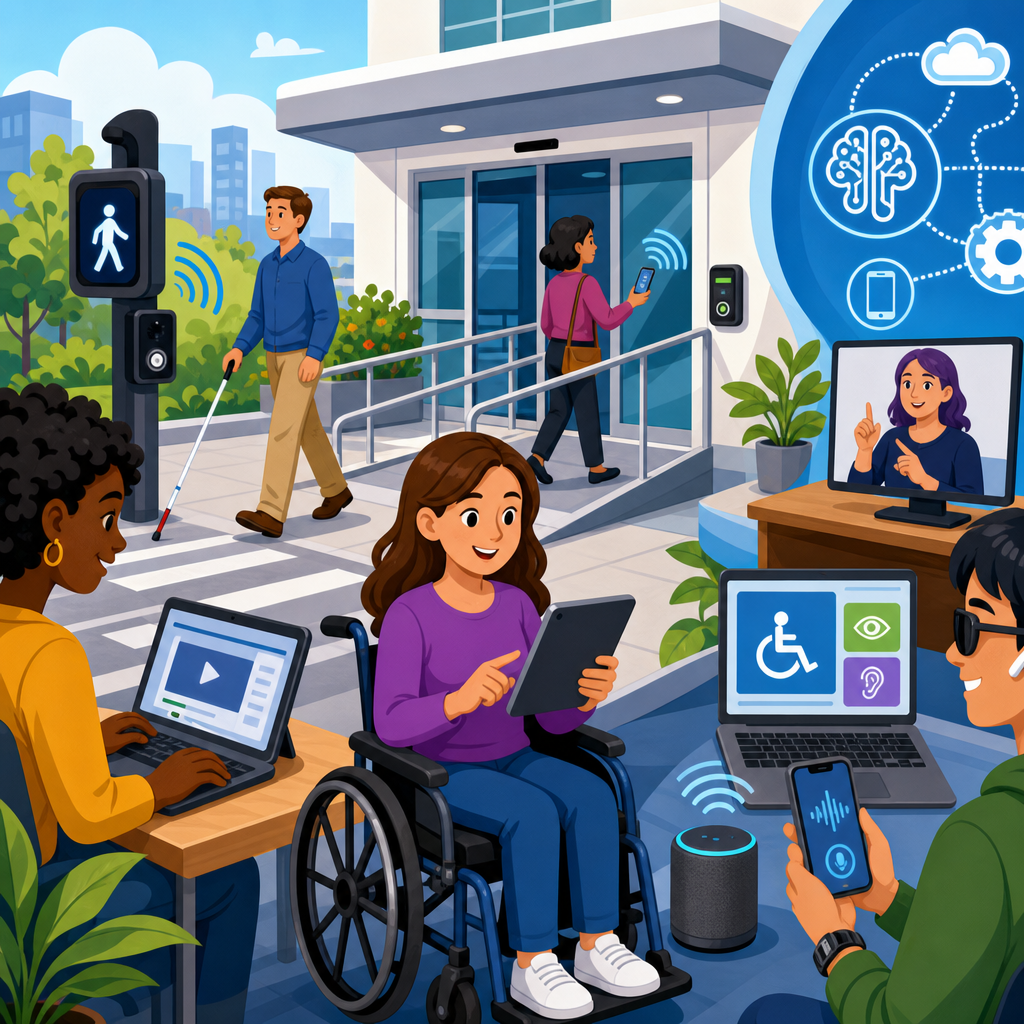
How recent technology advances are influencing ADA compliance is no longer a niche legal question reserved for accessibility specialists. It is a daily operational issue for employers, public agencies, schools, retailers, healthcare systems, software teams, and property owners that must deliver equal access across physical and digital environments. In my work reviewing accessibility programs, the biggest change has been simple: technology now shapes where barriers appear, how quickly they can be identified, and what regulators, courts, and users consider a reasonable accommodation.
The Americans with Disabilities Act, or ADA, is the core U.S. civil rights law prohibiting disability-based discrimination in employment, state and local government services, public accommodations, transportation, and telecommunications. ADA compliance refers to the practical steps organizations take to meet those obligations. Recent ADA updates and developments increasingly revolve around websites, mobile apps, self-service kiosks, video platforms, artificial intelligence tools, smart buildings, telehealth systems, and cloud software. At the same time, technology is giving organizations better ways to test accessibility, document remediation, and personalize accommodations.
This topic matters because disability access expectations have expanded with consumer behavior and digital dependence. A customer who orders groceries through an app, a patient who checks test results through a portal, or a job applicant who completes an online assessment expects the same access as anyone else. Regulators do too. The Department of Justice has reinforced that accessibility requirements apply in digital contexts, and courts have continued to hear claims involving websites, apps, and other technology-mediated services. For organizations tracking recent ADA updates and developments, the central reality is clear: accessibility is now inseparable from digital transformation, procurement, product design, and risk management.
Digital platforms are now central to ADA compliance
The most important development is the shift from viewing accessibility as a building-only issue to treating it as an enterprise-wide design requirement. For years, many organizations focused almost entirely on ramps, signage, parking, and restrooms. Those remain essential, but recent technology advances have moved the highest-volume points of interaction online. A city may publish forms on its website, a bank may rely on mobile deposit, and a university may push students into learning platforms, proctoring tools, and digital libraries. If those systems are inaccessible, equal participation breaks down before a person ever reaches a front desk.
In practice, this has changed compliance programs dramatically. Accessibility reviews now regularly include color contrast, keyboard navigation, focus order, captioning, semantic structure, alternative text, form labels, error identification, and screen reader compatibility. The technical benchmark most teams use is the Web Content Accessibility Guidelines, especially WCAG 2.1 and increasingly WCAG 2.2, because they provide testable success criteria that map well to legal expectations even when statutes do not name every technical detail. Organizations that once assigned ADA matters only to facilities managers now involve legal counsel, UX designers, developers, content owners, procurement leaders, and customer support teams.
Recent ADA updates and developments also show that digital accessibility cannot be handled as a one-time retrofit. Websites change weekly. Mobile apps update monthly. Third-party widgets, payment processors, chat tools, and document viewers can introduce barriers after an internal team thinks a project is complete. I have seen organizations pass an audit, then fail basic keyboard access six weeks later after a redesign. That is why mature compliance programs use automated scanning, manual testing, assistive technology checks, issue tracking, and release gates rather than depending on a single annual review.
Government action and technical standards are raising the bar
Another major influence on ADA compliance is the growing precision of government expectations. A central example is the Department of Justice rule strengthening accessibility requirements for web content and mobile apps used by state and local governments under Title II, with WCAG 2.1 Level AA serving as the practical technical target in most cases. That matters beyond the public sector because private organizations often look to federal rules as a signal of where enforcement and litigation standards are heading. When regulators define accessibility with more specificity, boards, insurers, and procurement teams pay attention.
Technical standards are also becoming more embedded in contracts and vendor review. Procurement language increasingly requires conformance documentation such as a Voluntary Product Accessibility Template, or VPAT, based on the Information Technology Industry Council format. A VPAT is not proof that a product is accessible, but it is now a routine screening tool for software purchases, learning systems, kiosks, and enterprise platforms. The practical effect is significant: technology vendors that ignored accessibility are finding that deals stall, especially in education, healthcare, and government-adjacent markets.
The table below shows how newer technologies are influencing ADA risk and compliance priorities across common operational areas.
| Technology area | Common accessibility issue | Compliance impact | Typical response |
|---|---|---|---|
| Websites and portals | Missing labels, poor keyboard access, low contrast | Higher complaint and litigation exposure | WCAG-based audits, design system fixes, content governance |
| Mobile apps | Unlabeled buttons, gesture-only actions, screen reader conflicts | Exclusion from core services and transactions | Native accessibility testing on iOS and Android |
| Self-service kiosks | Touch-only workflows, no audio output, unusable height or reach | Barrier at point of sale or check-in | Accessible hardware, tactile controls, privacy-enabled audio |
| Video and virtual meetings | No captions, poor transcripts, inaccessible controls | Communication access failures | Live captioning, transcript workflows, platform selection standards |
| AI hiring and service tools | Biased scoring, inaccessible interfaces, unclear accommodation paths | Discrimination and process fairness concerns | Human review, bias testing, alternate application methods |
For organizations following recent ADA updates and developments, the lesson is that standards now travel through multiple channels at once: formal rulemaking, settlement agreements, procurement terms, insurer questionnaires, and public expectations shaped by large platform companies. Compliance is therefore becoming both more measurable and more visible.
Artificial intelligence, automation, and algorithmic decision-making create new obligations
Artificial intelligence is one of the most discussed recent technology advances affecting ADA compliance, and the impact is broader than many leaders assume. AI touches resume screening, employee monitoring, customer service chatbots, fraud detection, caption generation, transcription, image recognition, and medical triage support. These tools can expand access when used carefully, but they can also create fresh barriers or hide old ones behind an automated layer.
In employment, the key issue is whether automated systems screen out qualified individuals with disabilities or make accommodations harder to obtain. An online assessment timed too aggressively for people using assistive technology, a video interview platform that misreads atypical speech patterns, or a productivity tool that flags disability-related work patterns as underperformance can all trigger compliance problems. The Equal Employment Opportunity Commission has repeatedly warned that employers remain responsible for the effects of decision tools they adopt, even when a third-party vendor built them.
I have seen teams assume that an AI product is compliant because it appears modern and efficient. That assumption is risky. Accessibility and discrimination review must happen before deployment and continue after launch. Organizations should validate whether interfaces work with screen readers, voice control, captions, and keyboard-only use. They should also ask whether an alternate path exists when a disability affects tool performance. A chatbot that handles appointment scheduling may help many users, for example, but if it cannot manage relay calls or does not let users bypass automation to reach a human, it can become a barrier rather than a convenience.
There is also a subtler issue: AI-generated accessibility features are useful but imperfect. Automatic captions have improved dramatically, and tools from Microsoft, Zoom, Google, and other major platforms now provide real-time support that would have been rare a decade ago. Still, automatic captions can mishandle names, medical terminology, accents, and rapid turn-taking. Image description tools can summarize obvious objects yet miss context that a blind user needs to understand a chart, meme, or product image. The right compliance posture is to use AI as an assistive layer, not as a reason to stop human review.
Smart devices, telehealth, and hybrid service models are expanding the meaning of access
Recent ADA updates and developments are also being shaped by connected devices and hybrid service delivery. Telehealth is the clearest example. Healthcare providers now rely on patient portals, appointment apps, remote monitoring tools, digital intake forms, and video visits. These systems can improve access for patients with mobility limitations, chronic illnesses, transportation barriers, or immune concerns. But the same systems can exclude patients if consent forms are unreadable by screen readers, if video platforms lack caption quality, or if biometric login methods do not support assistive alternatives.
Smart buildings and Internet of Things devices raise similar issues in physical spaces. Digital door entry systems, touchscreen thermostats, app-based room controls, and automated kiosks are often marketed as efficient upgrades, yet many are introduced without equivalent accessible operation. A hotel may install a sleek check-in kiosk that works for sighted, standing users while forcing blind guests or wheelchair users to wait for staff intervention. A transit station may add app-based wayfinding that helps some riders while offering no tactile or audible backup. These examples show that newer technology does not automatically equal greater accessibility.
Hybrid models create opportunity when designed correctly. Remote work platforms can support employees who need flexible scheduling, reduced commuting strain, or home-based assistive technology setups. Video meetings with captions can improve participation for deaf or hard of hearing employees and also benefit non-native speakers and anyone joining from a noisy environment. Electronic documents, when tagged properly, can be easier to navigate than paper binders. In other words, technology advances are influencing ADA compliance in two directions at once: they can remove longstanding barriers, and they can generate new forms of exclusion if accessibility is not built in from the start.
This is why accessibility planning now extends beyond websites into service design. Organizations should map the full user journey: discovery, login, authentication, transaction, confirmation, follow-up, and support. A telehealth portal that is accessible until identity verification requires an unreadable CAPTCHA still fails. A workplace accommodation process that begins with an accessible form but ends with inaccessible PDF notices still breaks down. Compliance depends on the entire path, not just the homepage or the primary interface.
What organizations should do now to keep pace with ADA developments
The most effective response to recent ADA updates and developments is to treat accessibility as a governance function rather than an emergency project. Start with an inventory of high-risk assets: public websites, mobile apps, applicant systems, customer portals, learning platforms, kiosks, and digital documents. Then prioritize based on service criticality and user volume. A careers site, checkout flow, patient portal, and account login are generally more urgent than a low-traffic blog archive because they control core participation.
Next, establish a defensible testing program. Automated scanners such as axe, WAVE, and Siteimprove can quickly identify common issues, but they will not catch everything. Manual keyboard testing, screen reader testing with tools like JAWS, NVDA, and VoiceOver, mobile accessibility checks on TalkBack and iOS assistive settings, and user testing with people with disabilities are necessary to uncover workflow barriers. Organizations should document findings, assign owners, set remediation deadlines, and verify fixes before release. Good records matter because they show active effort, not just passive awareness.
Procurement deserves special attention. Many accessibility failures enter through third-party software, embedded widgets, and outsourced content. Require accessibility commitments in contracts, request current VPATs, validate claims during demos, and reserve remediation rights. Train internal teams as well. Developers need patterns for accessible components. Content teams need standards for headings, link text, tables, PDFs, and video captions. Customer support teams need scripts and escalation paths for accommodation requests. Legal and compliance leaders need dashboards that track issue status across departments.
Finally, publish a clear accessibility statement and make feedback easy. This does not solve technical defects, but it improves trust and helps organizations catch problems earlier. The strongest programs pair public commitments with internal accountability: executive sponsorship, policy language, regular audits, and budget for remediation. Accessibility should sit alongside cybersecurity, privacy, and quality assurance as a standing operational discipline.
Technology is changing ADA compliance faster than many organizations expected, but the direction is consistent. Access obligations now extend across websites, apps, AI systems, kiosks, video platforms, telehealth tools, and connected environments. Recent ADA updates and developments show that digital accessibility is no longer optional, and neither is documentation, procurement review, or continuous testing. The organizations doing this well are not waiting for complaints. They are building accessibility into design systems, vendor selection, release management, and customer support.
The practical benefit is larger than legal risk reduction. Accessible technology improves usability, broadens audience reach, strengthens brand trust, and reduces friction for everyone from employees to patients to customers. It also future-proofs operations as standards become clearer and enforcement grows more sophisticated. If this page is your starting point for tracking recent ADA updates and developments, use it as a hub: review your highest-impact digital services, assess your vendors, and put a repeatable accessibility program in place now.
Frequently Asked Questions
How are recent technology advances changing what ADA compliance looks like in practice?
Recent technology advances have expanded ADA compliance far beyond traditional concerns like ramps, elevators, parking spaces, and restroom access. Today, organizations must think about accessibility anywhere people interact with services, information, employment systems, or customer support. That includes websites, mobile apps, self-service kiosks, digital forms, online learning platforms, telehealth systems, scheduling tools, video content, workplace software, smart building features, and even AI-driven customer interfaces. In practical terms, this means compliance is no longer limited to a facilities issue or a one-time legal checklist. It has become an ongoing operational responsibility that touches IT, HR, procurement, marketing, facilities, customer service, product development, and leadership.
Technology has also increased the speed at which barriers can appear. A website redesign, software update, mobile app release, chatbot deployment, or kiosk installation can create new accessibility problems overnight if accessibility is not built into the process. At the same time, technology has made it easier to identify and remove barriers more quickly through automated testing tools, captioning platforms, digital document remediation software, and assistive technology compatibility checks. The key shift is that organizations now need proactive systems rather than reactive fixes. ADA compliance in the modern environment depends on integrating accessibility into design, purchasing, development, content publishing, and maintenance from the start.
Why does digital accessibility matter so much under the ADA today?
Digital accessibility matters because websites, apps, and online systems are now central to how people apply for jobs, enroll in school, make purchases, access healthcare, receive government services, communicate with businesses, and participate in everyday life. If a digital platform is not accessible to people with disabilities, the exclusion can be just as real as a staircase blocking a wheelchair user from entering a building. For someone using a screen reader, keyboard navigation, voice input, captions, magnification software, or other assistive technology, inaccessible digital design can prevent basic participation in services that others can use immediately.
From an ADA perspective, digital access increasingly affects equal opportunity and effective communication. Employers may create barriers if job applications, training systems, scheduling software, or internal communication platforms are unusable for employees or applicants with disabilities. Public-facing entities may create barriers if consumers cannot complete transactions, access information, or request services independently. Healthcare systems, schools, retailers, and public agencies are especially affected because so many essential functions have shifted online. As technology becomes the default delivery channel, accessibility is no longer optional support layered on after launch. It is part of providing equal access itself. Organizations that treat digital platforms as a core ADA issue are far better positioned to reduce legal risk, improve usability, and serve a broader audience effectively.
What technologies are creating new ADA compliance risks for employers and organizations?
Several emerging and widely adopted technologies are creating new ADA compliance risks, especially when organizations implement them quickly without accessibility review. Artificial intelligence tools can create problems if automated hiring systems screen out qualified applicants with disabilities, if chatbots are difficult to navigate with assistive technology, or if AI-generated captions and transcripts are inaccurate for meaningful communication. Self-service kiosks in retail, healthcare, transportation, and hospitality settings can become barriers if they lack tactile controls, audio output, screen reader functionality, reachable design, or adequate response time. Mobile apps may exclude users if they rely on gestures without alternatives, have poor color contrast, or do not work well with screen readers and voice controls.
Other common risk areas include video conferencing platforms without reliable captioning, PDFs and digital forms that are not tagged properly for assistive technology, e-learning systems with inaccessible course materials, smart office systems that depend on inaccessible touchscreens, and customer portals that cannot be used by keyboard-only users. Even routine software updates can create ADA-related issues if new features are introduced without accessibility testing. Another major risk comes from third-party products. Many organizations assume that purchasing a commercial platform shifts the responsibility elsewhere, but if that platform becomes part of how services, employment, or communication are delivered, the accessibility issue still affects the organization using it. The safest approach is to evaluate accessibility before procurement, test regularly after deployment, and maintain clear accountability across departments.
Can new technology also make ADA compliance easier to achieve?
Yes, when used thoughtfully, new technology can significantly improve accessibility and make ADA compliance more manageable. Automated accessibility scanning tools can help teams identify common website and application issues early in development. Real-time captioning, improved speech recognition, and transcription tools can support more effective communication in meetings, classrooms, telehealth visits, and public events. Document remediation software can help convert PDFs and digital materials into formats that work better with screen readers. Modern design systems can also embed accessible components so that developers and content teams are less likely to repeat the same mistakes across multiple platforms.
Technology can also strengthen internal compliance processes. Organizations can use centralized issue tracking, accessibility dashboards, procurement checklists, and testing workflows to monitor whether digital and physical systems remain accessible over time. Remote access tools and flexible workplace technologies may also improve accommodation options for employees with disabilities, depending on how they are implemented. However, the important qualifier is that technology helps only when accessibility is part of governance, training, and decision-making. Automated tools cannot catch every issue, and convenience features do not replace the need for human testing, user feedback, and legal awareness. The most successful organizations use technology as an enabler of accessibility, not as a shortcut that replaces thoughtful compliance work.
What should organizations do now to keep up with technology-driven ADA compliance demands?
Organizations should start by recognizing that ADA compliance is now a continuous process tied directly to technology decisions. The first step is to assess where accessibility risk exists across both physical and digital operations. That includes websites, mobile apps, internal employee systems, customer portals, kiosks, digital documents, video content, communication tools, and any third-party platforms used to deliver services or manage employment functions. Once those areas are identified, organizations should adopt a structured accessibility program that includes policy development, leadership oversight, clear roles, training, testing, remediation timelines, and complaint-response procedures.
Procurement is especially important. Accessibility should be reviewed before buying or renewing software, hardware, and digital services, not after problems appear. Development and content teams should be trained on accessible design and publishing practices. Employers should also make sure accommodation processes keep pace with new workplace technologies, including AI tools, remote work systems, and digital onboarding platforms. Regular audits, both automated and manual, are essential because technology changes constantly. It is also wise to involve people with disabilities in usability testing whenever possible, since lived experience often reveals barriers that technical checklists miss. Ultimately, the organizations that adapt best are the ones that stop viewing ADA compliance as a narrow legal issue and instead treat accessibility as a quality, risk management, customer service, and operational priority shaped by every new technology they adopt.


