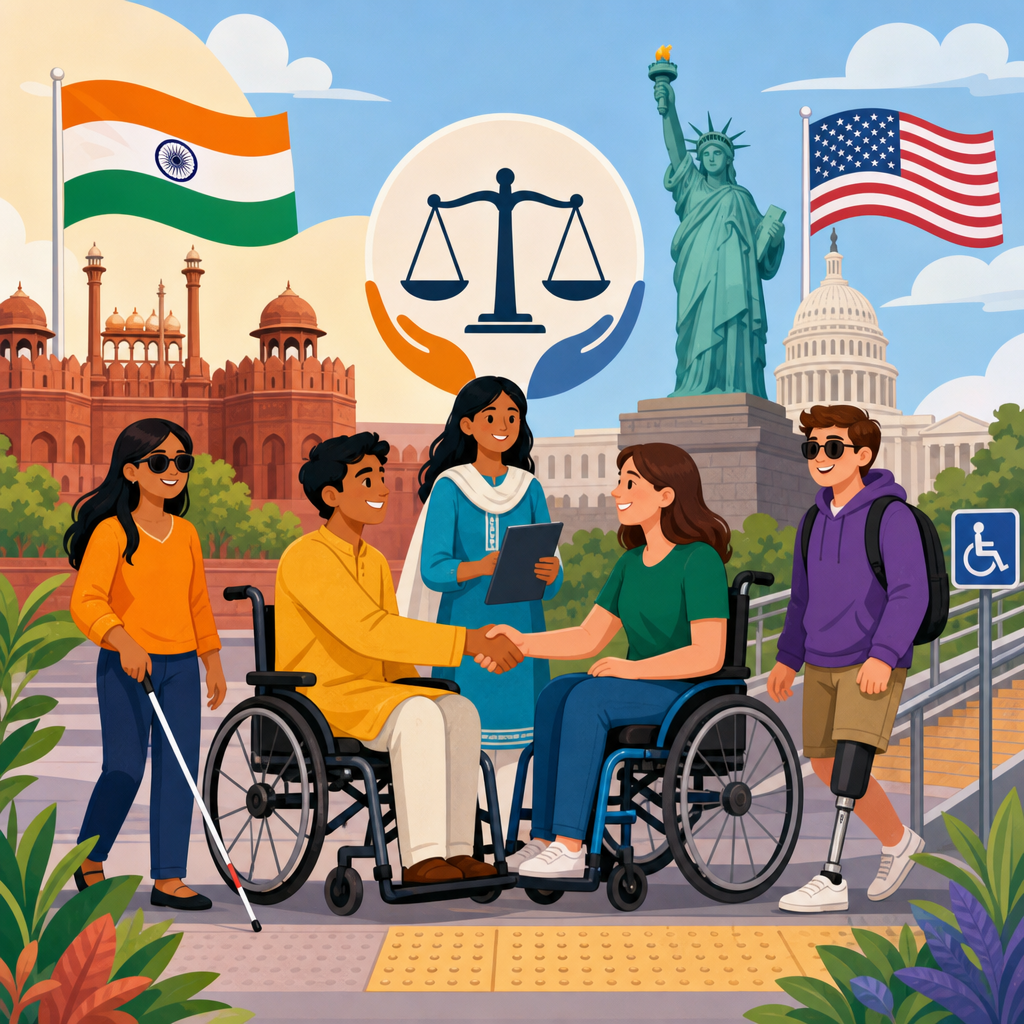
Disability rights in India compared with the ADA reveals how two major legal systems pursue inclusion through different histories, definitions, enforcement models, and social realities. For anyone studying global views on disability rights, this comparison matters because India and the United States influence policy debates far beyond their borders. India’s Rights of Persons with Disabilities Act, 2016, often called the RPwD Act, sits within a constitutional and treaty-based framework shaped by the UN Convention on the Rights of Persons with Disabilities. The ADA, or Americans with Disabilities Act of 1990, is the cornerstone civil rights statute in the United States, banning disability discrimination across employment, public services, public accommodations, telecommunications, and more. I have worked with accessibility audits, policy reviews, and cross-border compliance teams, and one lesson is constant: similar values do not produce identical legal duties.
At a basic level, disability rights law aims to remove barriers that exclude people with physical, sensory, intellectual, psychosocial, or multiple disabilities from education, work, transport, housing, healthcare, and civic life. The key terms are important. Non-discrimination means a person cannot be treated unfavorably because of disability. Reasonable accommodation means necessary and appropriate modifications, unless they create disproportionate burden under the governing standard. Accessibility refers to making environments, services, technologies, and communications usable in advance, not only after an individual complaint. Inclusive education means disabled students should learn within mainstream systems with support wherever possible. Legal capacity means recognizing disabled people as decision-makers, not merely care recipients.
This page serves as a hub for global views on disability rights by using India and the ADA as a detailed anchor comparison. The reason to start here is practical. The ADA is often treated as the international reference point for disability discrimination law, especially by businesses, universities, and technology companies. India, meanwhile, represents one of the world’s largest and most diverse disability-rights jurisdictions, where ambitious statutory guarantees meet uneven implementation across states, cities, and rural areas. Comparing them highlights universal themes: who qualifies as disabled, what accommodations are required, how accessibility standards are set, what remedies are realistic, and where law still falls short. Those questions shape every related article under an international perspective, whether the focus is employment, digital accessibility, education, transport, or comparative enforcement.
Foundations, definitions, and scope
The ADA and India’s RPwD Act both reject the older charity model of disability, but they arrived there by different routes. In the United States, the disability rights movement pushed disability law firmly into the civil-rights tradition. The ADA built on section 504 of the Rehabilitation Act of 1973 and on decades of activism demanding equal participation. In India, disability law evolved through constitutional equality principles, social welfare legislation, judicial interpretation, and then a stronger rights-based turn after India ratified the UN disability convention in 2007. The RPwD Act replaced the Persons with Disabilities Act, 1995, and significantly expanded rights, recognized disabilities, and state obligations.
One of the clearest differences is coverage. The ADA generally defines disability as a physical or mental impairment that substantially limits one or more major life activities, a record of such impairment, or being regarded as having such an impairment. The ADA Amendments Act of 2008 broadened interpretation after several restrictive court decisions. India’s RPwD Act uses a list-based approach with broad rights language, recognizing 21 specified disabilities, including blindness, low vision, hearing impairment, locomotor disability, autism spectrum disorder, specific learning disabilities, intellectual disability, mental illness, cerebral palsy, muscular dystrophy, chronic neurological conditions, multiple sclerosis, thalassemia, hemophilia, sickle cell disease, acid attack victims, Parkinson’s disease, and multiple disabilities including deafblindness. In practice, India’s approach can be clearer for certification and benefits, while the ADA’s functional approach can be more flexible for anti-discrimination claims.
Scope also differs by subject matter. The ADA is divided into titles, each targeting a domain such as employment or public accommodations. India’s RPwD Act is more integrated and expressly addresses equality, community life, education, skill development, employment, social security, accessibility, political participation, and institutional mechanisms. India also uses reservation policies, its term for affirmative quotas, in ways the ADA does not. For readers exploring global views on disability rights, this is a defining contrast: the U.S. model centers anti-discrimination and individualized accommodation, while India combines anti-discrimination with entitlement, affirmative action, and state welfare commitments.
Employment rights and workplace accommodation
Employment is where many organizations first encounter disability law, and where the contrast between India and the ADA becomes concrete. Under the ADA, covered employers with 15 or more employees cannot discriminate against qualified individuals with disabilities in hiring, advancement, compensation, training, or termination. They must provide reasonable accommodation unless doing so would impose undue hardship, a case-specific standard tied to cost, resources, and operational impact. Common accommodations include screen-reader compatible software, modified schedules, ergonomic workstations, sign language interpreters, reassignment to a vacant position, and remote-work adjustments where essential functions can still be performed.
India’s RPwD Act prohibits discrimination in employment and requires reasonable accommodation, but it also creates reservation in government establishments. At least 4 percent of vacancies in identified posts are reserved for benchmark persons with disabilities, a category generally tied to at least 40 percent specified disability as certified. This is a major structural difference. The ADA does not reserve jobs. It requires equal opportunity. India adds targeted representation within public employment. In my compliance work, this creates very different conversations: U.S. employers usually ask how to document interactive accommodation processes, while Indian public bodies often ask both about accessibility and whether reservation rosters, identification of posts, and recruitment methods meet statutory expectations.
Private-sector reality is mixed in both countries. U.S. employers often have stronger HR procedures, clearer litigation risk, and better awareness of accommodation duties, yet disabled workers still face hiring bias and underemployment. In India, many large employers now run disability inclusion hiring programs, especially in IT, banking, retail, and business process services. Companies such as Infosys, Wipro, and Accenture India have invested in accessible campuses and inclusive recruitment, but uptake remains uneven outside major urban employers. A legal right does not guarantee labor-market access when transport is inaccessible, schooling is segregated, or assistive technology is unaffordable.
| Issue | India RPwD Act | United States ADA |
|---|---|---|
| Employment coverage | Anti-discrimination plus public sector reservation | Anti-discrimination for covered employers |
| Accommodation standard | Reasonable accommodation | Reasonable accommodation unless undue hardship |
| Public job quotas | Yes, 4% in government establishments | No quota system |
| Disability threshold for some benefits | Benchmark disability often required | No percentage certification model for ADA claims |
| Typical enforcement | Commissioners, courts, administrative mechanisms | EEOC charges, DOJ action, private lawsuits |
Education, public services, and accessibility standards
Education shows how disability rights move beyond formal equality into system design. In the United States, the ADA works alongside the Individuals with Disabilities Education Act and section 504. Students may receive individualized supports, accessible materials, auxiliary aids, and non-discriminatory participation in school programs. Universities must provide academic adjustments and accessible digital systems. In India, the RPwD Act recognizes inclusive education and requires governments and educational institutions to make campuses, materials, and pedagogy accessible. It supports accommodations such as scribes, extra examination time, accessible formats, and appropriate modifications, while also linking with broader education schemes and state implementation rules.
Public services and built environments expose a second major difference: standard setting. The ADA relies heavily on detailed regulations and technical standards, especially the 2010 ADA Standards for Accessible Design enforced by the Department of Justice. These standards specify measurable requirements for ramps, door widths, toilet rooms, signage, parking, routes, and more. India has progressively developed standards through the Harmonised Guidelines and Standards for Universal Accessibility in India and related rules, plus the Accessible India Campaign. The legal ambition is substantial, covering government buildings, transport systems, and information and communication technology. The challenge is implementation consistency across ministries, states, municipalities, and legacy infrastructure.
Digital accessibility is now impossible to separate from disability rights. In the U.S., courts and regulators increasingly treat websites and apps as covered under disability law when they connect to public services or commercial offerings, even though litigation theories vary by jurisdiction. WCAG, the Web Content Accessibility Guidelines, has become the practical benchmark. In India, the policy direction also points toward accessible ICT, government portals, and digital service delivery, but enforcement remains less uniform. When I audit multinational platforms, the same product may technically meet WCAG 2.1 AA yet still fail users in India because local-language screen-reader compatibility, low-bandwidth performance, or inaccessible authentication flows create practical exclusion. Accessibility is not just a checklist; it is real use in local context.
Enforcement, remedies, and everyday barriers
The strongest legal text matters less if people cannot enforce it. The ADA offers several enforcement channels. Employees can file charges with the Equal Employment Opportunity Commission. The Department of Justice can investigate public entities and public accommodations. Individuals can sue in federal court, and class actions or systemic settlements can force changes at scale. Remedies vary by title and claim type but may include injunctive relief, reinstatement, back pay, compensatory damages, attorneys’ fees, and negotiated compliance programs. This enforcement architecture creates meaningful pressure, especially for larger employers, universities, retailers, hospitals, and transport providers.
India’s RPwD Act provides for Chief Commissioners and State Commissioners for Persons with Disabilities, grievance processes, monitoring duties, and court-based remedies. There are penalties for certain violations, and public interest litigation can be significant, especially where constitutional rights and state obligations intersect. Indian courts have at times issued important disability-rights rulings on education access, examinations, transport, and dignity. Yet access to justice can be slower and more uneven. Documentation burdens, limited awareness, certification problems, infrastructure gaps, and state-level variation all affect outcomes. The law is progressive, but many disabled people still rely on advocacy organizations, family support, or litigation by collectives rather than straightforward individual enforcement.
Everyday barriers also differ in scale and texture. In the United States, the common disputes I see involve inaccessible hiring systems, website barriers, service animals, communication access in healthcare, and failure to modify workplace practices. In India, those issues exist too, but they are compounded by inaccessible footpaths, inconsistent curb cuts, overcrowded transport, limited sign language provision, low rural service access, and social stigma around mental illness and intellectual disability. A useful comparative insight is this: the ADA often operates in an environment with more mature compliance systems but still persistent exclusion; India operates with broader developmental constraints, making implementation a question of governance capacity as much as legal principle.
What this comparison means for global disability rights
Comparing disability rights in India with the ADA shows that no single model solves disability exclusion. The ADA demonstrates the power of enforceable civil-rights duties, technical accessibility standards, and private enforcement. India demonstrates the value of pairing non-discrimination with affirmative measures, broader statutory recognition of disabilities, and explicit state responsibility for inclusion. Each system also exposes the other’s limits. The U.S. can appear procedurally robust but still fragmented, expensive to enforce, and too dependent on complaints after barriers arise. India can appear normatively expansive yet constrained by implementation gaps, certification systems, funding limits, and uneven local administration.
For readers using this page as a hub within an international perspective, the larger lesson is that global views on disability rights should compare function, not only legal text. Ask five questions in every jurisdiction. Who is covered? What counts as discrimination? What accessibility standards are mandatory? How are accommodations delivered and funded? What remedies are realistic for ordinary people? Those questions help connect this India-ADA comparison to related topics such as disability rights in Europe, accessibility law in Canada, inclusive education frameworks, employment quotas, transport design, and digital accessibility enforcement. They also help businesses, universities, and nonprofits operating across borders avoid the common mistake of assuming U.S. compliance automatically satisfies international obligations.
The main benefit of studying disability rights in India compared with the ADA is clarity. You see how rights move from principle to practice, where legal design matters, and why implementation determines whether inclusion is real. Use this article as your starting point for deeper research across the international perspective cluster, then review country-specific rules, sector standards, and current case law before making policy or compliance decisions.
Frequently Asked Questions
1. What is the main difference between disability rights in India and the Americans with Disabilities Act (ADA)?
The biggest difference is that India and the United States organize disability rights through different legal histories, institutional structures, and social conditions, even though both systems aim to advance equality, dignity, and participation. In the United States, the ADA is a landmark civil rights law enacted in 1990 to prohibit disability-based discrimination across major areas of public life, including employment, public services, public accommodations, transportation, and telecommunications. Its framework is strongly anti-discrimination oriented, meaning it focuses on removing exclusionary barriers and requiring reasonable accommodation so people with disabilities can participate on equal terms.
India’s modern framework is centered on the Rights of Persons with Disabilities Act, 2016, or RPwD Act, which replaced an earlier 1995 law and was shaped in part by India’s obligations under the UN Convention on the Rights of Persons with Disabilities. The RPwD Act is broader in some ways because it combines anti-discrimination rules with affirmative duties, social welfare measures, reservations in education and public employment, and a larger statutory list of recognized disabilities. That makes the Indian model not just a non-discrimination regime, but also a rights-and-entitlements system tied to constitutional values, social justice principles, and developmental policy.
Another important difference is enforcement. The ADA relies heavily on litigation, administrative complaints, regulatory compliance, and judicial interpretation. Courts, federal agencies, and private lawsuits all play central roles in shaping how rights are applied in practice. In India, enforcement includes commissioners for persons with disabilities, government departments, courts, and public authorities, but implementation often depends more heavily on administrative will, state capacity, and awareness at local levels. As a result, the formal rights may look strong on paper, yet outcomes can vary significantly depending on region, infrastructure, and institutional support.
So, while both systems seek inclusion, the ADA is often understood as a classic anti-discrimination statute within a mature civil rights framework, whereas India’s RPwD Act operates within a broader constitutional, treaty-based, and social justice landscape that tries to address both exclusion and structural disadvantage.
2. How do India and the ADA define disability, and why does that matter?
Definitions matter because they determine who is protected, what kinds of barriers the law recognizes, and how easily a person can claim legal rights. Under the ADA, disability is generally defined as a physical or mental impairment that substantially limits one or more major life activities, a record of such an impairment, or being regarded as having such an impairment. This definition has been refined over time, especially after the ADA Amendments Act of 2008, which broadened coverage in response to earlier court decisions that had interpreted disability too narrowly. The result is a more inclusive understanding that directs attention toward discrimination rather than forcing individuals to clear an excessively high threshold just to qualify for protection.
India’s RPwD Act takes a somewhat different route. It recognizes a wider and more explicit list of disabilities, expanding the number from the earlier law to 21 specified categories. These include physical, intellectual, mental, and sensory disabilities, as well as conditions such as autism spectrum disorder, cerebral palsy, specific learning disabilities, multiple sclerosis, blood disorders like thalassemia and hemophilia, and others. The law also distinguishes between a “person with disability” and a “person with benchmark disability,” with the latter category often used to determine eligibility for certain reservations, benefits, and targeted protections.
This difference matters because the ADA is built around a functional and anti-discrimination inquiry, while India’s law often combines categorical recognition with entitlement structures. In the American system, the key question is frequently whether the person faced prohibited discrimination and whether reasonable accommodation was required. In India, the inquiry may involve not only discrimination, but also whether a person falls within a recognized category for access to reservations, educational benefits, social protections, or government schemes.
These definitional choices reflect broader policy philosophies. The ADA tries to prevent exclusion in mainstream institutions. India’s framework tries to do that too, but it also acknowledges that historical disadvantage may require targeted public support and formal recognition of a wider range of conditions. For comparative legal analysis, this is one of the most revealing distinctions between the two systems.
3. Which law offers stronger protections in employment, education, and public access?
There is no simple winner, because “stronger” can mean different things depending on whether you are looking at legal design, scope of rights, practical enforcement, or access to remedies. In employment, the ADA is widely regarded as a powerful anti-discrimination statute. It prohibits covered employers from discriminating against qualified individuals with disabilities and requires reasonable accommodations unless doing so would impose an undue hardship. This has generated a large body of case law, detailed regulations, and a fairly developed compliance culture in many sectors, even if real-world barriers still remain.
India’s RPwD Act also prohibits discrimination in employment and requires reasonable accommodation, but it goes further in one notable respect by providing reservations in government employment for certain categories of persons with benchmark disabilities. That is an important structural protection not found in the ADA. Instead of focusing only on equal treatment, India explicitly uses quota-based representation in parts of the public sector to address underrepresentation. However, the effectiveness of that protection depends heavily on proper identification of posts, accessible recruitment processes, and consistent implementation across institutions.
In education, both systems support inclusion, but again they approach it differently. In the United States, disability rights in education are shaped not only by the ADA, but also by Section 504 of the Rehabilitation Act and the Individuals with Disabilities Education Act. Together, these laws create robust protections around access, accommodation, and specialized educational services. India’s RPwD Act supports inclusive education and places duties on educational institutions and the state, but practical challenges such as lack of accessible infrastructure, shortage of trained personnel, and uneven local implementation can affect actual outcomes.
For public access, the ADA has had enormous impact on physical accessibility, transportation, and access to businesses and public services, in part because technical standards and enforcement mechanisms are relatively well developed. India’s law also mandates accessibility and non-discrimination, and it reflects a strong commitment to accessibility in both public and private domains. Yet the scale of infrastructure gaps, urban-rural disparities, and resource constraints often makes compliance a more difficult long-term project.
In short, the ADA may appear stronger where enforcement systems, litigation pathways, and accessibility standards are concerned, while India’s law may appear stronger where formal recognition of a wider disability spectrum and affirmative representation measures are concerned. The real comparison depends on whether you value anti-discrimination enforcement, affirmative action, breadth of statutory coverage, or practical implementation most heavily.
4. How are disability rights enforced in India compared with the United States?
Enforcement is one of the most important differences in the comparison. In the United States, the ADA is enforced through a mix of federal agencies, administrative complaint systems, court actions, and private litigation. For example, employment claims often involve the Equal Employment Opportunity Commission, while other areas may involve the Department of Justice or other agencies depending on the setting. This creates multiple entry points for enforcement and has helped generate extensive judicial interpretation. Over time, that body of case law gives institutions clearer guidance about what compliance requires, even though litigation can still be slow, expensive, and unevenly accessible.
India’s enforcement structure under the RPwD Act includes the Chief Commissioner for Persons with Disabilities at the national level, State Commissioners, appropriate governments, designated authorities, and the courts. The law creates complaint mechanisms and assigns duties to public bodies, educational institutions, employers, and service providers. In principle, this can create a broad accountability framework. In practice, however, enforcement may be shaped by administrative capacity, public awareness, bureaucratic delays, and uneven coordination between central and state authorities.
One practical distinction is that American disability rights enforcement has historically relied more visibly on adversarial legal processes and compliance pressure from lawsuits, settlements, and federal oversight. India’s system, while certainly judicially enforceable in many contexts, often depends more on regulatory follow-through, institutional responsiveness, and rights awareness among citizens. That can make implementation less predictable, particularly where individuals do not have easy access to legal help or where local authorities are not fully trained on disability obligations.
Social context also matters. In both countries, rights enforcement is influenced by stigma, economic inequality, inaccessible environments, and the availability of advocacy networks. But in India, factors such as linguistic diversity, rural access barriers, documentation requirements, and variation in state-level governance can make rights enforcement especially complex. This means the legal framework must be understood not only as a text, but as part of a broader ecosystem involving administration, civil society, public infrastructure, and social attitudes.
So, when comparing enforcement, the ADA generally benefits from more developed litigation pathways and compliance mechanisms, while India’s RPwD framework reflects a broader rights vision whose success often turns on implementation depth rather than legal drafting alone.
5. Why does comparing India’s disability rights law with the ADA matter globally?
This comparison matters because India and the United States represent two influential but different models of disability law, and both shape global discussions about what equality should look like in practice. The ADA has long been treated as a flagship anti-discrimination law and has influenced policy design around accessibility, accommodation, and public