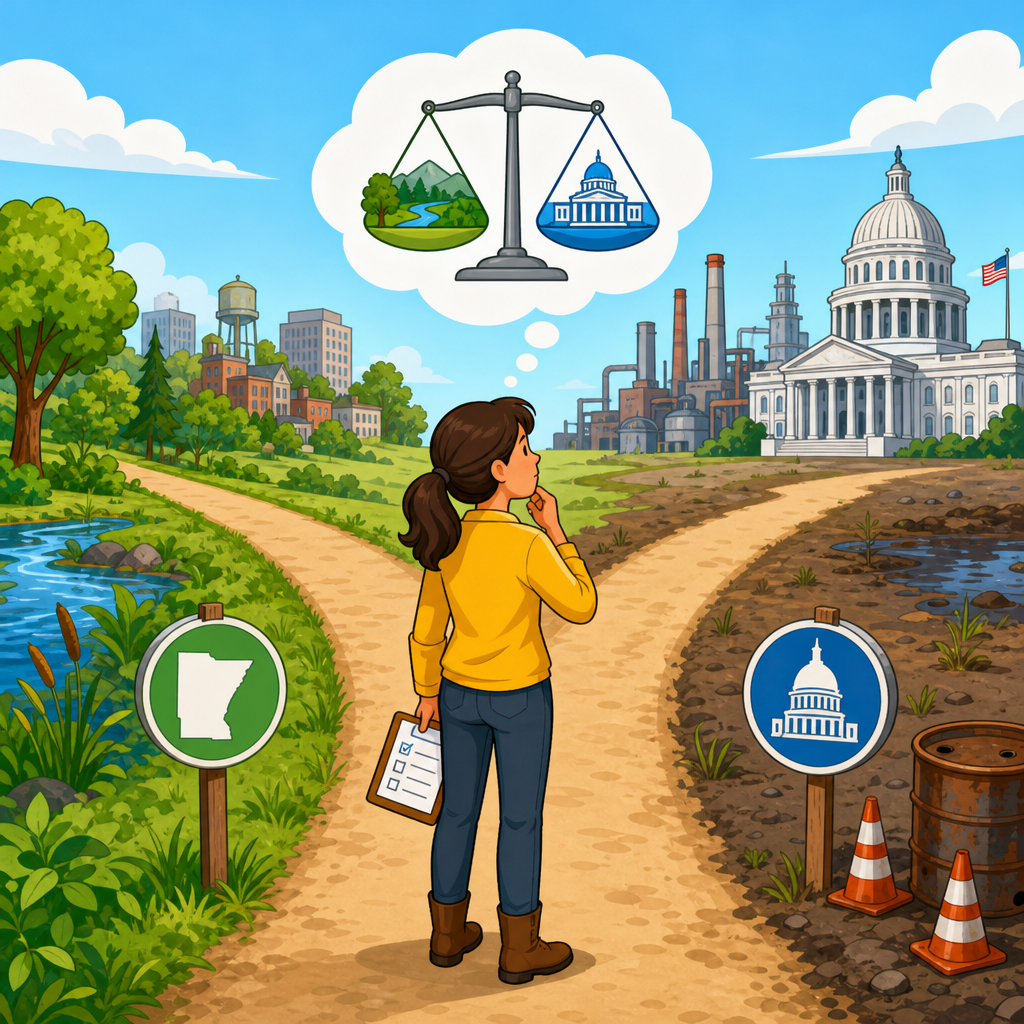
Choosing remediation priorities when state and federal rules diverge is one of the hardest governance problems facing organizations that manage environmental liabilities, legacy contamination, or regulated waste sites. In practice, the question is not simply which rule is stricter. It is how to sequence investigation, interim controls, cleanup design, community engagement, and litigation strategy when multiple sovereigns can impose overlapping duties, different cleanup levels, and conflicting deadlines. I have worked on matters where a site met a federal program milestone yet remained exposed to state enforcement, municipal nuisance claims, and private toxic tort suits because the remediation plan did not address local drinking water concerns.
For this hub on state and local lawsuits, remediation priorities means the order in which a company addresses receptors, media, contaminants, and legal risks. State rules include statutes, implementing regulations, guidance, enforcement policies, and permit conditions. Federal rules commonly arise under CERCLA, RCRA, the Clean Water Act, TSCA, and OSHA, but they also include agency consent orders and technical standards incorporated by reference. Divergence occurs when cleanup numbers differ, vapor intrusion policy evolves faster at the state level, natural resource damage theories expand, or local governments use zoning, stormwater, building, and public health powers to pressure action beyond a federal baseline.
This matters because poor prioritization increases total cost and can magnify liability. A company that spends capital on a final remedy before resolving receptor pathways may face a reopen clause, duplicative mobilization, or an injunction from a state court. Conversely, a company that waits for perfect regulatory alignment can lose insurance leverage, miss contribution opportunities, and damage credibility with agencies and communities. The most durable approach is risk-based and forum-aware: identify the legal drivers, rank imminent human exposure pathways first, preserve evidence for allocation and cost recovery, and structure decisions so that state, local, and federal obligations can be satisfied without rework. That framework anchors every downstream article in this subtopic.
Why state and federal cleanup rules diverge in the first place
State and federal divergence is not an anomaly; it is built into U.S. environmental federalism. Many federal statutes establish minimum standards while allowing states to obtain primacy, adopt more stringent requirements, or implement parallel authorities through separate cleanup programs. CERCLA illustrates the point. Federal remedial decisions must attain applicable or relevant and appropriate requirements, including certain state environmental standards, but not every state policy automatically binds a federal lead agency. RCRA corrective action can also proceed differently across authorized states because permits, orders, and guidance are administered through state programs with local interpretations of exposure assumptions, land use controls, and closure expectations.
Science moves faster than rulemaking, and states often react sooner. PFAS is the clearest modern example. Before EPA finalized national drinking water limits, several states adopted enforceable groundwater or drinking water standards, reporting triggers, and product restrictions. That created immediate divergence in site investigations and litigation posture. A facility operating under a federal order might still need additional delineation, treatment, and notification to satisfy a state attorney general or local water authority. Vapor intrusion, lead in soil, 1,4-dioxane, and hexavalent chromium have followed similar patterns, with states setting action levels or presumptive remedies more aggressively than federal screening values.
Local governments add a third layer. Counties and municipalities may not set numeric cleanup levels directly, yet they influence remediation through health codes, building permits, excavation ordinances, stormwater approvals, landfill bans, fire code requirements for treatment systems, and nuisance actions tied to odors, dust, runoff, or well interference. I have seen redevelopment projects delayed not by the lead environmental regulator, but by a city insisting on sub-slab mitigation upgrades and deed notice language before issuing occupancy approvals. When those practical constraints are ignored, the legal file says the site is progressing while the project team remains effectively blocked.
How to set remediation priorities when rules conflict
The first priority is always current and likely human exposure. If private wells are threatened, vapor intrusion is plausible, or indoor dust pathways affect occupied buildings, those issues outrank debates about final remedy optimization. Courts and regulators consistently treat imminent exposure as the strongest basis for emergency orders and injunctive relief. In a divergent-rule environment, early actions that cut exposure also reduce litigation temperature. Point-of-entry treatment, alternate water supply, sub-slab depressurization, access restrictions, dust control, and stormwater containment are often the fastest way to protect people while preserving flexibility on the permanent remedy.
The second priority is identifying which rule actually controls which decision. That sounds obvious, but it is where many companies lose months. Numeric cleanup levels, reporting triggers, permit conditions, and land use restrictions may come from different legal sources with different appeal rights. Build a matrix listing each contaminant, medium, receptor, parcel, governing authority, enforceable standard, guidance value, and deadline. Distinguish binding requirements from nonbinding guidance, because state agencies sometimes negotiate from policy documents that are influential but not legally self-executing. That distinction shapes both technical arguments and settlement leverage in state and local lawsuits.
The third priority is preserving optionality. Avoid remedy decisions that foreclose compliance with a more stringent but foreseeable state requirement. If the plume may trigger future PFAS treatment, design wells and treatment pads with expansion capacity. If redevelopment is likely, collect baseline geotechnical, hydrogeologic, and building data early so engineering controls can be integrated later without reopening the entire investigation. Optionality also means protecting privilege appropriately, separating factual investigation from litigation analysis, and maintaining chain-of-custody and data validation practices robust enough to survive agency scrutiny, Daubert challenges, and allocation disputes among potentially responsible parties.
State and local lawsuits: the pressure points that change cleanup sequencing
State and local lawsuits rarely mirror federal enforcement exactly. They are usually narrower, faster, and more tied to immediate community impacts. Common claims include public nuisance, trespass, negligence, property damage, cost recovery under state mini-superfund statutes, natural resource damages, fraudulent concealment, and claims for medical monitoring. Municipal water providers often pursue reimbursement for treatment, source investigation, and future capital upgrades. Counties may sue over landfill impacts, leachate management, or road contamination from waste hauling. These cases force remediation priorities to shift because plaintiffs target visible harms and near-term expenditures, not just the long arc of regulatory closure.
Three recurring pressure points matter most. First, drinking water claims accelerate source control and plume delineation. Second, vapor intrusion claims elevate building-specific work over large-scale groundwater remedy design. Third, redevelopment disputes make institutional controls, deed restrictions, and soil management plans urgent. In each scenario, the litigation forum pushes the project team toward proof that can be shown quickly to a judge, jury, or local official. A technically elegant remedy with a five-year design horizon may be less useful than a ninety-day interim measure that lowers concentration trends or prevents receptor contact.
| Pressure point | Typical plaintiff or regulator | Priority response | Why it rises to the top |
|---|---|---|---|
| Private or municipal drinking water impact | State AG, water utility, homeowners | Alternate water, well sampling, source control | Direct human exposure and clear damages model |
| Vapor intrusion into occupied buildings | Residents, tenants, local health department | Indoor air testing, sub-slab systems, entry mitigation | Immediate health concerns and injunction risk |
| Construction or redevelopment delay | Developer, city, neighboring owners | Soil plan, institutional controls, permit coordination | Time-sensitive economic loss and permit leverage |
| Stormwater or sediment migration | Municipality, state agency, downstream owners | Erosion controls, outfall monitoring, removal actions | Visible offsite impacts and compliance exposure |
For a hub page, the takeaway is simple: state and local lawsuits are not side shows. They often determine remediation pace, budget allocation, and settlement architecture. Supporting articles under this subtopic should drill into municipal cost recovery, nuisance litigation, private well cases, redevelopment disputes, and state attorney general strategies, but the central principle remains the same: prioritize actions that neutralize the plaintiff’s strongest proof of ongoing harm while keeping the long-term remedy technically defensible.
Building a defensible decision framework across agencies and courts
A defensible framework starts with a conceptual site model that is updated continuously and shared in disciplined form across technical, legal, and executive teams. The model should identify sources, release mechanisms, migration pathways, exposure points, and data gaps. When state and federal rules diverge, the conceptual site model becomes the common language that prevents siloed decisions. If counsel understands plume uncertainty, engineers understand evidentiary needs, and management understands milestone dependencies, the organization can rank tasks coherently. Without that integration, one team chases closure, another prepares for trial, and a third inadvertently creates inconsistent statements in agency submissions and pleadings.
Next, apply a four-part screening test to each proposed action. Ask whether it reduces present risk, satisfies an enforceable obligation, improves litigation posture, and preserves future remedy flexibility. Actions that score high across all four dimensions should move first. For example, installing sentinel wells near a municipal supply often satisfies state expectations, strengthens causation analysis, and informs remedy design. By contrast, rushing into an expensive treatment technology pilot before defining plume boundaries may satisfy none of those objectives. I have seen teams spend heavily on pilot studies that later became irrelevant after state regulators required broader delineation and different cleanup endpoints.
Documentation quality is another separator between manageable disputes and spiraling litigation. Field notes, sampling plans, laboratory qualifiers, geostatistical assumptions, and model inputs must be consistent and audit-ready. Use recognized standards: ASTM transactional and due diligence standards where relevant, EPA data quality objective principles, National Contingency Plan terminology when CERCLA is implicated, and state-specific guidance for vapor intrusion, groundwater classification, and risk assessment. In court, disciplined records support expert credibility and can narrow discovery fights. In agency negotiations, they show seriousness and reduce the chance that regulators demand repetitive sampling simply because they do not trust the earlier work.
Coordination, settlement strategy, and the role of technology
Good prioritization also depends on procedural strategy. Sequence engagement with federal agencies, state regulators, local officials, insurers, lenders, and plaintiffs so that one negotiation does not undermine another. Consent orders should be reviewed for contribution protection, reopen triggers, reservation of rights language, stipulated penalties, and work takeovers. State settlements may resolve one statute while leaving common-law claims or local cost recovery untouched. When possible, align technical milestones with mediation windows. A round of validated sampling, a completed receptor survey, or a tested interim measure can change bargaining power more than broad legal argument alone.
Technology can materially improve this process if it is used carefully. Geographic information systems help overlay plumes, parcels, well locations, demographic data, zoning, and permit constraints. Environmental data management platforms can flag exceedances against multiple regulatory thresholds simultaneously, which is invaluable when state and federal numbers differ. Remote telemetry on treatment systems and groundwater levels supports faster corrective action and stronger proof of operational diligence. Predictive modeling can test remedy scenarios, but it should never outrun the data. Judges and agencies are skeptical of black-box conclusions unsupported by transparent assumptions, calibration history, and uncertainty analysis.
Finally, remember the nontechnical dimension. Community meetings, multilingual notices, and responsive well-testing programs are not peripheral. They directly affect lawsuit volume, media attention, and agency trust. Where local fear is high, a company that communicates plainly about exposure pathways, limitations, and next steps can create space for rational prioritization. One that hides behind jargon invites emergency motions and political escalation. In contested sites, the best remediation plan is the one that protects health, fits the controlling legal framework, and can be explained clearly to the people living with the consequences.
Choosing remediation priorities when state and federal rules diverge requires more than selecting the toughest standard and hoping it solves everything. The durable approach is to rank current exposure first, map the exact legal source of every requirement, and favor actions that improve both compliance and litigation posture. State and local lawsuits matter because they focus attention on immediate harms such as drinking water impacts, vapor intrusion, redevelopment delay, and visible offsite migration. Those disputes often dictate sequencing even when a federal program provides the broader cleanup structure.
As the hub for state and local lawsuits within Legal and Technological Frontiers, this page establishes the working framework for the articles that should follow: municipal cost recovery, attorney general enforcement, nuisance and trespass claims, private well cases, redevelopment conflicts, and evidence strategy. Across all of them, the core lesson is consistent. Build a current conceptual site model, document decisions rigorously, preserve remedy flexibility, and coordinate legal, technical, and community-facing actions so they support each other instead of colliding.
If you are assessing a live matter, start with a priority matrix today. List receptors, pathways, governing authorities, enforceable standards, active claims, and near-term milestones, then test every proposed task against risk reduction, legal necessity, litigation value, and future flexibility. That discipline is what turns regulatory divergence from a crisis into a manageable decision problem.
Frequently Asked Questions
How should an organization decide which remediation requirements to follow first when state and federal rules point in different directions?
The best starting point is to stop treating the issue as a simple “pick the stricter rule” exercise. When state and federal requirements diverge, organizations should first identify whether the two regimes are actually in direct conflict, whether they can be satisfied in parallel, or whether one establishes a floor while the other adds procedural or substantive obligations. In many cases, the apparent conflict comes from differences in cleanup levels, investigation sequencing, risk assumptions, land-use controls, permit timing, or public participation requirements rather than an outright legal impossibility. A disciplined legal and technical crosswalk is essential. That means mapping each sovereign’s authority, the trigger for its jurisdiction, mandatory deadlines, enforcement posture, available defenses, and the specific site conditions that drive the obligation.
Once that crosswalk is complete, organizations should prioritize work based on exposure reduction, near-term legal risk, and actions that preserve future flexibility. Immediate threats to human health, drinking water, vapor intrusion, fire and explosion hazards, and migration pathways generally deserve first attention regardless of which regulator raised them first. From there, the organization should identify “no-regrets” actions such as source control, access restrictions, stormwater containment, monitoring, and record development that support compliance under either regime. This approach reduces risk while buying time to resolve more difficult questions about final cleanup standards or remedy selection.
It is also important to distinguish between irreversible and reversible decisions. If following one agency’s preferred path would foreclose compliance with another agency later, that path deserves extra scrutiny. By contrast, early-phase investigation, interim response measures, and community notifications often can be structured to satisfy both. The most effective organizations create a decision matrix that weighs statutory obligations, enforceable milestones, penalties for delay, technical feasibility, cost recovery implications, and reputational consequences. The practical goal is not to “choose sides” too early, but to sequence work so that the site becomes safer, the record becomes stronger, and the company remains credible with all regulators involved.
Does the stricter cleanup standard always control when state and federal remediation programs disagree?
No. The stricter standard often matters, but it does not automatically control in every setting. Whether a state or federal cleanup level governs depends on the statute, program, delegation status, permit framework, enforcement vehicle, and facts of the site. Some federal programs explicitly preserve a state’s ability to impose more stringent requirements. In other situations, federal law may preempt a conflicting state mandate, occupy the field for a particular activity, or create a procedural structure that limits how and when state standards apply. There are also hybrid circumstances in which state standards become relevant because they are incorporated into permits, consent orders, corrective action plans, or applicable or relevant and appropriate requirements under federal cleanup frameworks.
That is why the phrase “more stringent” can be misleading if used without context. One regime may impose a lower numeric cleanup level, while the other may impose faster deadlines, broader investigation boundaries, additional ecological endpoints, more robust financial assurance, or more demanding public participation duties. From a governance standpoint, strictness is multidimensional. A company that focuses only on the lowest numeric threshold may overlook the program that carries the higher enforcement risk or the more immediate obligation. The result can be technically sophisticated but legally incomplete remediation planning.
A better approach is to ask three questions. First, which requirements are unquestionably binding right now? Second, which standards are likely to be asserted later by regulators, communities, or private plaintiffs even if they are not immediately enforceable? Third, which standard is most likely to shape the ultimate remedy, redevelopment restrictions, and long-term stewardship obligations? By answering those questions, organizations can prioritize not just by theoretical stringency but by actual compliance exposure and remedy durability. That framing also helps senior leaders understand why the “strictest rule wins” shortcut is often too simplistic for complex contaminated sites.
What role should community engagement play when agencies disagree about remediation priorities or cleanup endpoints?
Community engagement should be treated as a core remediation priority, not a secondary communications task. When state and federal agencies diverge, affected communities often experience the disagreement as uncertainty, delay, or lack of accountability. If an organization waits until the legal conflict is resolved before engaging, it risks losing trust precisely when public confidence is most fragile. Early, consistent, and fact-based engagement can reduce misinformation, demonstrate seriousness, and create a record showing that the organization is addressing immediate risks even while regulatory questions remain under review.
Effective engagement starts with clear explanations of what is known, what is still being evaluated, and what protective measures are already in place. Communities usually want straightforward answers to practical questions: Is there a current health risk? What pathways are being monitored? What precautions should residents or workers take? What milestones can they expect next? Organizations should avoid framing agency disagreement as a reason for inaction. Instead, they should explain which interim controls, sampling efforts, and protective steps can proceed now, and how those steps fit within both state and federal oversight. That level of transparency can materially reduce suspicion that the company is exploiting regulatory complexity to defer cleanup.
Community engagement also has legal and strategic value. Public concerns often influence agency priorities, political oversight, access negotiations, redevelopment planning, and the likelihood of citizen suits or toxic tort claims. A robust engagement plan can therefore inform sequencing decisions by highlighting where odor, dust, groundwater use, school proximity, subsistence practices, or environmental justice concerns may justify earlier action than a purely technical ranking would suggest. In other words, engagement is not just about message management. It is a substantive input into remediation governance, especially where overlapping sovereigns and competing cleanup visions create uncertainty about what responsible action should look like in the near term.
How can companies manage litigation and enforcement risk while remediation priorities are still being sorted out between state and federal regulators?
The key is to build a defensible record showing that the organization acted promptly, rationally, and protectively even before every jurisdictional and technical dispute was resolved. Courts and regulators typically distinguish between good-faith efforts to manage a genuinely complex regulatory overlap and strategic delay disguised as uncertainty. Companies should therefore document how they identified governing requirements, evaluated competing standards, consulted technical experts, addressed imminent risks, and selected interim measures. A written governance structure is especially helpful. That may include a cross-functional steering group with legal, environmental, operations, finance, communications, and insurance representation; regular decision logs; escalation protocols; and preserved technical memoranda supporting key judgments.
Enforcement risk is often reduced when organizations proactively engage both agencies instead of negotiating in isolation with one while ignoring the other. Joint meetings, coordinated submittals, and side-by-side comparison tables can help surface disagreements early and may create opportunities for alignment on sampling plans, interim measures, or data quality objectives. Even where substantive agreement is not possible, transparency can reduce the appearance of gamesmanship. It also positions the company to argue later that it sought workable coordination in good faith. That matters in settlement negotiations, penalty assessments, and contribution disputes with other potentially responsible parties.
From a litigation standpoint, timing and language matter. Public statements, consultant reports, board materials, and regulator correspondence should be accurate and consistent, because inconsistencies can be used later in cost recovery, natural resource damages, toxic tort, securities, or insurance coverage disputes. Companies should also evaluate whether certain early actions improve or impair cost allocation positions against prior owners, operators, transporters, or insurers. Sometimes the right remediation priority is the one that best preserves evidence, causation analysis, and future reimbursement claims while still addressing present risk. In short, legal strategy should not wait until after technical priorities are chosen. It should be integrated into remediation sequencing from the start.
What practical framework helps leadership sequence investigation, interim controls, remedy design, and long-term cleanup when multiple sovereigns have overlapping authority?
A practical framework usually has five parts: authority mapping, risk triage, parallel-path planning, decision gating, and adaptive review. Authority mapping identifies who can require what, under which legal mechanism, and on what timeline. That includes federal and state agencies, delegated programs, local overlays, tribal interests where applicable, and private-party obligations created by contracts, permits, easements, or judicial orders. The organization should not assume all obligations arise from environmental statutes alone. Long-term stewardship, institutional controls, waste handling, water use, and redevelopment restrictions often come from several legal instruments operating at once.
Risk triage then ranks actions according to urgency and consequence. The first tier should cover imminent and substantial endangerment issues, active releases, unstable waste conditions, drinking water concerns, indoor air exposures, off-site migration, and worker safety. The second tier should include measures that materially improve the eventual remedy regardless of the final governing standard, such as delineation of contamination, source characterization, and preservation of access. The third tier addresses remedy optimization, final cleanup endpoints, and land-use assumptions that may depend more heavily on which regulator’s framework ultimately drives closure. This tiered approach helps leadership invest early where delay is most dangerous and least defensible.
Parallel-path planning is what makes the framework operational. Instead of waiting for complete interagency agreement, the company identifies workstreams that can move at the same time: site investigation, interim controls, stakeholder engagement, legal analysis, insurance notice, cost recovery assessment, and remedy alternatives development. Decision gates are then used to prevent premature lock-in. For example, the organization may decide not to commit to a final


