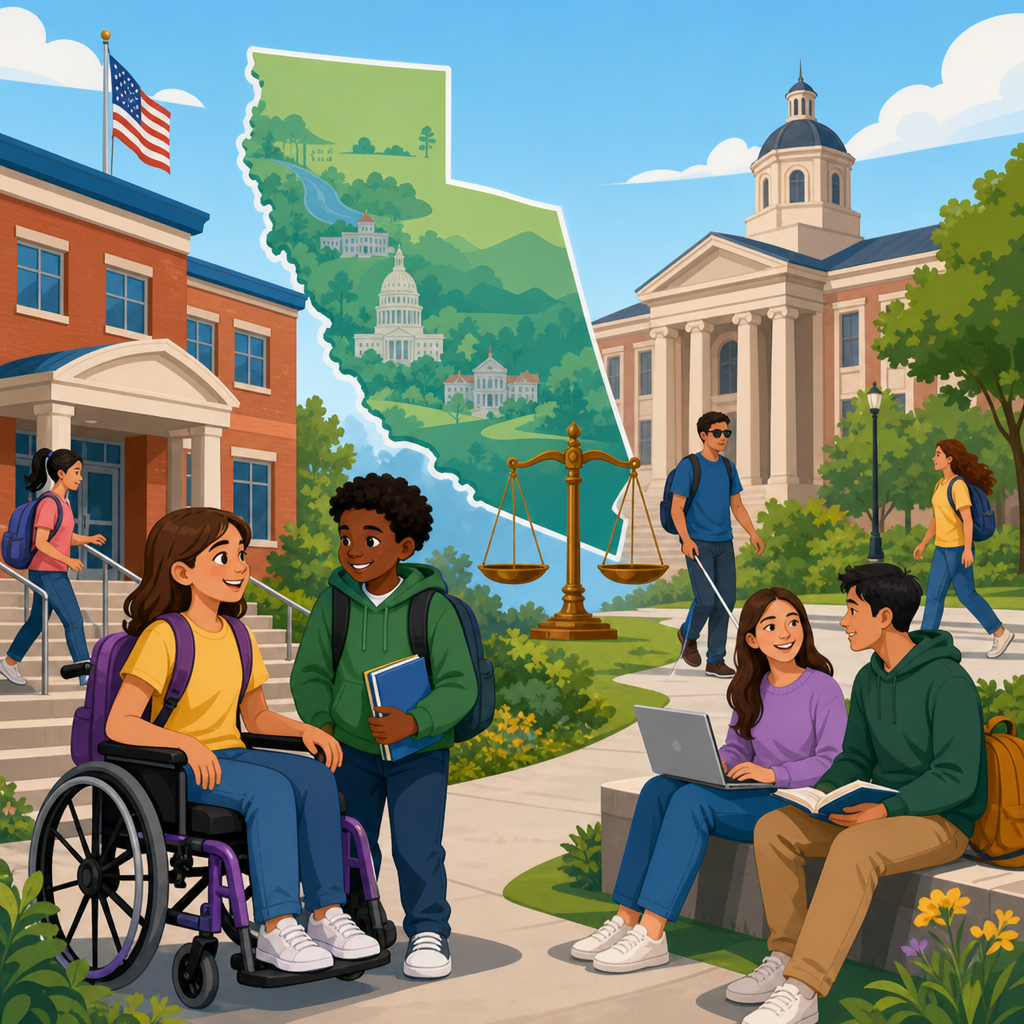
Public school and university accessibility cases in state context shape how students with disabilities experience education, technology, and campus life long before a dispute reaches a federal appellate court. In this hub article on state and local lawsuits, accessibility means the practical ability to enter a building, use a website, understand course content, participate in programs, and receive services on equal terms. Public schools include K-12 districts, charter systems operating under state authority, and related agencies; universities include community colleges and public four-year institutions. State context matters because many accessibility conflicts are driven by local procurement choices, state building codes, public records laws, sovereign immunity rules, and education department complaint systems. I have worked on reviews of school websites, digital course platforms, captioning workflows, and accommodation policies, and the pattern is consistent: the legal question is rarely only whether discrimination occurred. The harder question is which law applies, which forum has authority, and what remedy can be enforced quickly enough to help a current student.
That is why state and local accessibility litigation deserves its own map. Parents, students, disability rights advocates, general counsel offices, and technology vendors often assume the Americans with Disabilities Act answers everything. It does not. Section 504 of the Rehabilitation Act, state human rights statutes, state constitutional education clauses, local building enforcement, procurement rules, open meetings obligations, and tort or contract theories can all shape the dispute. A family challenging an inaccessible school bus route may need a very different strategy from a graduate student challenging an unreadable learning management system, even when both cases involve equal access. Understanding the state context helps people ask the right questions early: Is this a facilities barrier, a digital access failure, a communication access problem, or a denial of reasonable modification? Is there an administrative exhaustion requirement? Can plaintiffs seek injunctive relief, damages, attorneys’ fees, or only policy changes? The cases that change practice usually begin with that basic issue framing, supported by facts, documentation, and a clear theory of public accountability.
What Public School and University Accessibility Cases Usually Involve
Most state and local lawsuits in education accessibility fall into five recurring categories: physical access, digital access, communication access, academic adjustments, and program participation. Physical access includes ramps, elevators, route clearances, toilet rooms, stadium seating, laboratory layouts, parking, and dormitory features. Digital access covers websites, PDFs, registration portals, library databases, classroom software, and mobile applications. Communication access includes sign language interpreters, CART captioning, Braille, large print, tactile graphics, and effective emergency messaging. Academic adjustments concern testing modifications, note-taking supports, attendance flexibility, housing modifications, and course policy changes. Program participation reaches athletics, field trips, graduation ceremonies, internships, and after-school activities. In practice, these categories overlap. A blind student excluded from online registration may miss course seats, financial aid deadlines, and housing assignments at the same time.
For public entities, the core legal standards usually come from Title II of the ADA and Section 504. Title II requires state and local government entities, including public schools and universities, to provide equal access to programs, services, and activities. Section 504 applies when the institution receives federal financial assistance, which most public education systems do. In building cases, the 2010 ADA Standards for Accessible Design are central, though older facilities may trigger program access analysis rather than strict new-construction rules. In digital cases, courts and agencies increasingly look to the Web Content Accessibility Guidelines, especially WCAG 2.1 AA and now WCAG 2.2 AA, as the practical benchmark, even when pleadings do not cite those standards with precision. State laws can expand available remedies or create additional duties, especially through disability discrimination acts, education codes, and public procurement requirements.
The local dimension matters because school districts and state university systems govern differently. A district may have elected board members, a superintendent, and state oversight, while a university may have trustees, campus-specific disability services, and decentralized technology purchasing. That structure affects who knew about the problem, who had authority to fix it, and whether notice was adequate. I have seen strong cases weaken because a family complained only to a principal when the transportation office controlled the barrier, or because a university received repeated accessibility reports but no one tied them to a formal grievance process. Accessibility cases are won by connecting lived harm to institutional responsibility. The clearest complaints identify the barrier, the requested modification, the dates of notice, the educational impact, and the feasible remedy. That formula works whether the issue is a locked elevator, an uncaptioned lecture archive, or a refusal to modify meal-plan rules for a disability-related need.
How State Laws and Local Procedures Change the Outcome
State and local lawsuits often turn on procedural rules that nonlawyers underestimate. Some states require notice-of-claim filings before damages actions against public entities. Some route school disputes through administrative hearing systems, special education due process procedures, civil rights commissions, or state education agencies before a court case becomes practical. Others permit parallel paths: an internal grievance, an Office for Civil Rights complaint, and a state-court action seeking injunctive relief. Sovereign immunity and governmental immunity doctrines also matter. A plaintiff may have a strong factual claim yet face limits on damages, jury trials, or state-law causes of action depending on the institution’s status. Universities sometimes argue that a campus unit is not a separate suable entity; districts may raise statutory caps or immunity defenses for negligence claims tied to accessibility failures. These issues do not erase civil rights duties, but they influence leverage, cost, and timeline.
State building codes and local enforcement can be surprisingly important. The ADA is not displaced by state code compliance, but code records can provide persuasive evidence about what the public entity knew and when. For example, if a campus renovation passed through local permit review but still produced inaccessible routes or restrooms, the file may reveal design choices, waiver requests, or inspection gaps. In K-12 settings, playground accessibility and route access often involve a mix of district standards, state facilities guidance, and municipal inspection practices. Transportation cases can also hinge on state pupil transportation regulations, including lift maintenance logs, driver training requirements, and route assignment criteria. The more specific the state framework, the easier it becomes to convert a general discrimination complaint into a concrete showing that policy and operations fell below recognized requirements.
| Case Type | Common Legal Sources | Typical Evidence | Likely Remedies |
|---|---|---|---|
| Building access | ADA Title II, Section 504, state building code | Plans, inspection reports, photos, measurements | Barrier removal, route changes, policy updates |
| Website or LMS access | ADA Title II, Section 504, state procurement rules | Accessibility audit, WCAG findings, user testing | Remediation schedule, accessible alternatives, monitoring |
| Interpreter or captioning access | ADA effective communication rules, Section 504 | Requests, denials, class recordings, attendance impacts | Auxiliary aids, revised procedures, reimbursement |
| Testing or academic adjustments | Section 504, ADA, state education regulations | Medical documentation, faculty emails, handbook terms | Modified policies, makeup opportunities, training |
| Transportation access | ADA Title II, Section 504, state transport rules | Route logs, lift records, complaint history | Accessible routing, equipment repair, staff discipline |
Another state-specific factor is records access. Public records laws can uncover contracts, accessibility audits, procurement correspondence, and prior complaints that reshape a case. In digital accessibility matters, I have repeatedly seen vendors promise “ADA compliant” products without testing documentation, VPAT detail, or meaningful conformance evidence. A state open-records request can expose whether the institution relied on those claims, whether accessibility was part of the request-for-proposal scoring, and whether remediation deadlines were ignored. That evidence matters because public entities must do more than react after harm occurs. They are expected to administer programs in a nondiscriminatory manner, and procurement is part of administration. When a state university purchases an inaccessible proctoring tool or library interface, the problem is not only technical; it is institutional decision-making. State context determines how easy it is to prove that chain of responsibility.
Digital Accessibility Litigation Is Now Central
Digital accessibility has moved from a niche concern to the center of public education litigation. Nearly every major school function now depends on software: enrollment, transportation updates, assignment submission, video lectures, library search, disability documentation, tuition payment, and emergency communication. That expansion means an inaccessible platform can deny access to the entire educational experience, not just one webpage. The Department of Justice’s 2024 rule on web and mobile accessibility for state and local government entities gave schools and universities a clearer compliance path by pointing to technical requirements aligned with WCAG 2.1 AA and setting timelines based on population size. Even before that rule, enforcement actions and settlement agreements had already established the direction of travel. Public entities that still treat digital accessibility as optional quality assurance are out of step with current expectations.
State and local lawsuits in this area usually start with familiar failures: image-only PDFs, unlabeled form fields, videos without captions, lecture recordings without transcripts, math content that screen readers cannot interpret, timed quizzes incompatible with assistive technology, and third-party tools that keyboard users cannot navigate. In K-12 systems, parent portals and individualized education program documents are frequent flashpoints because inaccessible systems prevent guardians from receiving the same information as other families. In higher education, the risk concentrates in decentralized environments where faculty select tools independently and departments post inaccessible materials outside central oversight. One inaccessible chemistry simulation or clinical rotation portal can shut a student out of a required pathway. Courts and agencies increasingly reject the idea that ad hoc workarounds are enough when the core platform remains inaccessible.
The strongest defense is governance, not crisis response. Institutions need an accessibility policy, a technical standard, procurement controls, testing procedures, training, complaint intake, and remediation timelines. Named tools help, but tools do not replace accountability. Axe DevTools, WAVE, Siteimprove, and Adobe Acrobat’s checker can find recurring issues, while manual testing with NVDA, JAWS, VoiceOver, keyboard navigation, zoom, and caption review identifies what automation misses. Procurement teams should require detailed VPATs based on the current Accessibility Conformance Reporting format, then validate claims through demos or pilot testing. When I assess risk, I look first for ownership: who can stop a purchase, who approves an exception, and who tracks fixes after launch. Public school and university accessibility cases escalate when nobody owns that chain, because disabled users become the testing department after deployment.
Facilities, Transportation, and Program Access Remain Core Disputes
Physical access cases are older than digital cases, but they remain common because public education infrastructure is uneven and expensive to update. Many districts operate aging schools with split levels, narrow toilet rooms, steep routes, and temporary classrooms placed without accessible connections. Public universities face similar issues in historic buildings, residence halls, athletic venues, and research spaces. The legal analysis depends on whether the claim involves new construction, alterations, existing facilities, or overall program access. A school cannot simply point to one accessible entrance if the route is locked, poorly signed, or functionally segregated. Likewise, a university does not provide equal access by offering an alternative location that strips a student of the same faculty, equipment, or peer interaction available to others. Equal access is practical, not symbolic.
Transportation and extracurricular participation create some of the most immediate harms because they affect daily attendance and belonging. If a lift-equipped bus repeatedly fails, a student can lose instructional time for weeks. If a wheelchair seating area at a graduation venue is separated from family members, the message is exclusion even if entry is technically possible. Athletic facilities, marching band travel, science labs, and field trips all raise program access questions that schools sometimes mishandle by assuming separate arrangements are sufficient. They often are not. State and local lawsuits in these areas succeed when plaintiffs document the real educational loss: missed classes, inability to complete a requirement, exclusion from social development, safety risk, or stigma. Photos, route measurements, maintenance logs, witness accounts, and schedule records make these cases concrete in a way legal conclusions alone cannot.
Remedies here usually combine capital work and operational change. A settlement may require door hardware replacement, elevator maintenance protocols, accessible wayfinding, relocation of classes, revision of event planning checklists, and periodic audits by an outside consultant. In transportation matters, effective remedies often include spare accessible vehicles, preventive maintenance schedules, dispatcher training, and escalation procedures when a route fails. The lesson from years of enforcement is simple: accessibility is not achieved when a feature exists on paper; it is achieved when the feature works reliably in the student’s actual routine. Courts and agencies understand that distinction, and institutions should too.
Building a Strong Accessibility Claim and a Better Institutional Response
A strong public school or university accessibility claim begins with documentation, but it succeeds through precision. Plaintiffs should identify the program or service involved, the specific barrier, the dates and recipients of notice, the accommodation or modification requested, and the educational impact. Screenshots, videos, emails, medical or disability documentation where relevant, and records of missed opportunities are far more persuasive than broad statements that access felt unfair. At the same time, institutions can avoid litigation by treating complaints as operational intelligence rather than legal threats. Prompt interim measures, transparent timelines, and centralized tracking often defuse disputes because they show respect and competence. This hub exists to guide deeper articles on state and local lawsuits across digital access, facilities, transportation, effective communication, and procurement. Use it as a starting point: review your policies, test your systems, and fix barriers before the next complaint becomes the next case.
Frequently Asked Questions
What do public school and university accessibility cases usually involve at the state level?
At the state level, public school and university accessibility cases usually focus on whether students with disabilities can actually participate in education on equal terms in everyday settings. That can include physical access to classrooms, dorms, libraries, athletic facilities, cafeterias, parking areas, transportation systems, and event spaces. It also commonly includes digital access, such as whether a school website works with screen readers, whether online assignments and learning platforms are usable, whether videos include accurate captions, and whether students can independently access forms, schedules, grades, and campus services.
These cases also often address communication access and academic participation. For example, a dispute may involve sign language interpreters, captioning, assistive listening systems, accessible course materials, testing accommodations, note-taking support, or modifications to policies that unintentionally exclude students with disabilities. In K-12 settings, families may raise concerns about how a district implements disability-related supports in classrooms, field trips, extracurricular activities, discipline, or transportation. In colleges and universities, students may challenge barriers in housing, registration, academic programs, clinical placements, dining plans, or emergency procedures.
What makes the state context important is that many disputes are shaped by state civil rights laws, state education codes, state building standards, and local school governance structures in addition to federal disability law. A case may begin as a practical problem within a district or campus, grow into an administrative complaint or state-court lawsuit, and only later raise broader legal questions. In other words, these cases are rarely just about abstract legal rules. They are usually about whether a student can enter the building, access the class, understand the materials, use the technology, and participate in school life with dignity and independence.
How is accessibility different from special education or academic support services?
Accessibility is broader than special education and broader than general academic support. Special education typically refers to individualized services, instruction, and supports provided to eligible students in K-12 settings under disability-specific education frameworks. Accessibility, by contrast, focuses on whether the overall environment, program, service, policy, and technology are designed or modified so that students with disabilities can participate on equal terms. A student may need both, but they are not the same thing.
For example, a student might receive special education services yet still face accessibility barriers if the school auditorium has no wheelchair seating options, if the district website is unreadable with assistive technology, or if school-issued videos are not captioned. Similarly, a university student may receive classroom accommodations such as extended testing time but still encounter inaccessible housing, broken elevator routes, inaccessible lab equipment, or online course content that cannot be navigated by keyboard. Academic support services, such as tutoring or advising, may help all students generally, but they do not automatically fix disability-related access barriers.
This distinction matters in legal disputes because schools sometimes respond to accessibility concerns by offering workarounds that do not provide equal access. For instance, asking a blind student to rely on a staff member to read a website aloud, or telling a wheelchair user to enter through a loading area rather than the main entrance, may not be equivalent to independent access. State and local accessibility cases often examine whether the institution addressed the actual barrier or merely offered a less effective substitute. The central question is not simply whether some help was offered, but whether the student could fully and fairly participate in the educational experience.
Why do state and local lawsuits matter if federal disability laws already exist?
State and local lawsuits matter because the real-world enforcement of accessibility often happens close to where students live, study, and seek services. Federal disability laws provide major baseline protections, but state law may add additional rights, remedies, procedural paths, or accessibility standards. In some states, public entities must comply with state civil rights statutes, state constitutional guarantees, public accommodation laws, building codes, procurement rules, or education regulations that can shape how a claim is brought and what relief is available.
These cases also matter because local facts drive outcomes. A statewide university system may have one digital accessibility policy on paper, while individual campuses implement it unevenly. A K-12 district may approve accommodations centrally but fail to execute them in a particular school, classroom, bus route, or after-school program. State and local litigation helps expose those gaps between policy and practice. It can force institutions to examine how accessibility works across websites, facilities, transportation, athletics, career programs, and student services rather than treating each problem as isolated.
Another reason these lawsuits are important is that they often produce practical reforms before a case ever reaches a higher federal court. Settlements, consent decrees, injunctions, policy changes, training requirements, and monitoring agreements can reshape access for current and future students. Even when a case does not create a nationally cited precedent, it can still change how a school district, state university, or education agency designs programs and responds to disability-related complaints. For families, students, and advocates, the state context is where accessibility is often made concrete.
What kinds of barriers most often lead to accessibility complaints in public schools and colleges?
Some of the most common barriers are surprisingly routine. Physical barriers include inaccessible entrances, missing ramps, heavy doors, inadequate elevator access, inaccessible restrooms, poor classroom layouts, limited accessible seating, and routes that become unusable during construction or special events. On college campuses, barriers may also arise in dormitories, dining halls, science labs, stadiums, health centers, and shuttle systems. In K-12 settings, transportation, playground access, assemblies, and field trips are frequent sources of complaints because they affect whether students can take part in the full school experience.
Digital barriers are now a major source of disputes. These include websites that cannot be read by screen readers, course materials posted as inaccessible PDFs, online quizzes that are incompatible with assistive technology, videos without captions, software that requires mouse-only navigation, and registration or payment systems that students cannot use independently. Because schools increasingly rely on digital platforms for homework, attendance, communication, and student services, inaccessible technology can block access to education just as effectively as a locked door.
Communication and policy barriers are also common. Students may be denied interpreters, real-time captioning, alternate-format materials, accessible emergency notifications, or effective communication during disciplinary meetings, advising sessions, and campus events. Sometimes the barrier comes from a rigid policy rather than a missing ramp or broken website. Examples include attendance rules that ignore disability-related flare-ups, housing procedures that do not account for medical needs, or testing systems that delay accommodations. Many accessibility cases arise not because an institution openly rejects disabled students, but because routine systems were built without disabled students in mind and then not corrected when problems became obvious.
What should schools, universities, families, and students understand about preventing accessibility disputes?
The most important point is that prevention starts well before any complaint is filed. Schools and universities reduce legal risk when they treat accessibility as an institution-wide responsibility rather than a narrow disability-office issue. That means regularly reviewing buildings, websites, learning platforms, procurement practices, emergency plans, event planning, transportation systems, housing procedures, and communication methods for barriers. It also means training staff, faculty, administrators, and vendors so accessibility is built into daily operations rather than handled only after a student encounters a problem.
Families and students should understand that documenting barriers early can be very helpful. Clear records of inaccessible materials, failed accommodation processes, broken equipment, denied requests, or repeated communication problems often make it easier to show whether the issue is isolated or systemic. At the same time, many disputes can be resolved more effectively when concerns are raised promptly through established channels, such as disability services offices, principals, district coordinators, compliance officers, or formal grievance procedures. Early resolution can matter especially when the barrier affects grades, attendance, housing, or participation in time-sensitive programs.
For institutions, the best prevention strategy is to focus on equal access in practice, not just formal compliance language. A polished policy does little if a student still cannot access a classroom document, navigate a campus website, enter a performance venue, or receive services during a critical moment. Accessibility planning should include feedback from disabled students and families, regular testing of technology, consistent response timelines, and accountability when barriers are reported. In the state context, where disputes often grow out of local implementation failures, schools and universities that build accessibility into everyday decisions are in a much stronger position both educationally and legally.


