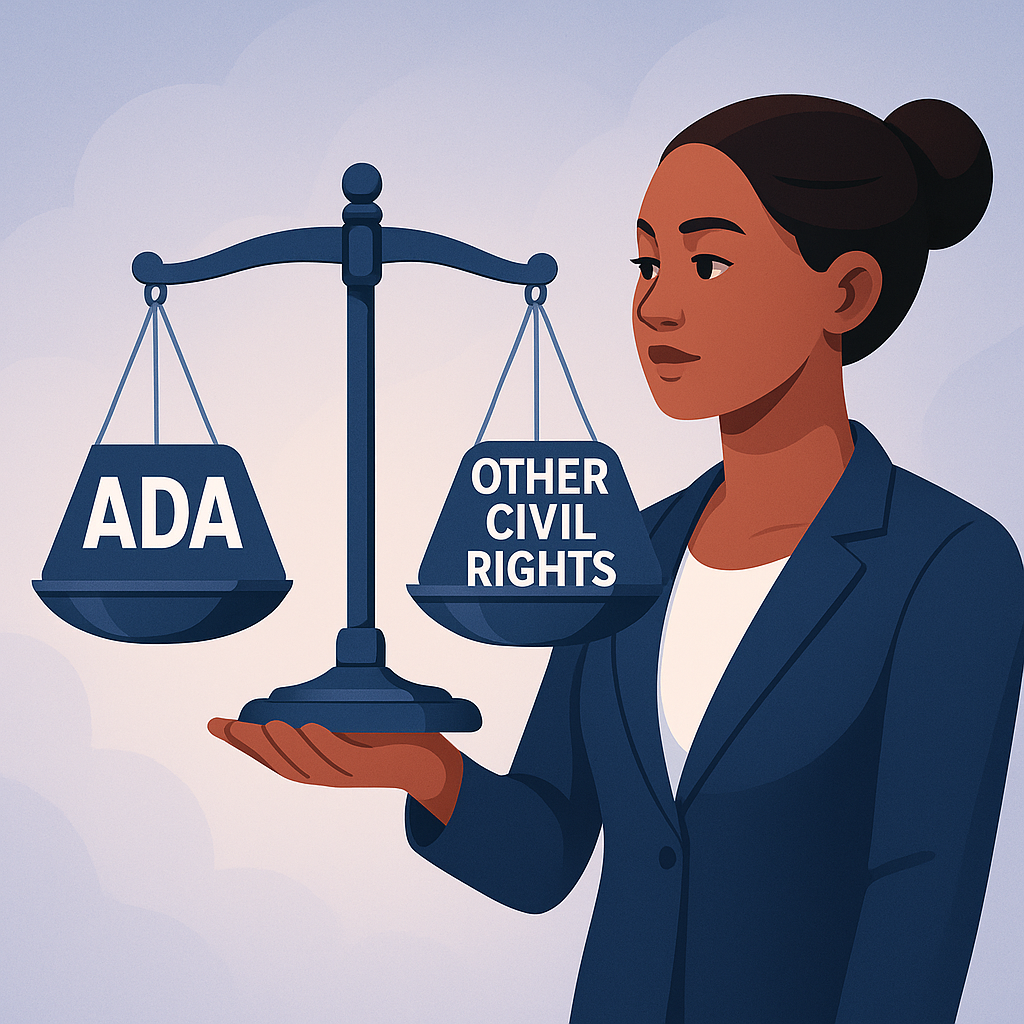
The intersection of civil rights law, especially the Americans with Disabilities Act (ADA), and broader anti-discrimination principles is increasingly relevant in legal discourse. One significant case that encapsulates the complexities of these issues is “Craig v. Masterpiece Cakeshop.” This case does not stand alone but connects inherently with another well-debated case, “Masterpiece Cakeshop v. Colorado Civil Rights Commission.” Craig v. Masterpiece Cakeshop centers on the tension between religious freedom and anti-discrimination principles, specifically under the auspices of public accommodations laws. This article aims to unravel the legal threads tying these cases and dive deep into the significance of balancing ADA with other civil rights laws.
The term “ADA,” or Americans with Disabilities Act, refers to a comprehensive piece of legislation enacted in 1990, which aims to eliminate discrimination against individuals with disabilities in several areas, including employment, public services, public accommodations, and telecommunications. In contrast, anti-discrimination principles covered by state and federal laws, like the Civil Rights Act, offer more general protection against discrimination based on race, color, religion, sex, or national origin. Understanding how these rights interact, overlap, and sometimes conflict in legal settings, such as those involving Masterpiece Cakeshop, is crucial in ensuring justice for all parties involved.
Why does this case matter? The Masterpiece Cakeshop cases represent pivotal judicial thought on how jurisprudence can balance different rights without compromising the core tenets of justice and equality. Understanding the nuance in these cases provides insights not just for legal scholars but also for individuals and businesses about how legislation interacts in practical instances, affecting daily lives and commercial practices.
The Legal Landscape of Craig v. Masterpiece Cakeshop
Craig v. Masterpiece Cakeshop is a derivative case rooted in the broader context of Masterpiece Cakeshop v. Colorado Civil Rights Commission. In this broader case, Masterpiece Cakeshop refused to create a wedding cake for a same-sex couple, citing religious beliefs. The couple, Craig and Mullins, filed a complaint with the Colorado Civil Rights Commission, arguing this action violated the state’s public accommodations law, which prohibited discrimination based on sexual orientation.
The legal landscape here extends beyond the traditional bounds of religious freedom versus equality. The ADA compels businesses to offer equal access to those with disabilities, necessitating compliance irrespective of other intersecting personal beliefs, such as religion. This case raised questions about whether compliance with one set of civil rights laws (public accommodations) can infringe on other protected rights (religious expression) and pointed to precedents that could influence ADA-related cases.
Religious Freedom and Public Accommodations: Are They Compatible?
A core issue in Craig v. Masterpiece Cakeshop is whether religious expression can exempt businesses from compliance with public accommodations laws. Historically, public accommodations laws, dating back to the Civil Rights Act of 1964, require businesses open to the public to serve customers equally without discrimination. However, the intersection with religious freedom, protected under the First Amendment, complicates this dialogue. Business owners, like those at Masterpiece Cakeshop, argue that creating certain products conflicts with their religious beliefs, thus impacting their freedom of expression.
- Masterpiece Cakeshop refused service based on religious grounds.
- Civil rights organizations argue this sets a precedent that could apply more broadly, including within ADA contexts.
- The Colorado court initially ruled in favor of Craig, emphasizing non-discrimination in public spaces.
It is essential to consider how similar claims might be approached if a business refused to accommodate a disabled person under the ADA due to religious or moral grounds. Such cases illustrate that even when core rights seem unequivocal, their intersection can lead to contested legal landscapes akin to those seen in the Masterpiece Cakeshop scenario.
Case Outcome and Its Implications for Civil Rights
The U.S. Supreme Court ruled narrowly in favor of Masterpiece Cakeshop, focusing on the Colorado Civil Rights Commission’s handling of the case, which they deemed demonstrated anti-religious bias. However, the ruling did not settle the broader issue of balancing religious freedom with anti-discrimination laws. This decision highlights the complexities inherent at the intersection of different civil rights frameworks, suggesting that individual case facts significantly sway outcomes.
| Case Aspect | Outcome |
|---|---|
| Public Accommodations Law | Upheld – initially found in violation by Colorado courts |
| First Amendment Rights | Upheld by SCOTUS, citing procedural bias rather than establishing broad precedent |
This outcome illustrates legal systems’ challenges in arbitrating disputes where different rights overlap. Businesses serving the public must navigate these waters carefully to ensure compliance while respecting religious and moral beliefs, with cases involving the ADA also potentially drawing from these discussions.
The ADA’s Role in Parallel Disputes
The ADA enforces clear guidelines for businesses to accommodate individuals with disabilities. While religious freedom played a pivotal role in Masterpiece Cakeshop, ADA disputes remain imperative in assessing how businesses balance rights in practice. Consider a hypothetical situation where a business owner denies ADA compliance by claiming religious beliefs prevent them from doing so because they believe in the ‘natural order’ of body limitations.
This brings up the crucial question: can personal beliefs exempt a business from ADA compliance? The clear answer here is no, given the ADA’s robust protections and the lack of a direct conflict, such as those seen in religious expression cases dealing with artistic expression. However, understanding the Masterpiece Cakeshop case helps underscore that while ADA cases may seem clear-cut, the interplay of personal and business rights necessitates nuanced legal interpretation.
Interconnected Rights and Practical Business Compliance
For business owners, Masterpiece Cakeshop provides a blueprint—not necessarily in how to act, but in understanding the need to reconcile personal beliefs with legal obligations. In particular, where ADA compliance is concerned, it offers a stark reminder that personal or religious beliefs not only need balancing with regulation but that failure to adequately reconcile these can lead to legal disputes.
Businesses must consider not only the legal implications but the public sentiment and potential brand impact. Organizations refusing services risk both legal ramifications and negative public perception, which can affect the business’s reputation and bottom line. Engaging in a fair compliance strategy, where civil rights laws like the ADA are fully respected, is not only a legal requirement but a necessity for ethical business conduct. Masterpiece Cakeshop underscores this for both ADA and broader civil rights compliance.
Conclusion and Next Steps for Businesses Navigating Civil Rights Law
The Craig v. Masterpiece Cakeshop dialogue shines light on the importance of understanding and balancing civil rights laws, such as the ADA, with other rights. The takeaway for business owners and the public is clear: knowing the intricacies of laws governing public accommodation and ensuring compliance is paramount. The complexity of a case like Masterpiece Cakeshop reiterates the importance of businesses seeking legal counsel to navigate these intertwined rights effectively.
The benefit for readers is multifold. Individuals understand what recourse is available if faced with discrimination, and business owners gain insights into ensuring legal compliance while respecting religious and other personal beliefs. The case exemplifies that understanding civil rights in the context of ADA is crucial for ensuring protected rights for all.
If you are a business, review your practices and consult legal professionals to ensure that you remain compliant. If you face discrimination, be aware that avenues exist to uphold your rights. The balance of civil rights is delicate, and proactive efforts contribute to a more inclusive society.
For further guidance, consider outreach to organizations specializing in civil rights and ADA compliance or consult legal professionals to tailor approaches specific to your business or situation. Understanding the balance between different rights helps foster environments respectful of both personal freedoms and public equity.
Next, take a step to educate your team or community about these rights to better equip everyone with the tools needed to address potential issues as they arise.
Frequently Asked Questions
1. What is the Craig v. Masterpiece Cakeshop case about?
The Craig v. Masterpiece Cakeshop case delves into the delicate balance between upholding various civil rights protections. Specifically, it addresses conflicts between the rights outlined in the Americans with Disabilities Act (ADA) and broader anti-discrimination laws. The case is set against the backdrop of a prior, more famous legal battle, Masterpiece Cakeshop v. Colorado Civil Rights Commission. Although these two cases are distinct, they share thematic similarities, especially concerning how business practices intersect with protected individual rights.
In the Craig v. Masterpiece Cakeshop case, the focus is on how businesses can or cannot exercise discretion when it comes to service provision under the ADA while also considering other civil rights that protect individuals from discrimination based on race, gender, sexual orientation, and more. It explores the nuanced ways in which civil rights laws interact and, at times, appear to conflict, thus requiring careful judicial consideration to ensure fair practice and policy outcomes.
2. How does the Americans with Disabilities Act come into play in this case?
The Americans with Disabilities Act (ADA) is central to the case of Craig v. Masterpiece Cakeshop because it mandates that businesses open to the public must ensure accessibility and non-discrimination on the basis of disability. Historically, the ADA has served to protect individuals with disabilities from unfair treatment and guarantee equal access to public accommodations. In this context, the defendants in Craig v. Masterpiece Cakeshop had to demonstrate adherence to the ADA’s requirements while potentially confronting other civil rights laws that prohibit discrimination for other protected classes.
This intersection raises questions about how a business can simultaneously respect the ADA and show compliance with concurrent anti-discrimination principles, which might include religious freedoms, racial equality, or protections based on sexual orientation. The ADA stipulates a clear framework for accommodations, but how these interact with other mandated rights can challenge both businesses and courts to interpret the laws in a way that is coherent and equitable. Overall, this case invites an analysis of where boundaries must be drawn, both to foster inclusiveness for those with disabilities and to honor the civil rights of all individuals.
3. How are the Craig and Masterpiece Cakeshop cases connected?
The Craig v. Masterpiece Cakeshop case is intricately linked with Masterpiece Cakeshop v. Colorado Civil Rights Commission, as both cases are derived from similar contexts and involve the same business entity, the Masterpiece Cakeshop. While the Colorado Civil Rights Commission case famously addressed the refusal of a bakery to produce a wedding cake for a same-sex couple on religious grounds, Craig v. Masterpiece Cakeshop escalates the discussion to examine further tensions between differing civil rights statutes, specifically how they juxtapose the ADA with other discrimination preventions.
Both cases challenge the courts to navigate the boundaries of permissible business practices under civil rights laws and the religious and personal convictions held by business owners. They underscore the challenge of determining just where the line should fall in safeguarding both freedom of expression and the right of individuals to non-discriminatory service, sans prejudice for sexual orientation, race, disability, or other protected statuses.
4. What legal precedents impact Craig v. Masterpiece Cakeshop?
Multiple legal precedents play a significant role in shaping the discourse in Craig v. Masterpiece Cakeshop. Firstly, the Masterpiece Cakeshop v. Colorado Civil Rights Commission decision itself is pivotal, as it casts a precedent for how the courts interpret claims of discrimination intertwined with First Amendment rights. This case influenced judicial perspectives on whether and how a business can assert religious liberty when facing discrimination accusations.
Additionally, the enactment of the ADA in 1990 serves as another historical touchstone, as it established a legal framework on which many disputes around accessibility and anti-discrimination are based. Various ADA-related court rulings add dimensions to the understanding and application of what constitutes a reasonable accommodation and equitable treatment for people with disabilities, directly influencing the expectations placed on businesses like Masterpiece Cakeshop.
5. What are the potential implications of this case on future business practices?
Craig v. Masterpiece Cakeshop serves as a prominent marker in the evolving landscape of business regulations concerning discrimination practices and existential rights conflicts. The outcomes and legal interpretations of this case could reverberate through future instances where businesses must balance accessibility laws against other civil mandates. Potential implications include heightened scrutiny on how businesses provide public accommodations and the necessity for clearer guidance on reconciling claims under the ADA with assertions of different civil rights.
If the courts create more explicit pathways for adjudicating these disputes, businesses could face changes in operational requirements, ensuring comprehensive compliance that honors the multiplicity of protected statuses under US law. This could necessitate new business training programs, policy reforms, and a proactive stance on inclusivity and non-discrimination that pre-empts legal challenges. Ultimately, the Craig v. Masterpiece Cakeshop case nudges the progression of business practices towards more adaptive, intersectional, and rights-respecting models.


