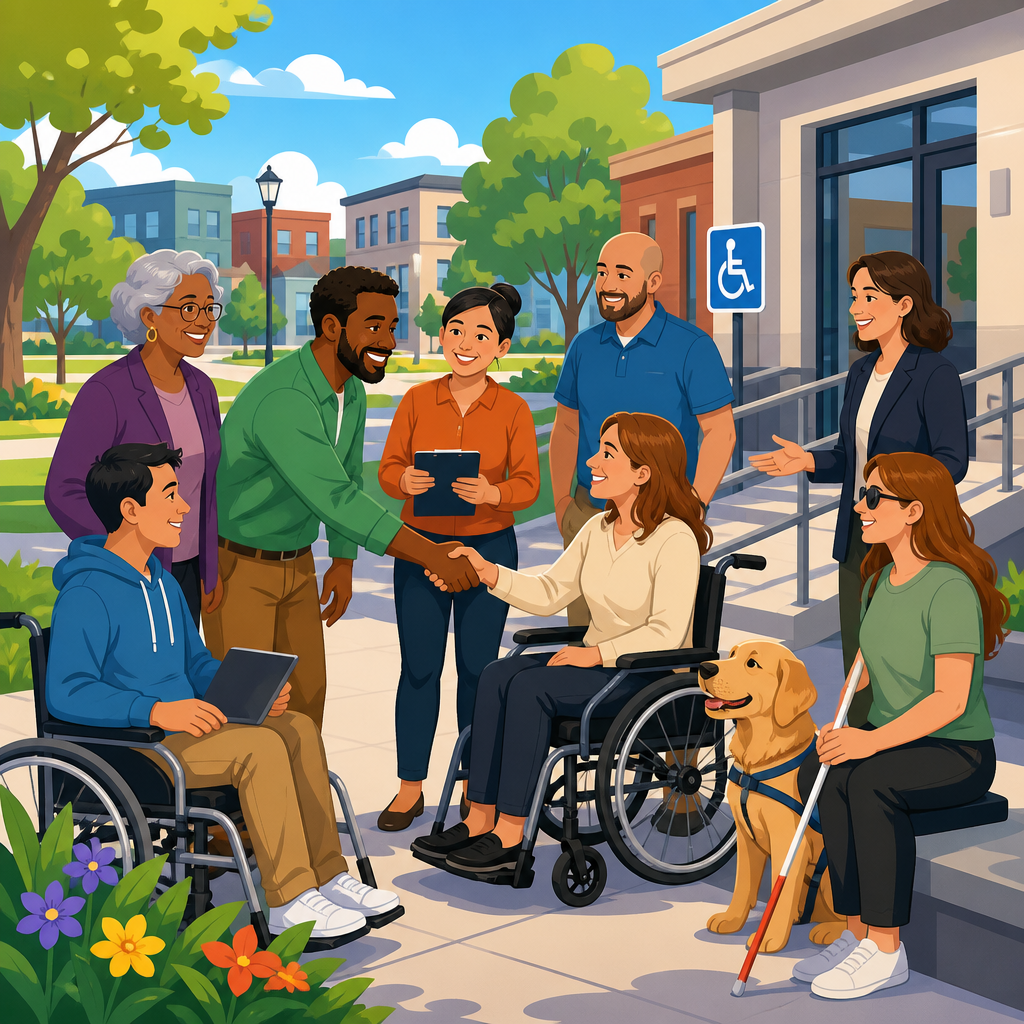
Community partnerships are one of the most practical ways to strengthen ADA implementation because compliance rarely improves through policy alone; it improves when public agencies, employers, schools, nonprofits, and disabled residents work together to remove barriers in the places where people actually live, travel, learn, and work. The Americans with Disabilities Act, or ADA, is the federal civil rights law that prohibits disability-based discrimination across employment, government services, public accommodations, transportation, and telecommunications. Implementation means the day-to-day work of translating legal requirements into accessible buildings, digital systems, service practices, and communication methods. Awareness means people understand both their rights and their responsibilities. In my work with municipal programs, business owners, and community organizations, I have seen that many accessibility failures do not begin with hostility; they begin with isolation, incomplete information, and decisions made without disabled people at the table.
That is why community partnerships matter. A city may have an ADA coordinator and formal grievance process, yet still miss barriers in parks, websites, emergency alerts, hiring systems, or small-business storefronts. A nonprofit may deliver strong advocacy but lack access to facility budgets or procurement authority. An employer may want to improve inclusion but not know whether to start with physical access, digital access, communication access, or staff training. Partnerships connect those pieces. They create channels for shared problem-solving, trusted feedback, and ongoing accountability. They also support broader disability awareness by making accessibility visible as a community standard rather than a niche compliance task. As a hub for supporting ADA awareness and implementation, this article explains how effective partnerships work, who should be involved, what structures produce results, and how communities can move from good intentions to measurable progress.
Why community partnerships improve ADA implementation
Community partnerships improve ADA implementation because they close the gap between legal standards and lived experience. The ADA sets a framework, but every community must apply that framework to its own sidewalks, recreation programs, websites, customer service desks, election systems, and employment pipelines. No single department or organization sees the whole picture. Disabled residents know where barriers occur. Independent living centers understand recurring service failures. School districts see transition needs for students entering adulthood. Chambers of commerce understand the constraints facing small businesses. Transit agencies know where route design and stop conditions create exclusion. When these groups work separately, accessibility efforts stay fragmented. When they work together, communities can identify the highest-impact fixes first and avoid expensive mistakes.
Partnerships also improve the quality of decision-making. For example, I have seen building upgrades planned around minimum code interpretation, only to be revised later because wayfinding, door pressure, reception counter height, or restroom layouts still created access problems. Early involvement from disability advocates and users of mobility devices often catches those issues before money is spent. The same is true online. A website redesign may look modern yet fail keyboard navigation, alt text quality, color contrast, heading structure, or captioning workflows. Involving accessibility specialists and users early produces better outcomes than retrofitting after complaints arrive. The practical value of partnership is simple: people closest to the barrier help shape the solution before the barrier hardens into policy, procurement, or construction.
Who should be at the partnership table
Strong ADA partnerships are intentionally cross-sector. At minimum, the table should include disabled residents, local government leadership, the ADA coordinator, public works, parks and recreation, transit representatives, library systems, school districts, higher education institutions, major employers, workforce boards, healthcare providers, housing organizations, and community-based disability groups. Independent living centers are especially valuable because they often combine advocacy, peer knowledge, referral capacity, and direct familiarity with access barriers across multiple systems. State vocational rehabilitation agencies, protection and advocacy organizations, and legal aid offices can also add expertise on employment, rights enforcement, and systemic barriers.
Business and civic partners matter too. Small-business associations can help translate requirements into usable checklists and training sessions. Faith communities often operate food programs, childcare, shelters, and gathering spaces, making them important partners in communication access and physical access planning. Emergency management agencies must be included because inaccessible alerts, evacuation procedures, or shelter policies can create immediate risk. Technology vendors and procurement teams should not be left out, since many accessibility failures originate in purchased software, kiosks, or platforms. The central rule is representation with authority: include people who experience barriers, people who understand the technical standards, and people who can allocate budget, approve policy, and implement change.
Core partnership models that work in practice
Communities do not need a single template, but the most effective models share a few traits: clear purpose, recurring meetings, defined responsibilities, and a direct line to decision-makers. One common model is an ADA advisory committee established by local government. When run well, it is more than a symbolic board. It reviews transition plans, monitors public feedback, advises on capital projects, and identifies communication barriers across departments. Another effective model is a resource coalition led by a nonprofit or independent living center. This type of coalition may host workshops for employers, maintain referral networks, and help organizations interpret obligations related to reasonable modifications, effective communication, and digital accessibility.
Project-based partnerships are also useful. A city preparing a sidewalk inventory, website migration, inclusive playground, or emergency communication overhaul can convene a focused working group with disabled residents, engineers, procurement staff, and service providers. I have found this model especially effective when deadlines are tight because it ties community participation to a concrete deliverable. Regional partnerships can address barriers that cross jurisdiction lines, such as paratransit coordination, accessible tourism, or school-to-work transitions. The right structure depends on the problem, but successful partnerships always assign ownership. Without named leads, timelines, and escalation paths, accessibility concerns get discussed without being resolved.
| Partnership model | Best use | Main participants | Typical output |
|---|---|---|---|
| ADA advisory committee | Ongoing policy and infrastructure oversight | ADA coordinator, disabled residents, department heads | Recommendations, transition plan review, barrier priorities |
| Nonprofit resource coalition | Training and community awareness | Independent living center, advocates, employers, schools | Workshops, referral guides, outreach campaigns |
| Project working group | Specific initiative such as website redesign or facility upgrade | Users, technical specialists, procurement, project managers | Requirements, testing feedback, implementation fixes |
| Regional access partnership | Cross-jurisdiction issues like transit or tourism | Municipalities, transit agencies, destination partners | Shared standards, coordinated services, joint funding plans |
How partnerships support ADA awareness across the community
ADA awareness improves when information is practical, repeated, and locally relevant. Community partnerships are ideal for that work because they can tailor messaging to the audiences that need it most. Employers need plain-language guidance on reasonable accommodation, accessible hiring, and retention. Public-facing staff need examples of effective communication, including when to provide qualified interpreters, captioning, or accessible documents. Property owners need to understand common access barriers such as routes, entrances, service counters, restrooms, and parking. Digital teams need training on WCAG-based accessibility practices, procurement language, document remediation, and testing workflows. Residents need to know how to request accommodations, report barriers, and participate in planning processes.
Partnerships can deliver this through coordinated campaigns rather than one-off events. For instance, a disability coalition and chamber of commerce might co-host an accessibility series for retailers before the holiday season, covering entrance access, checkout counter design, service animal rules, and website booking accessibility. A public library and school district might produce workshops on accessible technology, captioned media, and transition planning for students with disabilities. A city and local hospital system might improve emergency communication by distributing accessible preparedness materials in multiple formats, including large print, plain language, braille on request, and captioned video. Awareness is strongest when it connects law to daily decisions. People remember accessibility when they can see exactly how it affects hiring, customer service, transportation, housing, education, and civic participation.
Turning partnership input into measurable implementation
Partnerships only strengthen ADA implementation if input leads to action. The most effective communities build a repeatable process for moving from community feedback to documented improvement. Start with a barrier inventory. For facilities, that may include parking, exterior routes, doors, restrooms, meeting rooms, recreation spaces, and service points. For digital services, it should include websites, mobile apps, PDFs, forms, kiosks, and third-party platforms. For programs and policies, review accommodation request procedures, grievance processes, emergency communications, event planning, hiring systems, and procurement standards. Then rank findings by impact, risk, feasibility, and frequency of use. A blocked accessible entrance at city hall is not equivalent to a minor formatting issue on a low-traffic page; prioritization matters.
Next, assign deadlines, budgets, and owners. Public entities should maintain or update ADA transition plans where required and connect partnership recommendations to capital improvement planning. Organizations should document standards in contracts, design briefs, and operating procedures so access is built in, not added later. Measure progress with specific indicators: number of barriers removed, percentage of web pages passing automated and manual testing, response time for accommodation requests, attendance at trainings, or increase in accessible program participation. In practice, this is where many efforts fail. Teams gather good feedback but never convert it into procurement language, maintenance schedules, staff accountability, or public reporting. A strong partnership does not just surface problems; it creates a management system for solving them.
Common barriers that partnerships help solve
Many ADA challenges are recurring and highly solvable when communities collaborate. Physical access barriers often include missing curb ramps, inaccessible playground surfacing, steep routes, heavy doors, poor signage, and service counters that cannot be used by wheelchair users. Communication barriers include public meetings without captioning or interpreters, inaccessible PDFs, videos without captions, and emergency notices that rely on a single format. Program barriers appear when policies unintentionally exclude people, such as registration systems that time out before screen-reader users can finish, recreation rules that misunderstand service animals, or hiring tests that are not designed for accommodation workflows.
Partnerships are especially useful for complex barriers involving multiple systems. Consider accessible transportation to healthcare. A clinic may be physically accessible, yet patients still miss appointments because bus stops lack safe paths, schedules do not align, or paratransit eligibility information is hard to obtain. No single organization can fix that alone. Another example is employment. A company may recruit disabled applicants, but if its application platform is inaccessible, interviews lack communication accommodations, and managers are untrained on reasonable accommodation, the pipeline breaks at several points. Bringing employers, vocational rehabilitation, disability advocates, and technology teams together reveals where the process actually fails. This systems view is one of the biggest advantages of community partnership work.
Funding, governance, and accountability for long-term success
Lasting ADA implementation requires resources, governance, and public accountability. Funding can come from municipal capital budgets, Community Development Block Grants where eligible, state accessibility initiatives, philanthropic support, transportation funds, school improvement budgets, and employer inclusion programs. The key is not only finding money for one project but embedding accessibility into standard budgeting. When departments treat access as a routine line item in facilities, technology, communications, and training budgets, progress becomes more sustainable. Procurement is equally important. Contracts should require accessible design, testing, remediation, and vendor accountability. If software, kiosks, or public-facing platforms are purchased without accessibility terms, communities often pay twice: once for the product and again for the fix.
Governance keeps partnerships effective. Set a charter, meeting schedule, attendance expectations, and escalation path for unresolved issues. Publish goals and progress updates so residents can see what is changing. Include disabled people in paid advisory roles when possible; relying solely on volunteer labor can limit participation and shift costs onto the people most affected by inaccessibility. Accountability also means being candid about tradeoffs. Not every barrier can be removed at once, historic buildings may require nuanced solutions, and digital remediation can take time across large content libraries. Still, delay should never become an excuse for inaction. Communities that improve accessibility consistently do three things well: they listen early, act on documented priorities, and report results clearly. If your organization wants stronger ADA awareness and implementation, start by building the partnerships that turn compliance into everyday practice.
Frequently Asked Questions
Why are community partnerships so important for stronger ADA implementation?
Community partnerships matter because ADA implementation is most effective when it moves beyond written policy and becomes part of everyday decision-making. The Americans with Disabilities Act establishes a clear civil rights framework, but real accessibility improvements usually happen when multiple stakeholders work together to identify barriers and solve them in practical settings. Public agencies may control sidewalks, transit systems, and public programs. Employers shape hiring practices and workplace accommodations. Schools influence educational access and family engagement. Nonprofits often provide direct services, outreach, and trust-based relationships. Disabled residents bring lived expertise about what barriers actually exist and which solutions are likely to work.
When these groups collaborate, they can address problems earlier, coordinate resources, and avoid fragmented responses. For example, a city may technically comply with certain requirements on paper, but residents may still face inaccessible bus stops, confusing digital services, or public meetings without effective communication access. A partnership approach helps surface those issues through regular dialogue, community feedback, and shared problem-solving. It also improves accountability, because implementation is no longer handled by a single office in isolation. Instead, accessibility becomes a shared responsibility supported by local knowledge, professional expertise, and direct input from people with disabilities.
Strong partnerships also help communities shift from a reactive mindset to a proactive one. Rather than waiting for complaints, grievances, or litigation, partners can review policies, facilities, communications, and programs before barriers become entrenched. That leads to more efficient use of public funds, better service delivery, and stronger public trust. In practice, the communities that make the most progress on ADA implementation are often the ones that treat accessibility as an ongoing collaboration rather than a one-time compliance exercise.
Who should be involved in a community partnership focused on ADA compliance and accessibility?
Effective ADA-focused partnerships should include a broad mix of institutions and community voices, especially those with direct knowledge of how disability access works in real life. At a minimum, key participants often include local government departments, public schools and colleges, employers, transit providers, housing organizations, healthcare systems, disability-led groups, advocacy organizations, and nonprofits that serve residents across different age groups and disability communities. Just as important, disabled residents themselves should be central participants, not occasional advisors brought in after major decisions have already been made.
Including people with diverse disabilities is essential because access needs vary widely. A partnership should consider mobility access, effective communication for people who are deaf or hard of hearing, accessible documents and websites for people who are blind or have low vision, cognitive accessibility, sensory considerations, and meaningful inclusion for people with mental health disabilities or chronic health conditions. Families, caregivers, interpreters, and service providers can also add valuable perspective, but they should not replace direct engagement with disabled individuals.
Within institutions, the right people should also be at the table. That may include ADA coordinators, human resources leaders, facilities managers, procurement staff, communications teams, planners, IT staff, transportation officials, and program administrators. Accessibility problems often arise across departments, so partnerships work best when they are not limited to legal or compliance personnel alone. Bringing operational leaders into the conversation helps turn ideas into action.
A strong partnership usually benefits from clear structure as well. That can include regular meetings, defined goals, transparent decision-making, public reporting, and compensation or support for community members whose lived expertise is informing the work. The most credible partnerships are not symbolic. They are organized, inclusive, and designed to ensure that community input has a real effect on policies, programs, and built environments.
How can local governments and organizations turn community input into real ADA improvements?
The most important step is to treat community input as implementation data rather than general feedback. Too often, organizations invite comments about accessibility but fail to connect those comments to concrete planning, budgeting, or policy changes. A stronger approach is to create formal systems for gathering, organizing, and acting on what community members report. That might include accessibility surveys, listening sessions, advisory committees, public audits, complaint trend reviews, and direct site visits with disabled residents who can demonstrate barriers firsthand.
Once the input is collected, it should be translated into clear priorities. For example, if residents repeatedly report inaccessible public entrances, lack of captioning at meetings, or online forms that cannot be used with assistive technology, those are not isolated inconveniences. They are signals about where the organization’s ADA implementation is weakest. Agencies and institutions can then assign responsibility, set timelines, allocate budget, and measure progress. A barrier removal plan, transition plan update, digital accessibility roadmap, or accommodation procedure revision can all emerge from this process.
Community input is especially valuable when it is integrated early into projects. If residents with disabilities are consulted during planning for transportation upgrades, school events, emergency response communications, or website redesigns, organizations can prevent many costly mistakes before they happen. Input should also be closed-loop, meaning the organization reports back on what it heard, what actions it will take, and what remains under review. That transparency helps build trust and shows that participation leads to visible outcomes.
To make this sustainable, local governments and organizations should pair feedback mechanisms with staff training, cross-department coordination, and ongoing evaluation. ADA implementation improves when community insight is embedded into normal operations, not treated as a separate public relations effort. In practical terms, that means community voices should influence procurement decisions, event planning, capital improvements, communications standards, and service delivery on a continuing basis.
What are examples of community partnerships that improve accessibility in everyday life?
Community partnerships can improve accessibility in highly practical ways across transportation, employment, education, recreation, housing, and civic participation. For instance, a city government might work with disability advocates, transit officials, and neighborhood organizations to identify inaccessible bus stops, improve curb ramps, and redesign pedestrian routes to public buildings. That kind of collaboration can make travel safer and more reliable for wheelchair users, older adults, blind pedestrians, and others who depend on accessible infrastructure.
In employment, partnerships between employers, workforce agencies, vocational rehabilitation programs, and disability organizations can strengthen inclusive hiring, reasonable accommodation practices, and retention. Employers may understand the legal requirement to avoid discrimination, but they often benefit from community-based expertise on recruitment channels, assistive technology, accessible interviews, and workplace culture. These partnerships can expand opportunities for disabled job seekers while helping businesses improve compliance and talent access at the same time.
In schools and colleges, community collaboration can support accessible events, inclusive extracurricular activities, digital learning access, and smoother transitions for students entering higher education or the workforce. Partnerships with families, disability-led groups, transportation providers, and local service organizations often help educational institutions identify barriers that are easy to overlook in standard administrative reviews. Accessibility is not limited to classrooms; it includes communication, facilities, field trips, websites, sports, assemblies, and family engagement.
Nonprofits and public agencies can also partner on emergency preparedness, accessible voting information, inclusive recreation programming, and communication access at public meetings. A library system might work with disability groups to improve website navigation, caption virtual programming, and expand access to assistive technology. A parks department might collaborate with residents to assess trails, playgrounds, restrooms, and event policies. These examples show that community partnerships are effective because they focus on the places and systems people use every day. They make ADA implementation visible, measurable, and connected to lived experience.
How can a community measure whether its ADA partnership efforts are actually working?
Successful ADA partnership efforts should be measured through both compliance-related indicators and quality-of-life outcomes. It is not enough to say that meetings were held or relationships were formed. Communities should be able to point to specific changes in access, participation, and responsiveness. Useful measures might include the number of identified barriers removed, the percentage of digital content brought into accessibility standards, the speed and consistency of accommodation responses, increased participation by disabled residents in public programs, and improvements to transportation routes, public facilities, or communication systems.
Qualitative measures matter as well. Disabled residents should be asked whether access has meaningfully improved, whether they can participate more independently, and whether organizations are easier to work with when barriers arise. Those questions help determine whether the partnership is producing real-world benefits instead of narrow technical fixes. For example, a website may appear improved, but users may still struggle to complete forms or access time-sensitive information. Similarly, a public building may meet some technical requirements while remaining difficult to navigate in practice. Community-based evaluation helps reveal those gaps.
Another strong sign of progress is institutional change. Communities should look at whether accessibility is being built into planning, procurement, training, capital projects, event design, and communications policies on a routine basis. If every barrier still requires an individual complaint to trigger action, the partnership may not be changing systems deeply enough. By contrast, if agencies and organizations are preventing barriers before they occur, coordinating across departments, and regularly consulting disabled residents, that usually indicates stronger implementation.
Public accountability also plays a major role. Communities can publish accessibility goals, progress reports, timelines, and updates on unresolved issues. That transparency helps maintain momentum and demonstrates that the partnership has measurable purpose. Ultimately, the clearest test is whether disabled people can access services, employment, education, transportation, and civic life more fully and with fewer obstacles than before. When that happens consistently, a community partnership is not just active; it is effective.


