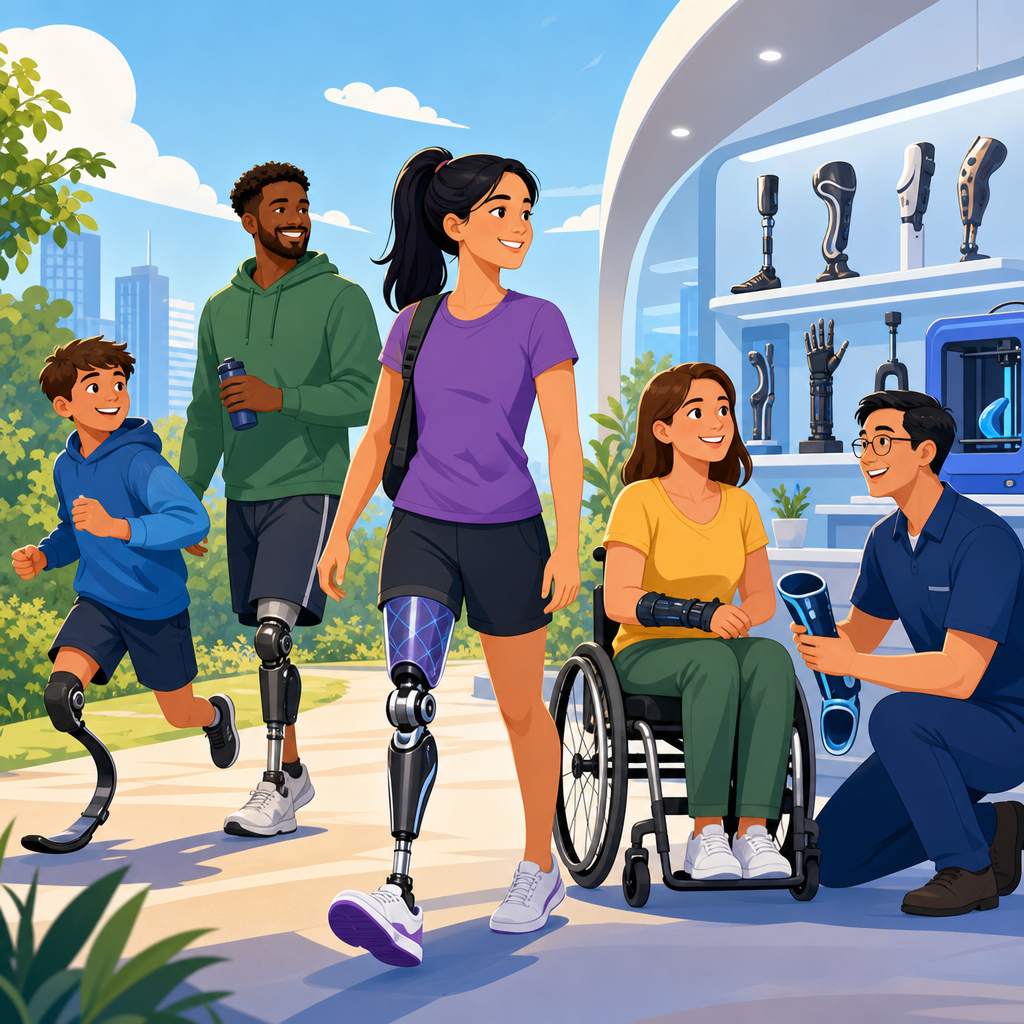
Advances in prosthetic and orthotic technologies under ADA are reshaping mobility, workplace access, clinical care, and public expectations of disability inclusion across the United States. Prosthetics are artificial devices that replace a missing body part, while orthotics are braces or supports that improve alignment, stability, or function in an existing limb or spine. The ADA, or Americans with Disabilities Act, is the federal civil rights law that prohibits discrimination and requires equal access in employment, public services, transportation, telecommunications, and places of public accommodation. When these fields intersect, the result is not simply better devices; it is a broader shift in how institutions must accommodate people who use advanced mobility technology. I have worked with rehabilitation teams, accommodation requests, and device implementation projects long enough to see the practical impact: a microprocessor knee or custom ankle-foot orthosis can change whether a person returns to work, navigates a campus safely, or participates fully in community life.
This topic matters now because prosthetic and orthotic technologies have advanced faster than many organizations’ policies. Sensors, lighter composites, osseointegration, powered joints, digital scanning, and 3D printing are improving comfort and performance, but they also raise new questions about coverage, maintenance, interoperability, training, and accessibility obligations. Recent ADA updates and developments increasingly center on digital access, effective communication, integrated services, and individualized assessment, all of which affect device users directly. Employers must evaluate accommodations based on actual job functions, not assumptions about physical capacity. Schools, hospitals, airports, retailers, and government agencies must consider how modern assistive devices interact with entrances, seating, security procedures, websites, and emergency planning. This hub article explains the current landscape, the technologies driving change, the compliance implications, and the operational steps organizations should take to keep pace.
How the ADA shapes prosthetic and orthotic access
The ADA does not require an employer, school, or business to buy a person’s prosthesis or orthosis, but it does require equal opportunity and reasonable modifications when a disability affects access. In practice, that distinction is essential. If an employee uses a powered prosthetic arm, the employer may need to modify workstation height, allow charging access, adjust tool grips, or revise a no-bag policy so batteries and maintenance supplies remain available. If a student uses a reciprocating gait orthosis or wheelchair-prosthetic combination, a campus may need route planning, accessible lab layouts, and evacuation procedures that account for slower transfers. The legal standard is individualized assessment, and that principle matches sound clinical practice: no two users have identical gait patterns, socket tolerances, skin integrity issues, or endurance levels.
Recent ADA developments have reinforced a broad view of accessibility that goes beyond ramps and door widths. Device users often encounter barriers in digital systems before they encounter architectural ones. Online scheduling forms may not allow adequate time selections for orthotic fittings. Telehealth platforms may fail to support captioning for patients managing multiple disabilities. Employee portals can create friction when accommodation documentation requires repeated uploads after each prosthetic adjustment cycle. The direction of federal guidance and enforcement has made one point clear: accessible processes matter as much as accessible spaces. Organizations that treat accessibility as an end-to-end service design issue are better positioned than those that focus only on minimum building code compliance.
Recent prosthetic breakthroughs changing real-world function
Modern prosthetic technology is moving from passive replacement toward responsive systems that adapt to terrain, speed, and user intent. Microprocessor knees from manufacturers such as Ottobock, Össur, Blatchford, and WillowWood use onboard sensors and algorithms to adjust resistance during stance and swing phases. For many users, that means fewer falls, smoother descent on ramps and stairs, and reduced cognitive load during daily movement. The most important practical advance is not novelty; it is consistency. A device that responds predictably to uneven sidewalks, crowded hallways, and wet flooring can improve employability and confidence more than a dramatic but unreliable feature set.
Upper-limb prosthetics have also advanced through multi-articulating hands, myoelectric control, improved pattern recognition, and stronger haptic feedback research. The challenge I repeatedly see is that performance in demonstrations does not always translate into worksite durability or all-day comfort. Battery life, glove wear, grip speed, sweat management, and training time still matter. That is why the best outcomes typically come from matching technology to tasks rather than chasing the most expensive component. A warehouse worker may need robust pinch reliability and quick donning, while an office professional may prioritize keyboard compatibility, cosmetic appearance, and low fatigue during commuting.
Osseointegration is another major development. Instead of using a traditional socket, a metal implant anchors directly into bone and connects externally to the prosthesis. For selected candidates, it can improve range of motion and sitting comfort while reducing socket-related skin problems. It also introduces infection control demands and long-term monitoring requirements. Under ADA-related accommodation planning, osseointegration may affect leave schedules, hygiene needs, and emergency procedures. Organizations should not make assumptions either way; they should ask what specific support allows effective participation.
Orthotic innovation and the shift toward personalized support
Orthotic technologies are often discussed less than prosthetics, but recent innovation in this area is equally significant. Carbon-fiber ankle-foot orthoses, stance-control knee-ankle-foot orthoses, scoliosis braces informed by digital modeling, and dynamic upper-extremity supports are helping people conserve energy, correct alignment, reduce pain, and maintain mobility longer. In many cases, the most meaningful benefit is not dramatic speed but prevention: fewer trips, lower joint stress, reduced compensation injuries, and better tolerance for school or work demands across a full day.
Digital scanning and computer-aided design have transformed fabrication. A clinic can now capture a limb or torso shape quickly, adjust pressure relief zones precisely, and produce a device with tighter repeatability than older plaster-heavy workflows. That matters under accessibility planning because fit changes can be documented and reproduced more efficiently. For children, people with fluctuating edema, or workers whose devices wear out under heavy use, faster iteration reduces downtime. 3D printing is useful here, particularly for test sockets, pediatric components, and lower-volume custom parts, although it is not a universal replacement for traditional fabrication. Material strength, reimbursement policy, and quality control still determine whether additive manufacturing is appropriate.
Smart orthoses are another emerging category. Some devices use sensors to track adherence, joint angle, pressure, or gait data that clinicians can review remotely. The opportunity is better outcomes through early intervention; the risk is privacy confusion if schools, employers, or insurers push for data they do not need. Accessibility and confidentiality must move together. A person should not have to trade medical privacy for participation in a workplace accommodation process.
Where recent ADA developments are most visible
In day-to-day operations, the most important developments are appearing in employment, healthcare, transportation, and digital services. Employers are seeing more accommodation requests tied to charging stations for powered devices, hybrid schedules during fitting periods, anti-fatigue flooring, reserved storage, and flexibility around prosthetic maintenance appointments. Healthcare systems are under pressure to make every stage of care accessible, from online intake to imaging transfers and post-operative rehabilitation. Transportation providers face recurring issues involving screening, securement, and staff training when users combine prostheses, orthoses, wheelchairs, crutches, and service animals.
| Setting | Common barrier | Effective response |
|---|---|---|
| Workplace | Rigid schedules during adjustment periods | Modified hours, remote work, charging access |
| Healthcare | Inaccessible transfer equipment or portals | Accessible exam rooms, compliant digital intake |
| Education | Long walking routes and poor emergency planning | Route review, elevator access, evacuation protocols |
| Retail and hospitality | Narrow aisles, fixed seating, uninformed staff | Clear circulation paths, adaptable seating, training |
| Transit and airports | Screening delays and handling errors | Standard procedures, respectful communication, device-safe checks |
Digital accessibility deserves special attention because recent federal action has clarified expectations for state and local government web content and reinforced the importance of accessible interfaces generally. For prosthetic and orthotic users, online systems affect appointment booking, accommodation requests, maps, training materials, and benefits management. If a claims portal times out too quickly for a user navigating with pain or limited dexterity, equal access is not achieved. If maintenance manuals are posted only as inaccessible image files, the problem is operational, not cosmetic. Organizations should align web and app design with WCAG 2.1 AA as a practical baseline and test with real users of assistive technology.
Standards, reimbursement, and the compliance reality
Technology alone does not improve access unless standards, coverage rules, and organizational procedures keep pace. In prosthetics and orthotics, the Centers for Medicare & Medicaid Services, private insurer medical policies, coding practices, and state Medicaid rules often determine whether a clinically appropriate device reaches the user. That can create tension with ADA compliance. A person may legally be entitled to equal access while still struggling to obtain a device that enables that access. Those are separate systems, but in practice they collide every day. Employers and public entities should understand that accommodation decisions cannot rely solely on what an insurer approved.
Clinicians and administrators should also pay attention to recognized standards and guidance. ISO standards influence component testing and quality benchmarks. Rehabilitation protocols from professional organizations shape safe adoption of new technologies. The Job Accommodation Network remains one of the most practical resources for workplace adjustments. Accessible design should also consider the 2010 ADA Standards for Accessible Design, even when the issue seems device-specific rather than architectural. A charging shelf mounted too high, a security gate that misreads a gait aid, or a fixed bench without transfer space can turn excellent technology into a frustrating daily barrier.
There are tradeoffs. Advanced devices cost more, require more training, and can fail in ways simpler devices do not. A powered ankle may improve symmetry but increase maintenance dependence. A highly rigid orthosis may protect a joint while reducing comfort in hot environments. The right answer is rarely a universal answer. Organizations should avoid both skepticism toward new technology and blind enthusiasm for it. The question is whether a device, in context, allows a person to perform essential tasks safely and effectively.
How organizations should respond now
The most effective response is to build a repeatable accessibility process that accounts for modern prosthetic and orthotic use. Start with policy. Accommodation procedures should explicitly invite requests related to assistive devices, charging, maintenance, storage, schedule flexibility, and accessible digital tools. Train managers and frontline staff to ask functional questions without demanding unnecessary medical detail. Review physical spaces for circulation width, flooring transitions, seating variety, and private areas for adjustments. Audit websites, forms, kiosks, and mobile apps with accessibility specialists. In my experience, the fastest gains come from fixing ordinary friction points that no single department owns.
Next, connect decisions to real tasks. If the setting is a factory, review pedal use, ladder policies, vibration exposure, and PPE compatibility with prosthetic liners or orthotic shells. If it is a university, examine class-change timing, lab benches, housing furniture, and fieldwork transportation. If it is a hospital, test transfer workflows, imaging positioning, and discharge education materials. Document what works, revisit it after device upgrades, and treat adjustments as normal operations rather than exceptions. This hub should guide deeper reading on employment updates, digital accessibility changes, healthcare obligations, and public accommodation trends across the broader updates and developments topic.
Advances in prosthetic and orthotic technologies under ADA are ultimately about practical inclusion. Better devices are expanding what people can do, but institutions must modernize their policies, spaces, and systems to match. The key takeaways are clear: evaluate people individually, design access across physical and digital environments, rely on recognized standards, and plan for maintenance, training, and privacy from the start. Organizations that do this well reduce risk, improve service quality, and support fuller participation in work and community life. Use this article as your starting point, then review your current accessibility practices and identify the first barrier you can remove this quarter. That is how progress becomes measurable, compliant, and real.
Frequently Asked Questions
1. How are advances in prosthetic and orthotic technologies changing access and inclusion under the ADA?
Advances in prosthetic and orthotic technologies are expanding what meaningful access can look like under the Americans with Disabilities Act. Modern prosthetic limbs, microprocessor-controlled knees, powered ankle-foot systems, custom 3D-printed sockets, sensor-based orthoses, and lighter composite materials can improve mobility, endurance, balance, comfort, and participation in daily life. In practical terms, that means more people may be able to move through workplaces, schools, transportation systems, health care settings, and public spaces with greater independence. The ADA supports this shift by requiring equal opportunity and prohibiting discrimination in employment, state and local government services, public accommodations, transportation, and telecommunications. Technology does not replace ADA protections, but it can make it easier for individuals to fully benefit from them.
At the same time, the ADA is not a guarantee that a person will receive the latest prosthetic or orthotic device from an employer, business, or government agency. The law focuses on access, nondiscrimination, and reasonable accommodation rather than mandating that third parties purchase personal devices. For example, an employer may need to modify a workstation, adjust a schedule, or restructure certain nonessential tasks so an employee using a prosthesis or orthosis can perform the essential functions of a job. A public accommodation may need to remove barriers, provide accessible routes, or change policies so a person using advanced mobility equipment can participate equally. In this way, emerging technology and ADA compliance work together: the device may enhance function, while the law helps ensure the environment, policies, and attitudes do not create unnecessary barriers.
2. Does the ADA require employers to accommodate workers who use prosthetic or orthotic devices?
Yes, in many situations the ADA requires covered employers to provide reasonable accommodations to qualified employees and applicants with disabilities, including those who use prosthetic or orthotic devices. The key issue is not simply whether a person wears a brace, uses a prosthetic limb, or relies on an assistive support, but whether they have a disability as defined under the law and can perform the essential functions of the job with or without reasonable accommodation. Reasonable accommodations can include modified equipment, ergonomic adjustments, accessible workstations, reassignment of marginal tasks, schedule flexibility for medical appointments, changes to workplace policies, remote work in appropriate roles, or leave accommodations where legally appropriate. Employers are also expected to engage in an interactive process to understand the employee’s functional limitations and identify effective solutions.
Importantly, employers should not make assumptions based on appearance or outdated beliefs about physical capability. A worker with a highly advanced prosthetic may have excellent mobility but still need a modified floor surface, a sit-stand option, extra time for donning equipment, or flexibility during periods of skin breakdown, pain, or device adjustment. Likewise, an employee using an orthotic brace may need periodic breaks, seating options, or modified lifting expectations. The ADA does not require an employer to eliminate essential job duties or create undue hardship, but it does require individualized assessment rather than stereotypes. As prosthetic and orthotic technologies become more sophisticated, employers should update policies, training, and workplace design so accommodation decisions are based on current medical and functional realities, not assumptions from decades past.
3. What is the difference between prosthetics and orthotics, and why does that distinction matter legally and medically?
Prosthetics and orthotics are related but distinct fields, and the difference matters because each serves different functional, clinical, and accommodation needs. A prosthesis replaces a missing body part, such as a leg, arm, hand, or foot. An orthosis supports, aligns, stabilizes, or improves the function of an existing body part, such as an ankle-foot orthosis, knee brace, spinal brace, or wrist support. Medically, prosthetic care often involves limb loss, socket fit, gait mechanics, residual limb health, and device training. Orthotic care often focuses on controlling motion, reducing pain, preventing deformity, improving posture, supporting weakness, or assisting recovery from injury or neurological conditions. These differences shape what a person may need in terms of follow-up care, workplace supports, accessibility planning, and long-term function.
Legally, the distinction can affect how accommodation requests are understood, though the ADA’s core principles still center on functional limitation rather than device category. For example, a person using a lower-limb prosthesis may need accessible routes, anti-fatigue flooring considerations, seating flexibility, and time for maintenance or medical care. A person using an orthotic brace may need modified physical demands, ergonomic supports, or flexibility around flare-ups and fatigue. In health care and insurance contexts, prosthetic and orthotic devices may also be evaluated differently for medical necessity, coverage, replacement schedules, and rehabilitation planning. Understanding the distinction helps employers, clinicians, policy makers, and the public respond more accurately to individual needs. It also helps avoid the common mistake of treating all mobility-related assistive devices as interchangeable when, in fact, the daily experience and legal implications can vary significantly.
4. How do new technologies like microprocessors, smart sensors, and 3D printing affect clinical care and patient outcomes?
New technologies are transforming clinical care by making prosthetic and orthotic devices more personalized, responsive, and data-informed. Microprocessor-controlled prosthetic knees and ankles can adapt to walking speed, terrain changes, stair negotiation, and balance demands in ways that mechanical systems cannot. Smart orthotic systems may include pressure monitoring, gait feedback, motion sensors, or adjustable support levels that respond to activity patterns. 3D scanning and 3D printing can improve fit, speed up fabrication, and support highly customized designs for complex anatomy. Advanced materials can reduce weight while increasing durability, which may improve comfort and decrease energy expenditure. For many patients, these innovations translate into better mobility, fewer falls, improved confidence, lower pain, greater consistency of use, and a stronger ability to participate in work, family life, and community activities.
Still, better technology does not automatically guarantee better outcomes. Clinical success depends on proper evaluation, skilled fitting, rehabilitation, patient training, follow-up care, and access to repairs and replacement parts. A highly advanced device that is poorly fitted or insufficiently supported may be less useful than a simpler device tailored to the patient’s real-world needs. Cost and coverage remain major barriers, particularly when payers classify certain features as convenience items instead of functional necessities. That is where disability rights principles and ADA-informed inclusion become especially important. Even when technology improves individual capacity, public and private systems still need to address accessibility, scheduling flexibility, transportation, environmental barriers, and communication gaps. The strongest outcomes usually come from a combination of innovative device design, strong clinical care teams, patient-centered rehabilitation, and environments that are genuinely accessible.
5. What should patients, families, and organizations know about ADA rights as prosthetic and orthotic technology continues to evolve?
Patients, families, and organizations should understand that evolving technology does not weaken ADA rights; if anything, it highlights the need to apply those rights in more current and informed ways. Individuals who use prosthetic or orthotic devices remain entitled to equal access, fair treatment, and freedom from discrimination in covered settings. That includes access to jobs, public services, transportation, educational opportunities, and businesses open to the public. Organizations should avoid assuming that because someone has an advanced device, they no longer need accommodations or legal protections. A person may function at a high level in one environment and still face significant barriers in another due to fatigue, pain, weather conditions, uneven surfaces, narrow layouts, inaccessible policies, or device maintenance needs. ADA compliance is about removing those barriers and ensuring participation on equal terms.
For families and individuals, it is wise to document functional needs clearly, communicate early when accommodations are necessary, and work with clinicians who can explain how a device affects mobility, endurance, safety, and daily tasks. For employers, schools, health systems, and businesses, the best approach is proactive inclusion: train staff, review policies, create accessible physical environments, and respond to requests through individualized assessment rather than stereotypes. It is also important to recognize that technology access itself is uneven. Not every person has the latest device, timely repairs, or comprehensive insurance coverage. A legally compliant and inclusive system cannot be built around ideal assumptions. It must account for real-world variability in disability experience. As prosthetic and orthotic technologies continue to advance, the ADA remains the legal framework that helps ensure innovation leads not just to better devices, but to broader dignity, opportunity, and participation.


